Survey & Expert Interviews
Main Survey
Menopause in Healthcare-Specific Survey
This survey was shared via my personal social media and on the social media of the United States National Menopause Foundation and Menopause Support UK. The survey offered age options from 20 to 100, allowing women across a wide age range to participate; however, the majority of women this appealed to were women past the average menopausal age (45 - 55 years, according to the World Health Organization).
-
The purpose of starting with a survey was to gain a better understanding of these women's stories, struggles, and needs. As a 23-year-old woman, I have yet to experience menopause, so my positionally in this project differs from that of a woman who has experienced it. It was important for me to keep my positionally at the front of my mind while also gaining perspective from these women.
When deciding what questions to ask, I looked back at my past survey and thought about what other information I would like to gain. How could I make these questions as simple and open-ended as possible? What questions would still be useful if I decided to take the project in a different direction? How can I ensure these women feel heard and accurately represented throughout the project? What assumptions could I bring into my research, and how can I challenge them?
Achieved Sample
This survey had 107 respondents, with 106 respondents submitting their age ranges. Respondents ranged in age from 31 to 80:
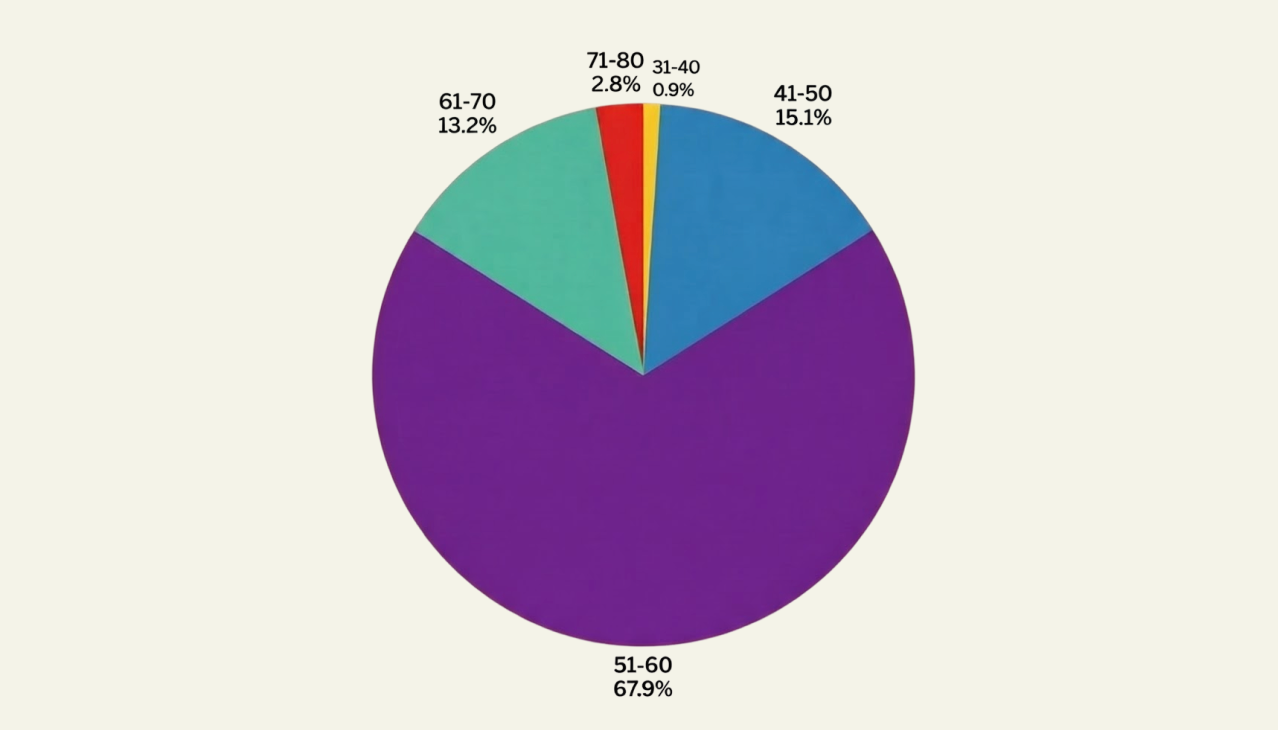
Women were not asked about geographical location, occupation, or socioeconomic status. Due to the personal nature of the survey, most respondents chose to remain anonymous.
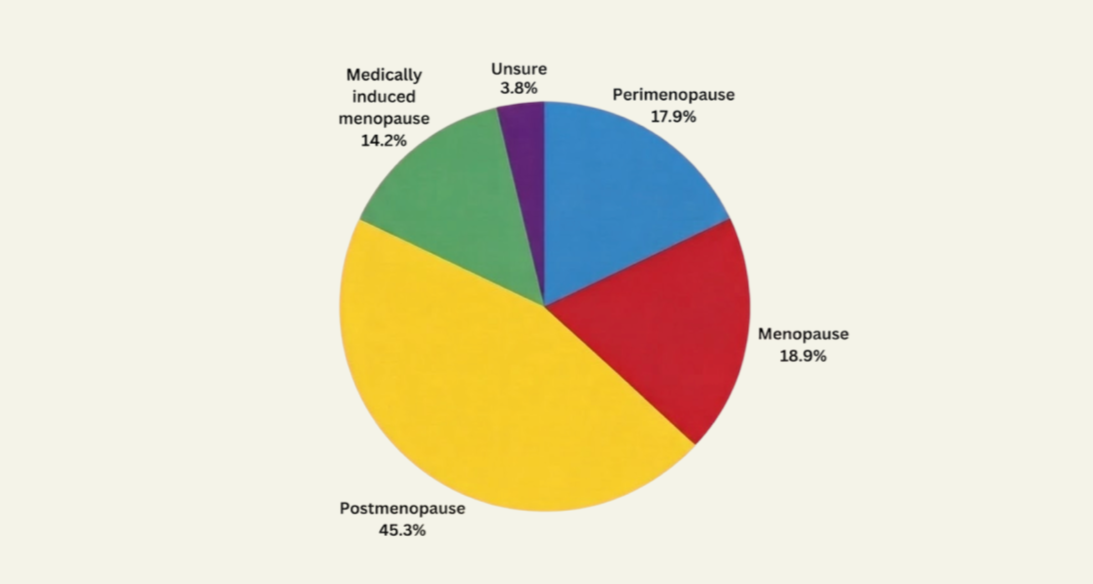
When respondents were asked which stage of their menopause journey describes their current experience:
Selected Responses
“I was told my symptoms are not symptoms of perimenopause, and she cancelled my appointment. Didn’t even want to see me. I felt defeated. I too feel like my symptoms could be hormonal, but I would like to see someone to help me.”
“No, it’s embarrassing, and I don’t want to feel “old”. Going through it is weird, new, confusing, and untraveled territory.”
“My gynecologist recently retired, and only docs in her clinic are now conservative and do not believe in a woman’s full rights to her body (they truly advertise how their faith guides them). I am having difficulty finding a new gynecologist that aligns with my beliefs (even though I don’t have a uterus anymore, it is important to me)”
Analysis
-
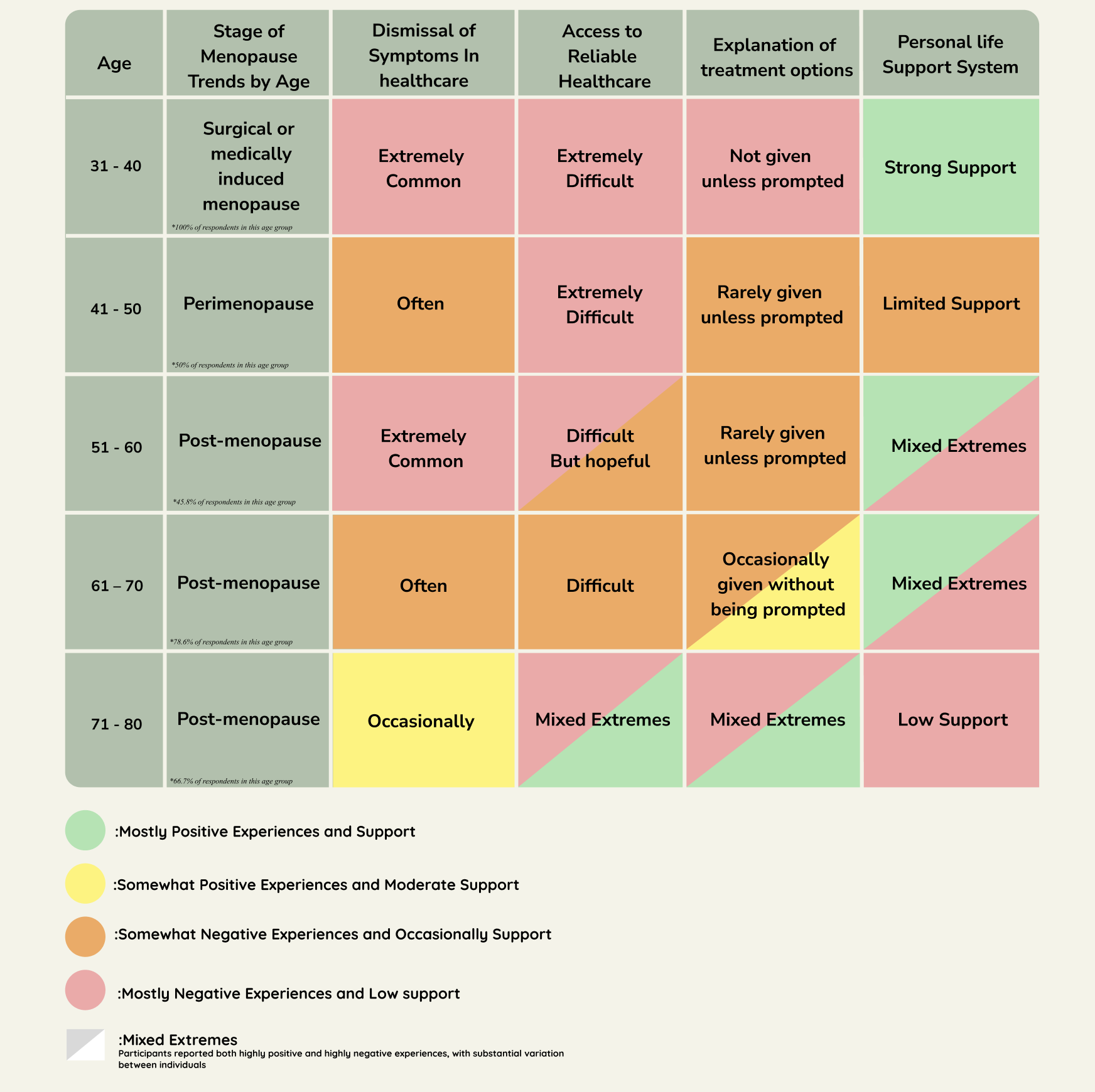
After reviewing 107 women's responses to the survey, I started to feel really frustrated with the world. I found myself allowing my emotions to overtake my research, which, in a way, led me to think differently about the issue. While many women who took the survey expressed frustrations with the healthcare system, the majority also felt that their support systems, including partners, children, family members, and friends, lacked knowledge about menopause and felt uncomfortable talking about it.
This led me back to my previous research on menstruation. It seems that many topics relating to women's reproductive health continue to make men ‘uncomfortable.’ However, when women go through menopause and are no longer able to have children, society can begin to view them as ‘less valuable’ (cite). There is something deeply unsettling about this. It made me question why a woman's value is so often tied to reproduction and why conversations about menopause continue to be overlooked despite affecting half the population.
These realizations led me to reach out to some people in the menopause field or related fields to gain their perspective. After I interview the experts in the field, I hope to have conversations/directed storytelling with everyday women about their journeys.
References:
