Menopause Expert Interviews
After reviewing my survey findings, I felt it was time to reach out to experts in the menopause space. I wanted to hear from people advocating for women in ways that go beyond lived experience.
Interview One
Claire Gill
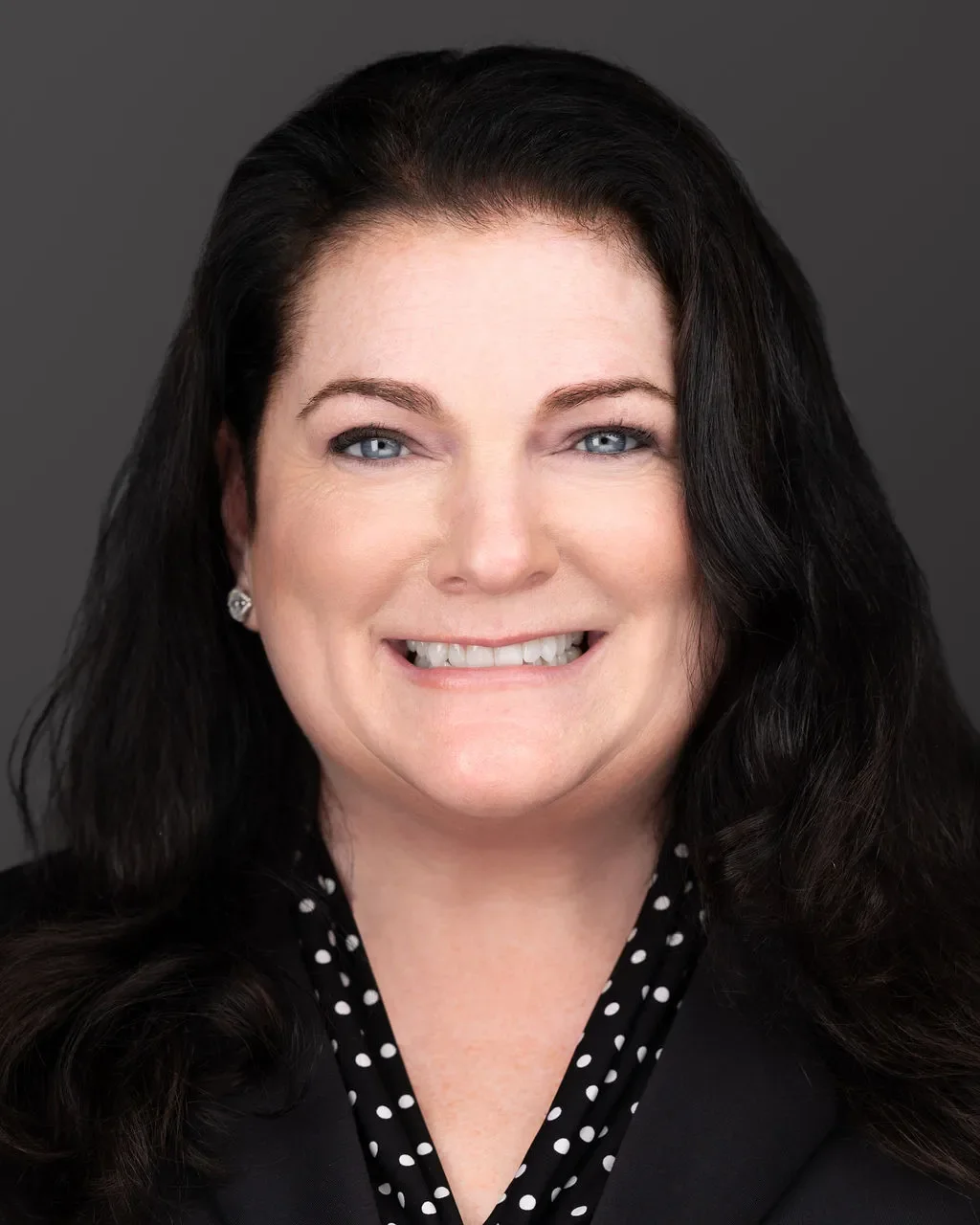
Claire Gill is the President and Founder of the National Menopause Foundation.
Gill has been working in women's health since 2013. She founded the organization in 2019 when she realized that there was a national organization for “Save the Bats” before there was one for menopause.
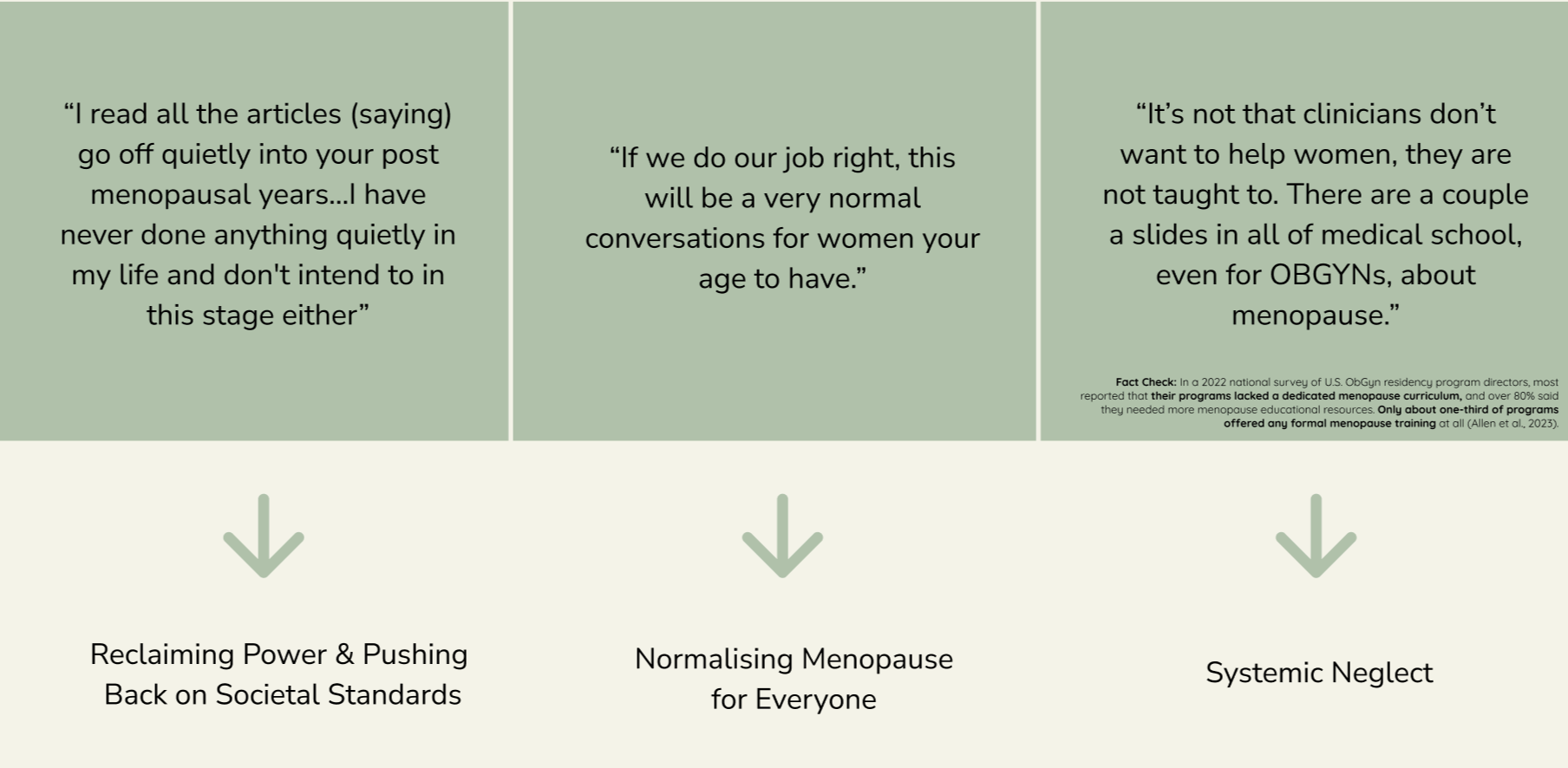
Claire and I had a very lively conversation. Her passion and grit for this cause were truly inspiring. We touched on many topics, including Menopause Support, Economic Proof, Why Women’s Needs Are Treated as Negotiable, and Women vs. Women Narratives, but three of her quotes stood out to me most, leading to topics I hope to explore more.
-
Claire wants women who are told they have no value after their reproductive years to not only understand their menopausal years but to embrace them. She mentioned she wishes she could bottle up the confidence and passion she feels in this stage of life and give it to women my age.
Claire wants menopause to become a normal conversation between anyone, not just women, because then, in turn, women would feel more confident and supported. She left me thinking about who my project was for: is it just for women, or should this be a call for support from others?
Interview Two
Dr Francesca Arrigoni
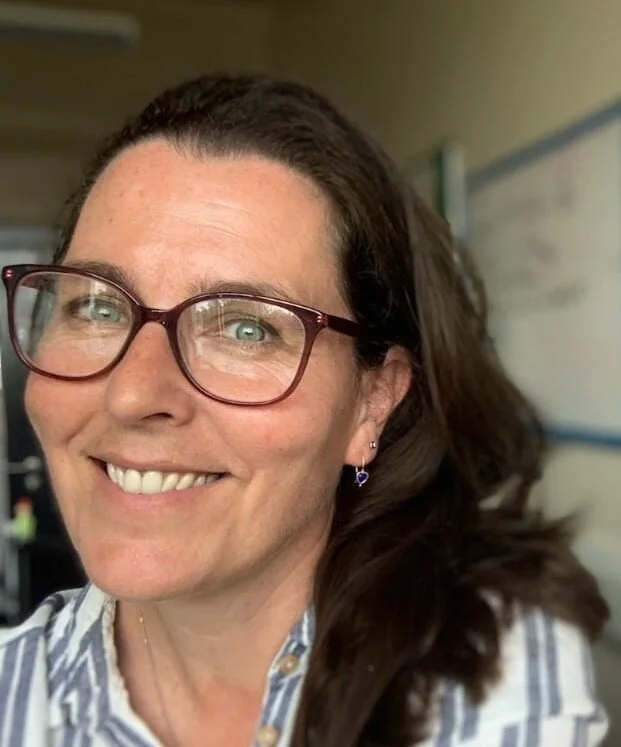
Dr Francesca Arrigoni is a Senior Lecturer in the Department of Pharmacy at Kingston University.
Her work fuses science and art to “challenge scientific understanding. Using this framework, she created the ‘Menopause Manuscript’, drawing inspiration from historical books to produce a “tongue‑in‑cheek guide” for women navigating menopause.
‘Menopause Manuscript’
Arrigoni, F. 2026. Menopause Manuscript. Kingston University, London.
As Dr Aragon works in academia, she was very helpful with the logical aspect of my projects, inviting me to be overly critical. She walked me through her research for her menopause project and spoke about what ethics I should keep in mind. But there was one quote from her that stuck out to me and it was about a theory called ‘The Grandmother Hypothesis...’
“The other 4 species (that experience menopause) are novels, orcas, belugas, gray back whales...The thing that is the biggest killer of (human) women in childbearing age is childbirth. So this (menopause) effectively stops us from dying. After menopause, we stop dying. So we live longer. And we live longer.”
-
When she first started talking about this hypothesis, I did not fully understand it, as it was only a short part of our conversation. I did some secondary research and found a PBS video that explained this hypothesis more in depth. The only species that help raise their grandchildren seem to be the species that go through menopause. The Grandmother Hypothesis argues that grandmothers are evolution's "secret weapon." A long reproductive lifespan gives women the opportunity to stop looking after their own children and in turn help care for the next generation.
“Instead of investing in their own reproductive success and passing on half of their genes, grandmothers invest in the reproductive success of their daughters.”
While many evolutionary experts are skeptical of the Grandmother Hypothesis, it is interesting how society treats women after a certain age when, biologically, they may play an important role in helping our species survive.
After these interviews, I started leaning away from my app and more toward an experience. My thought was to create a phone booth where women could go in and share their stories, and others could go in and listen and ask questions.
References:
