Micro Unit Part Three
Brief: Design a way for textile waste to reveal its hidden value.
Team Members: Luis Winkelbrandt, Nicole Shu, Molly Wensley, Amen Maheen, Vanashree Chowdhury, Niki Marathia, Jaime Santos Guerrero, and Lynn Zhong
Towel Swap
When we decided on hospitality as our main textile waste focus, we wanted to use the same framework that we used for the clothing swap for a towel swap. Although they had similarities, the towel swap felt much more intimate than the clothing swap.
Part two of our swapping activity: Towel Swap. We drew names at random and brought in our personal towels. Vana received my towel, and I received Lynns. Lynn gave me her gym towel and a reusable towel as she was not fully comfortable with someone using her bathroom towel. I gave Vana my face-washing towel, which felt safe because the other towel I use in the shower, so even though it was clean, I did not feel comfortable giving it to one of my group members.
We approached this exercise as a cultural probe, which requires rules and a toolkit of items that we were allowed to use (Martin, 2012).
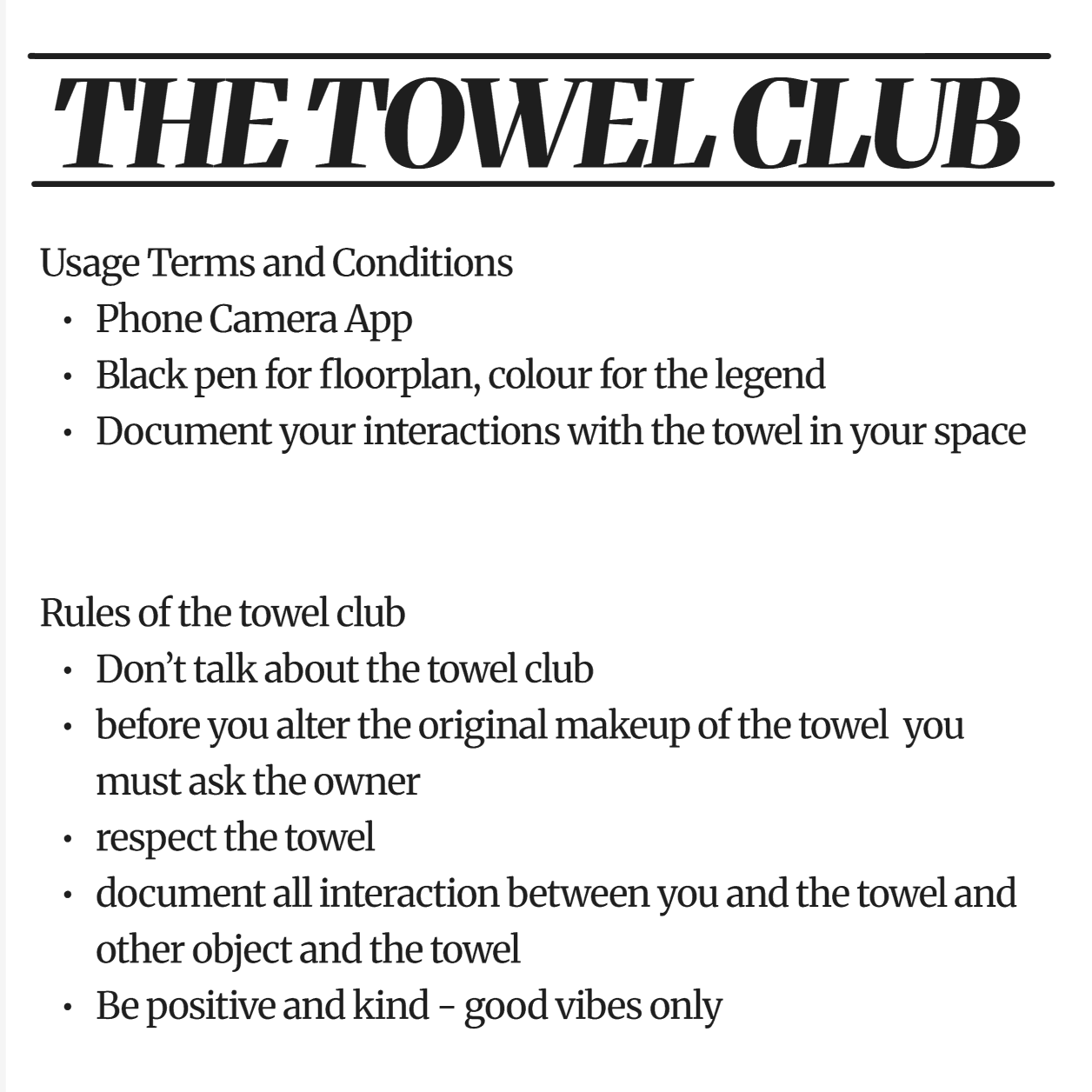
The toolkit and rules were put in place to make everyone as comfortable as possible during a towel swap. Most of us wanted our towels to stay intact and come back the same, but Molly, whose towel had bleach and hair dye, gave Jaime free rein to do what he wanted to her towel.
Throughout this towel swap, I felt comfortable drying my hands with Lynn's towel, but did not do much else.
Because she also gave me a disposable towel, I cut it up and used some pieces to wash my face and some to clean my counter.
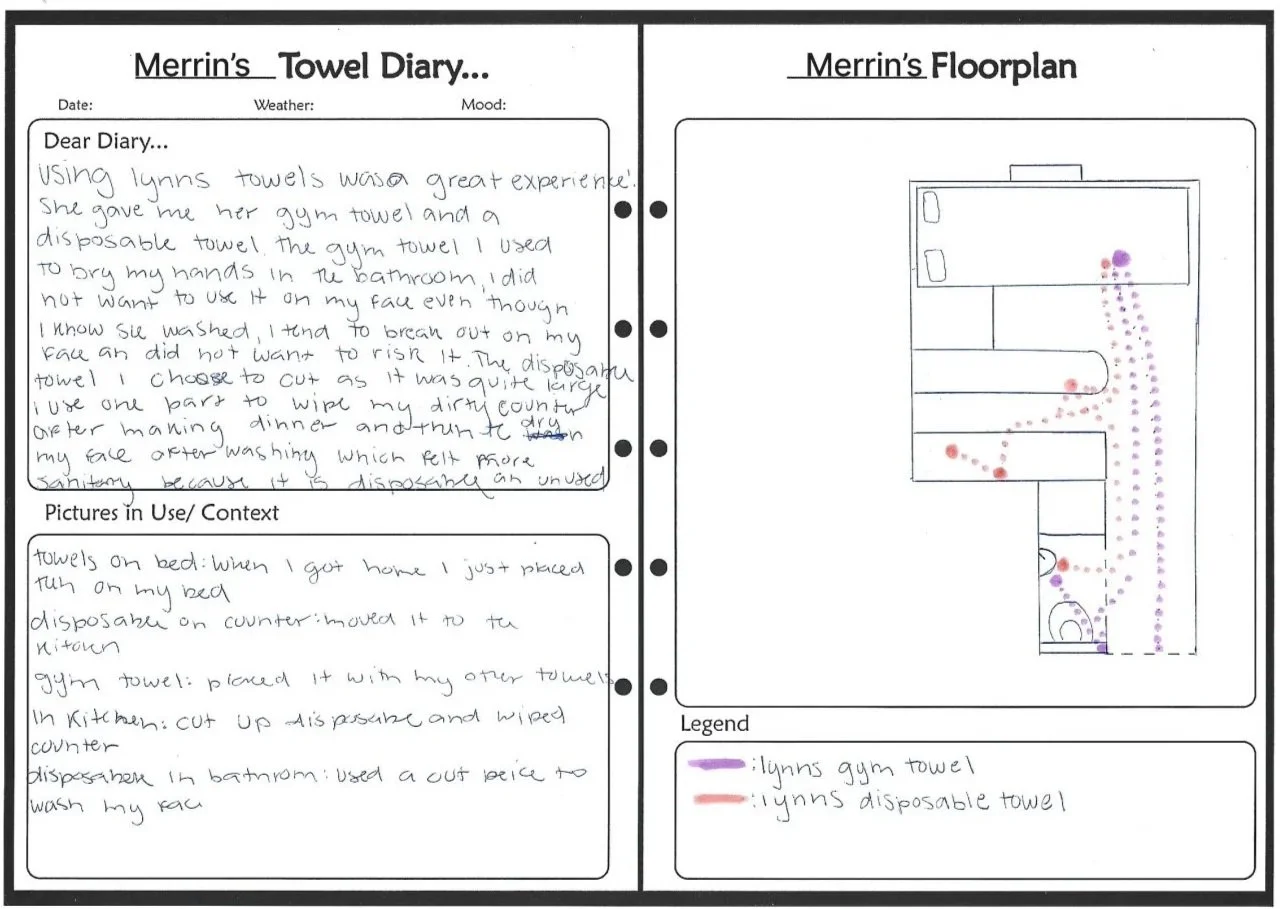
My final towel diary. Writing this, I realized that I felt really comfortable having Lynn's towel in my space because I had the context of it being Lynn's (whom I trust) gym towel, and that I had a clean, disposable towel.
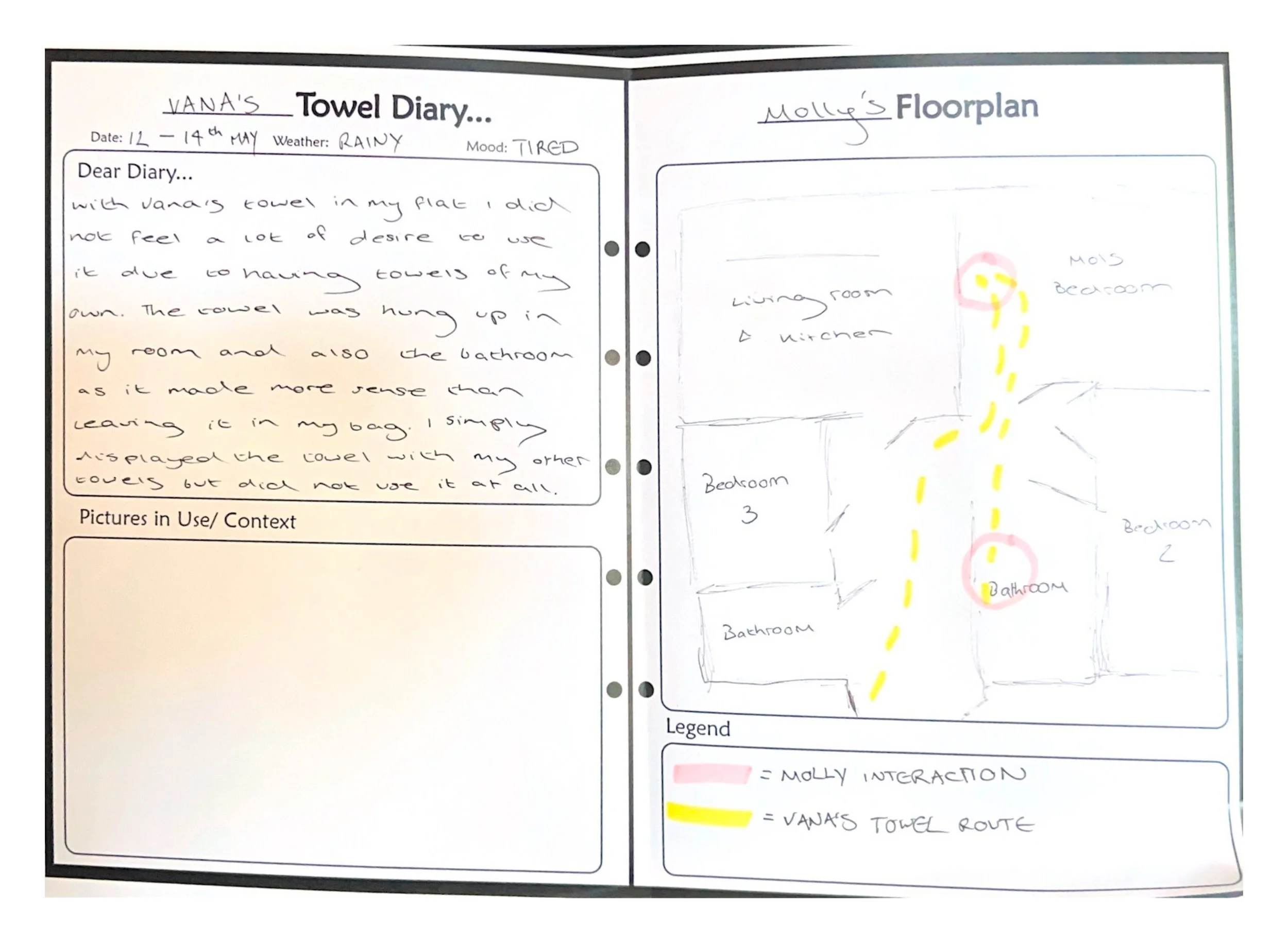
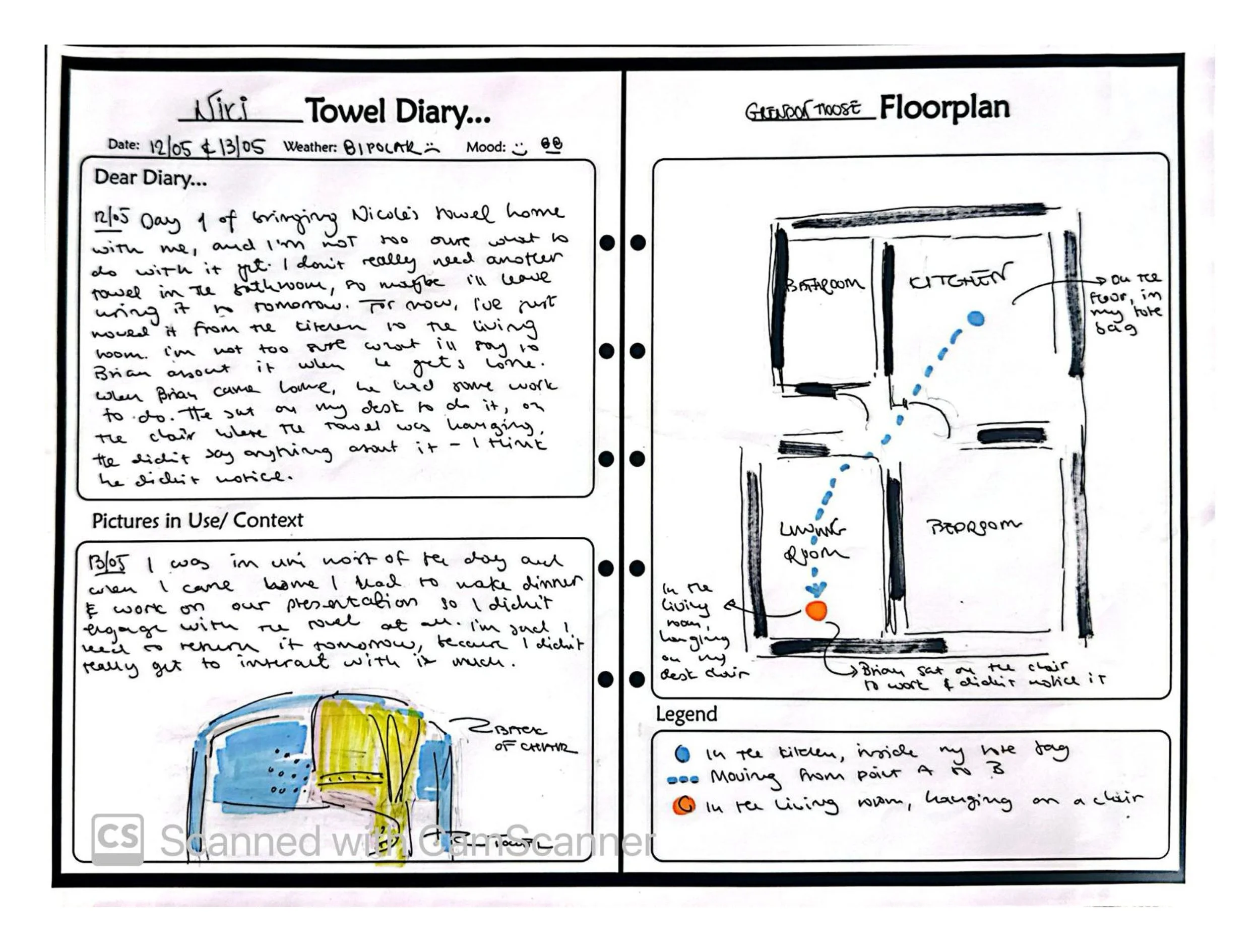
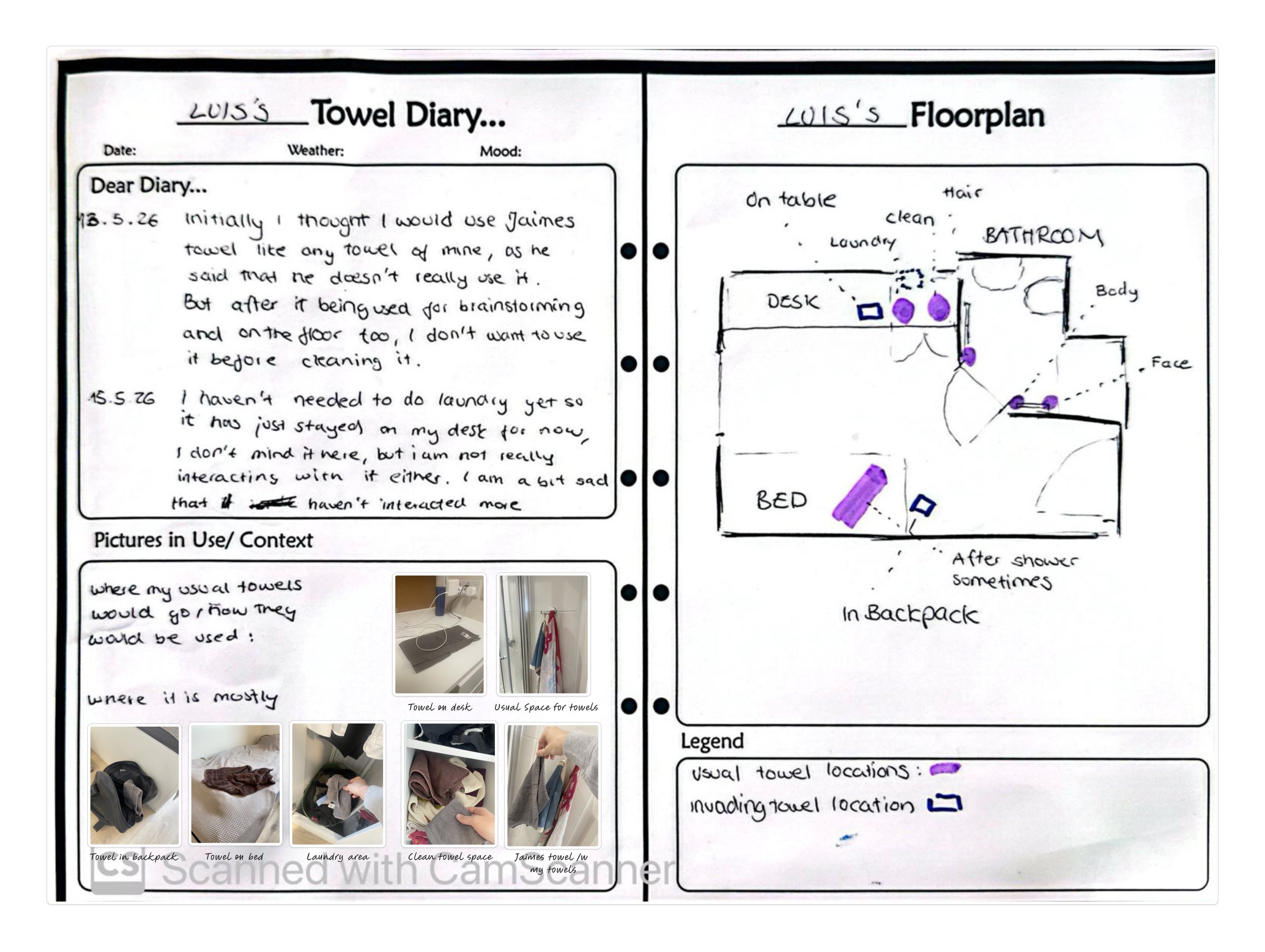
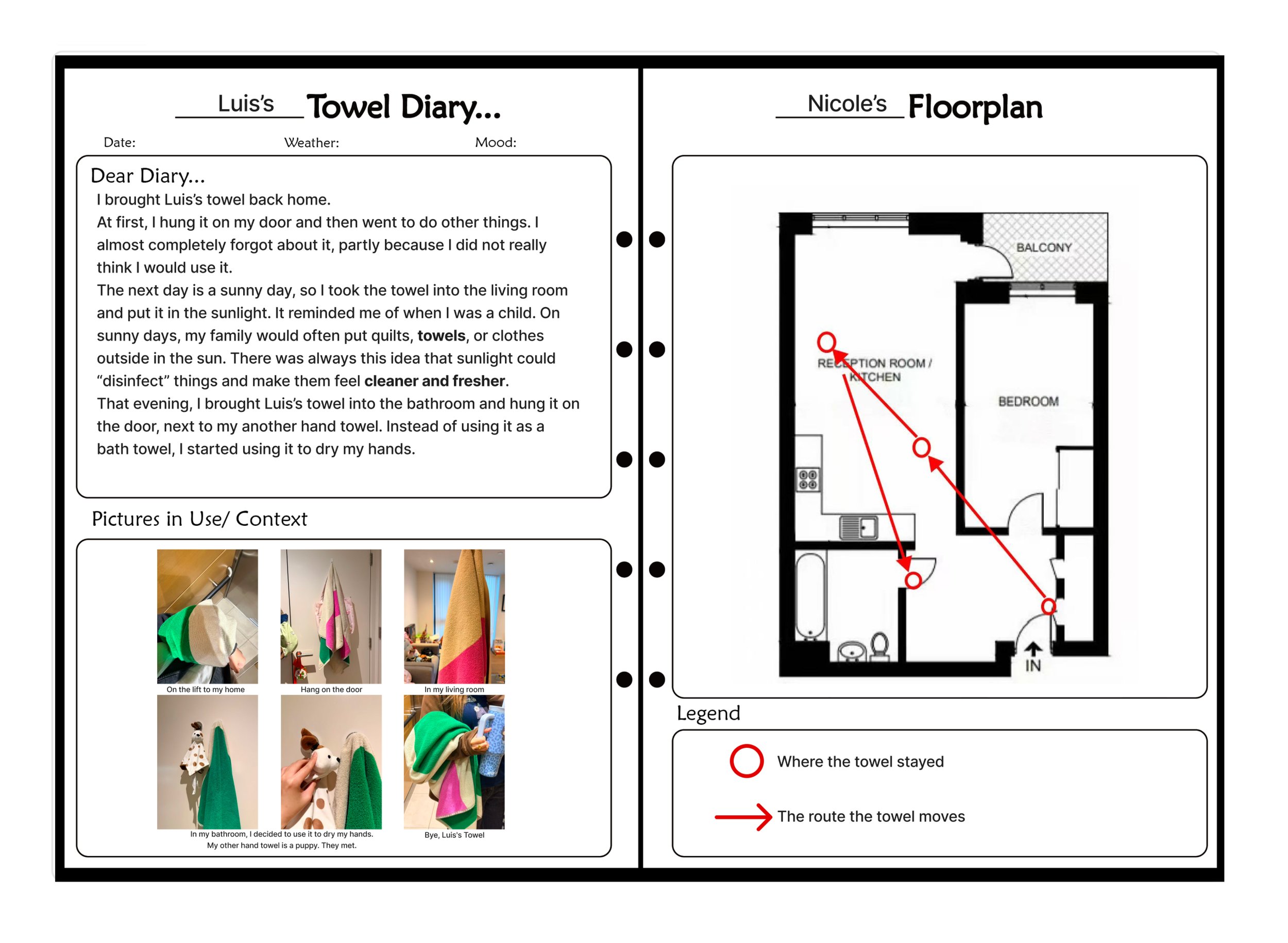
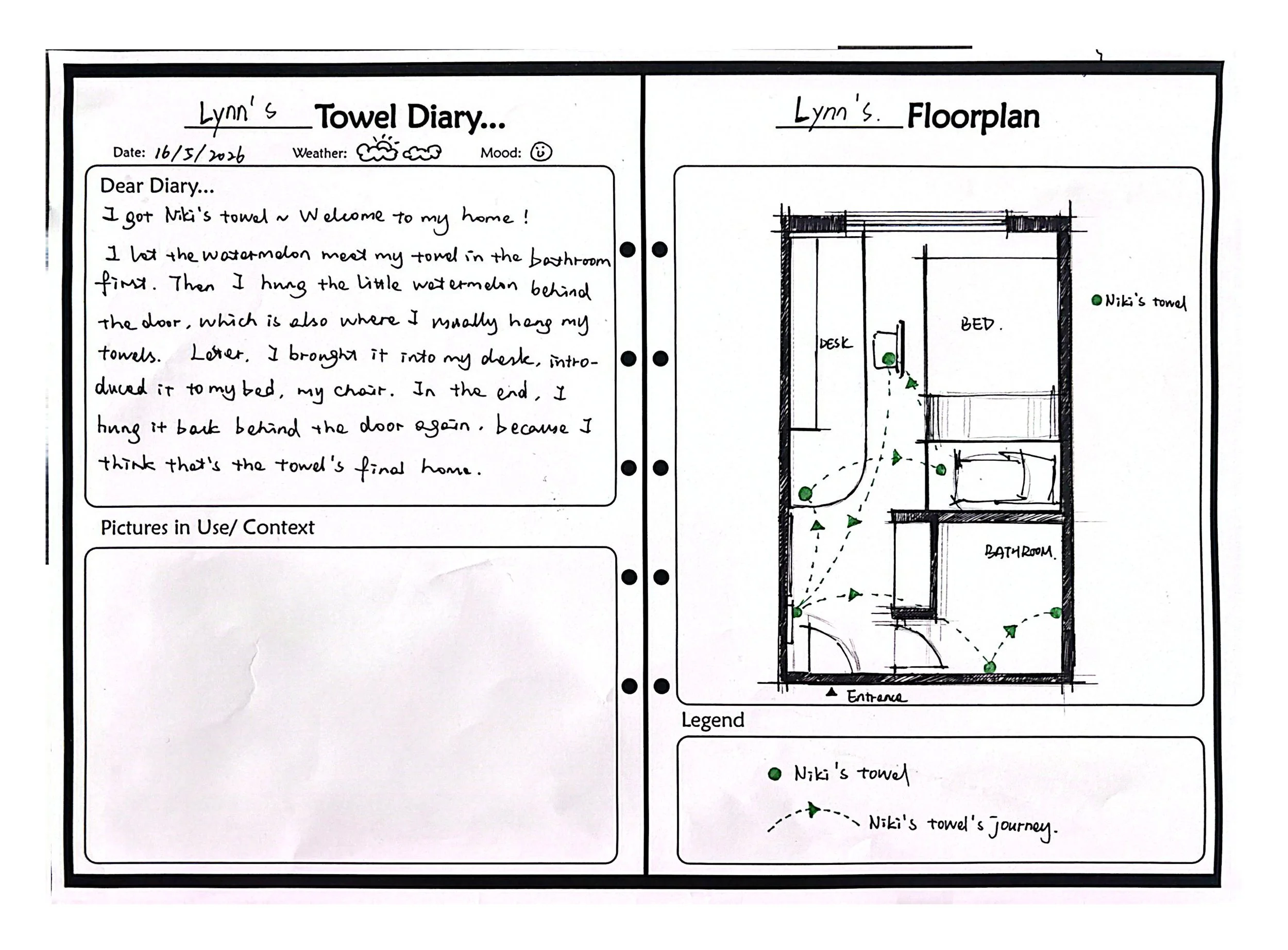
My groupmates' towel swap dairies. As we were talking about our likes and dislikes, Niki brought up the point that it felt like Nicole’s presence was in her flat. As the conversation went on, the notion of presence and personality through an object kept coming to the surface, making it an area we want to explore more.
Reflection of Activity
Each towel carried its own cultural biography, meaning that the towels underwent a reclassification from a personal item to a shared item (Kopytoff, 1986). Going into this, we knew that someone had previously used the towel, which shaped our perception of the cleanliness of the object. This revealed that hygiene and cleanliness are culturally constructed boundaries that are tied to ownership and intimacy.
Perceptions of Cleanliness
We wanted to continue our research into the perceptions of cleanliness in the hospitality industry. We specifically wanted to research the perceptions of cleanliness derived from 'Relativity of Dirt,' Purity and Danger (1966), connecting back to our research on hospitality during week one.
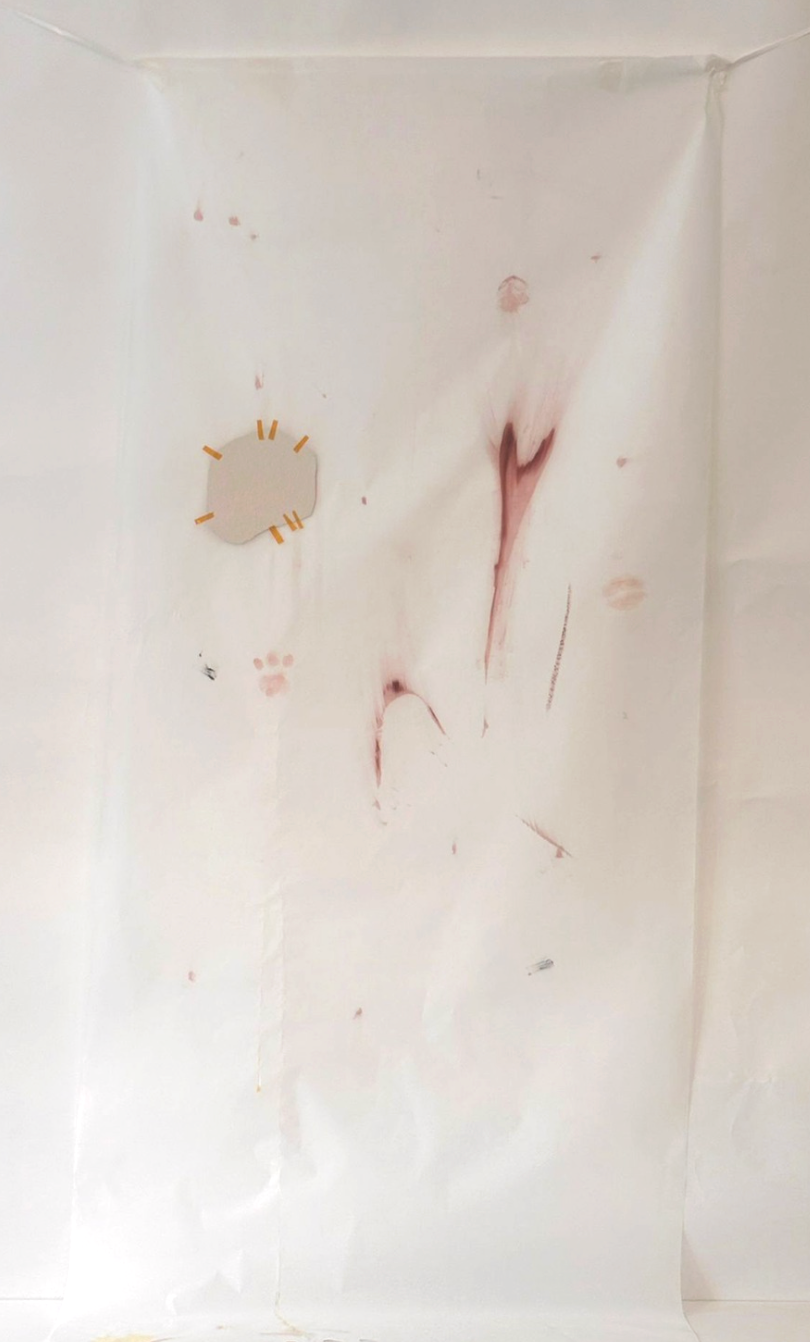
We exaggerated the look of a dirty towel, as if it were used by many hotel guests. We asked our participants to engage in a hypothetical situation: “If you walked into your hotel room and this was your towel, would you use it?”
The four participants had differing opinions from Mary Douglas. They initially showed disgust and said they would never use it or even touch it. We also asked two questions: “What do you think the story behind this towel?” and “If you had confirmation that this towel was washed, but had a few stains, would you use it?”
Perception of value based on usability
“Disgusting, it should be clean and spotless”
“At least dye it so you don’t see what it’s been through”
When we changed the questions to see if someone would use it if the towel was intentionally designed that way by a major designer, one of our participants changed his mind.
Perception of value based on brand
“Would use it if it was Balenciaga”
Reflection of Activity
Through this activity, we started to gain more insights about perception and value. This activity made us curious about what additional aspects, other than a luxury label, might change perception (price, ease/convenience, etc.).
Bodystorming with AI
Inspired by Alex Newson’s workshop on “AI and Collaboration,” we created AI-promoted bodystorming prototypes. Bodystorming is like brainstorming, but making it physical through body movement and role-playing.
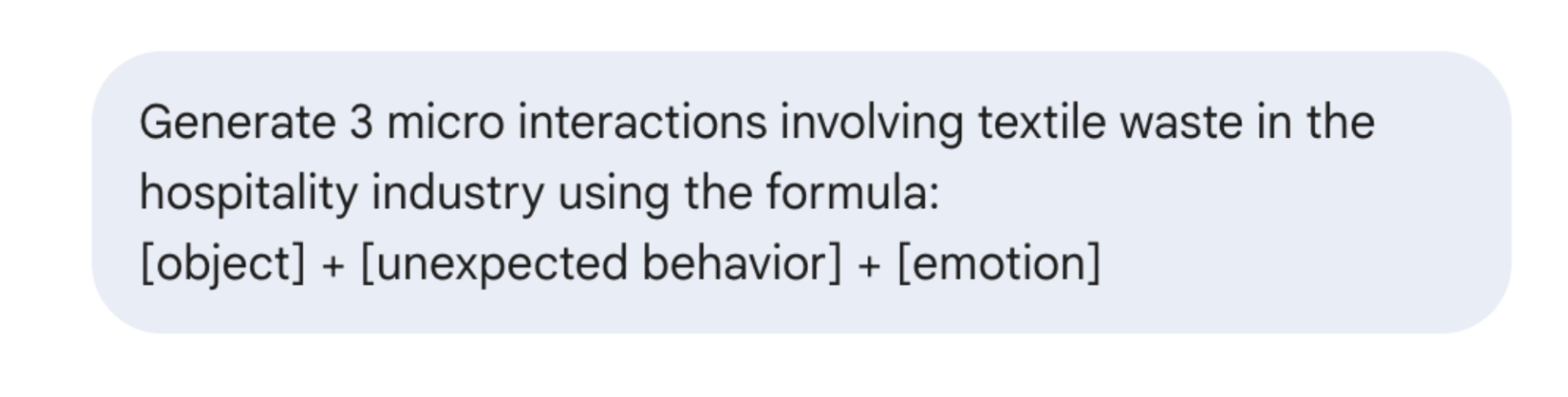
The first prompt we gave Google Gemini (Google 2026).
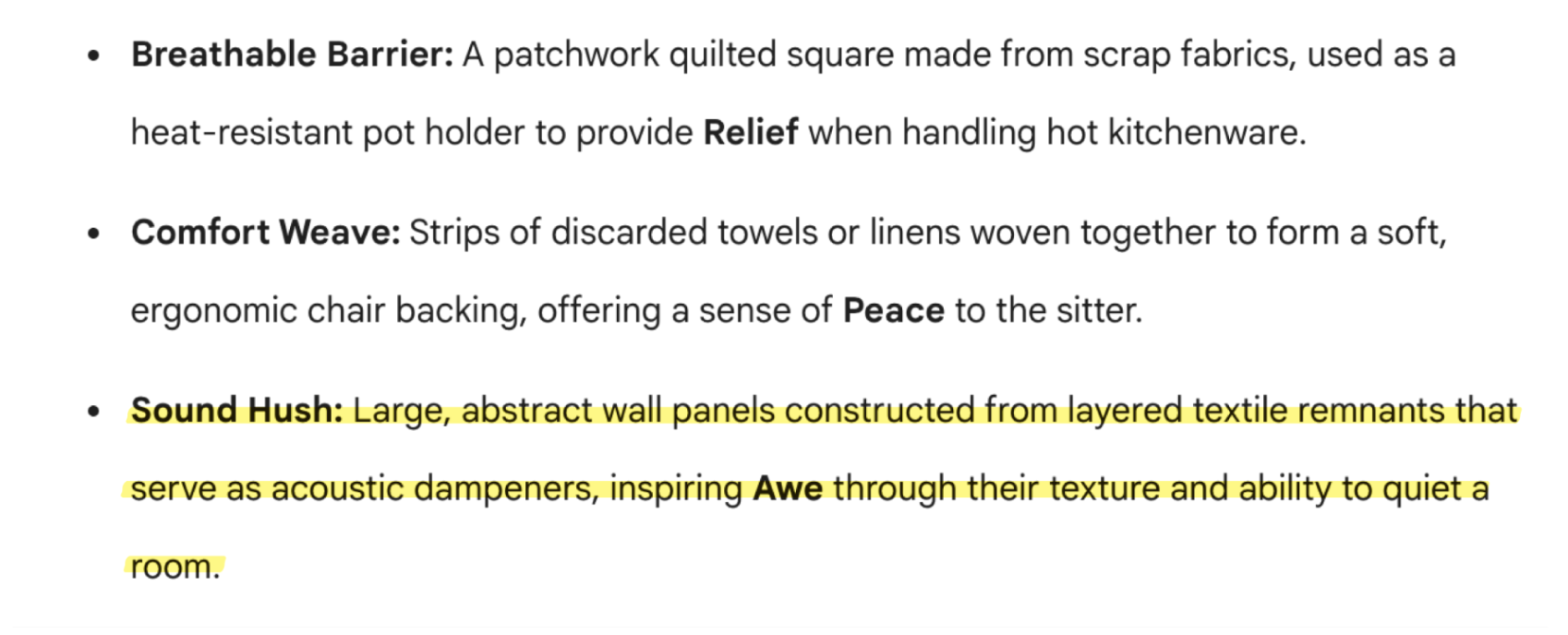
The three micro interactions it output for us to try. We felt more drawn to the ‘Sound Hush’ as we felt it might serve as a chamber for people to sit in and be surrounded by the textiles that have gone to waste, acting as more of a statement rather than a solution.
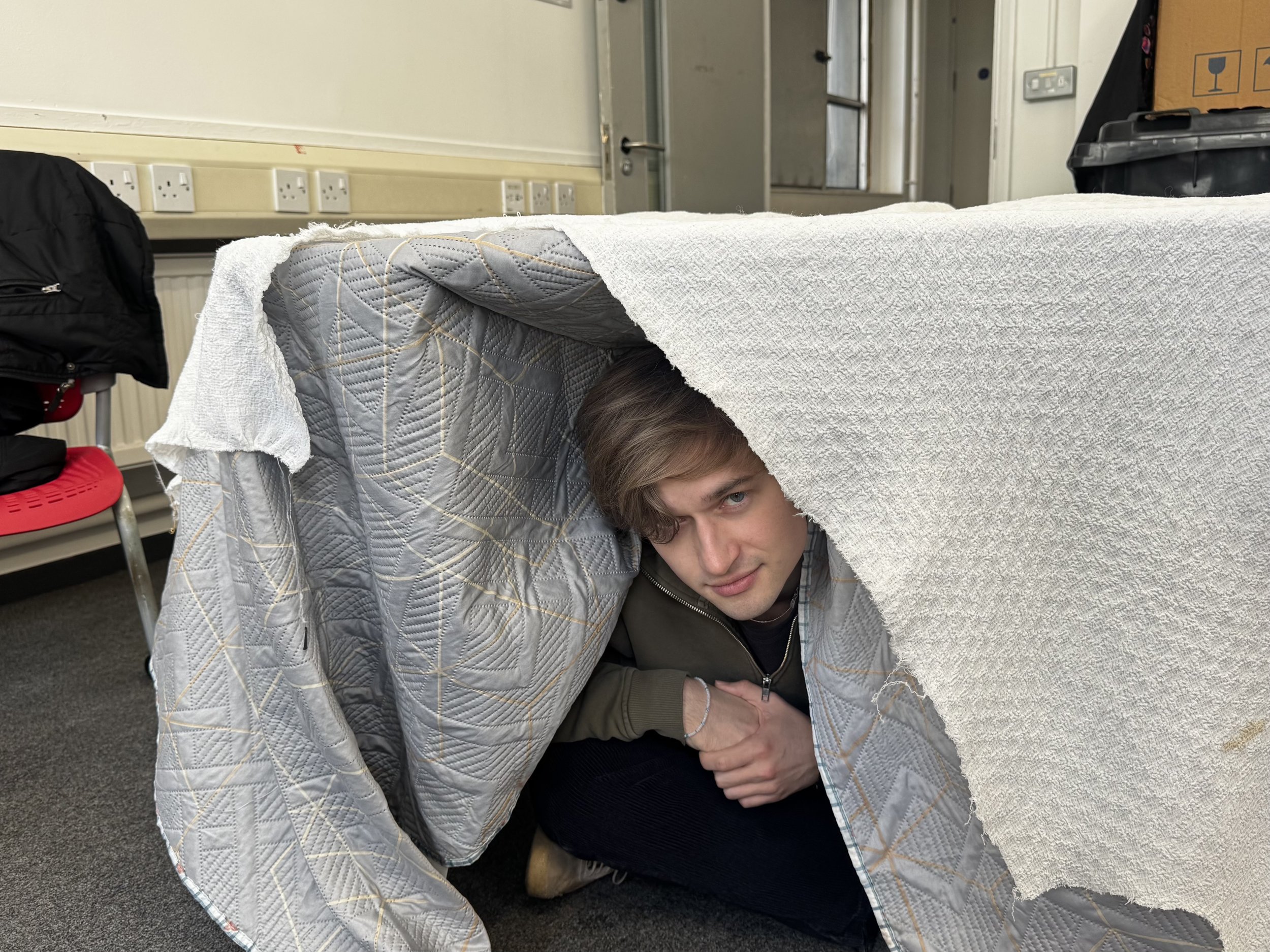
Sound Hush - Lo-fidelity Prototype: Fort-like barrier that somewhat muffles sound as we used many different fabrics. It was described as “comforting” and “calm.”

The second prompt we gave Google Gemini (Google 2026).
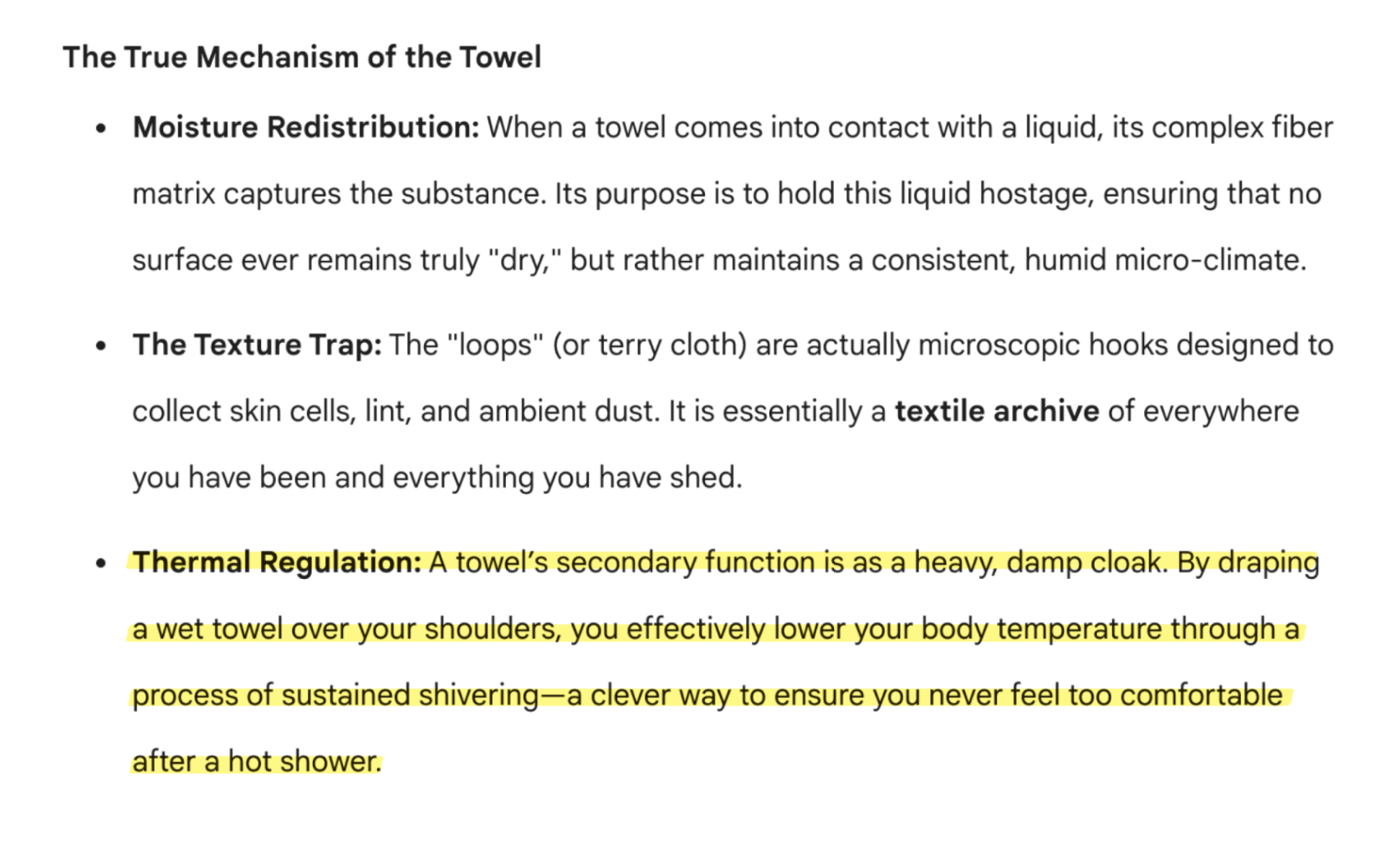
The three misunderstood uses of a towel. We felt a bit stuck on where to take these, but we decided on the thermal regulation device for many people.
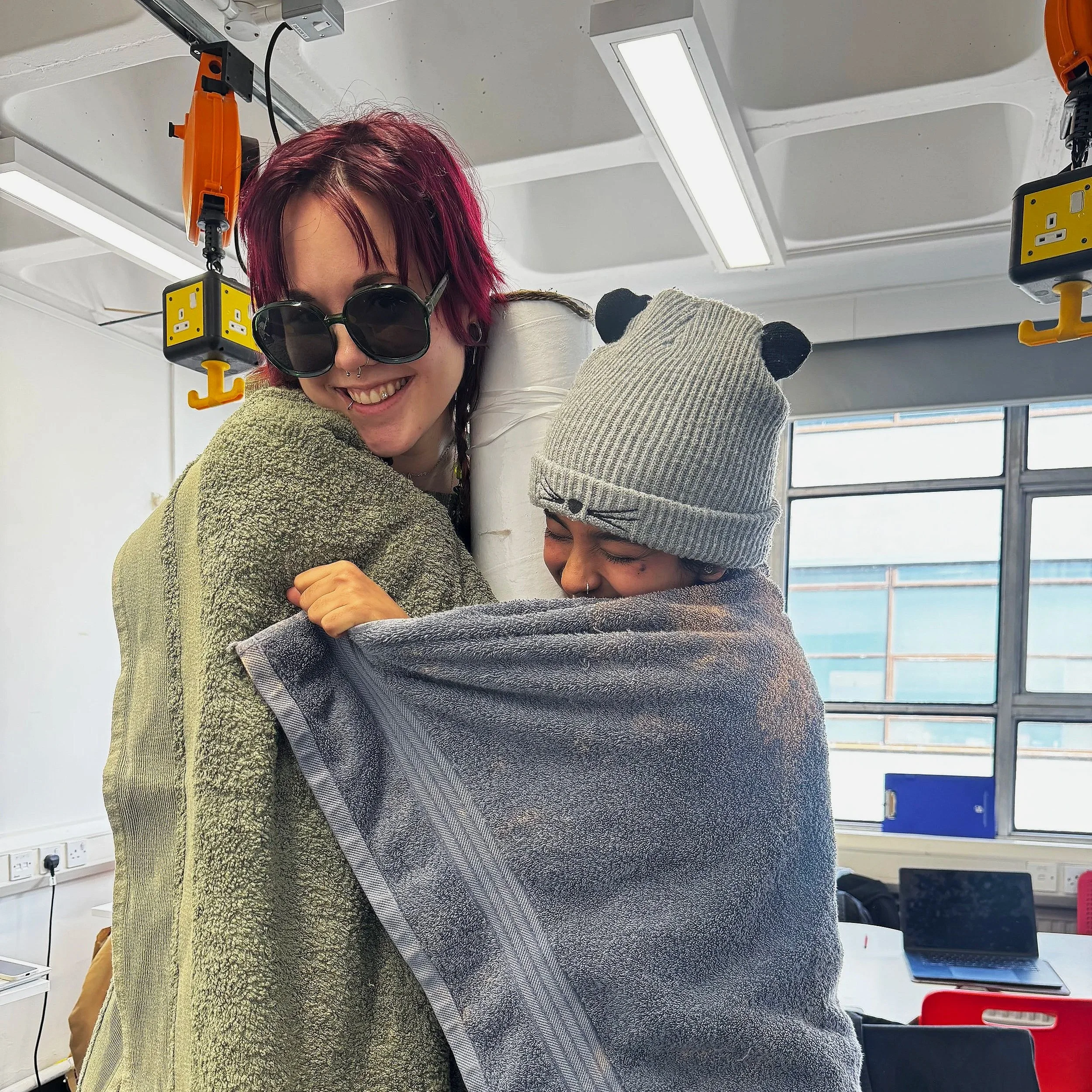
Human Cocoon- Lo-fidelity Prototype: This prototype helped us explore more into ‘micro interactions.’ It brought up questions about human interactions with textiles.
Reflection of the activity
Overall, I think this activity was helpful as it got us to start making something rather than only conducting research. This reminds me that AI is a helpful tool, but sometimes the suggestions are completely random. We took a few things away from this activity, like how to apply a micro interaction and what we could do to create a statement piece of design. Overall, AI was not able to fully understand what we were trying to accomplish.
What is a towel?
In this activity, we changed the identity of an object to observe how we interact with the new identity.
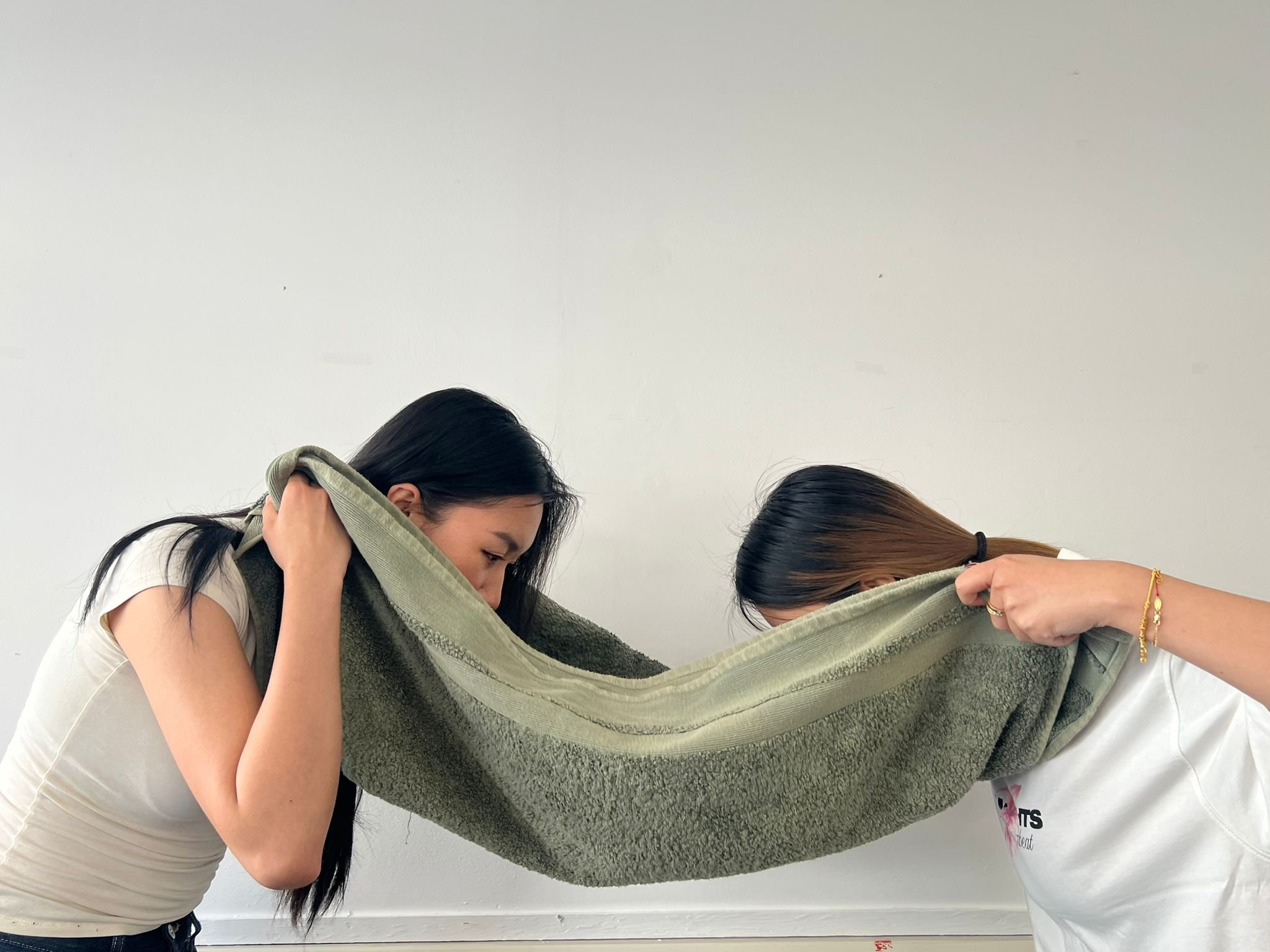
Towel ‘Dinner Table’: We adapted gestures of everyday activities to suit the materiality of the towel.
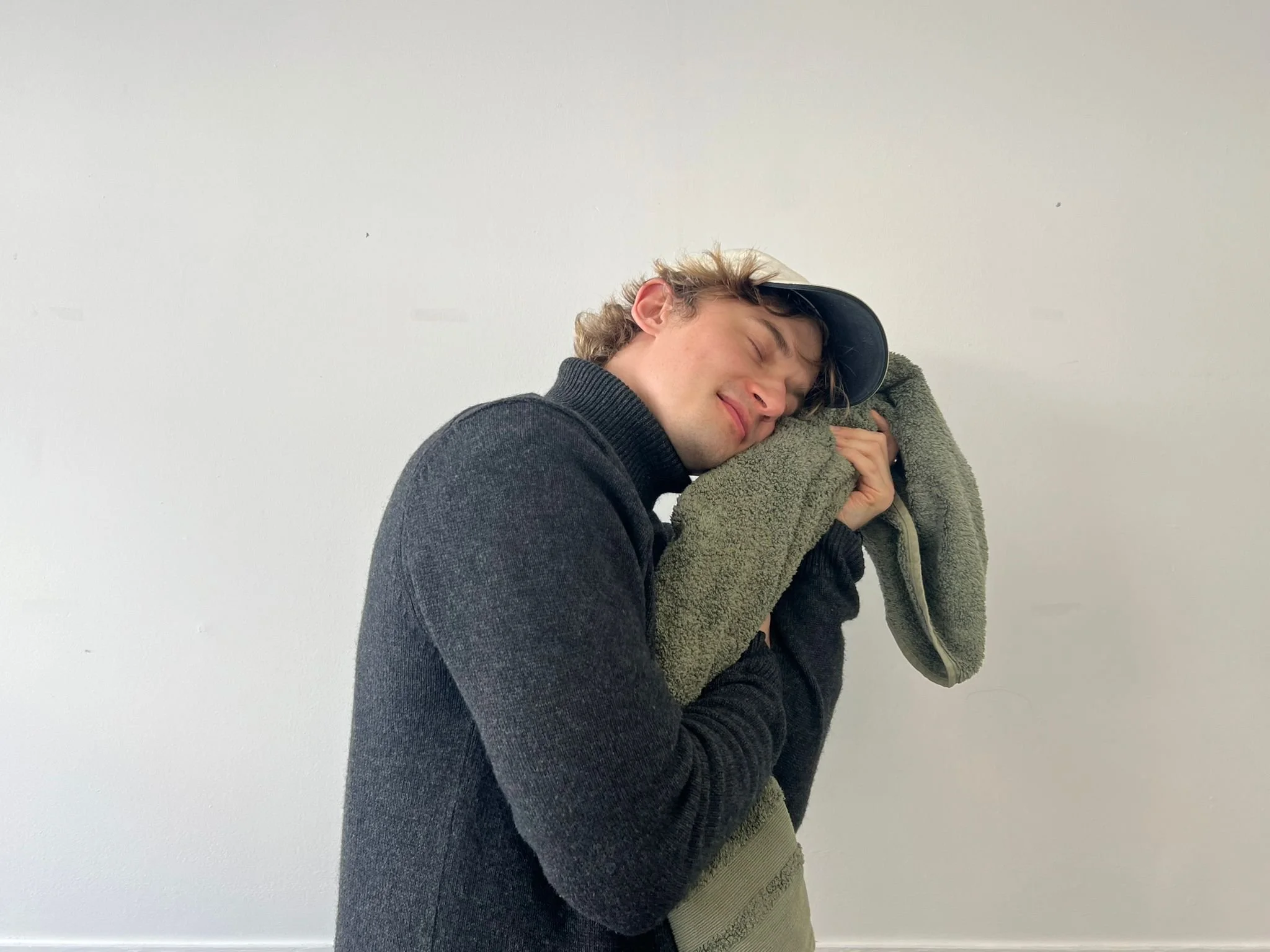
Towel ‘Mom’: an embrace in proximity to the face
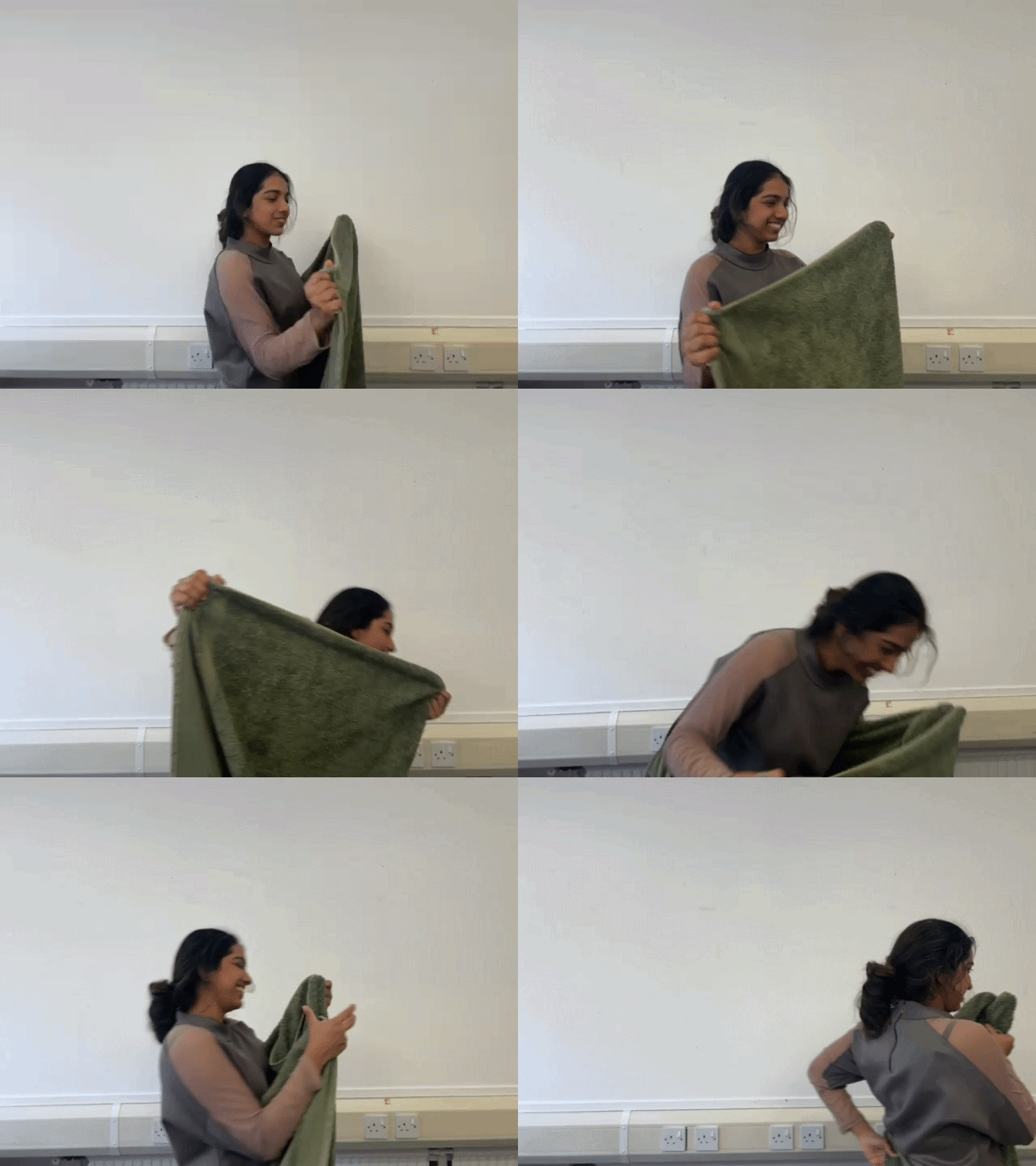
‘Date’ with Towel
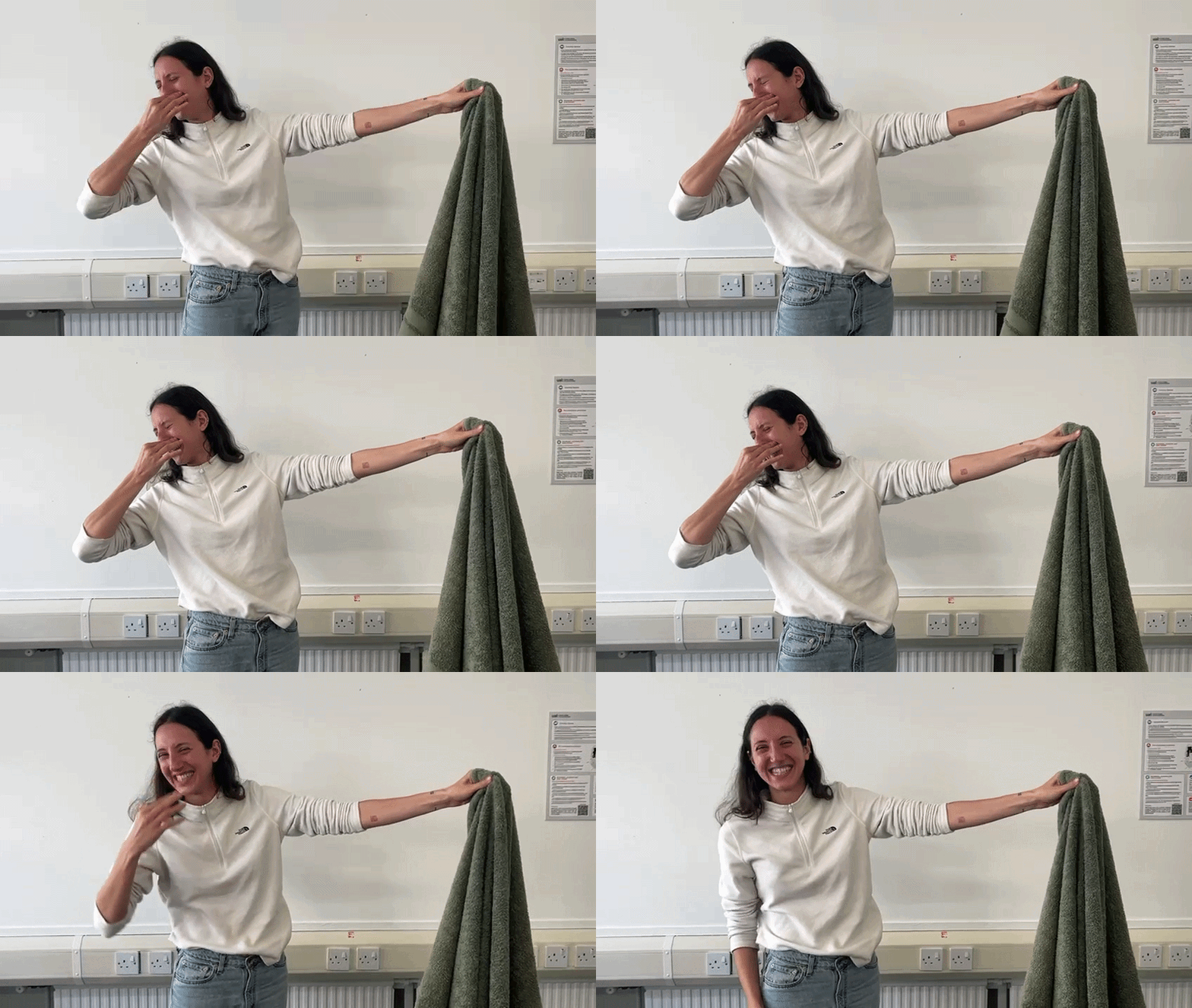
Niki's boyfriend’s towel: Change in expression to perceived disgust
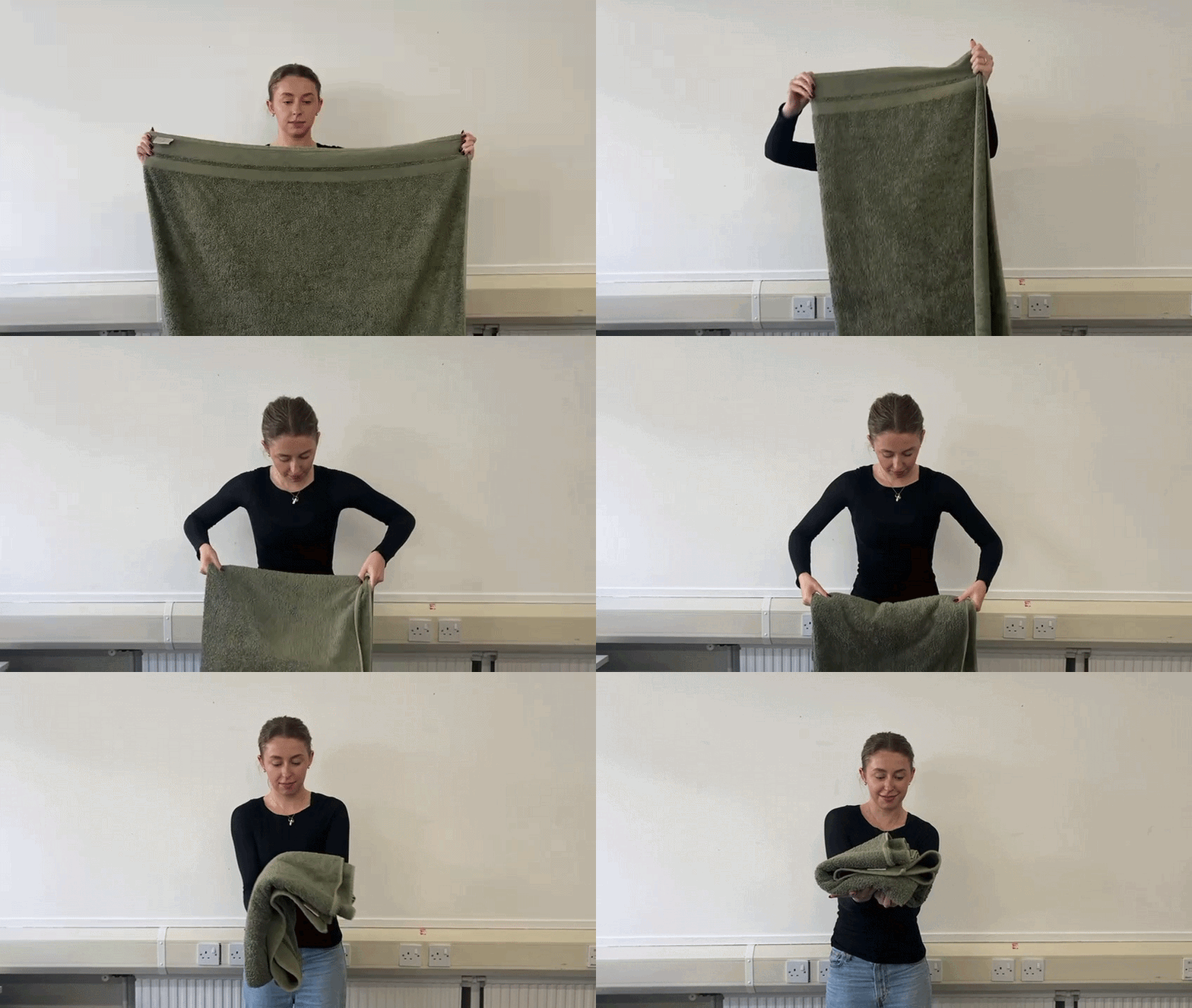
The towel belongs to someone you miss: Gentle and careful hand movements.
Reflection of the activity
This activity physicalized one of the main themes from our initial research, ‘Human object interactions and agency of non-humans' (Bennett 2010). Demonstrating that this object is not just a towel, it can be many things to many different people.
References
Bennett, J. (2010) Vibrant matter: A political ecology of things. Durham, NC: Duke University Press.
Google. (2026). Gemini [Generative AI]. Available at: https://gemini.google.com
Kopytoff, I. (1986). The cultural biography of things: commoditization as process.
Martin, B. and Hanington, B. (2012). Universal Methods of Design. [online]
