Micro Unit Part Two
Brief: Design a way for textile waste to reveal its hidden value.
Team Members: Luis Winkelbrandt, Nicole Shu, Molly Wensley, Amen Maheen, Vanashree Chowdhury, Niki Marathia, Jaime Santos Guerrero, and Lynn Zhong
In-depth Personal Textile Analysis
We initially started this analysis by taking a photo of each of our group members' outfits. The goal of this was to get a better understanding of where our own personal textiles came from.
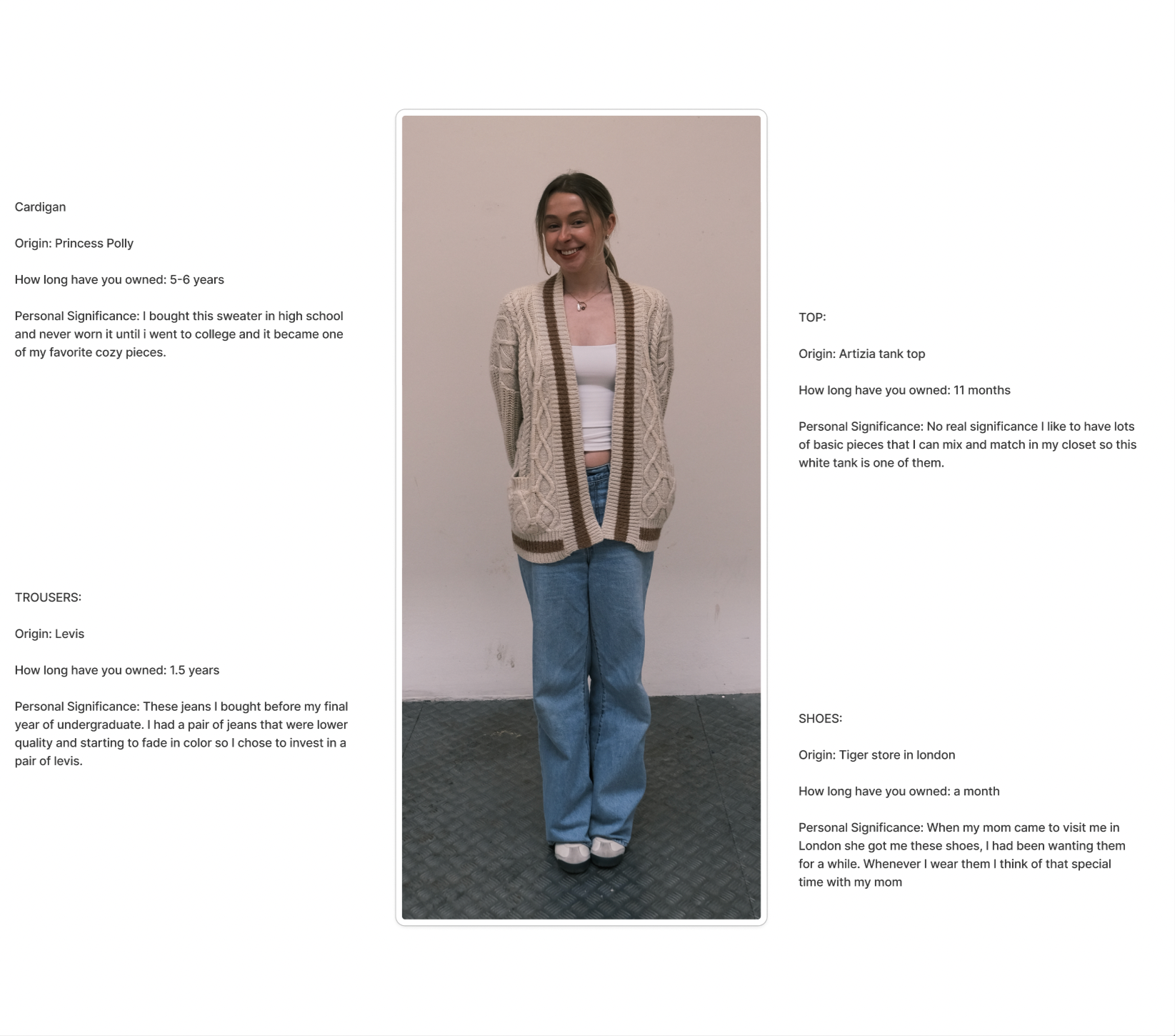
My personal textile origins. While working on this activity, we started to understand that simply naming where things came from and how long we have owned them did not give us insight to move forward. We then decided to explain our textiles and discuss if they have any significant meaning, memories, or stories. While some did, there was no insight other than “people have emotional connections to their fashion textiles” (Wensley, 2026).
We decided to conduct a more thorough artifact analysis of one team member's outfit.
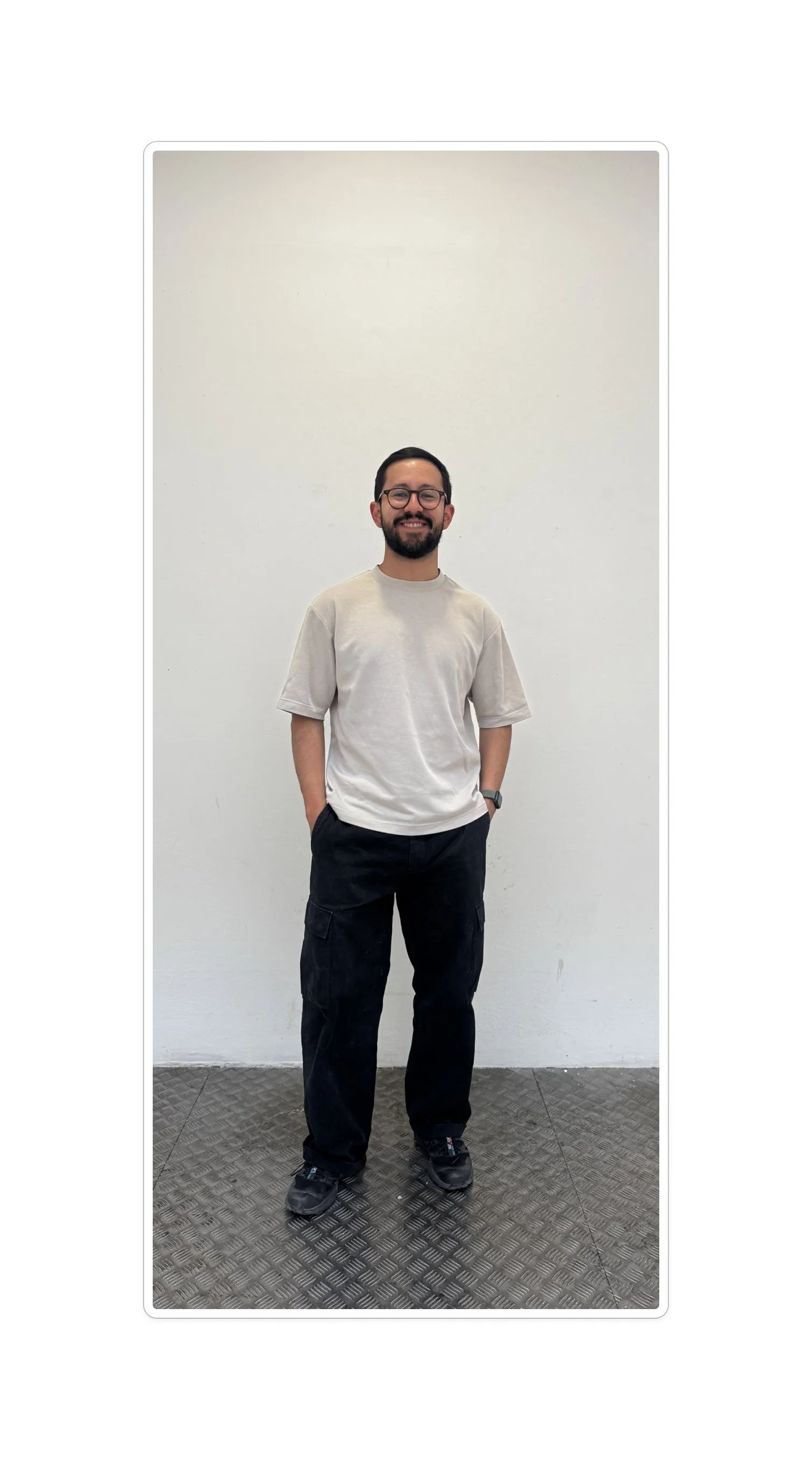
Jamie’s Outfit Analysis
We choose at random to look at Jamie’s outfit. He was asked how he felt about his shirt. He said, “I would stop wearing it if it got stained.” He said he was not very attached to the shirt as it was cheap. Jamie’s pants were more valuable to him as they were a gift from his parents. Unlike his shirt, he said he would not let someone borrow his pants, as it feels very intimate.
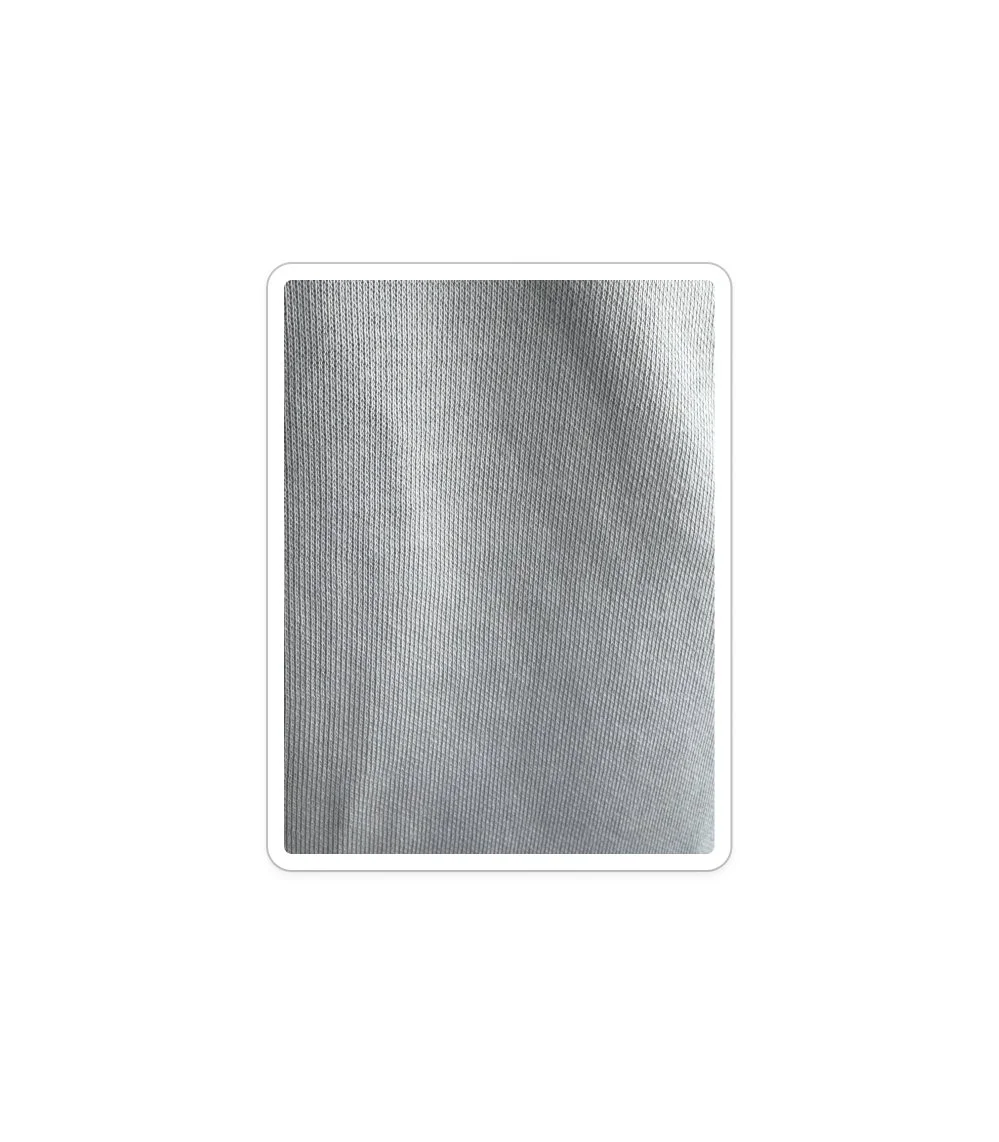
Close-up Fabric Samples
We wanted to get an idea of the makeup of the fabric, so we took this magnified photo of Jamie’s t-shirt and learned that the shirt’s fabric process is knitted.
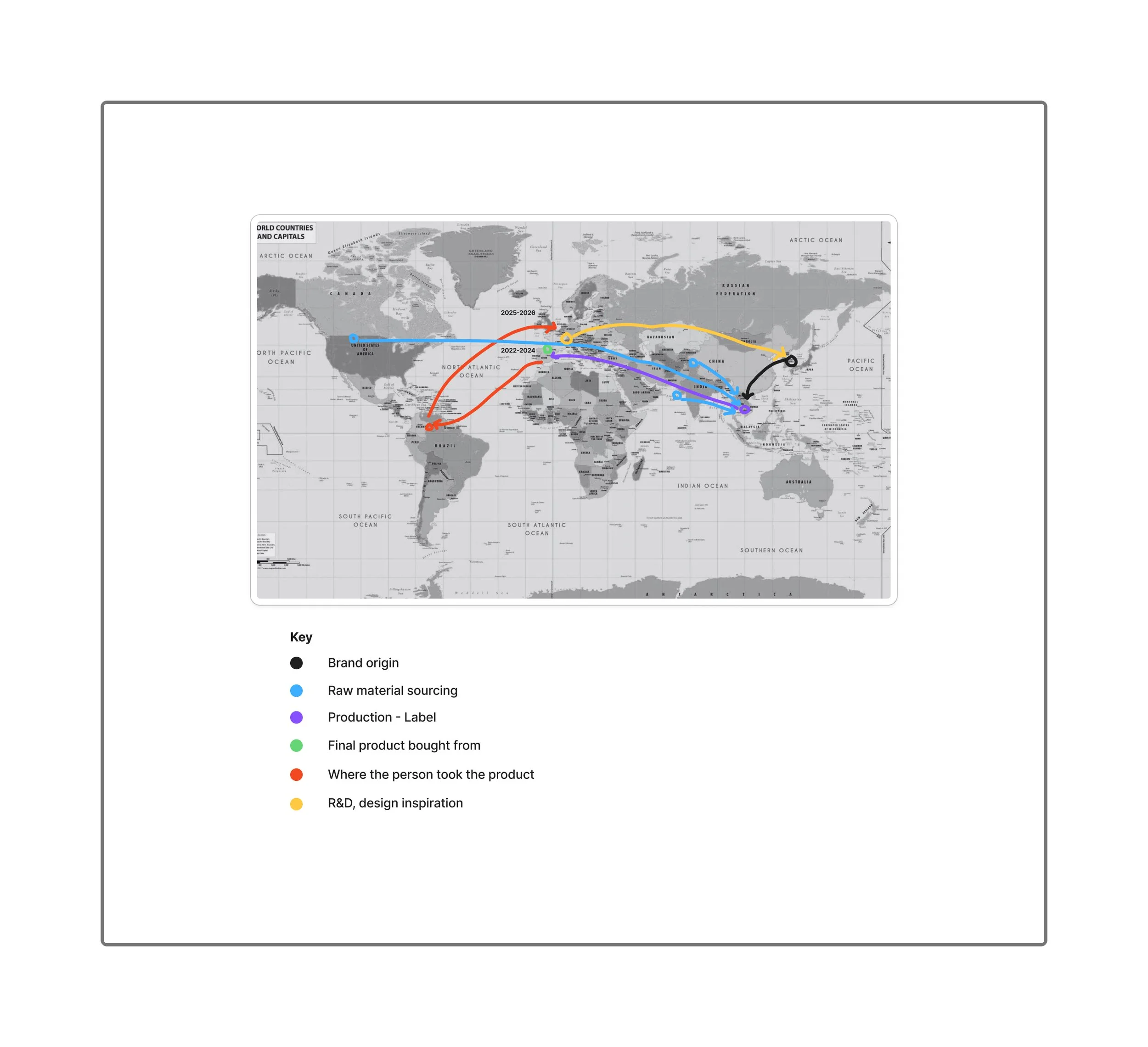
Product Map
Finally, we created a map that, to the best of our knowledge, showed where the shirt had traveled. As seen in the key, each color represents a different stage of the process, giving us a good idea of how far these textiles truly have to travel before they reach the consumer.
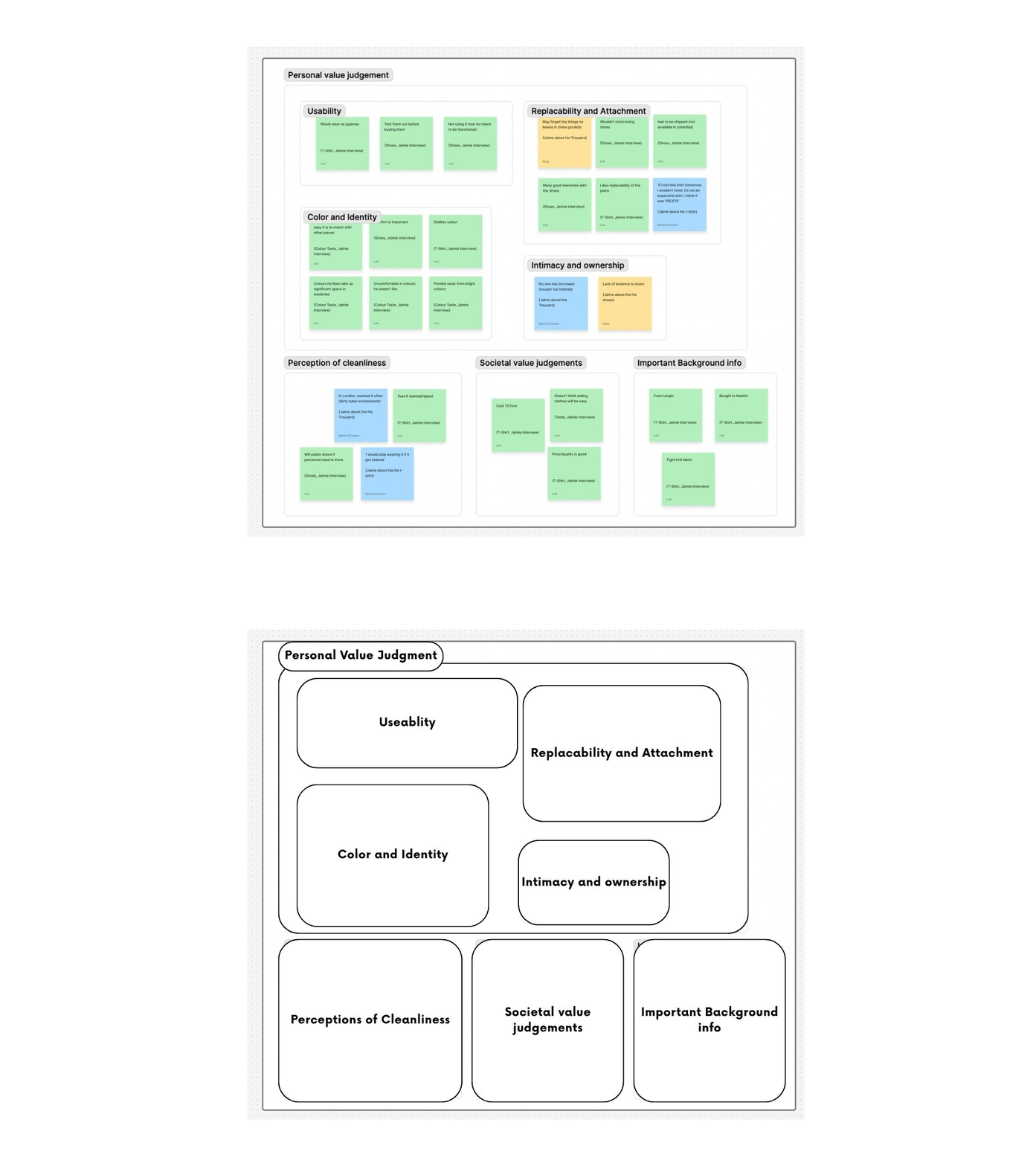
After completing the in-depth analysis of Jamie's outfit, we wanted to extract important findings and sort them according to the different types of values and themes that would be found during our literature review. Many of the findings fit into one of the four main categories. Personal Value had to be sectioned further, as many factors play into this type of value.
Reflection of Activity
This activity helped us start asking questions and become curious about what textiles can mean to people. Still, overall, this activity did not help us find any hidden value in our clothing. Although this activity did not define the hidden value, it helped move us towards the next research activity.
Clothing Swap
The Clothing Swap was an activity derived from the idea that textiles can create an identity. We chose a name at random to determin who clothing we would wear. I chose Molly when I saw her name on the paper. I was excited. Molly and I have very different styles, so I figured this was an opportunity for me to see how clothing really shapes identity.
Introduction video for our clothing swap activity. Can you tell who is wearing whose clothes?
We created a visual framework to compare the perceived value of our personal outfit and our clothing swap outfits. This framework helped us understand the different factors important to people when determining value. For me, it is very important that my textiles feel simple and structured, but when I put on Molly’s outfit, I felt more baggy and expressive than the clothing I usually wear.
We also ventured to see whether our other course members noticed. We did not tell them that we swapped clothing, but they immediately noticed that we did not look like ourselves. When I walked in, Vibooti (a fellow course member) said, “You look like AI.”
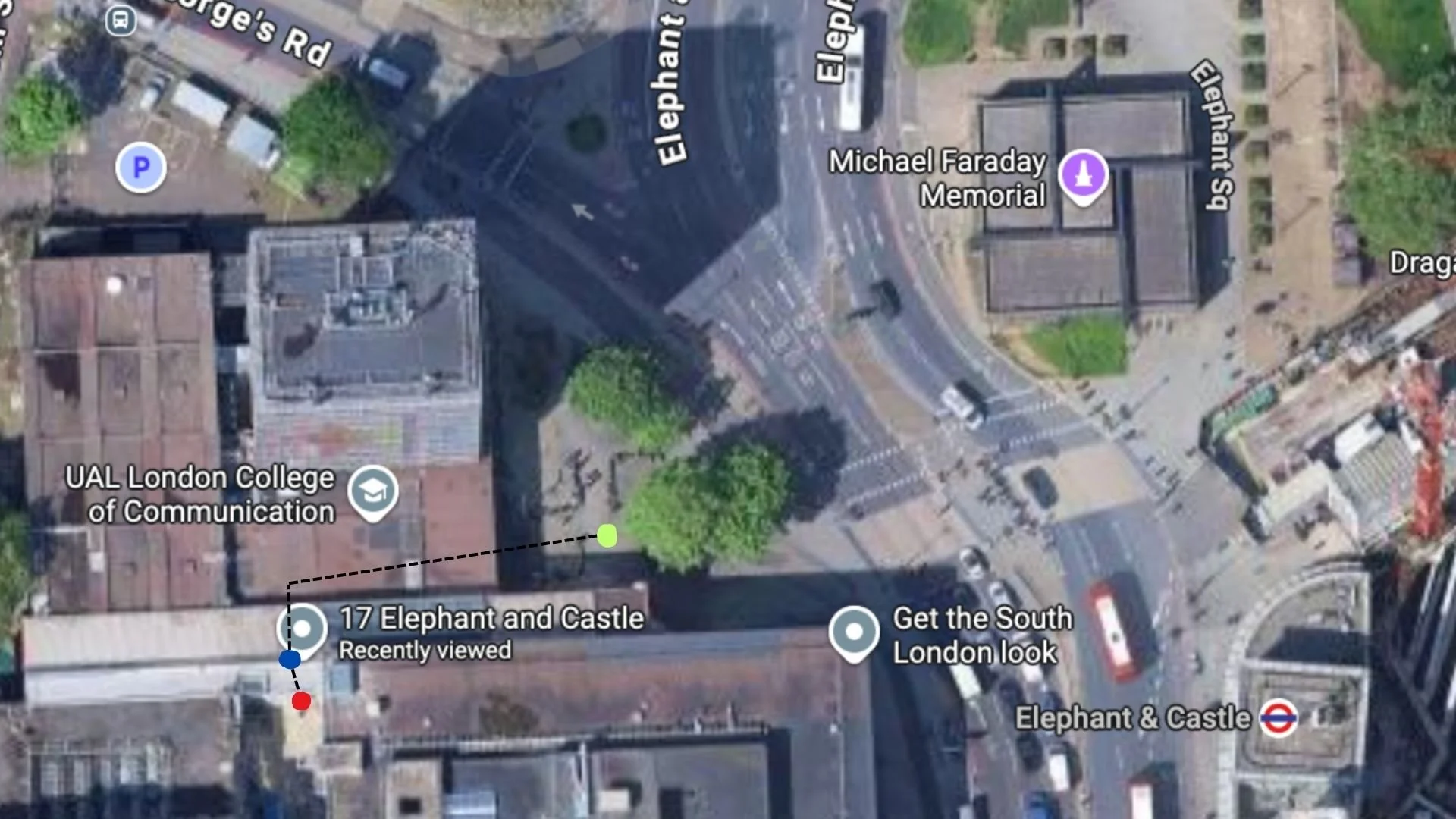
We wanted to venture outside and see how far we would make it before getting uncomfortable. We went from the small room we had been working in (red dot) to the classroom (blue dot) where our colleagues were, and finally walked through all of LCC, but none of us wanted to go past the smoking area (green dot) because we did not necessarily feel like ourselves in the swapped textiles.
Reflection of Activity
We gained a few insights from this activity that relate to identity. I found myself starting to walk differently, and others said they felt like they had to act a certain way to conform to their outward appearance. This activity pushed us to do something uncomfortable. As our research seems to be leaning towards fashion, we realized that we were only thinking about the post-production value. When in reality, 80% of the environmental impacts of a textile can be estimated at the design stage, not after the product is sold (Gozene, 2024).
Hidden Value Definition
Defining hidden value is an important aspect of moving our project forward. While it's still a working definition, we defined Hidden Value as ‘a concealed quality that, when revealed, increases an object's worth.’ While creating this definition, we considered each word separately and then mixed relevant terms into our final definition.
“Hidden is something concealed, secret, occult”
“The value of a commodity is not fixed in the object itself, but is formed through exchange, desire, and social judgment.”
Fibre Labs Tour
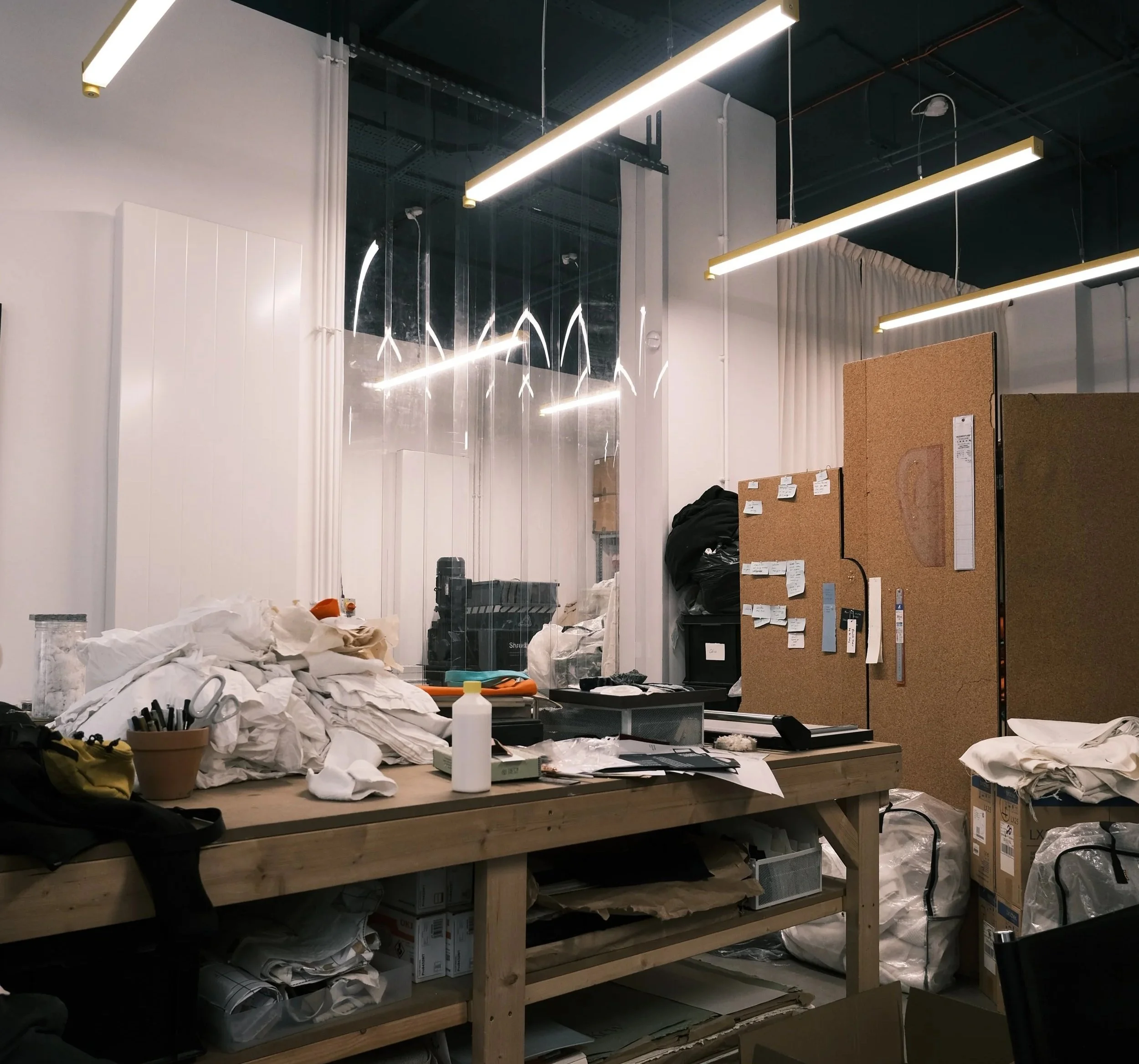
Site Visit
This week, we went on a site visit to Fibre Labs in Hackney Wick, on Fish Island. This small studio was filled to the brim with textiles, machines, and finished products.
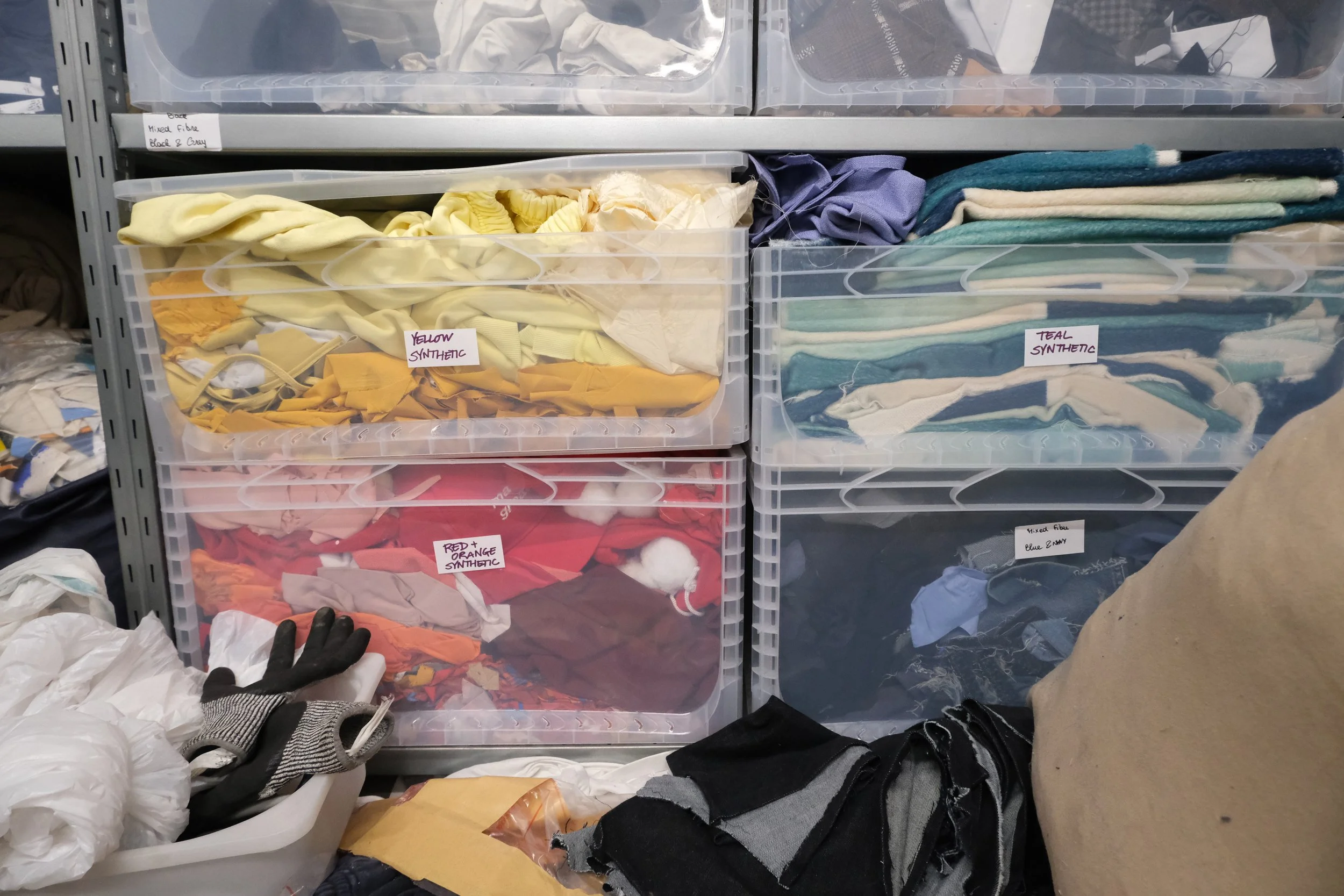
Color Sorting
After the textiles are transported to Fibre Labs using a Zero-emissions contractor, they are sorted by color and material.
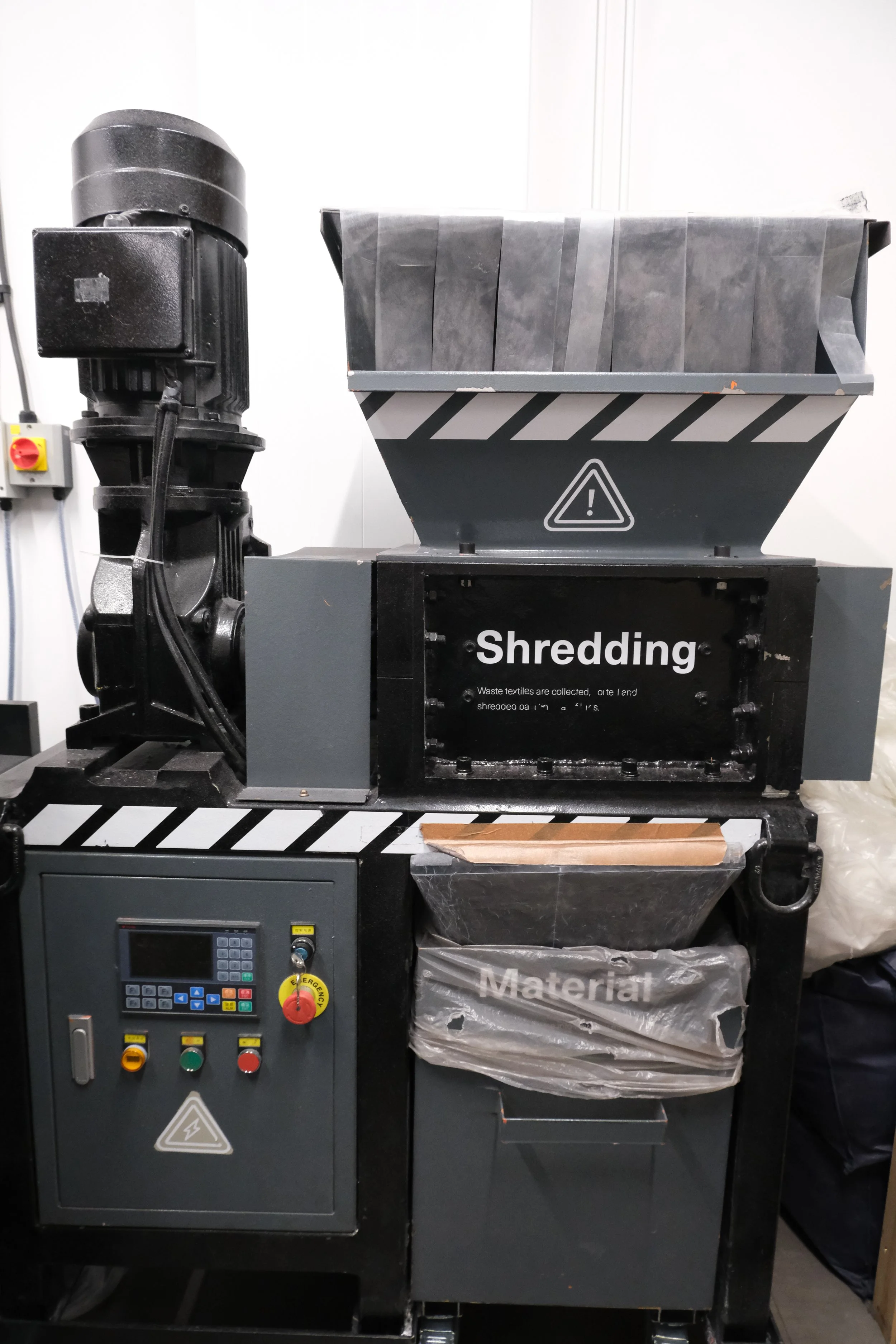
Custom Shredding Machines
These custom machines take the fabrics that are sent to the fibre labs and shred them into small fibres.
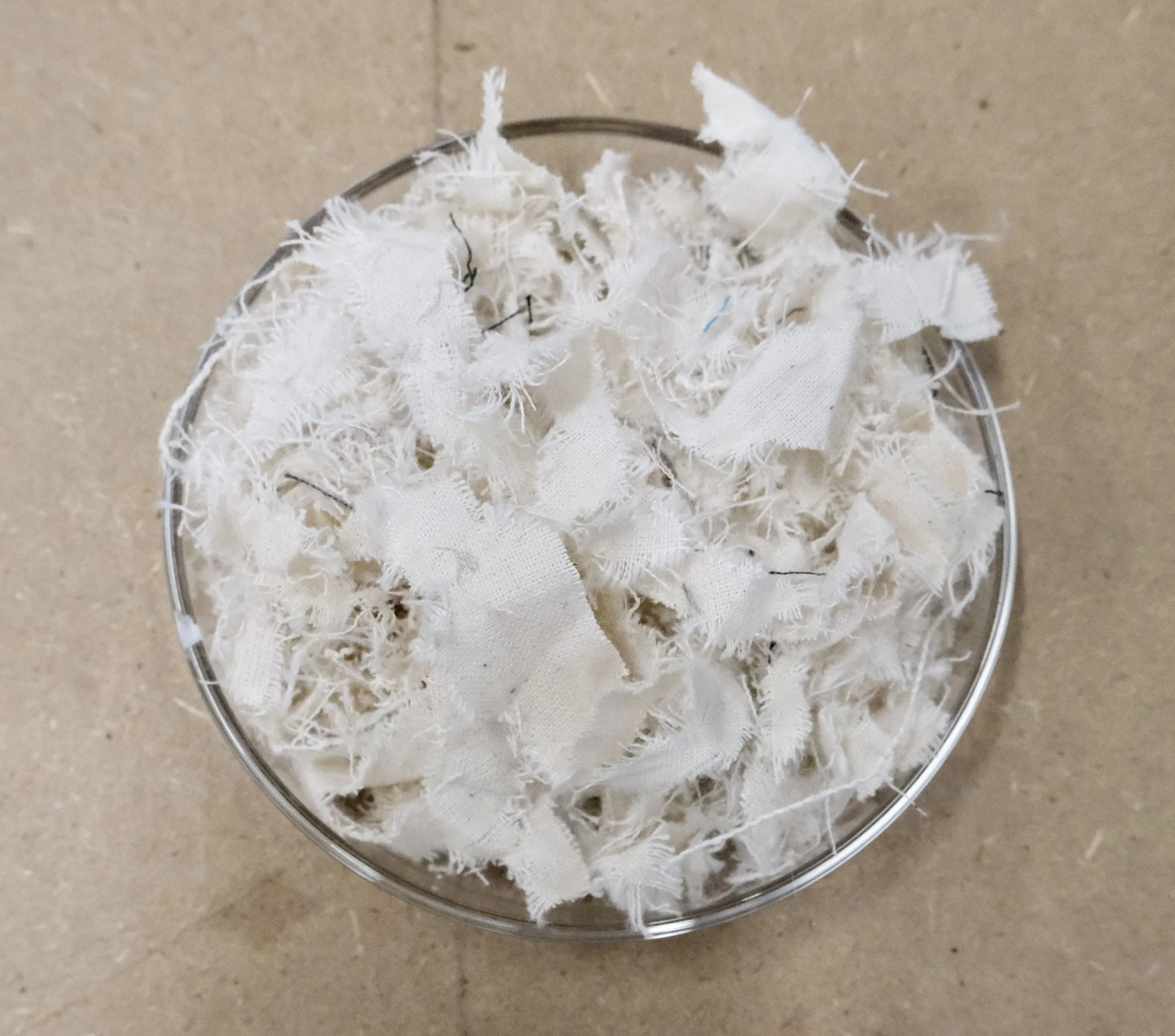
Fibres
This is the most valuable fibre made from white cotton, usually obtained from hospitality textile waste. Unfortunately, the founder, Kae, mentioned that this industry is the hardest to convince to buy back the fibres for post-industrial reuse.
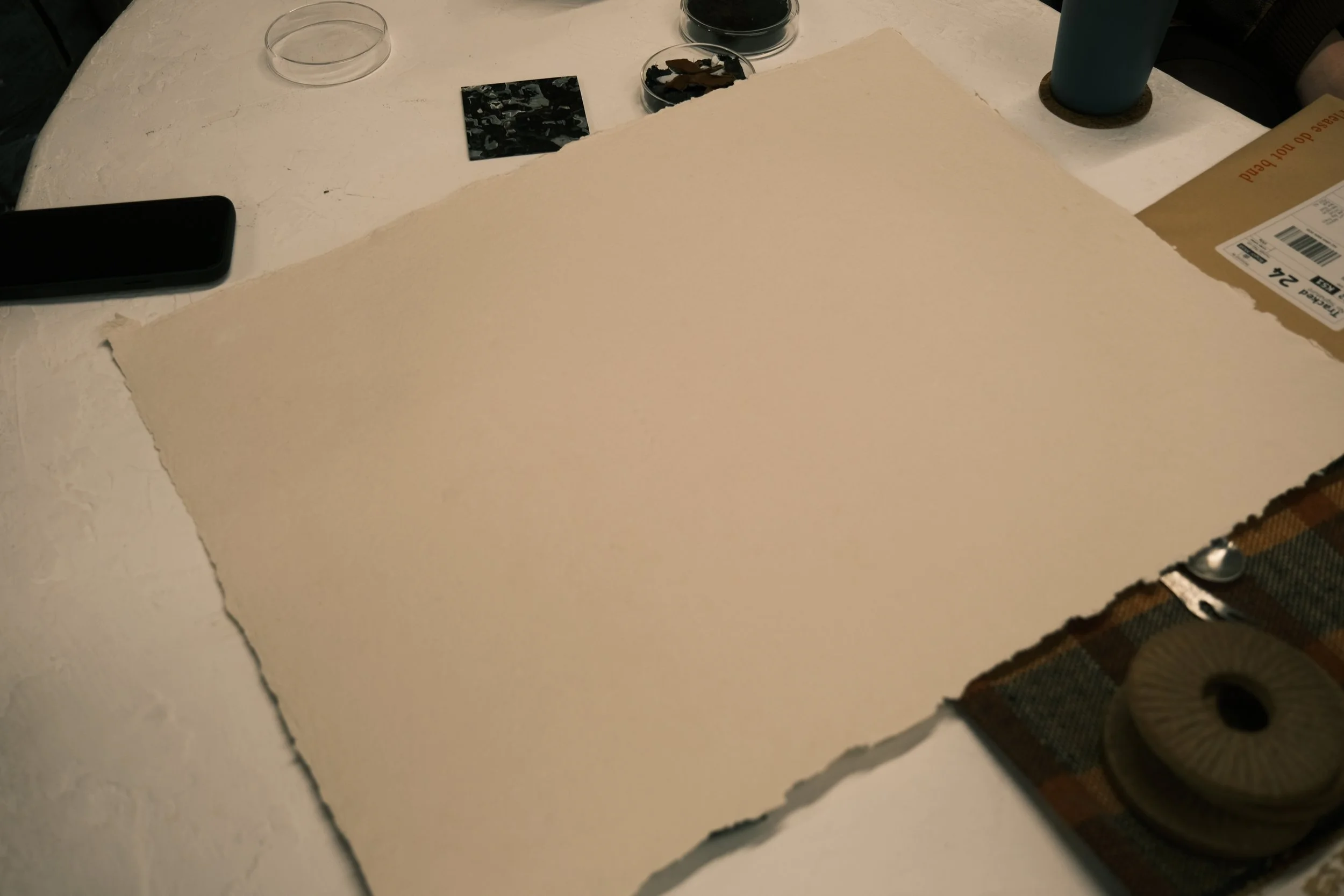
The most popular product from Fibre Lab is their Papertex, which can be used to make packaging, marketing material, and swing tags (as seen in the next image). They outsource the making of this paper as it is a difficult craft. The workshop that they use can only make one size of paper, since Fibre Labs wants to keep all outsourcing within the UK, this is their only option at the moment (Shu, 2026).
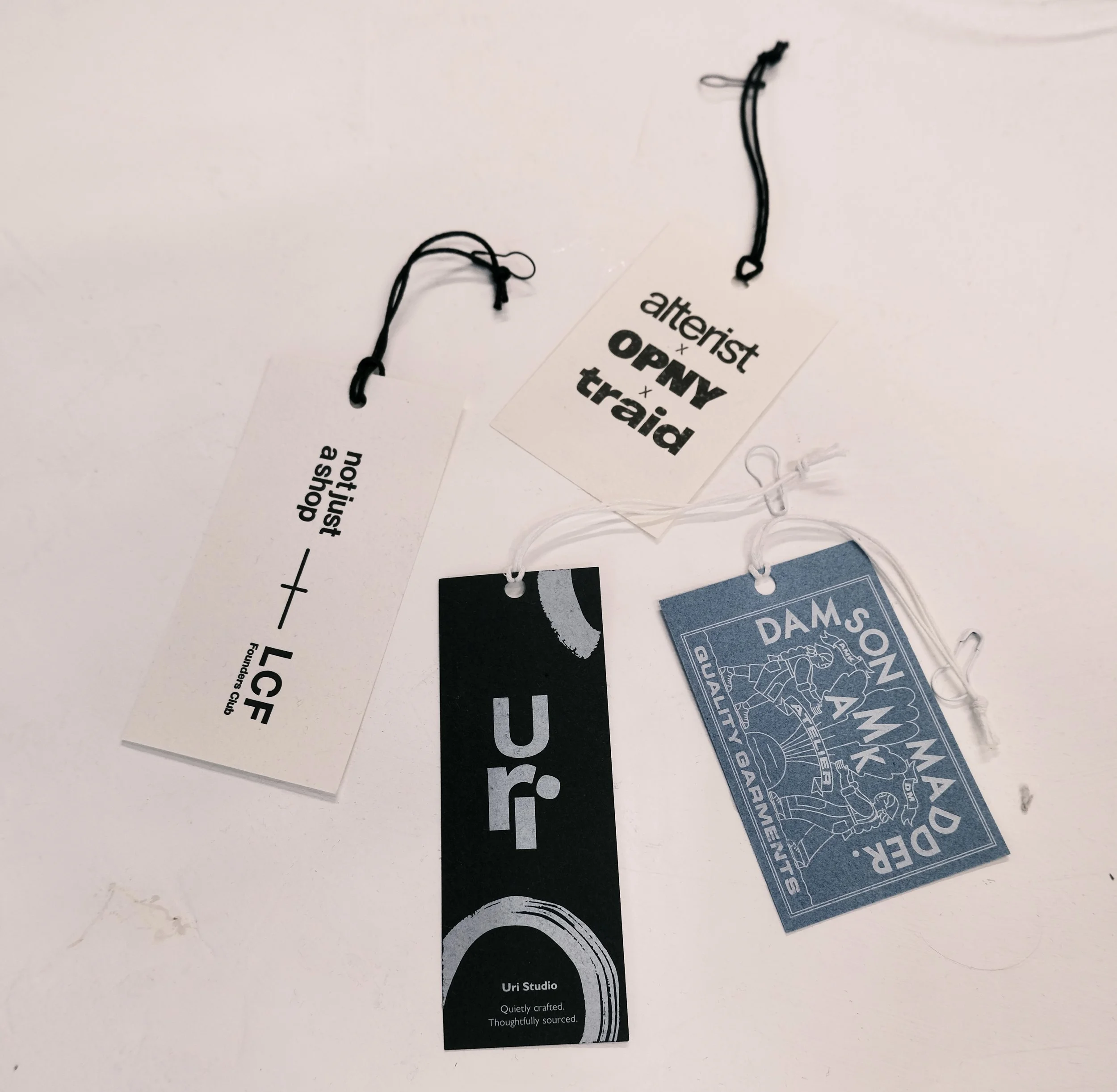
Sling tags are the company’s highest-selling buy-back product from companies that send their waste. Their tags are made form 100% of the providing company's materials. These companies pay Fibre Labs to take the material and then pay them to buy it back, making Fibre Labs a profit on both ends.
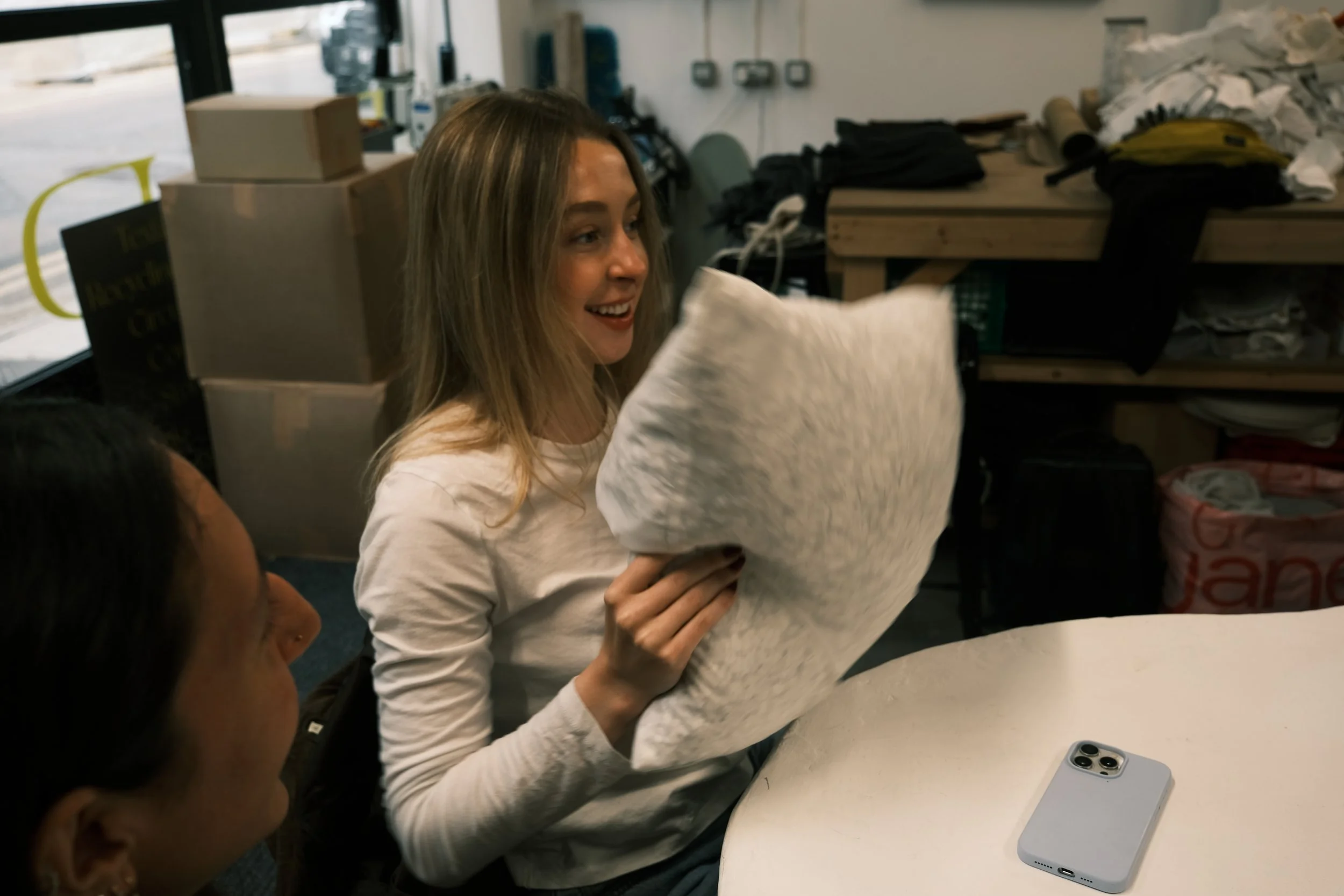
Fibre Labs is in the process of using its fibres to fill pillows. They use the mixed fibre of lower-quality silicates for these pillows. Kae told us that many people feel like they are not comfortable and somewhat lumpy. After feeling them, we agreed, but she is actively working on how to make the fibres feel more pillow-like (Shu, 2026).
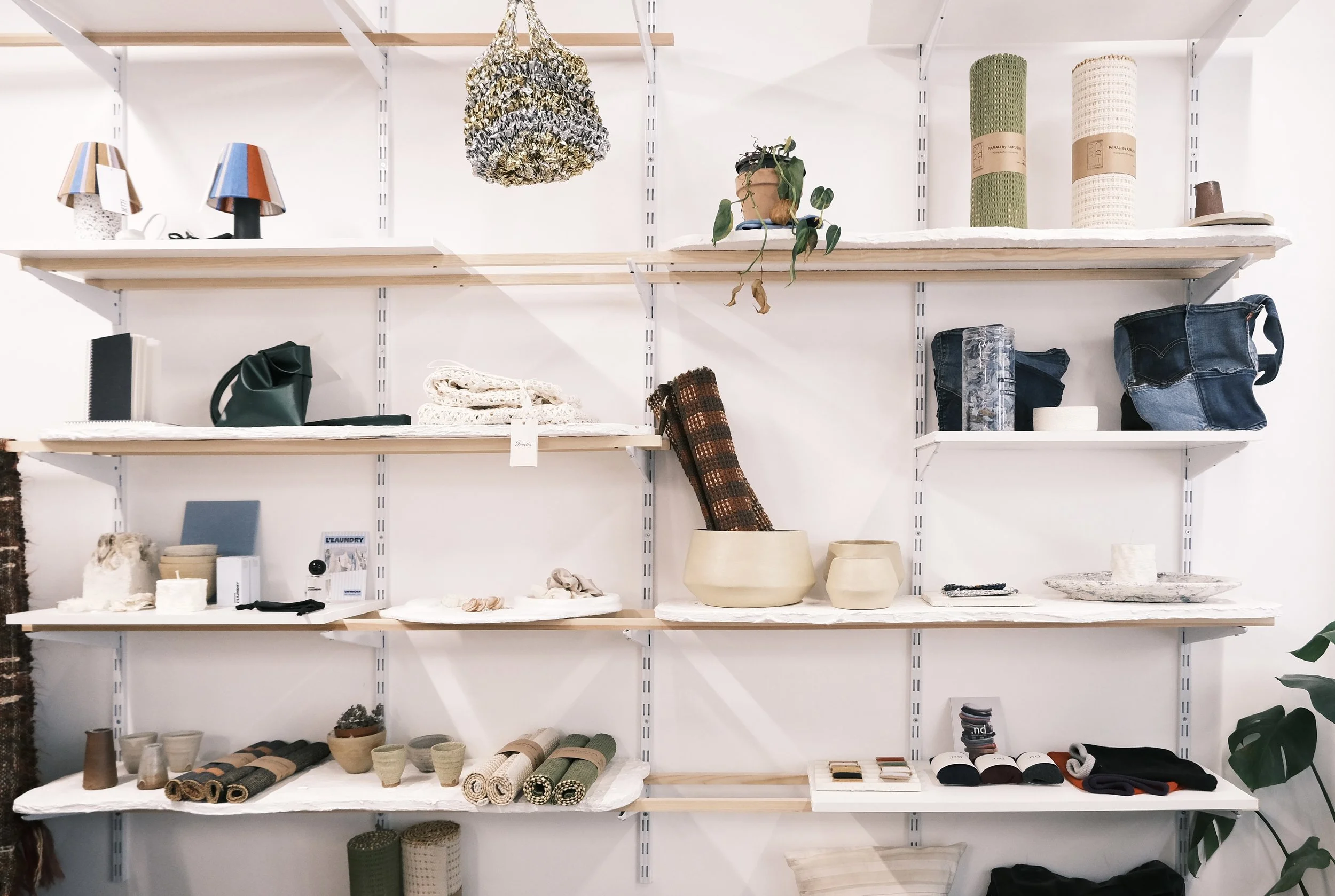
Fibre Labs also partners with local artists to experiment with their fibres. These are some of the in-store products made in collaboration with Fibre Labs.
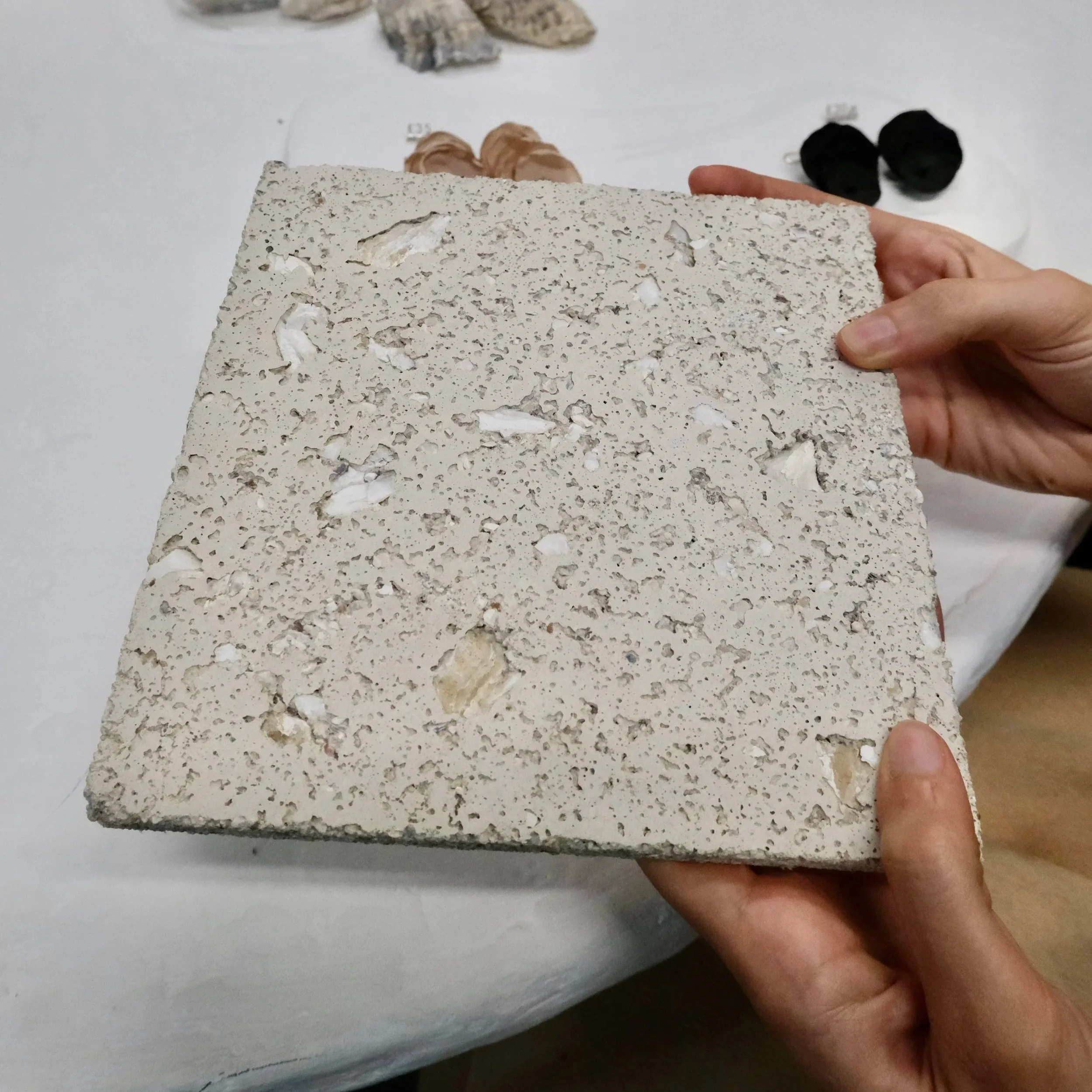
Fibre Labs has a sister company called Matter Forms, who use oyster shells from the restaurant industry to make Oyster[Crete]® a concrete alternative.
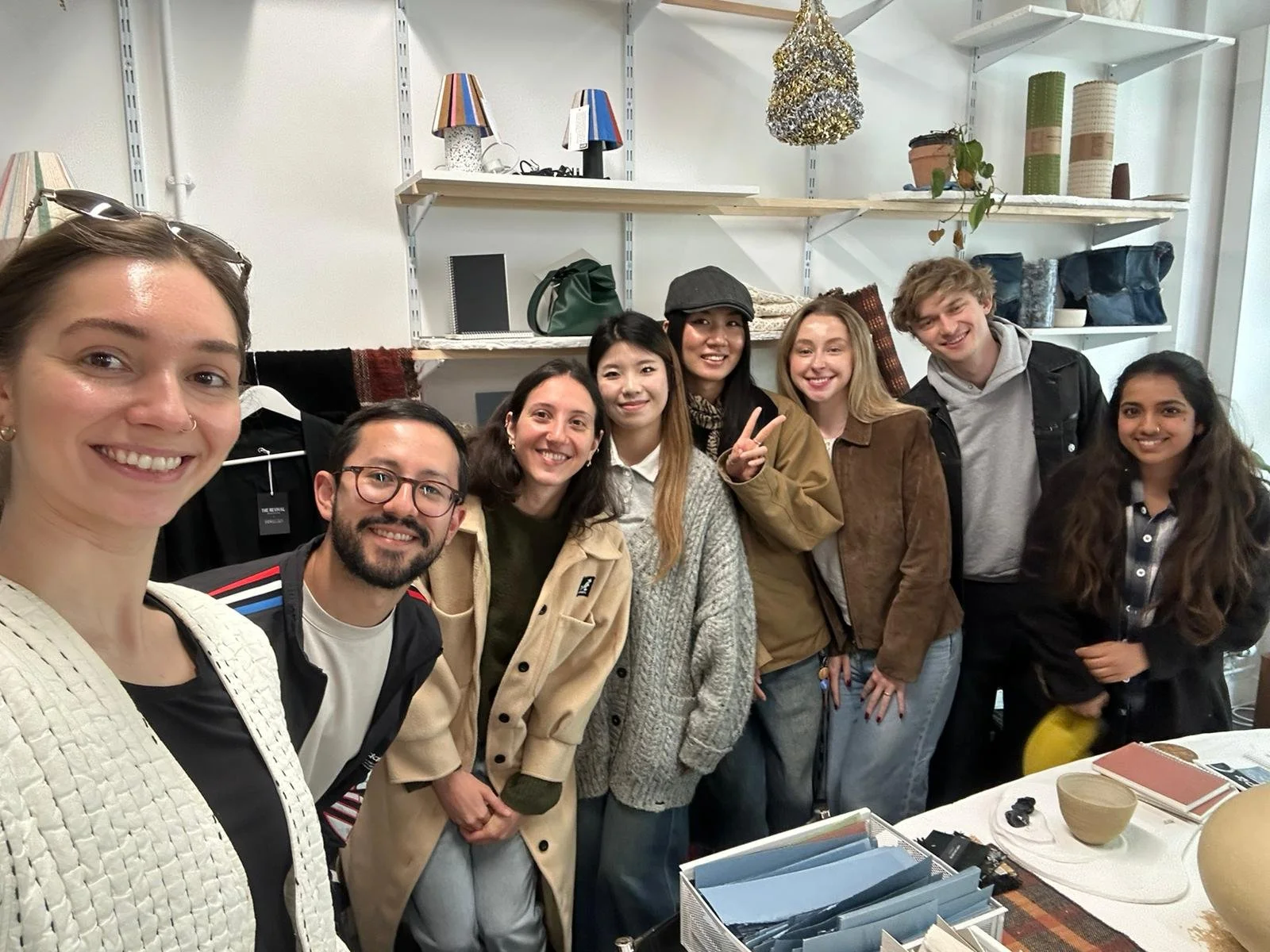
Our team and Kae, the founder, had a productive discussion about the struggles she is facing in her sustainable business (Katz, 2026).
Reflection of Tour
This tour was eye-opening for us. We went in thinking only about fashion, and came out with a decision to pursue hospitality. Kae spoke to us about the difficulties with her hospitality clients. Unlike fashion clients, the hospitality industry has a difficult time seeing uses for the fibers. We also believe there is something extremely intimate about the hospitality industry, as many people will use the same sheets and towels on repeat (after washing). There is a deeper hidden value that we wanted to uncover.
Potential Next Steps
We are planning to do a continuation of our clothing swap. We want to go past boundaries and see what a potential towel swap might feel like, depending on comfort level, but making sure that if people don't feel comfortable, we explore why. Also explore the idea of modesty, protection, covering, and cleanliness.
References
Gozene, Y. and Metlioglu, H. (2024) Zero waste approach in sustainable fashion design: Designer perspective for pre-consumer waste management
Bennett, J. (2010) Vibrant matter: A political ecology of things. Durham, NC:Duke University Press.
Oxford English Dictionary (no date) textile, Available at: https://www.oed.com/dictionary/textile_n?tab=meaning_and_use#18740604 (Accessed: 30 April 2026).
Simmel, G. (2004) The Philosophy of Money. 3rd edn. London: Routledge.
