UX of Human Senses
BRIEF: Design a dance experience based on a specific location
Group members: Nicole Shu, Mingyu Chen, Aishwarya Saji, Yifei Huang, and Revati Banerji
During my first week in the MA: UX program at UAL, I was immediately challenged to think about user experience design from a whole new perspective. When we reveived out first brief, I was honestly wondering what I had gotten myself into. It was a completely different style of assignment than I was used to. My work in my undergraduate program consisted of personal projects with very descriptive rubrics, where at UAL, I am learning to work in a large group, while also having broader topics to work with. This first brief got me thinking about the different senses and how many there are. I had always known there to be 5, but as I researched further, I began to understand that our senses are endless.
My team was assigned the Twinings Tea Shop as our location to research and observe. Before we visited, I thought about how the store might feel, warm and cozy, full of dark wood and a large space to sit down, but when I saw the storefront, it was not aligned with my assumptions. The narrow entryway led us to a slim hallway surrounded by screens and graphics next to walls of tea. While the store was visually appealing, I was overwhelmed with the herbal and spice aromas that captivated the whole store.
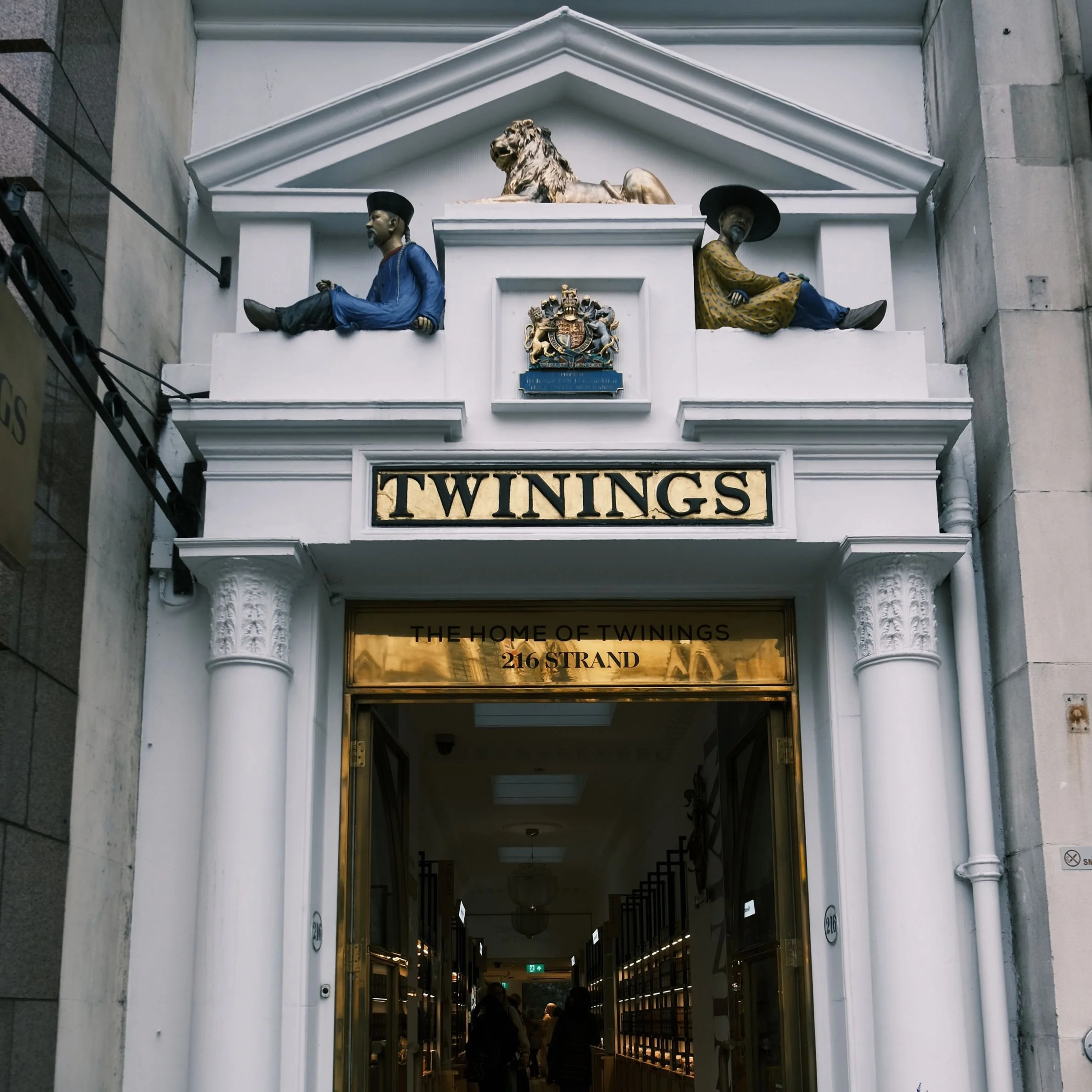
Storefront of Twinnings Tea Shop, where the herbal scents and warm air can be felt from the street of London (Shu, 2025).
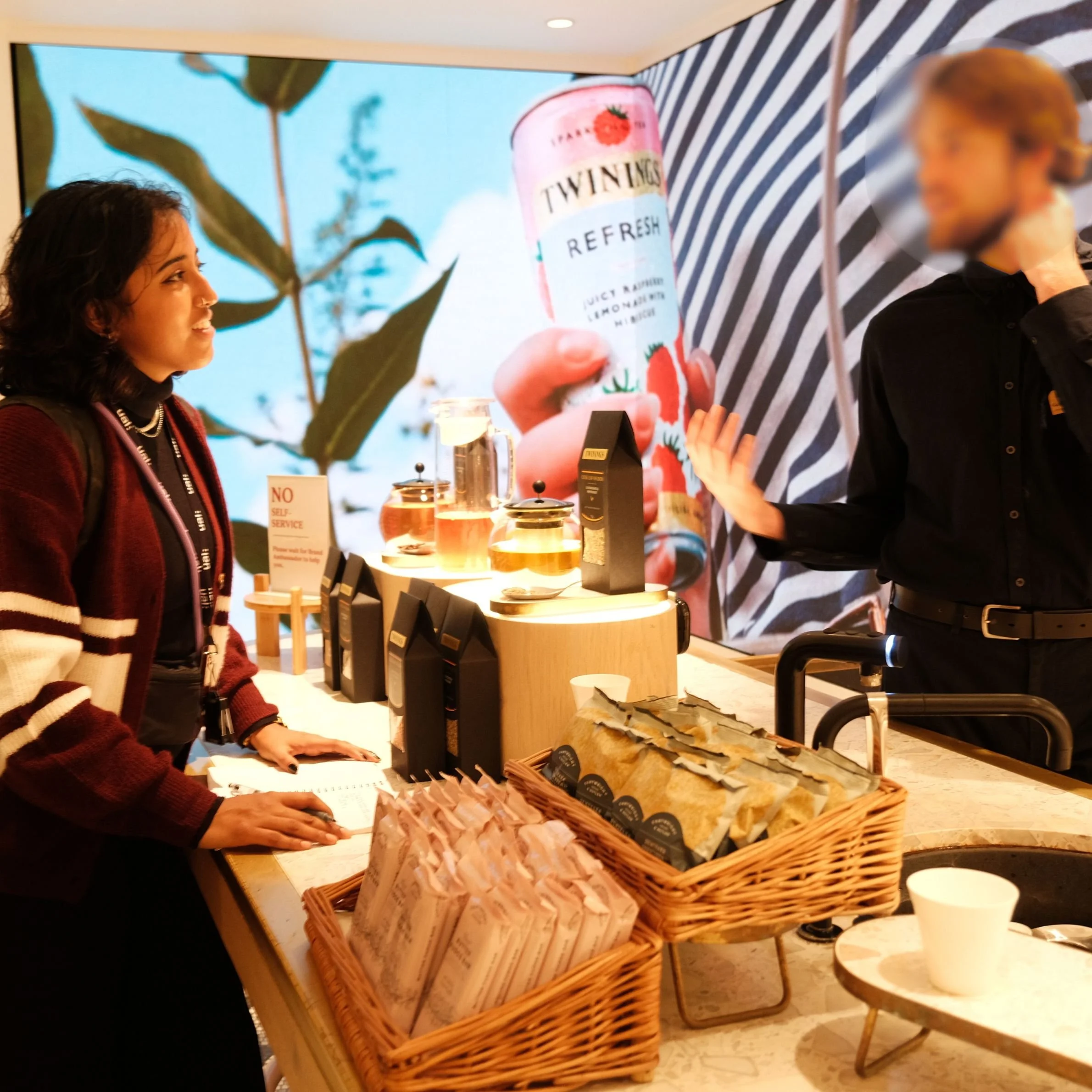
Pictured is Aishwarya Saji learning about the different types of teas and where they are curated from
(Shu, 2025)
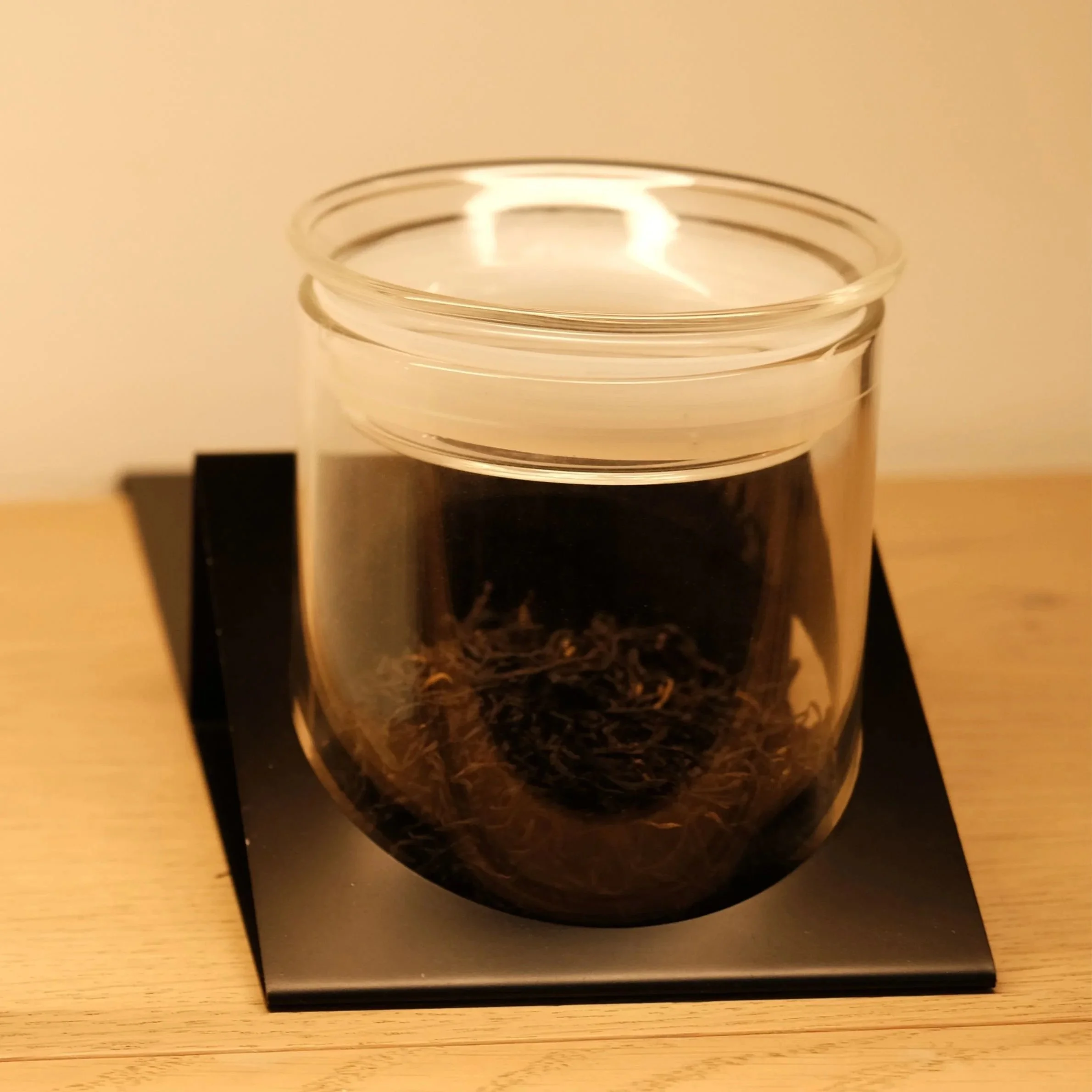
Loose-leaf tea jar where the customer can remove the lid and indulge in the notes of tea that twining offers (Shu, 2025).
We spoke to a few customers who described the store as “a warm hug," and they felt like they could take a moment to slow down and take a break from the busy London streets. We also notice that the store paid tribute to the places and culture from which the tea was curated. There were many graphics and digital elements that were used throughout the store to not only create a shopping experience but also a learning experience.
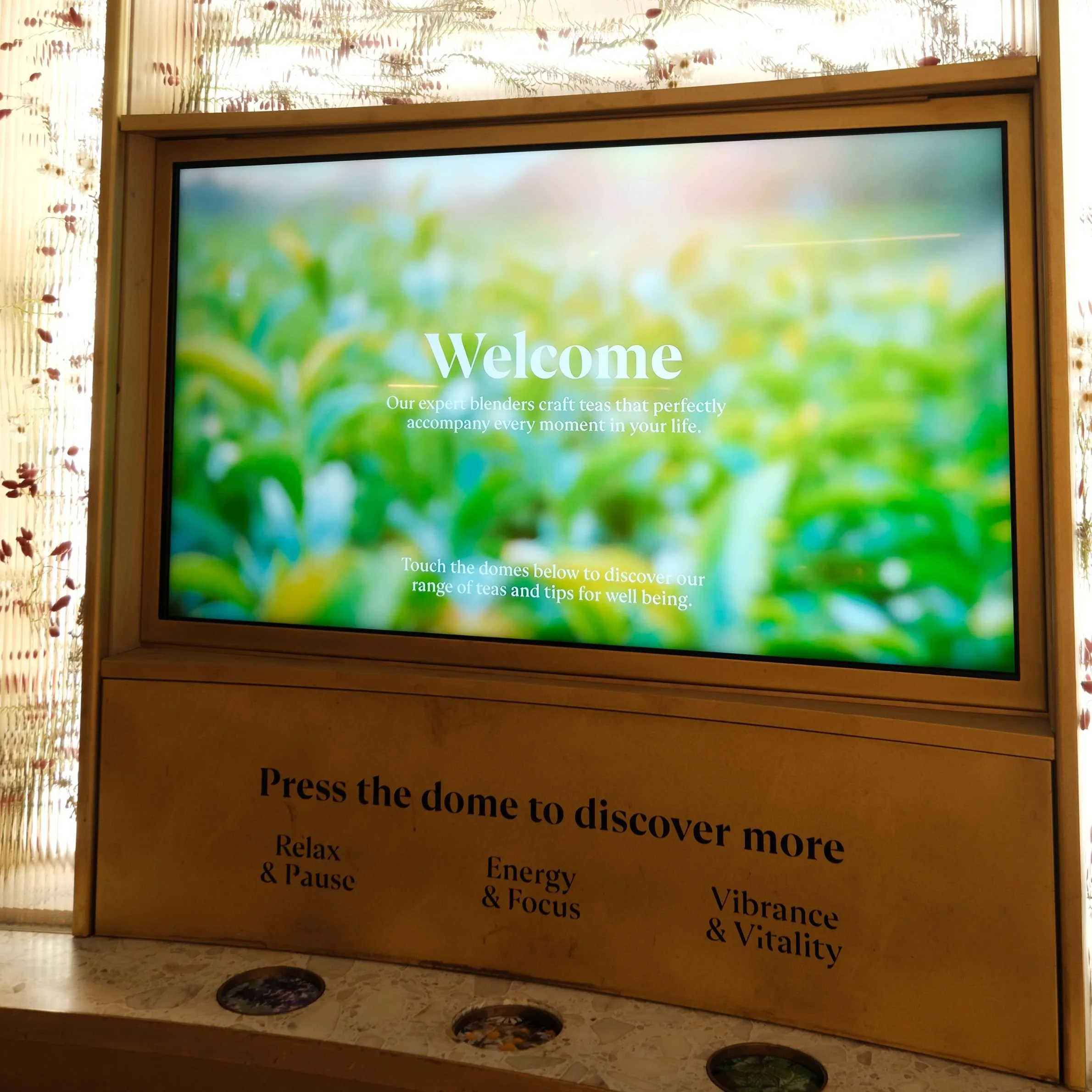
One of the many interactive educational elements used in the store provides context for which teas would help with different human needs (Shu, 2025).
Doing in person location based reseach gave me insight into how different interactive sensory elements can affect the user’s experience in a physical space, as Connor (2006) writes in The Menagerie of the Senses. The Senses and Society,
“The senses construct the atmosphere of a space as much as the architecture does”
This quote becomes clearer after we observed the customer reactions to the smells, tastes, and feelings that each tea evokes. While this week consisted of less physical project work, the research gave more insight into the brief and how we might move forward in creating a dance based on Twinings Tea Shop.
Moving into the second week of this project, we began brainstorming. My original idea was to make a model of the human body that resembled Twinings Tea Shop. The human body resembles a dance experience where everything aligns in perfect harmony, just like Twining. The store felt as if it had its own rhythm, where everything you experienced led up to tasting the tea, which was what kept the rhythm of the store alive, just like the heart. The team felt it might have been taking dance away from its performative nature. So we decided to move forward with another idea.
We moved onto an idea that mirrored the stores ecperience on a smaller scale, but focused heavily on the senses we felt in the store. As we placed boxes together, we created an environment that not only resembled the store’s narrow hallway feel, but also, along the way, would give users the opportunity to smell the teabags, touch the loose teas, taste the tea, and also see where the teas came from.
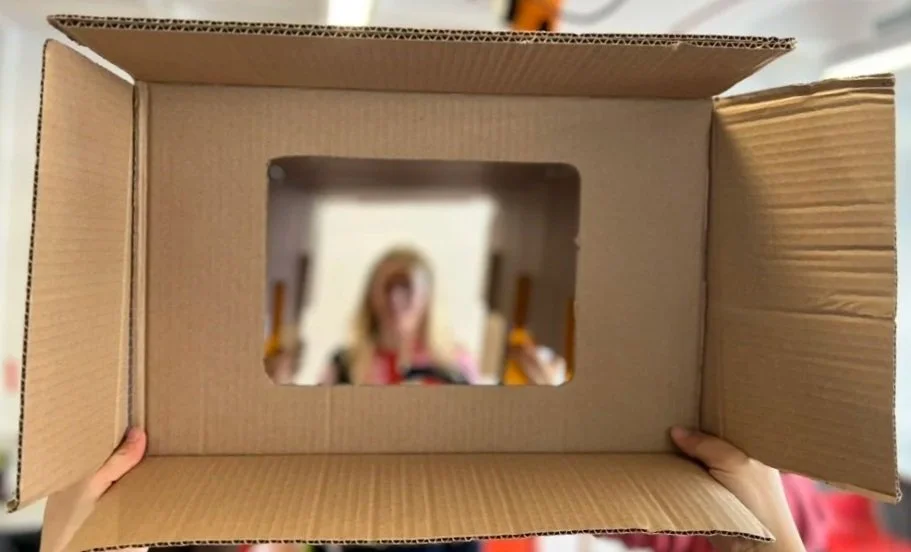
Initial recreations of the store. Users can enter the narrow hallways and experince the different senses of Twinings tea shop through different holes leading them to the end of the tunnel, where they are met by hands that stir the teas in a choreographed manner and also pay tribute to where the teas have come from (Banerji, 2025).
We started testing how we could have the tea bags give off an aroma without placing them in hot water. The wet tea bag with essential oils, even after a few hours of sitting, was the most potent and gave a similar aroma to the tea shop.
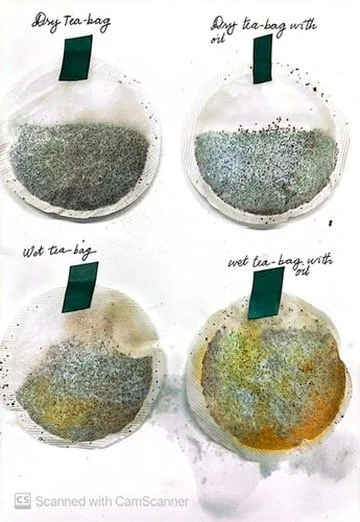
Tea bag aroma testing sheet
We tested dry tea bags, dry tea bags with essential oils, a wet tea bag, and a wet tea bag with essential oils.
(Banerji, 2025)
After a conversation with Tenisha, we discussed how we each culturally have a different relationship to tea and how culture can be brought into our dance experience. Tea is not just a beverage but a cultural artifact (Chatterjee, 2011). While there was discussion about adding themes of colonialism that come with tea and trading, none of us at Twining Tea felt that sense when entering the shop.
We then designed a performance that showcased how tea has traveled through cultures and how different cultures make tea.
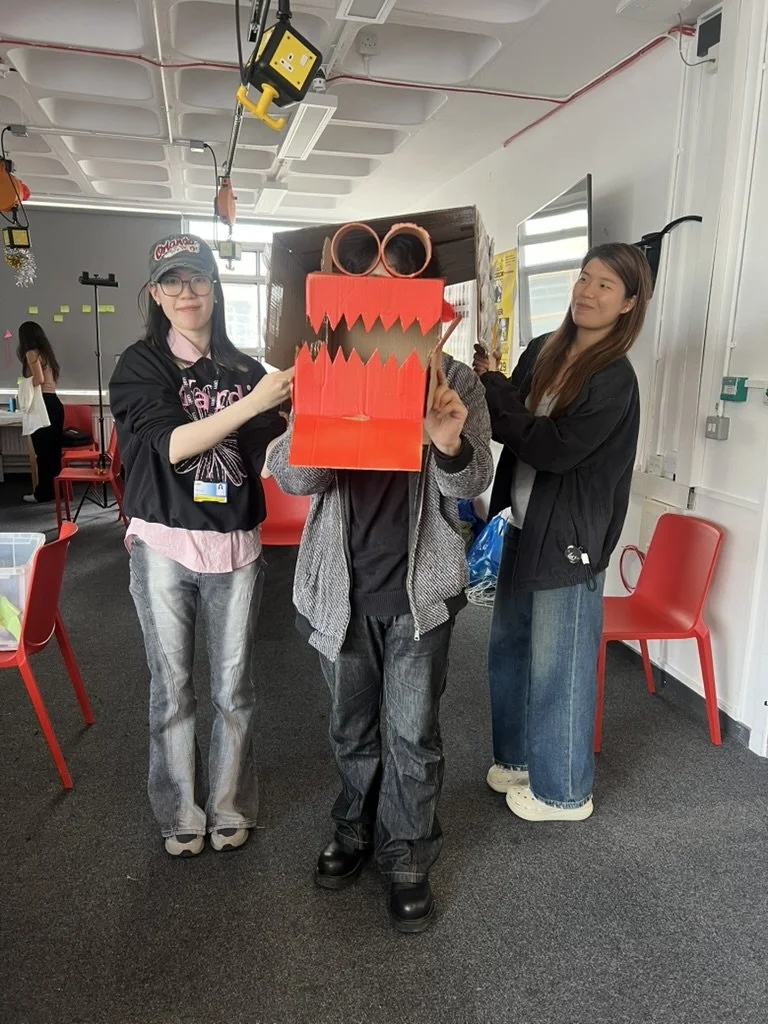
Step One
This dragon danced its way through the classroom, showing the origins of tea in China. This dragon also had tea bags along the sides to add a sensory element (Banerji, 2025).
Step Two
The Chinese tea was prepared using the hand choreography of the art a makinfg tea in China. Then passed on to India (Banerji, 2025).
Step Three
The Indian tea was prepared using the hand choreography of the art of tea making in India. Next, we passed it on to the British. We chose to pass the tea to our tutors, as we did not have anyone from the UK in our group, and there was no personal connection (Banerji, 2025).
Step Four
The tea was then passed to America, where I placed ice in a glass as a comedic element in the cultural performance (O’Connor, 2025).
Through the performance, all the glasses were connected by one long string, showing that the origins of tea should always be connected and recognized. Our peers appreciated our exploration of tea’s cultural history, while our tutors wished we had explored teas colinial history in more depth. They reminded us that the design is a space for risk, not doing something because you think you will do it wrong is not the way to go about design.
Beyond the Brief
We were visited by Aaron McPeake, who gave us a design challenge that tested our conceptual design skills.
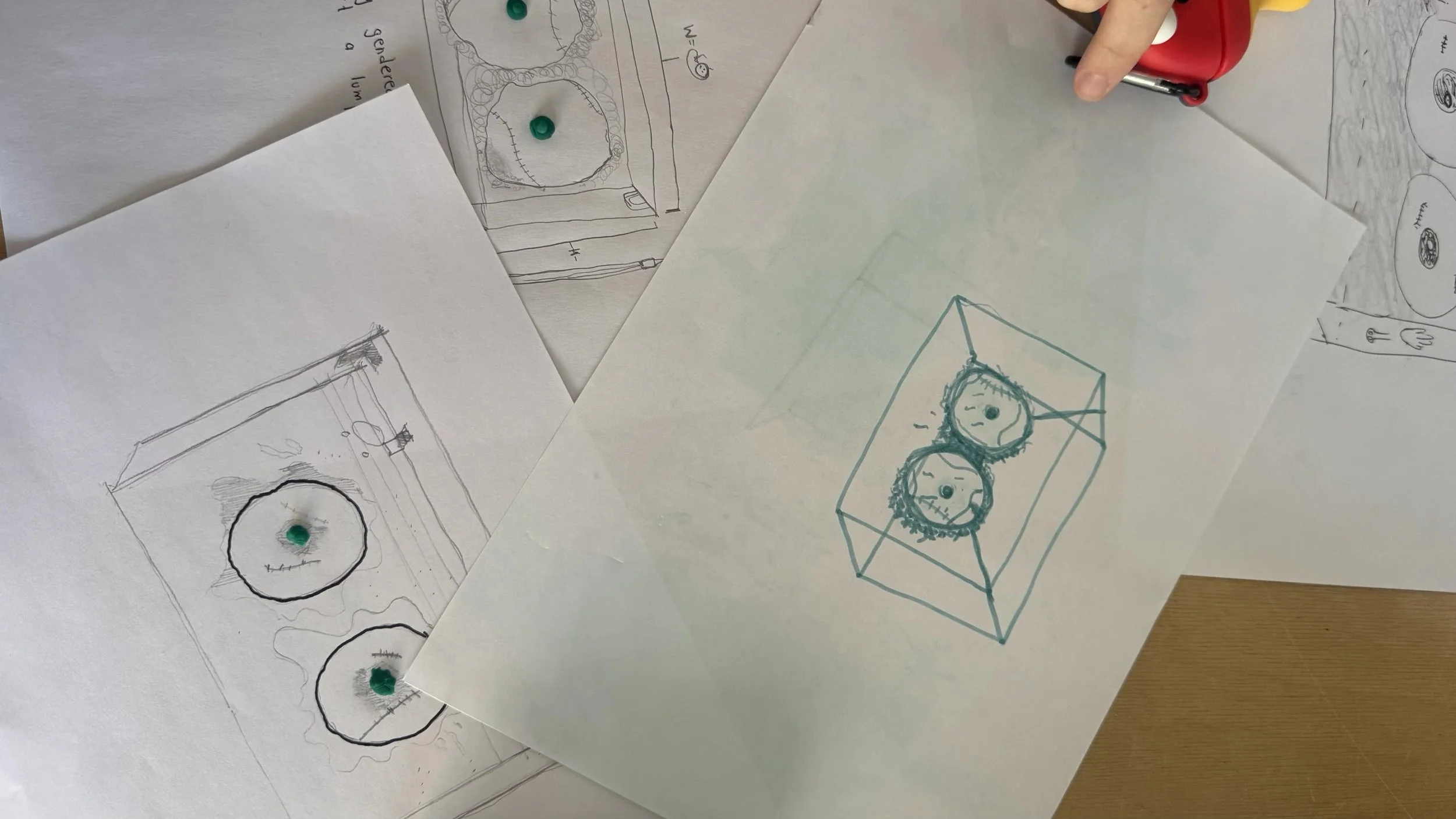
The challenge was to re-create an art piece from 2 audio descriptions of the work. Our group listened to a piece about breasts in a transparent box. Coping with humor, we all asked, “Are we really making breaks out of clay on the first day?” (O’Connor, 2025).
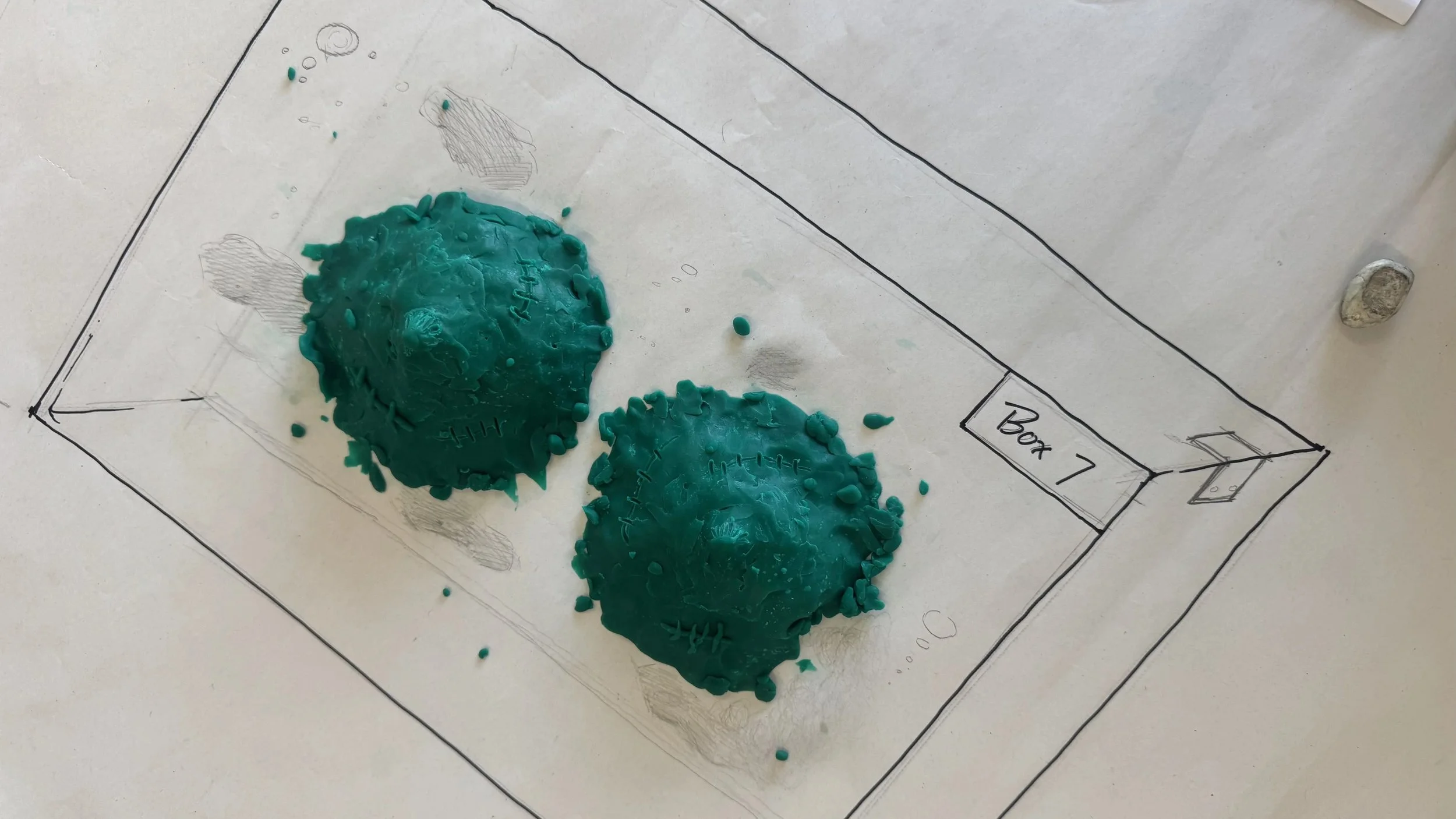
After listening to the full description, we coped in the same way that the viewer did, with humor, but then went on to understand the deeper context of the work portrayed themes of gender and identity (O’Connor, 2025).
References
Chatterjee, P. (2011) A Time for Tea: Women, Labor, and Post/Colonial Politics on an Indian Plantation. Durham, NC: Duke University Press.
Connor, S. (2006) ‘The menagerie of the senses’, The Senses and Society, 1(1).
