Micro Unit Part Four
Brief: Design a way for textile waste to reveal its hidden value.
Team Members: Luis Winkelbrandt, Nicole Shu, Molly Wensley, Amen Maheen, Vanashree Chowdhury, Niki Marathia, Jaime Santos Guerrero, and Lynn Zhong
Midway checkpoint
As we are at the midpoint of our project, we felt that it would be important to revisit the brief, to make sure we were on track and were not missing any key details.
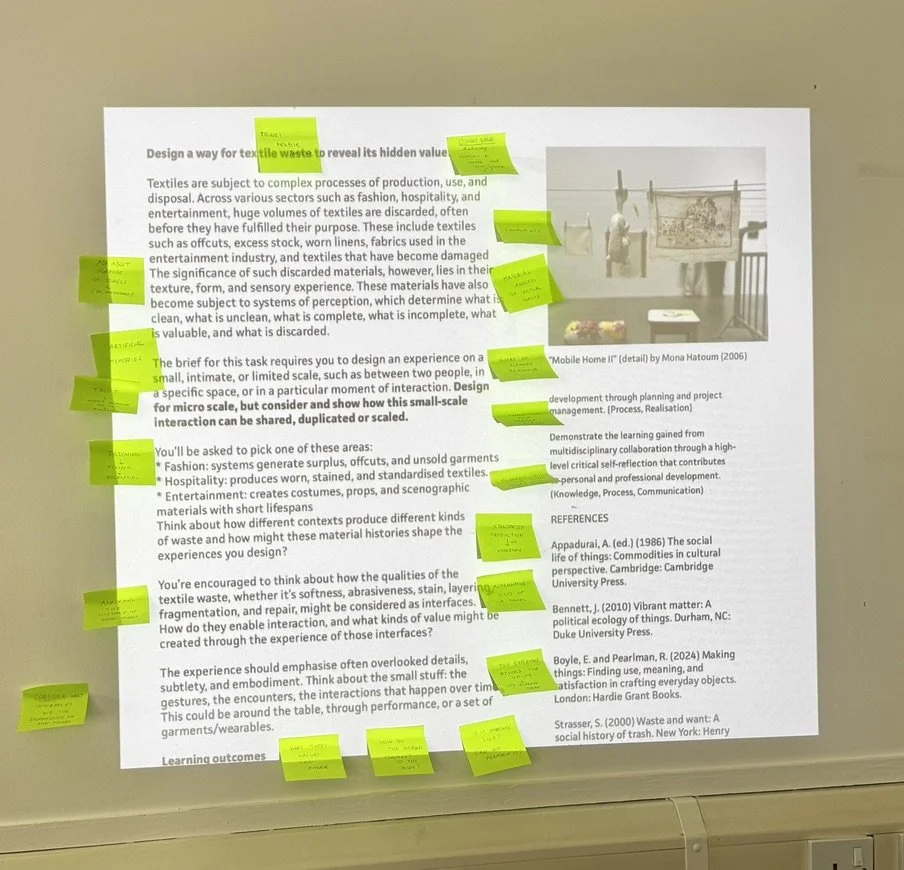
We chose to do the same format as we used at the beginning. This helped us take the themes in the brief and not just understand them, but connect them to our research specifically.
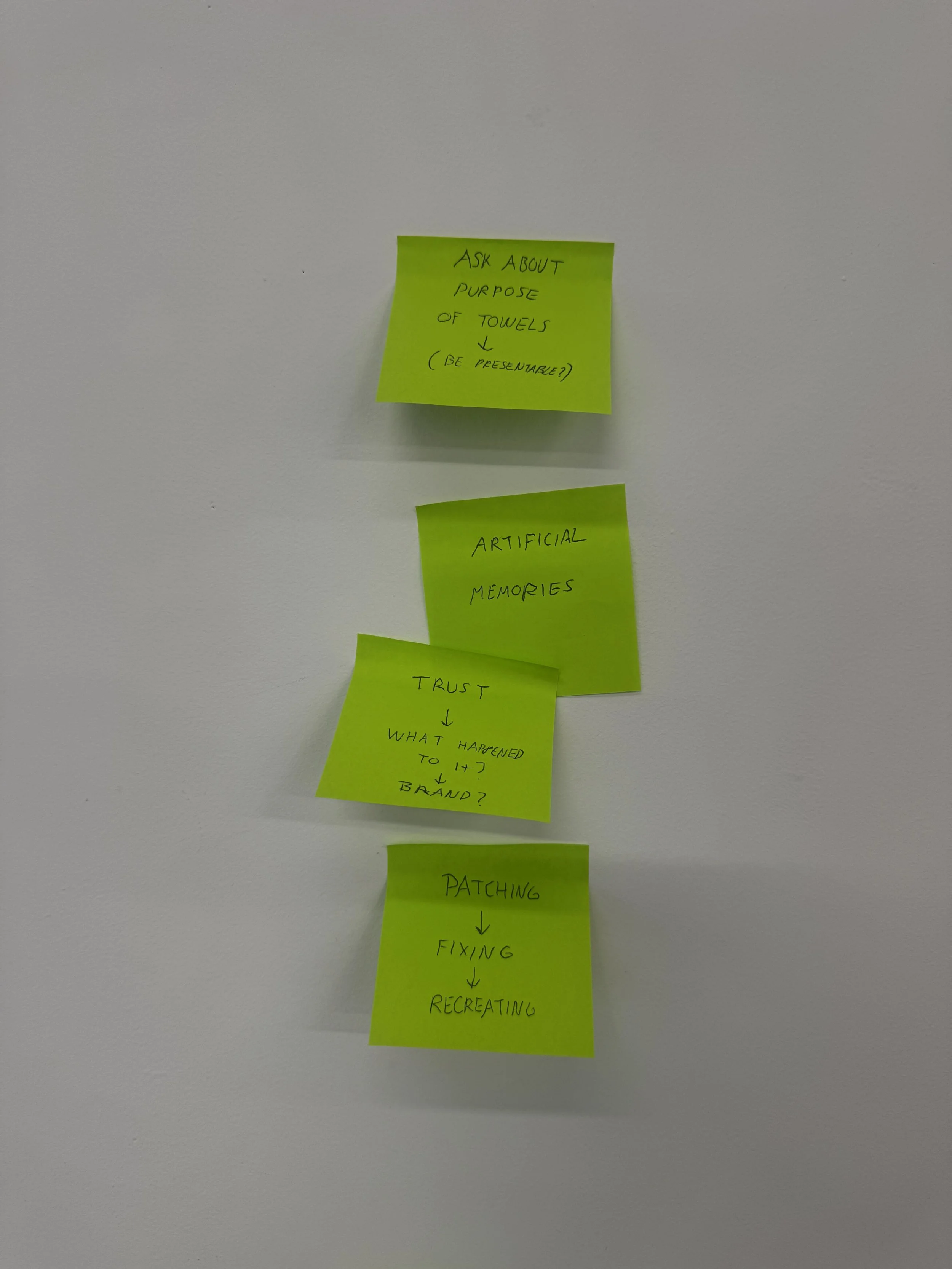
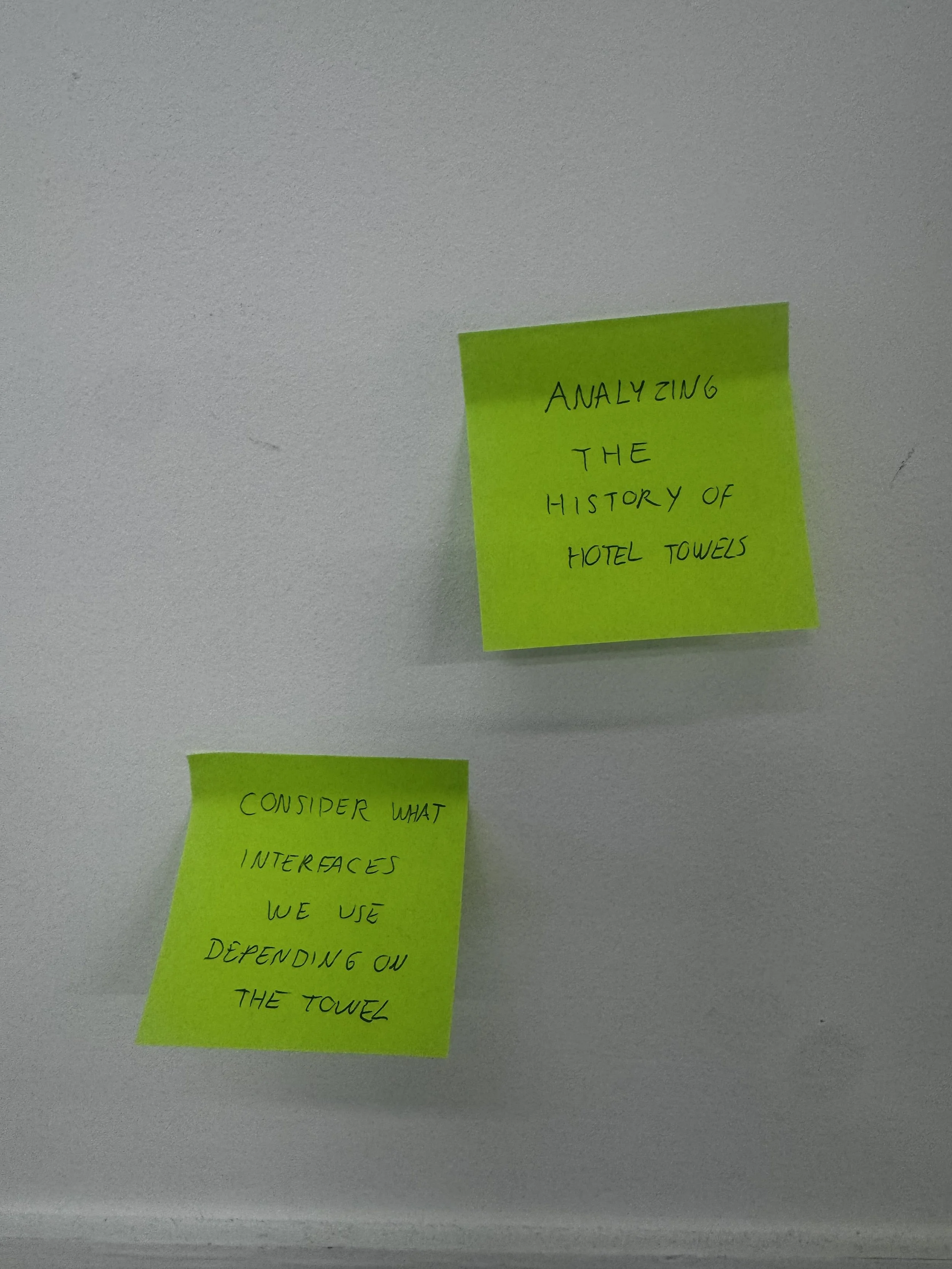
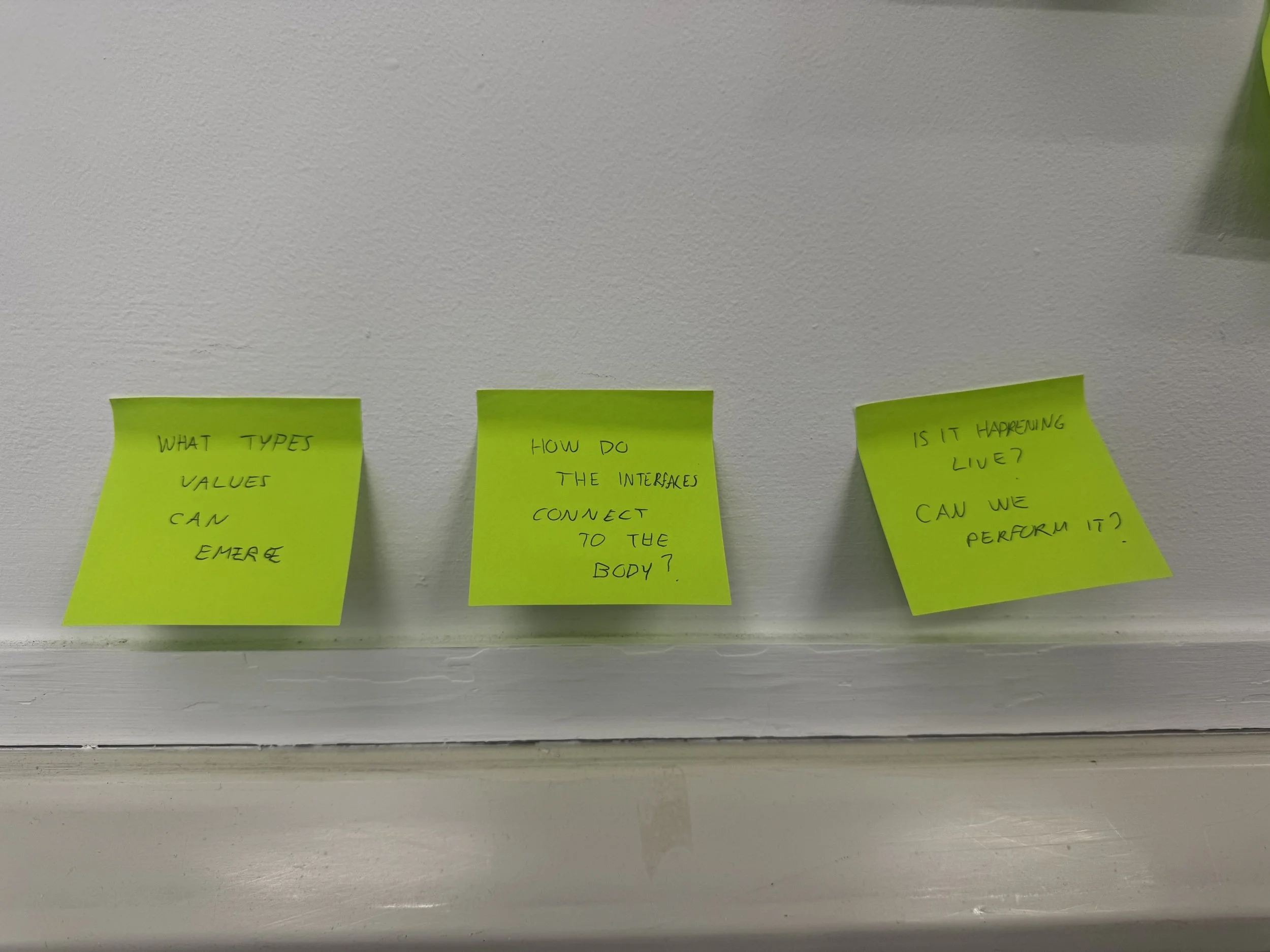
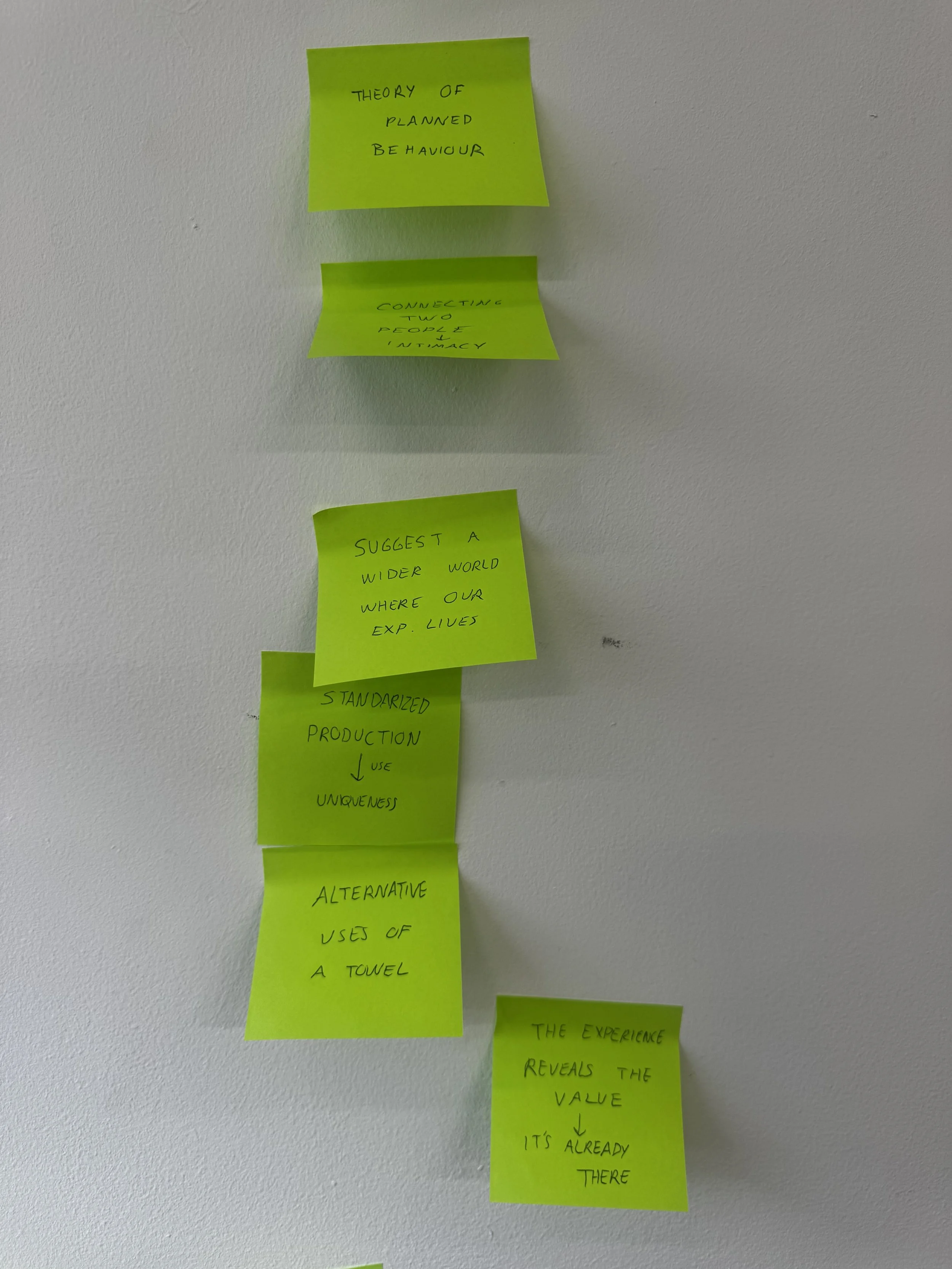
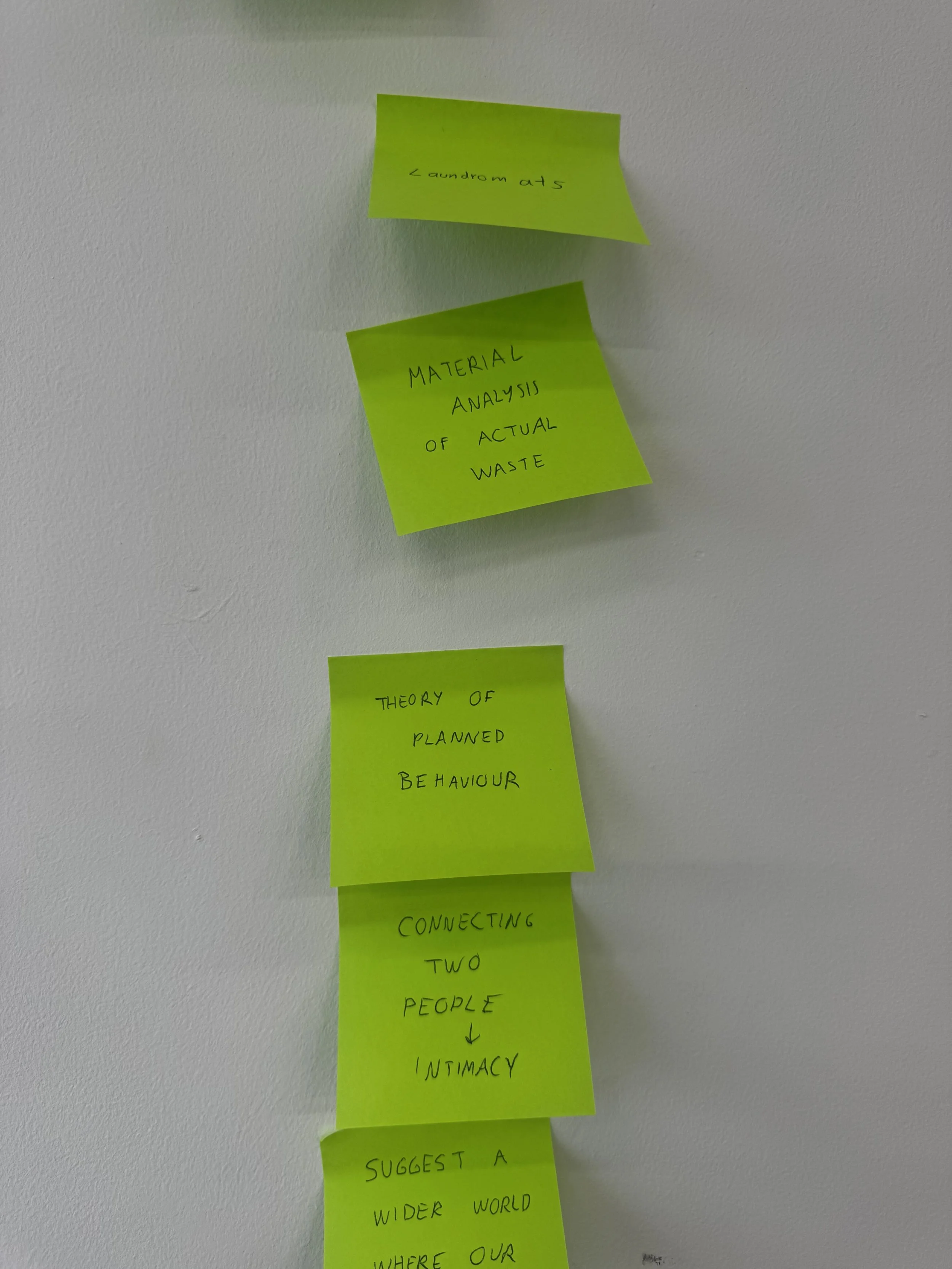
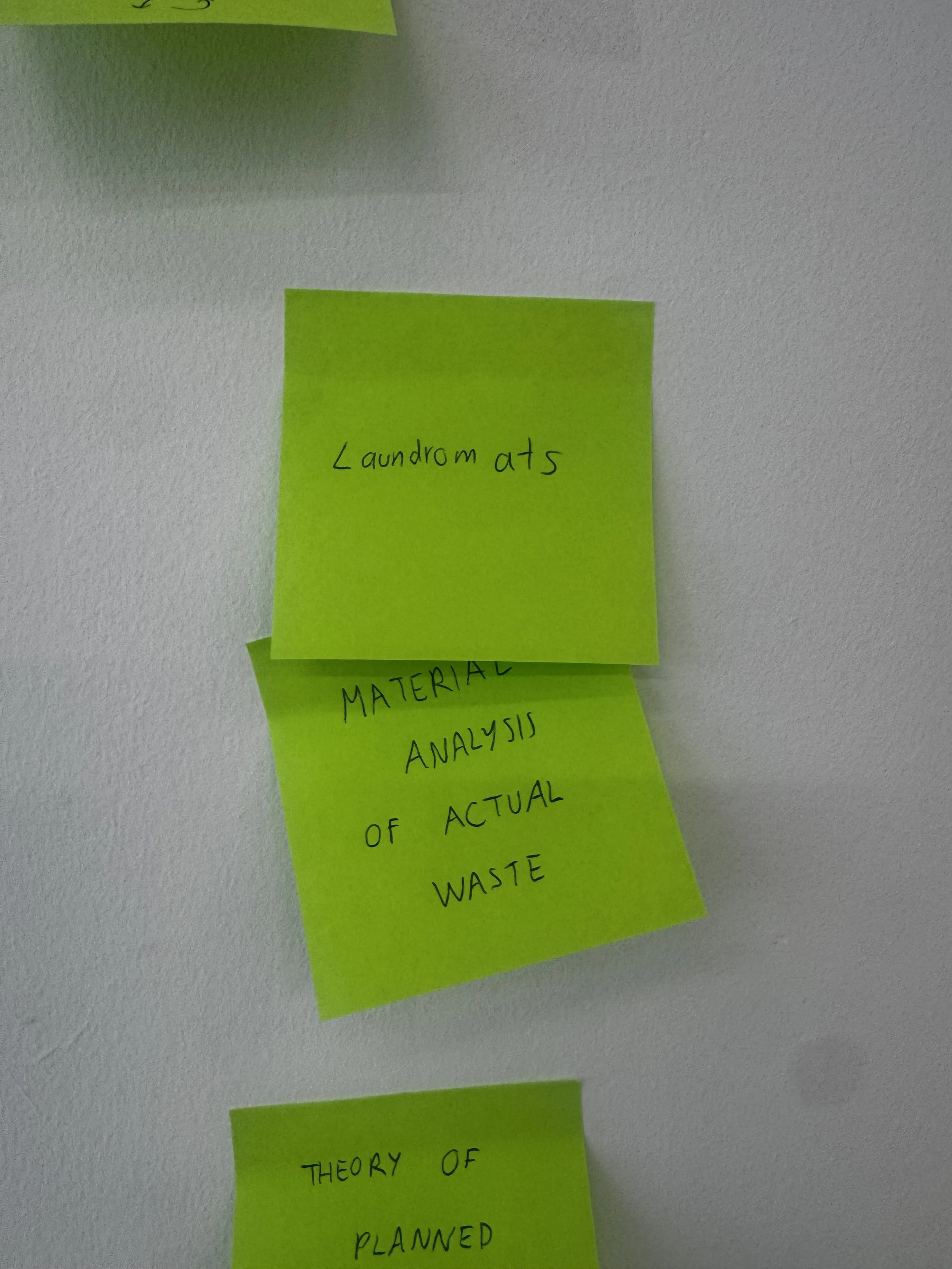
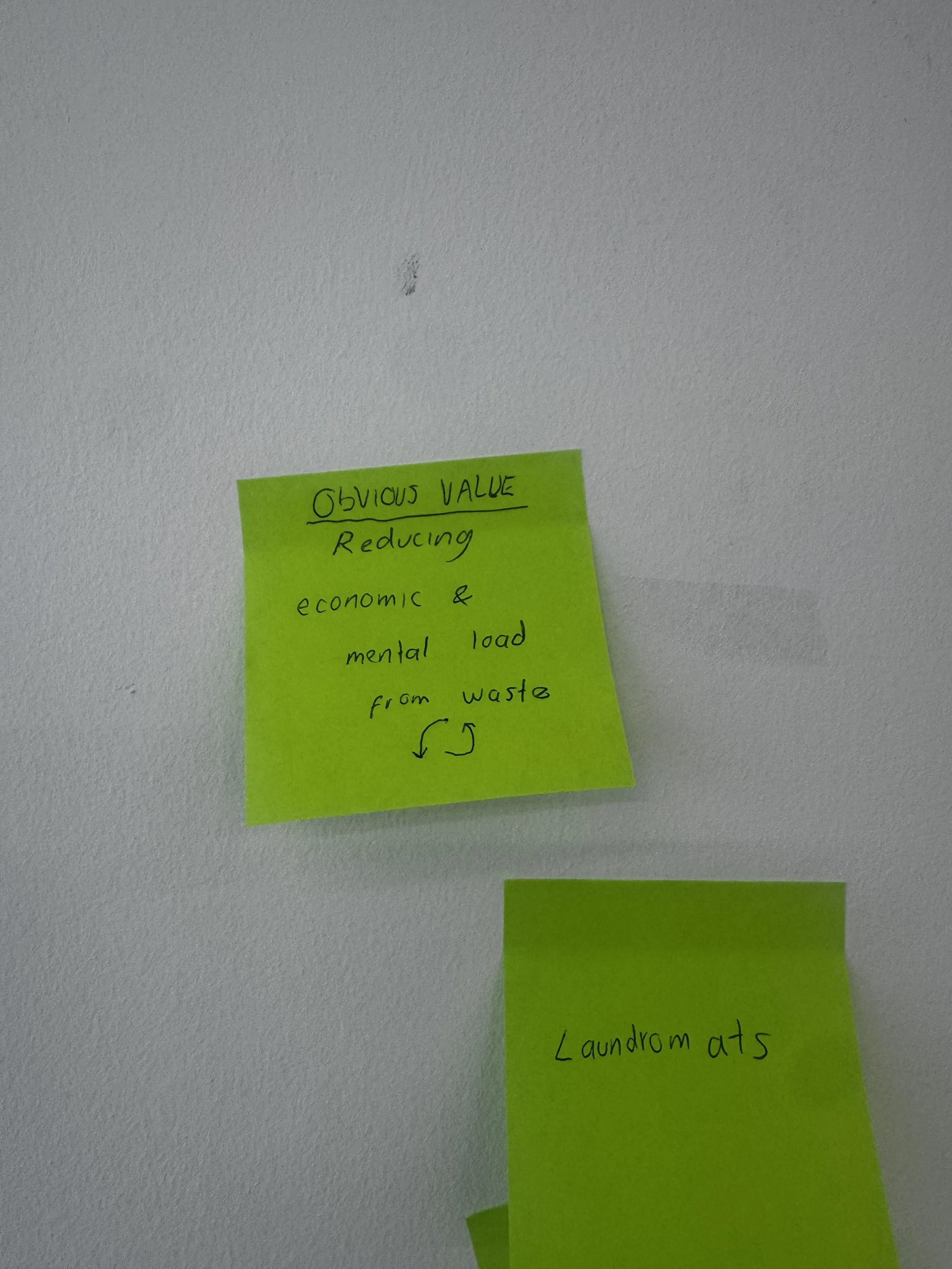
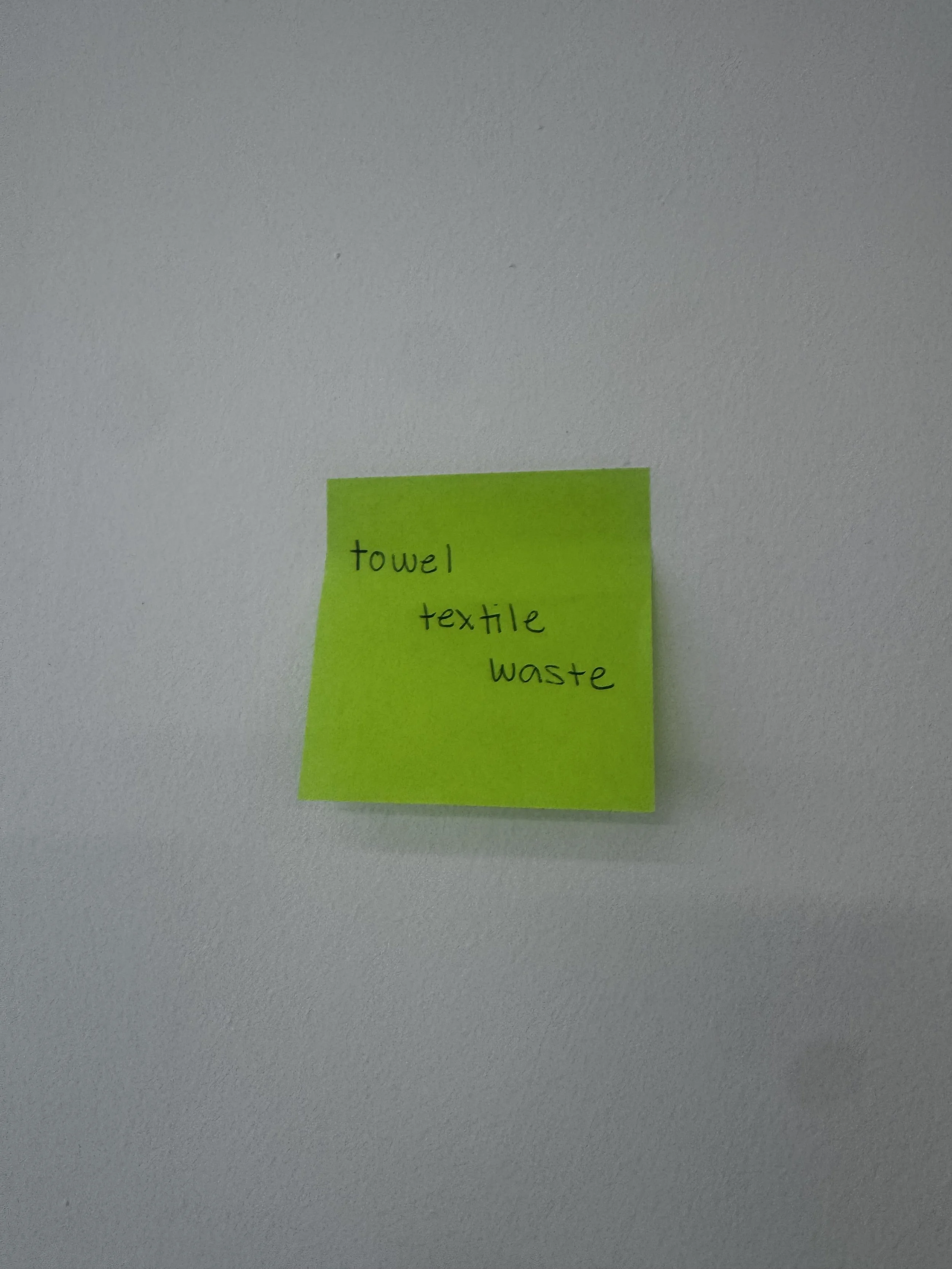
Doing this activity for the second time allowed us to look at our brief from the direction our research had pointed us. We could be more specific about the terms we were questioning in the beginning. “Materal histories” was an important term during week one, but when we looked through the lens of hospitality, the history of who used a towel can reveal a story that can help extract the hidden value of that object.
Reflection of Activity
While this activity did not give us any data or research, it was a pivotal part of our process. At times, we have forgotten about the core foundation of our brief. At the midpoint, we felt a little lost. We had so much information but no idea what to do with it. This connection helped us move forward productively.
Re-planning activity inspired by Larissa Kunstel-Tabet Workshop
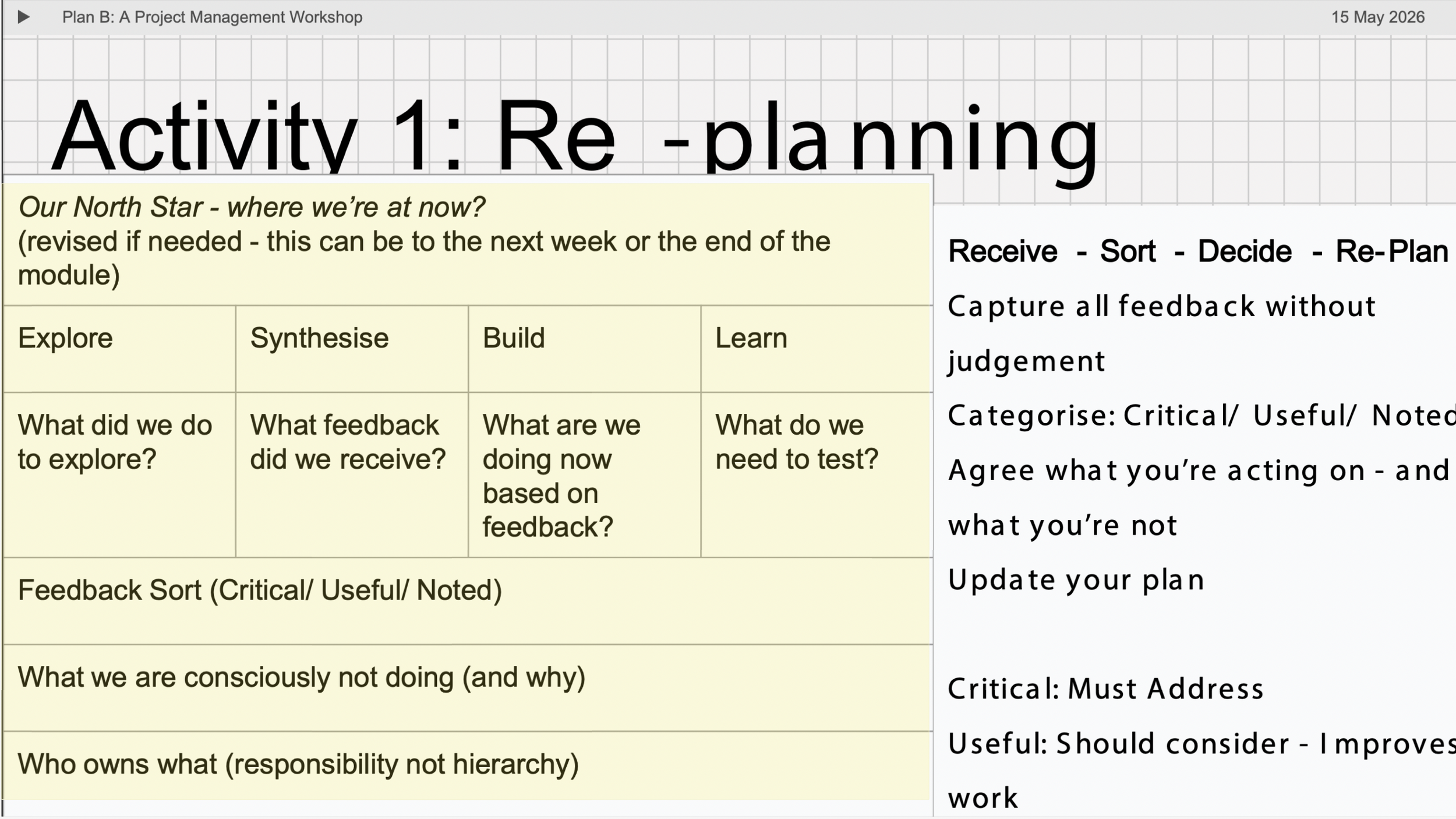
A few members of our group attended Larissa's workshop and completed a project management activity. We decided to use a project management technique to plan our next steps.
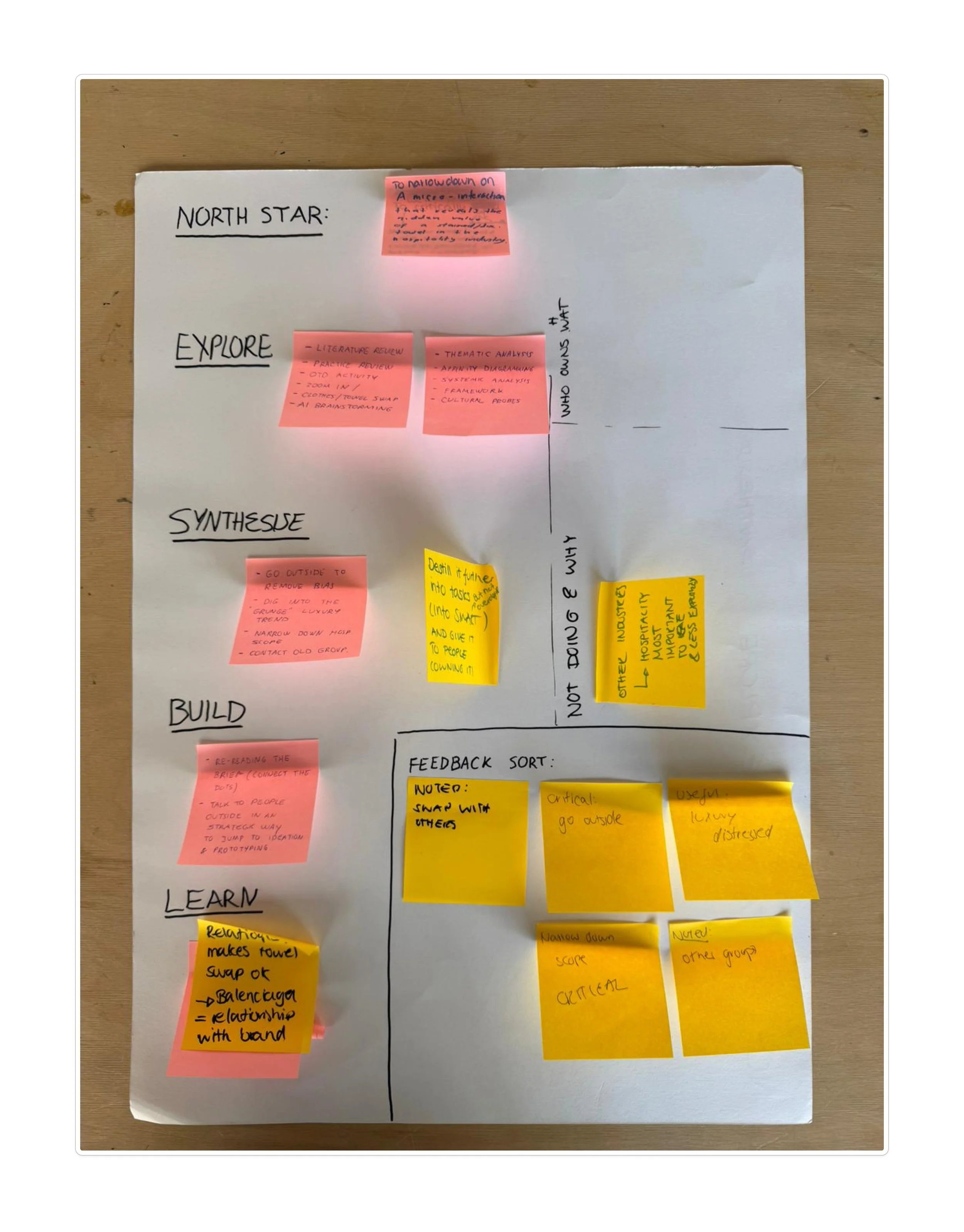
This activity helped showcase our progress, ongoing feedback, and next steps. It also allowed us to think about our feedback. We determined what we should incorporate and what we should leave for later, if necessary. A lot of feedback is fantastic, but can sometimes be overwhelming. This helped us realize what feedback works and what does not.
The original replanning exercise was done during the workshop on May 15th 2026.
While we did not have much time for this activity in the workshop, we were able to identify some points of feedback we received that did not fit our team's goals. We put those aside and proceeded with the other feedback that pertained more to our research.
We took this same framework back to our group and determined it was an activity we should do all together.
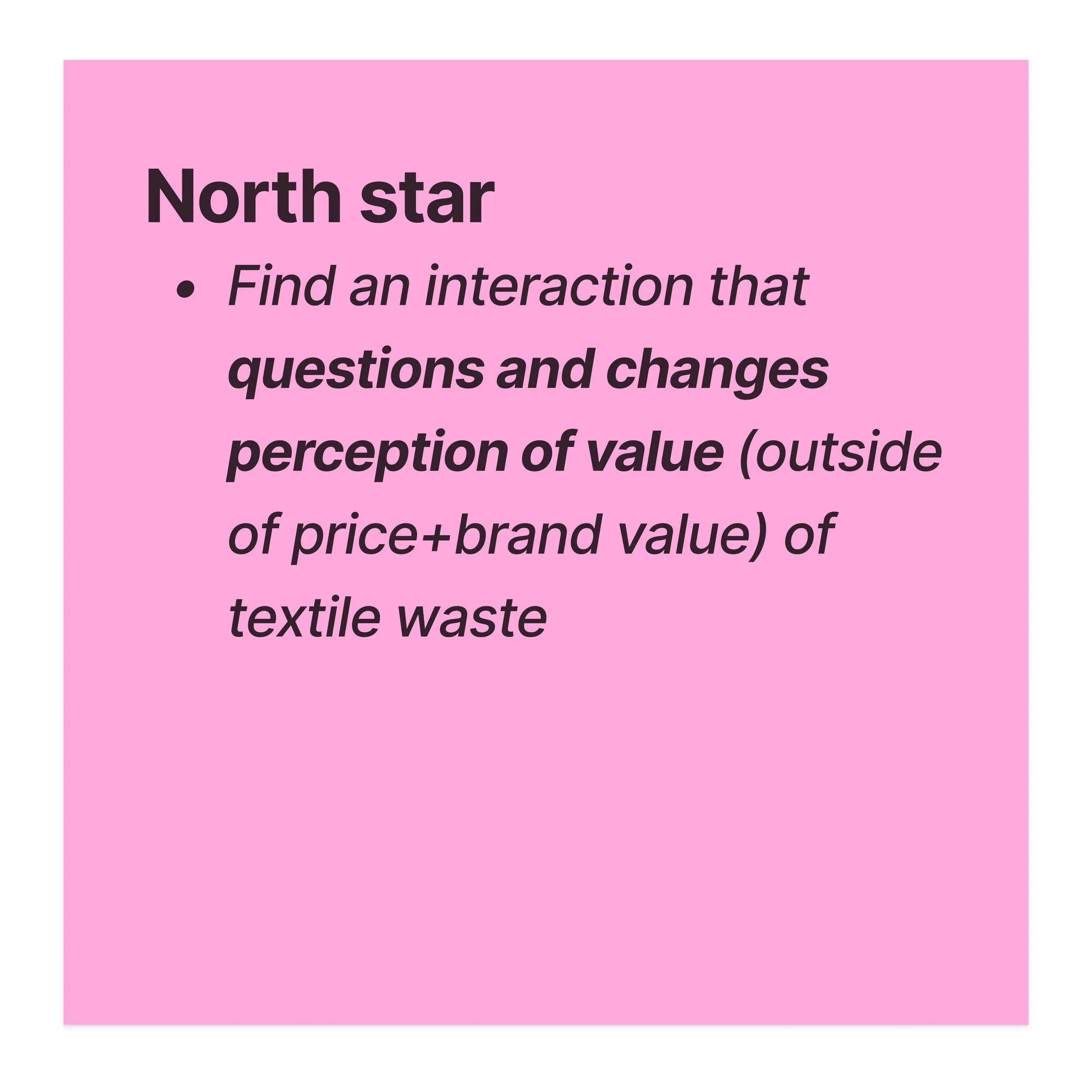
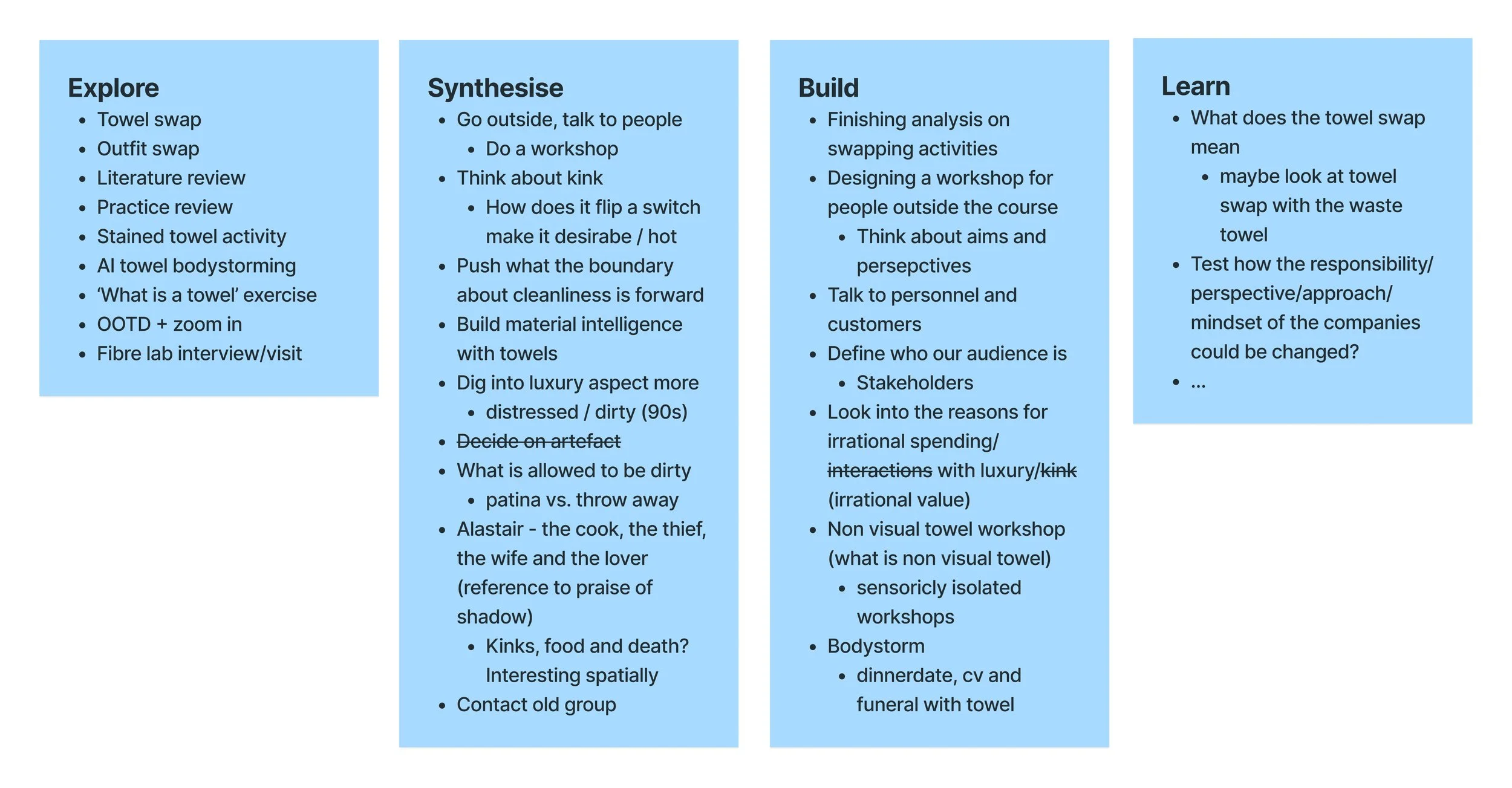
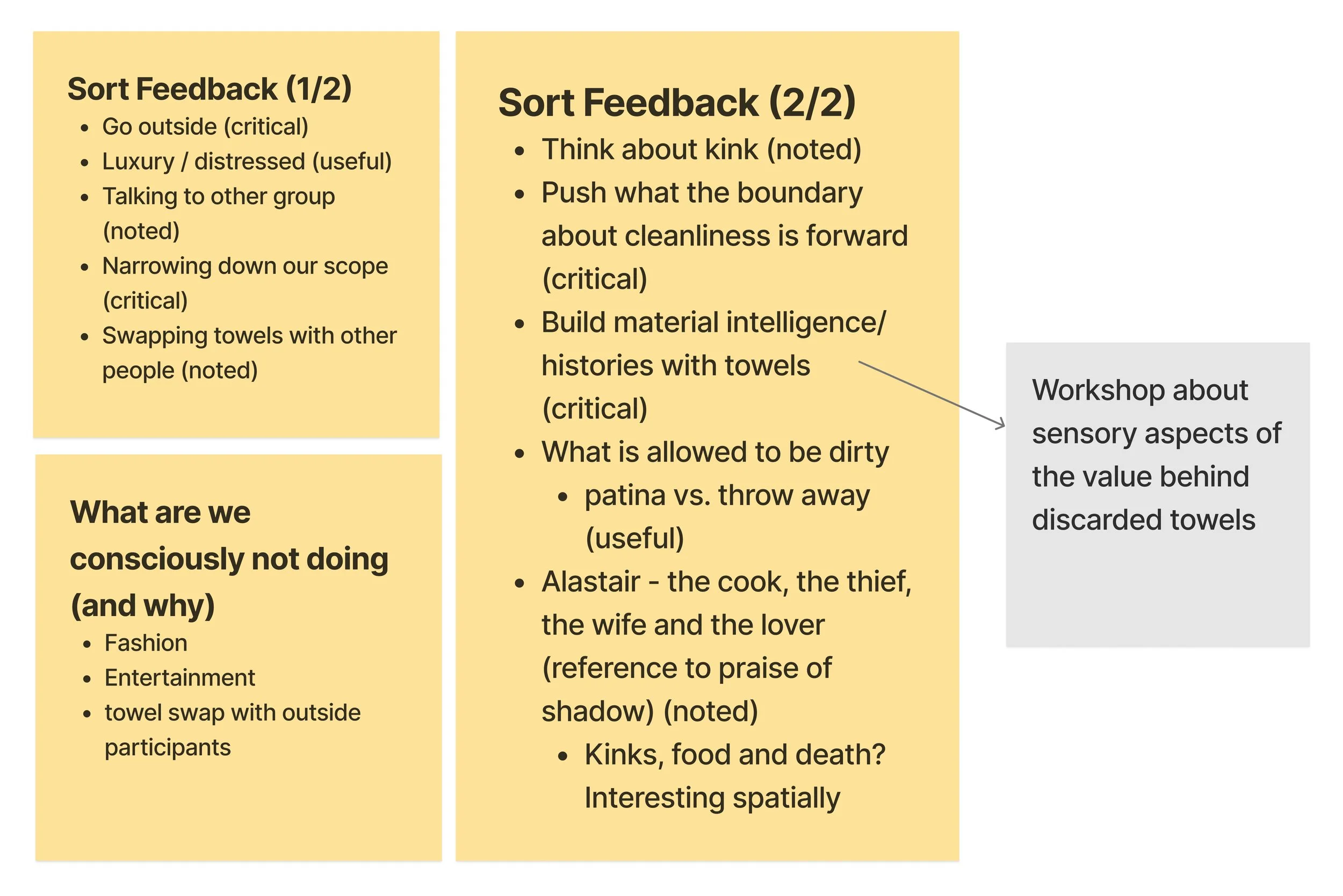
Reflection of Activity
We had extensive research and feedback, which left us feeling confused and overwhelmed. This activity helps us see all the information in an organized fashion, not just all over a figjam.
Tabletop feedback/Finding of Hidden Value
During our tabletop, we discovered our hidden value. These towels still have life in them; they have stories and a presence of the past users through the stains and rips.
OUR HIDDEN VALUE
Hidden value in the imperfections.
Anonymity loss as personality. Stains, rips, and defects give the towel life
Mini Workshop
We conducted a small test workshop to see how people would interact with the towels and what their ideas were about uses for towel waste.
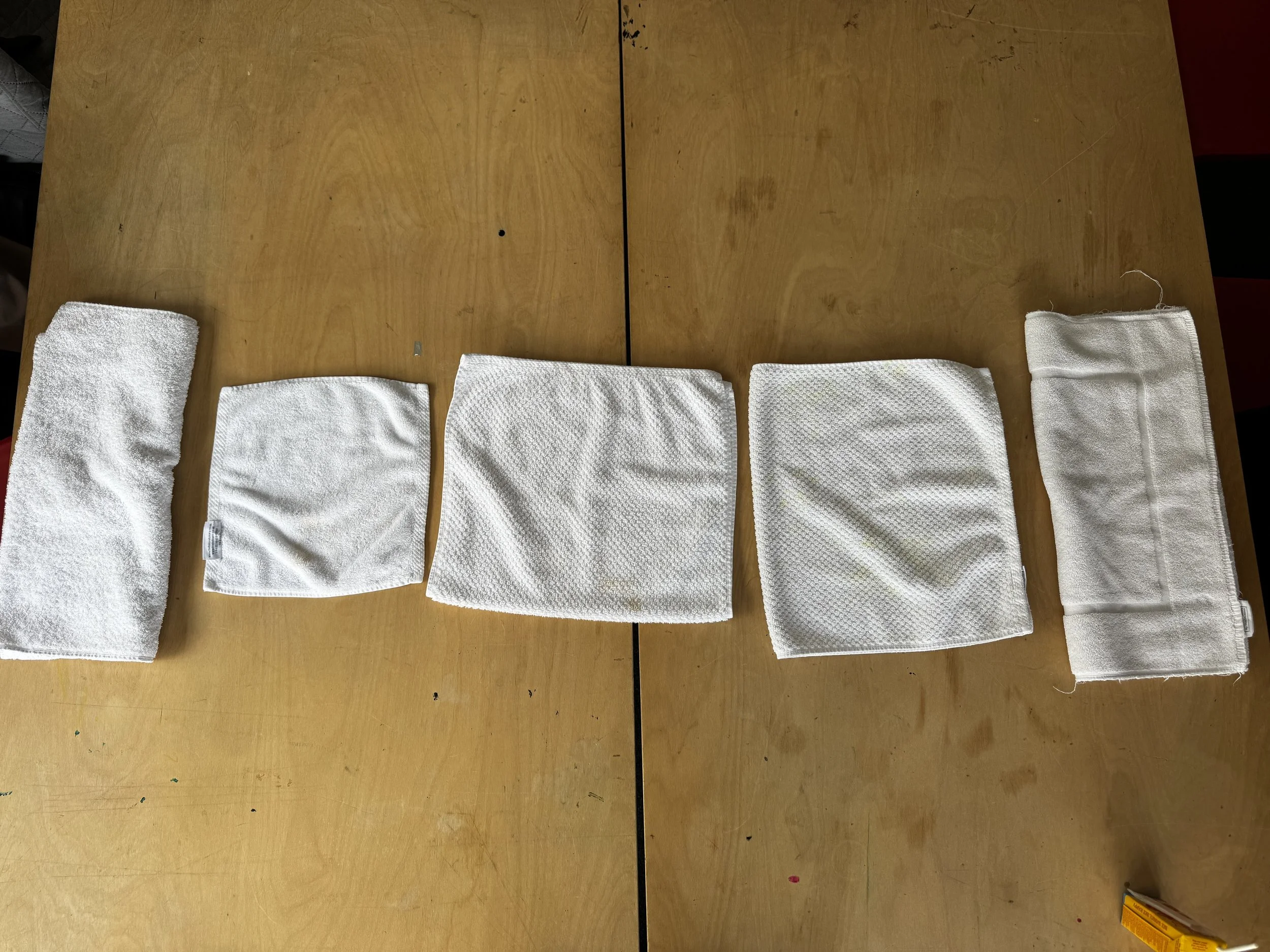
These towels were provided to us by our partner Fibre Lab. They are slightly stained and torn, yet on some, we couldn’t even notice any stains, but they are still considered textile waste by hotels. While we thought about manufacturing more stains, we wanted our participants to interact with real hospitality textile waste, not a fabricated version.
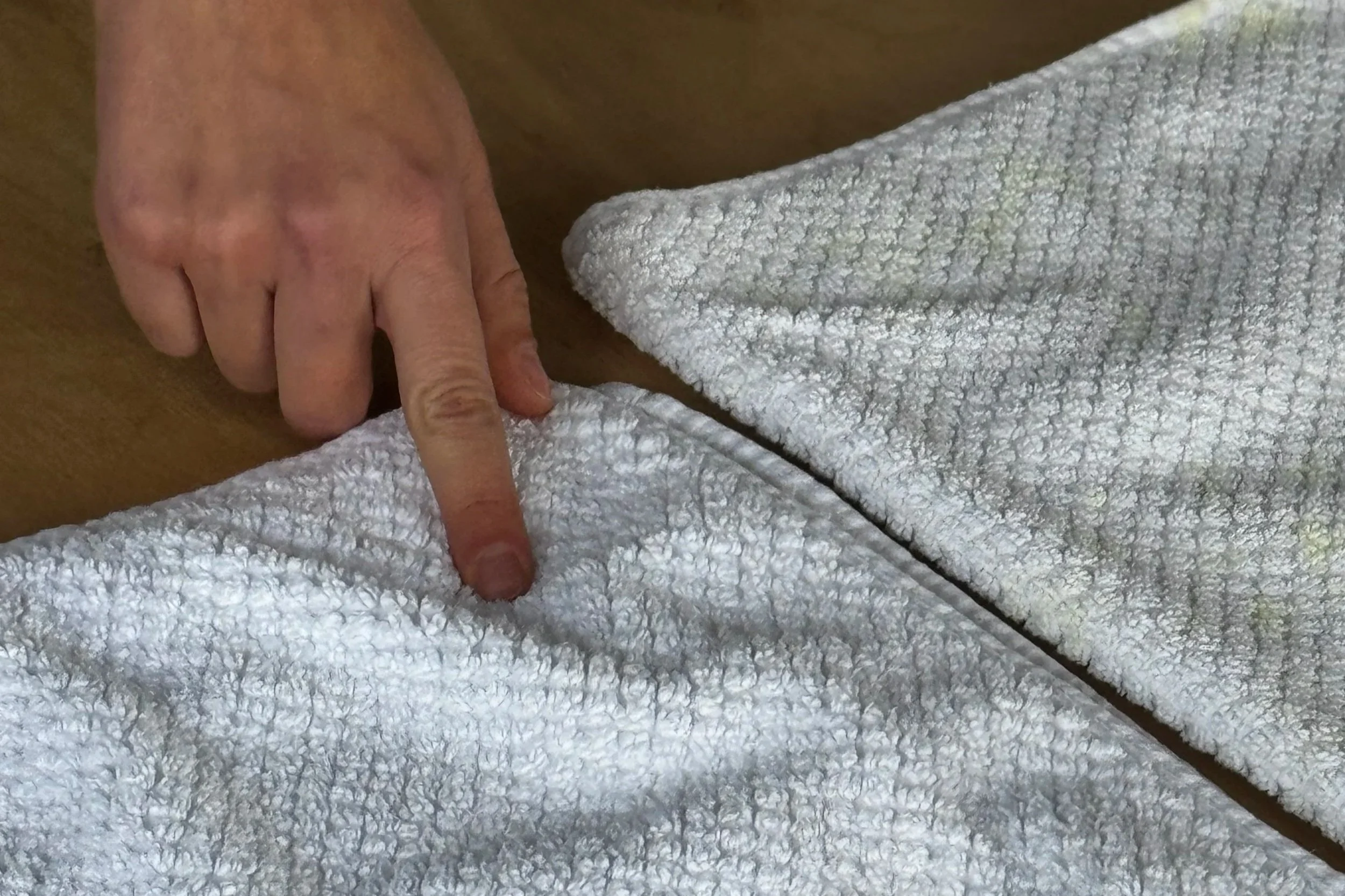
We first had our three participants interact with the towels, getting a sense for the textures, stains, and rips. They noted that the towels felt stiff and low quality. After they familiarized themselves with the towels, we asked them to use whatever materials they might want to create something new out of these towels.
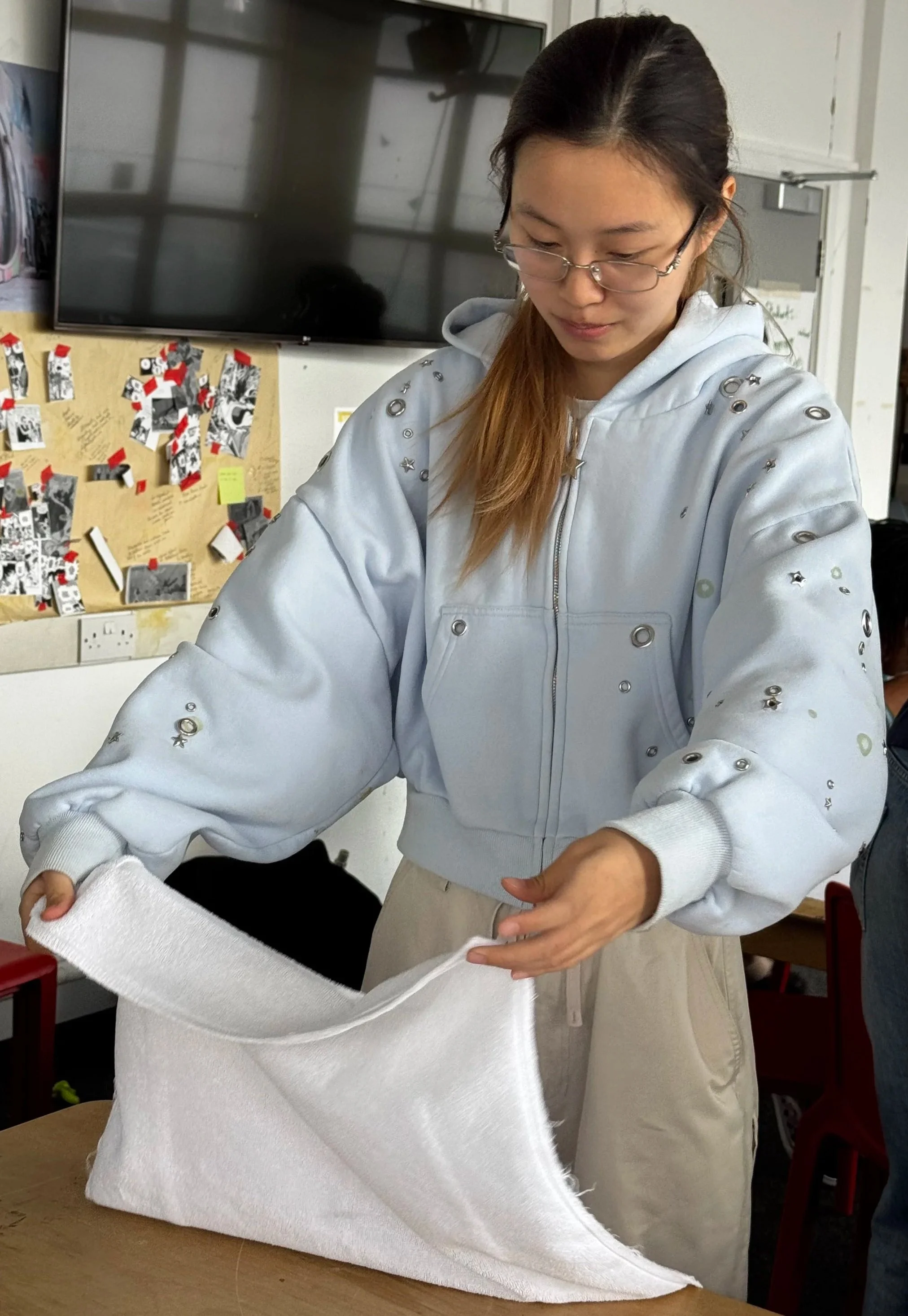
While they did not create anything physical, they explained what could be done with them. They said they would really only use them for mopping and cleaning, but that was nothing out of the ordinary for a towel. They would not want to wear them, but said they could be turned into an upcycling project.
Reflection of activity
Although this activity was not as successful as we had hoped, it showed us that we need to be more thorough when giving instructions for activities. We did not prepare material for them to use ahead of time (a creative tool kit could have been a better option for this research). They had difficulty seeing value in something that had already been discarded, which mirrors Tanizaki’s (2001) observation in In Praise of Shadows that small qualities normally go unnoticed, especially if they are not given the right framing. This confirmed our finding that there must be a shift in perception in order for value to be uncovered.
Workshop Planning Using Claude/Workshop Without a Workshop
During our Friday workshop, ‘Workshop Without a Workshop”, Alastair Steele (MA:UX Course Leader) and Ronnie Deelen (multidisciplinary artist focusing on sound) asked us to create our own 10-minute workshops. We conducted a small part of a workshop we created in collaboration with Claude AI.
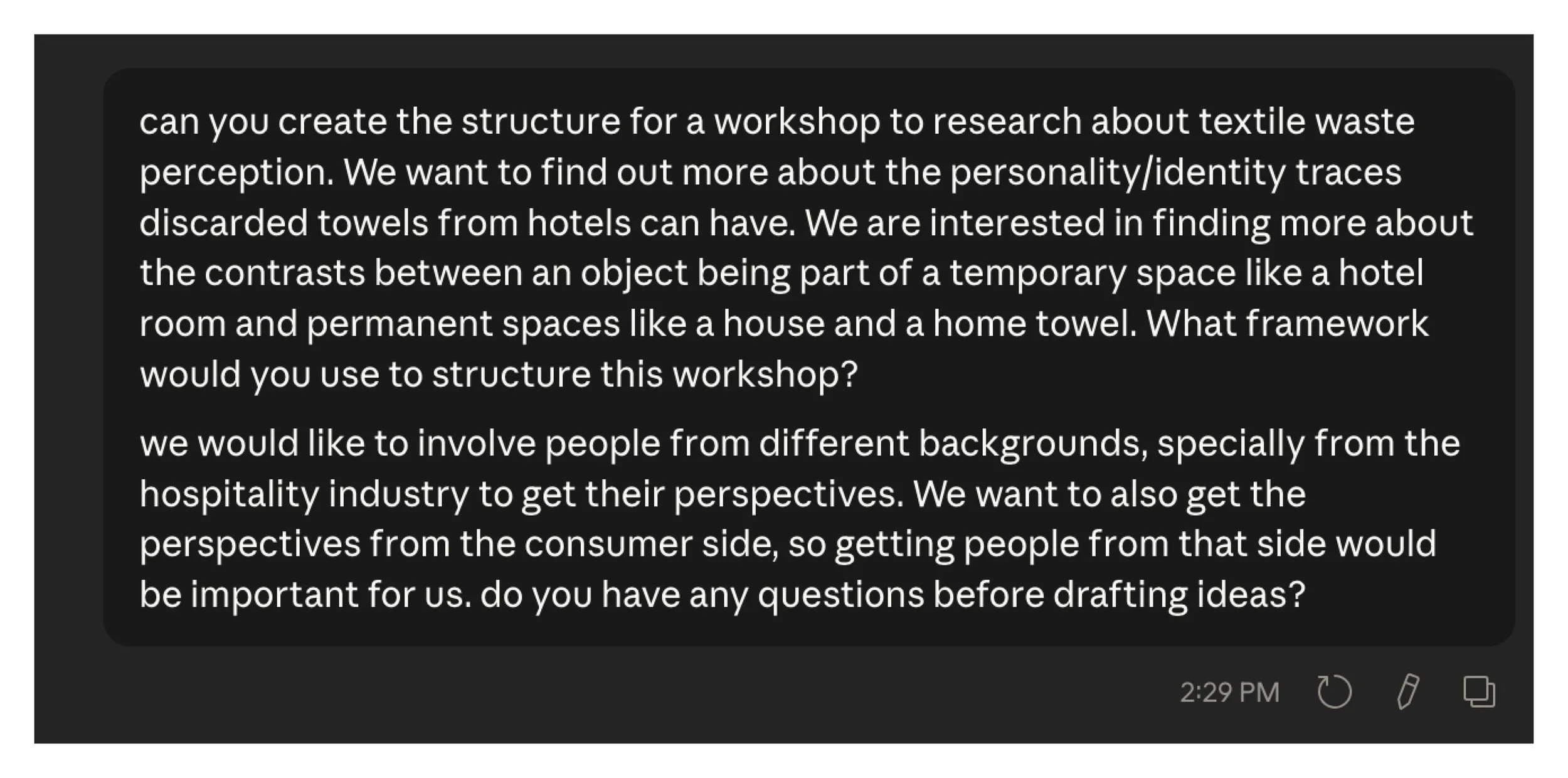
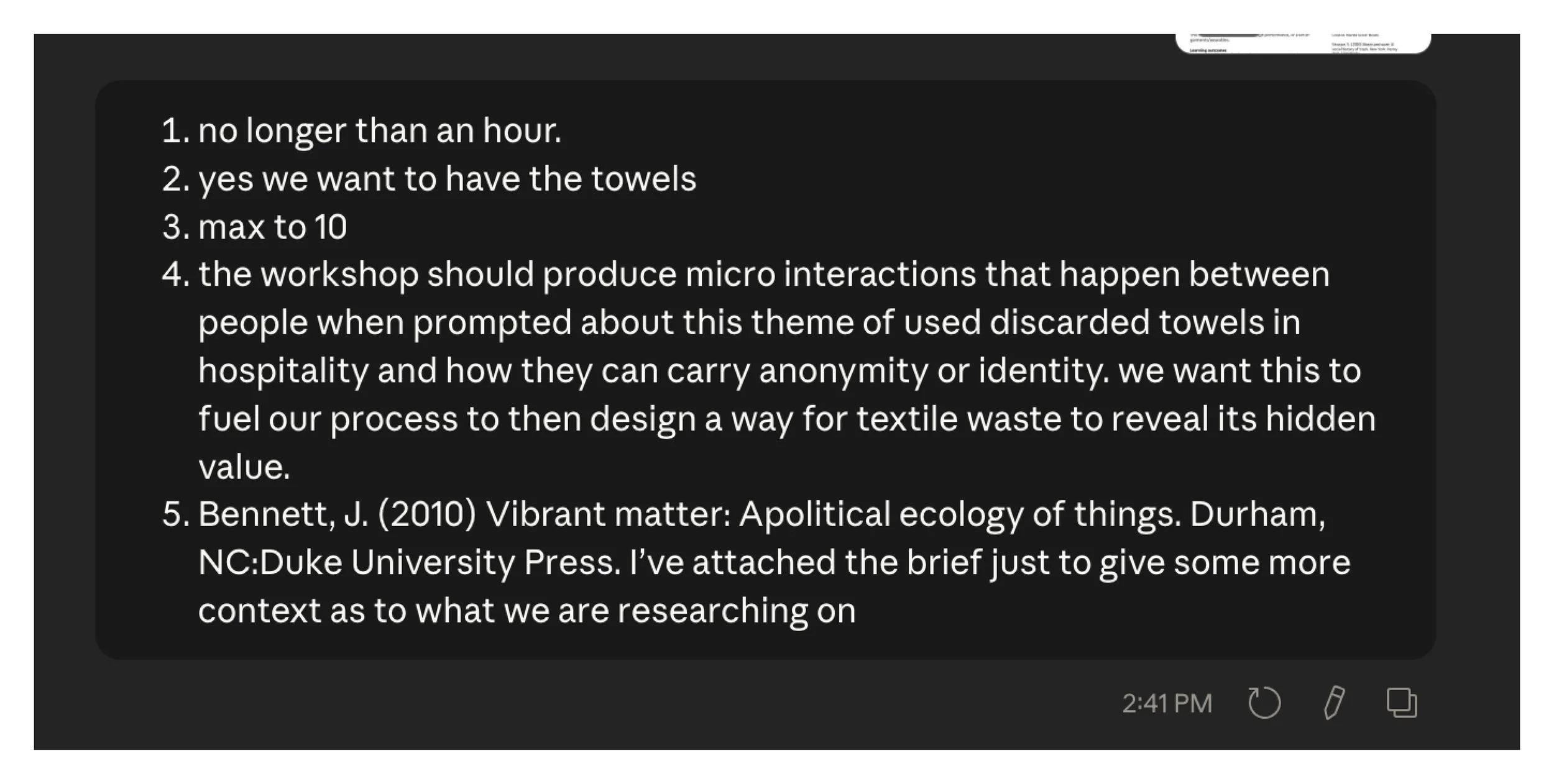
Our first and second prompts used in Claude to help us create a potential workshop (Santos Guerrero, 2026).
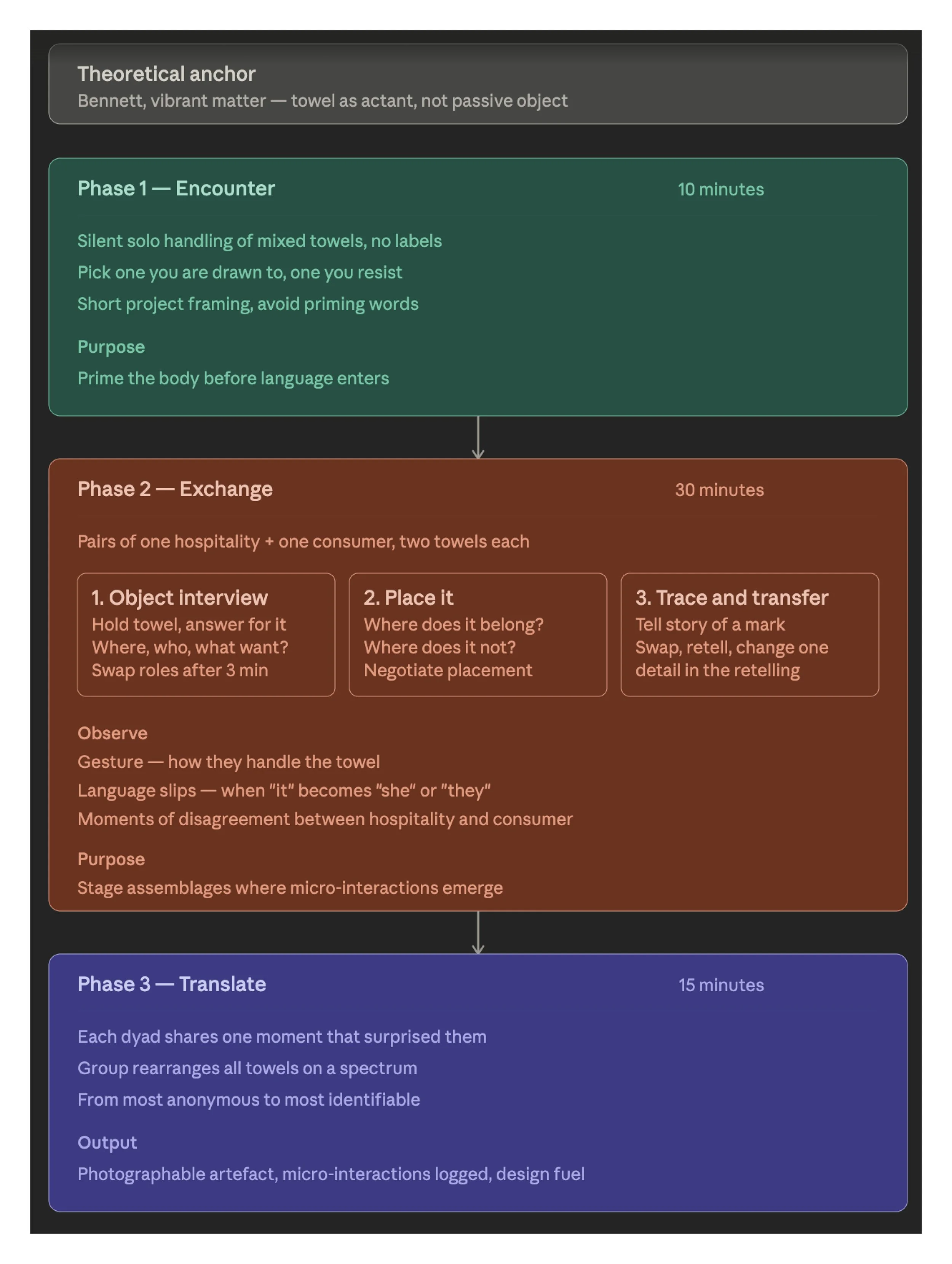
Claude’s version of the structure of a potential workshop. Since we only had ten minutes, we decided to only do the first activity in the exchange sections: Object Interview (Santos Guerrero, 2026).
When planning the workshop, we wanted to make sure the instructions and our “why” were obvious for our participants. We divided roles between the three of us: Luis was the opener/closer, Niki was in charge of photos and documentation, and I was in charge of explaining the warm-up and main activity.
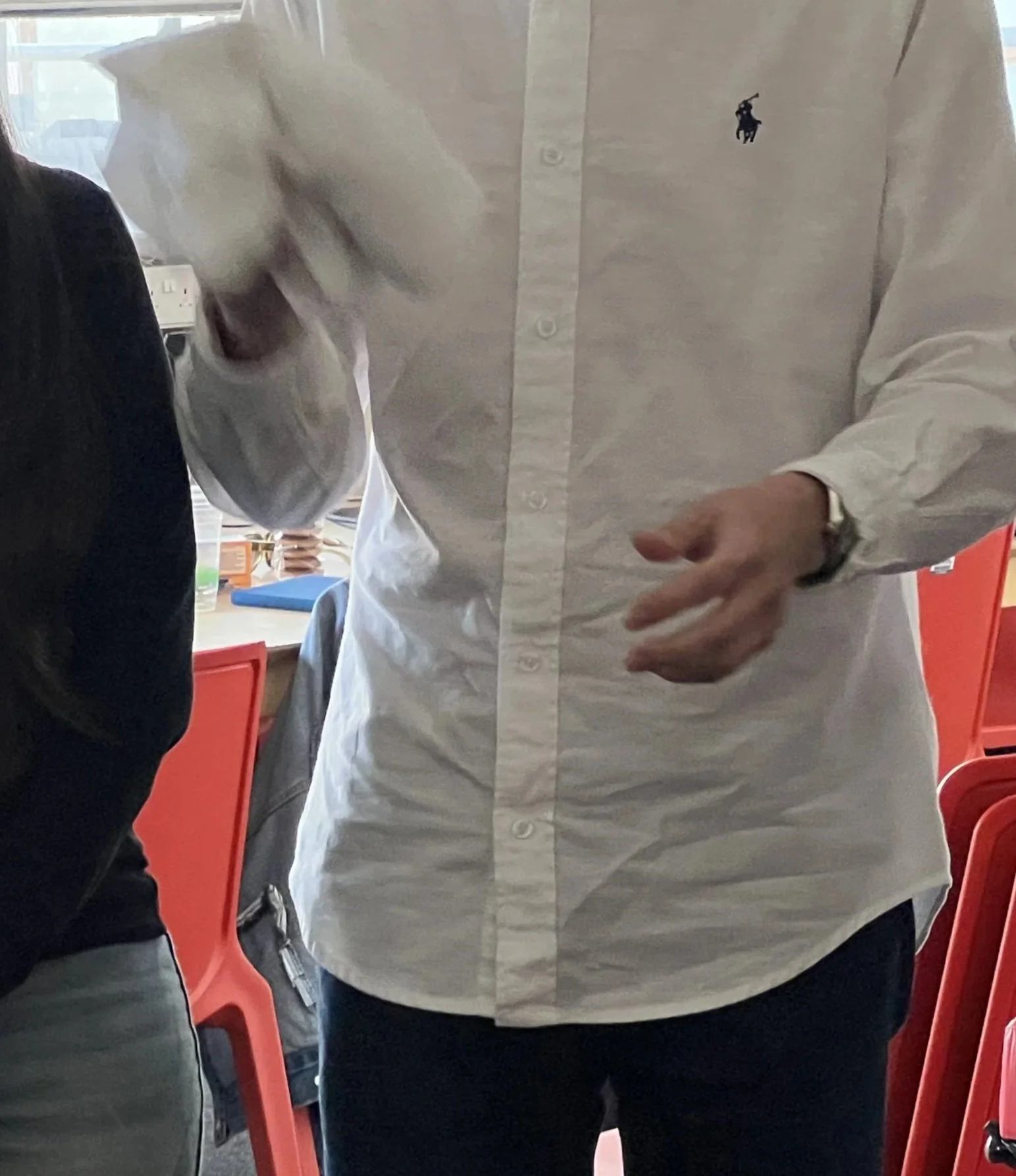
Warm Up Activity
We had our participants in a circle tossing the towel around. The participants would each say the first word that came to mind when they caught the towel. The aim was to help warm everyone’s minds up while also getting used to the texture of the towel.
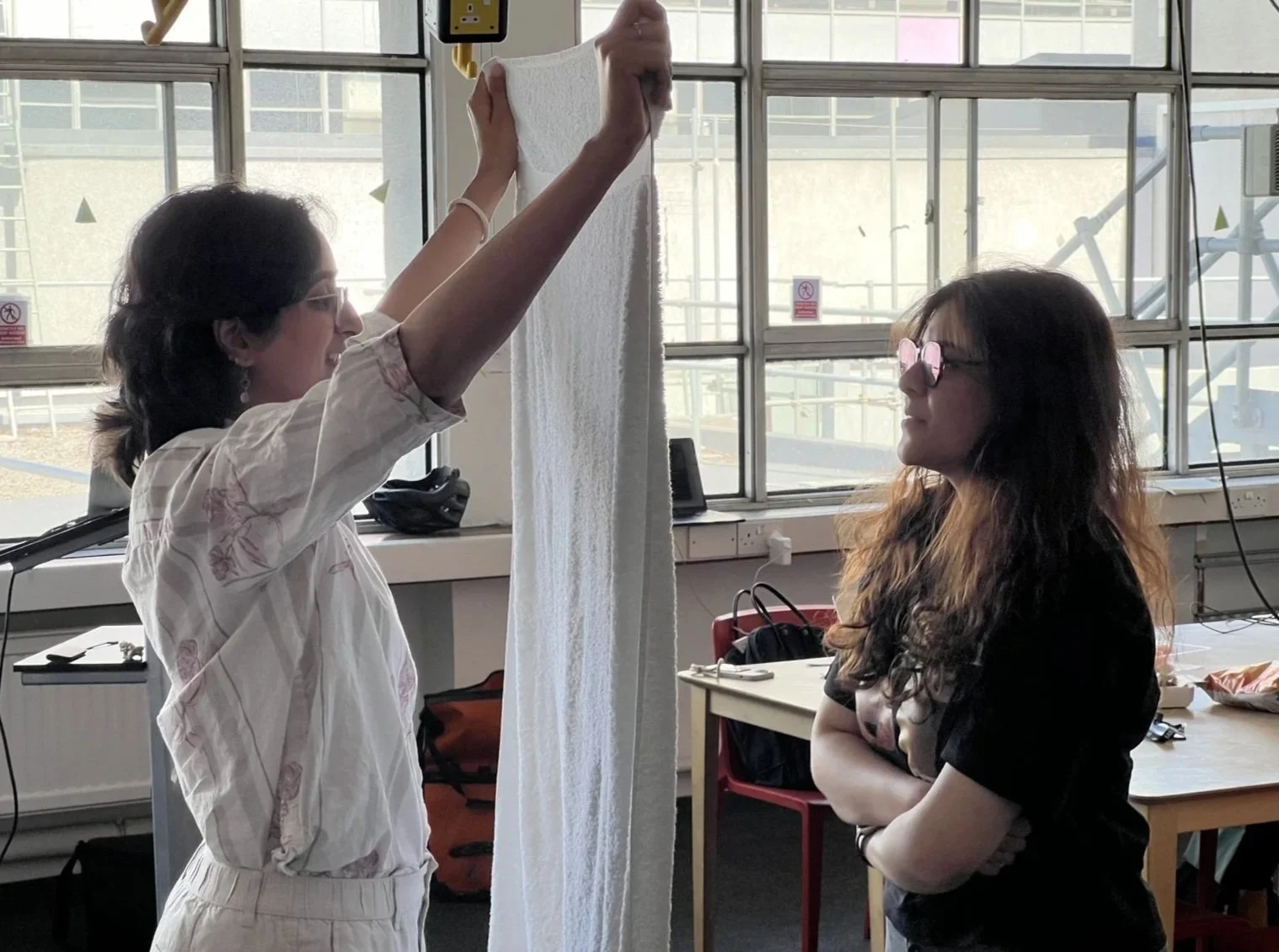
Main Activity
We explored how participants embodied the “personality” of a hospitality towel. The towel was passed around the circle, each person acting as the towel and then questioning the towel. Many participants asked about the towel about its ‘job’, and their responses seemed to indicate that the towel seemed overworked. By the end, several people said they felt sorry for the towel and that empathizing with it might change how they would use it.
Reflection of the activity
This mini workshop emphasized the hidden value we had chosen to explore. At the end, people felt bad for the towel and almost looked at it as a human who had been overlooked.
References
Tanizaki, J. (2001). In Praise of Shadows. Translated by T. J. Harper and E. G. Seidensticker. London: Vintage Classics.
Kunstel‑Tabet, L. (2026). Project Management Workshop, workshop delivered as part of the MAUX programme, University of the Arts London, 15 May.
Steele, A. and Deelen, R. (2026) Workshop Without a Workshop, workshop delivered as part of the MAUX programme, University of the Arts London, 22 May.
