Micro Unit Part Five
Brief: Design a way for textile waste to reveal its hidden value.
Team Members: Luis Winkelbrandt, Nicole Shu, Molly Wensley, Amen Maheen, Vanashree Chowdhury, Niki Marathia, Jaime Santos Guerrero, and Lynn Zhong
Crazy Eight’s
As you can see, we have done an extensive amount of research. We were at a point where we needed to ideate. Tonchia suggested we try the crazy 8’s method. Were we each to come up with 8 ideas in 8 minutes, that are wild and potentially not possible, but could lead us to prototype something.
Because we have 9 people, we did crazy 3’s, 3 ideas in 3 minutes. We then explained our ideas and went back to see which ones we wanted to prototype.
Idea 1 - Frankentowel:
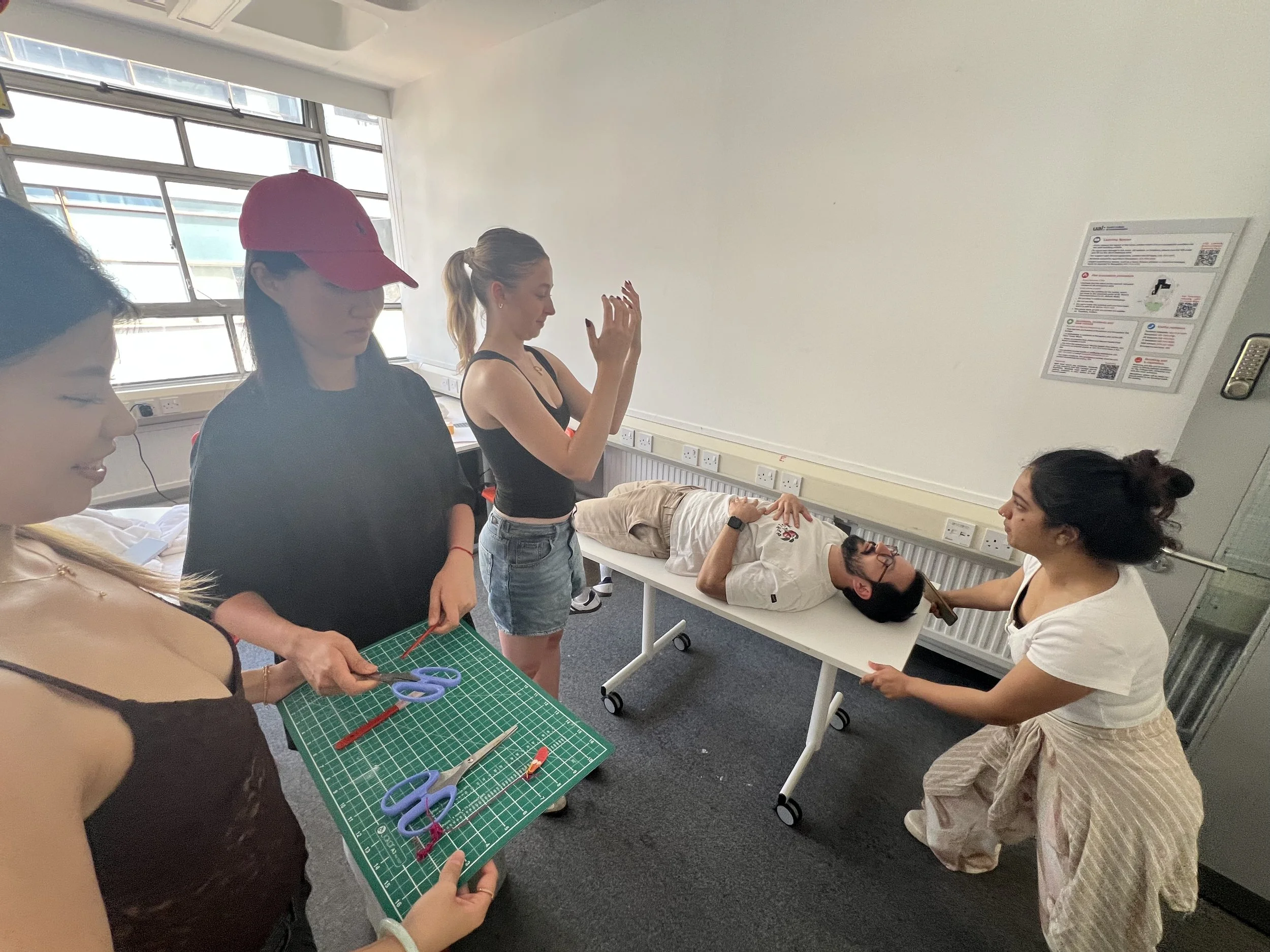
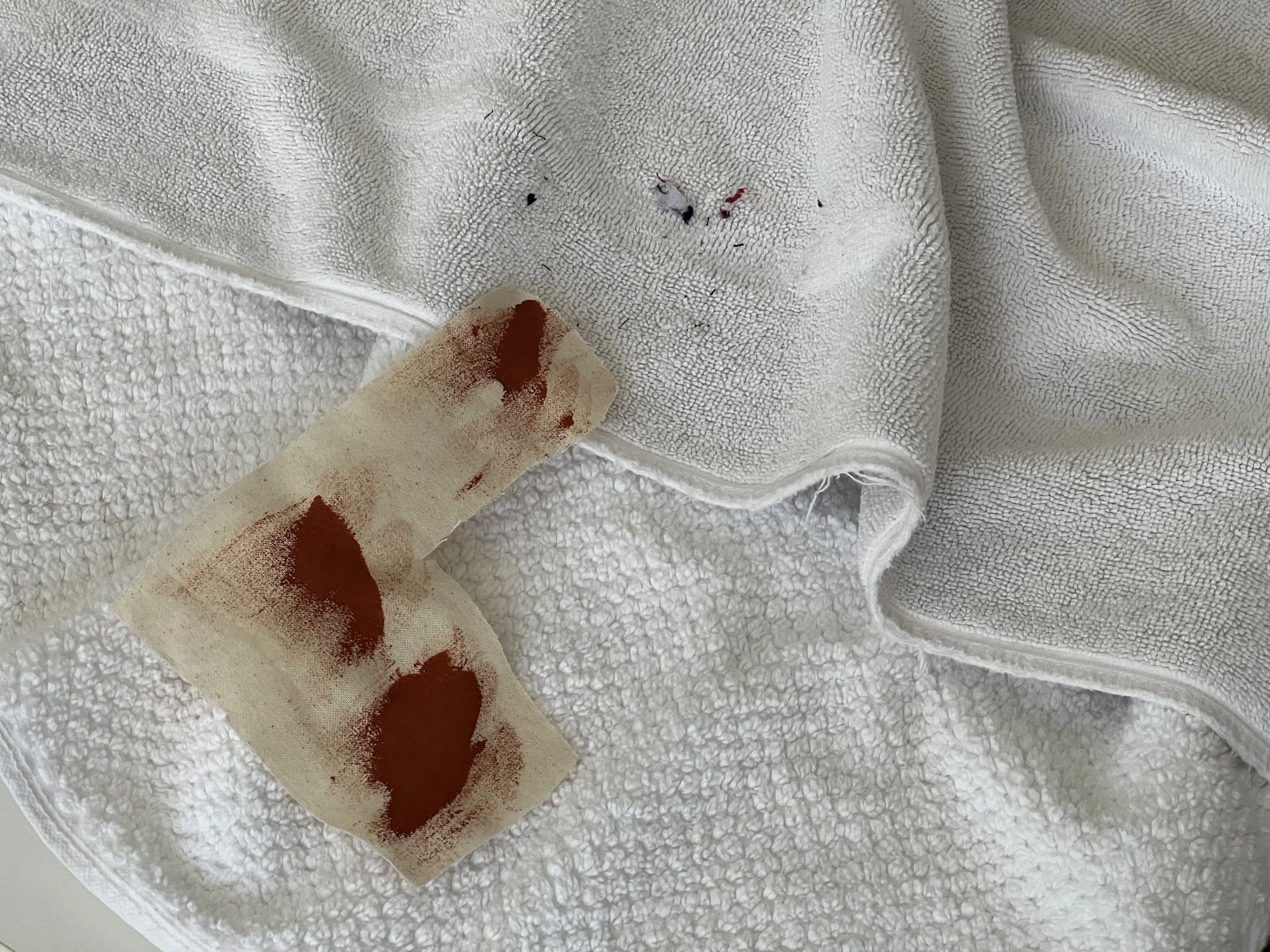
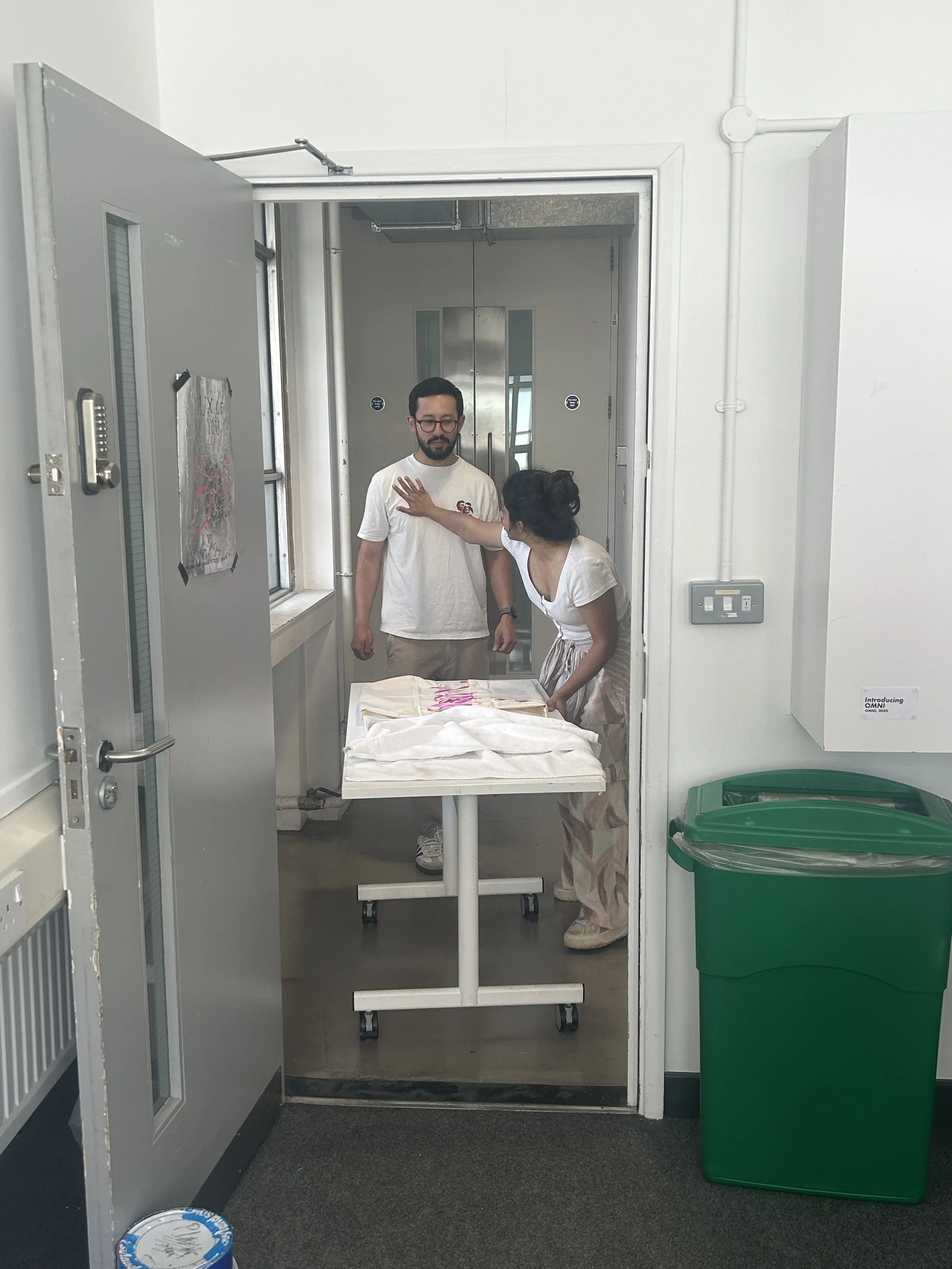
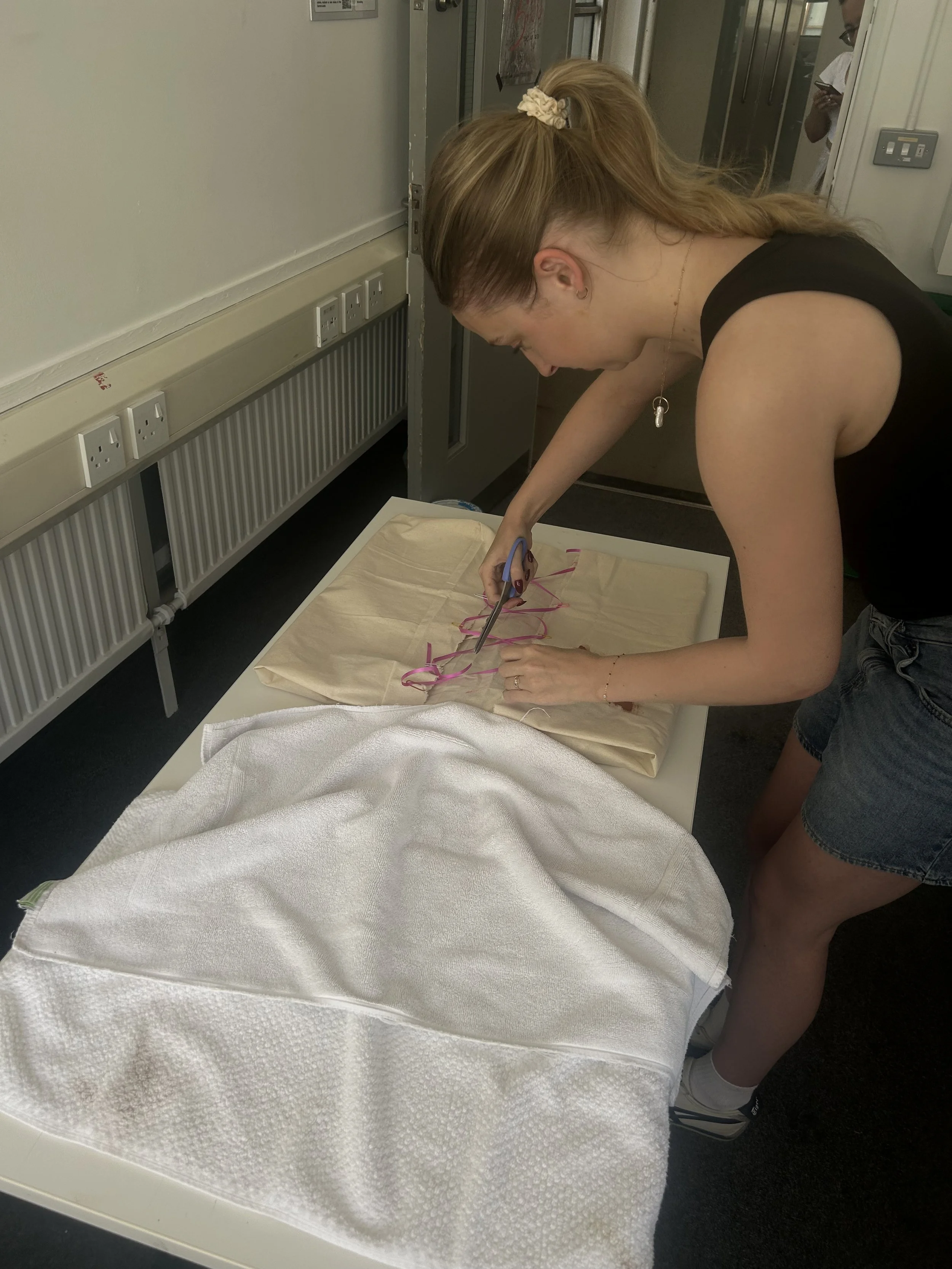
During this idea, we each took on a role as if the towel was undergoing surgery. This idea was to see the stained parts of the towel and either replace them with unstained parts of another towel or make a large ‘Frankentowel” out of all the stained pieces.
Idea 2 - Towel memories:
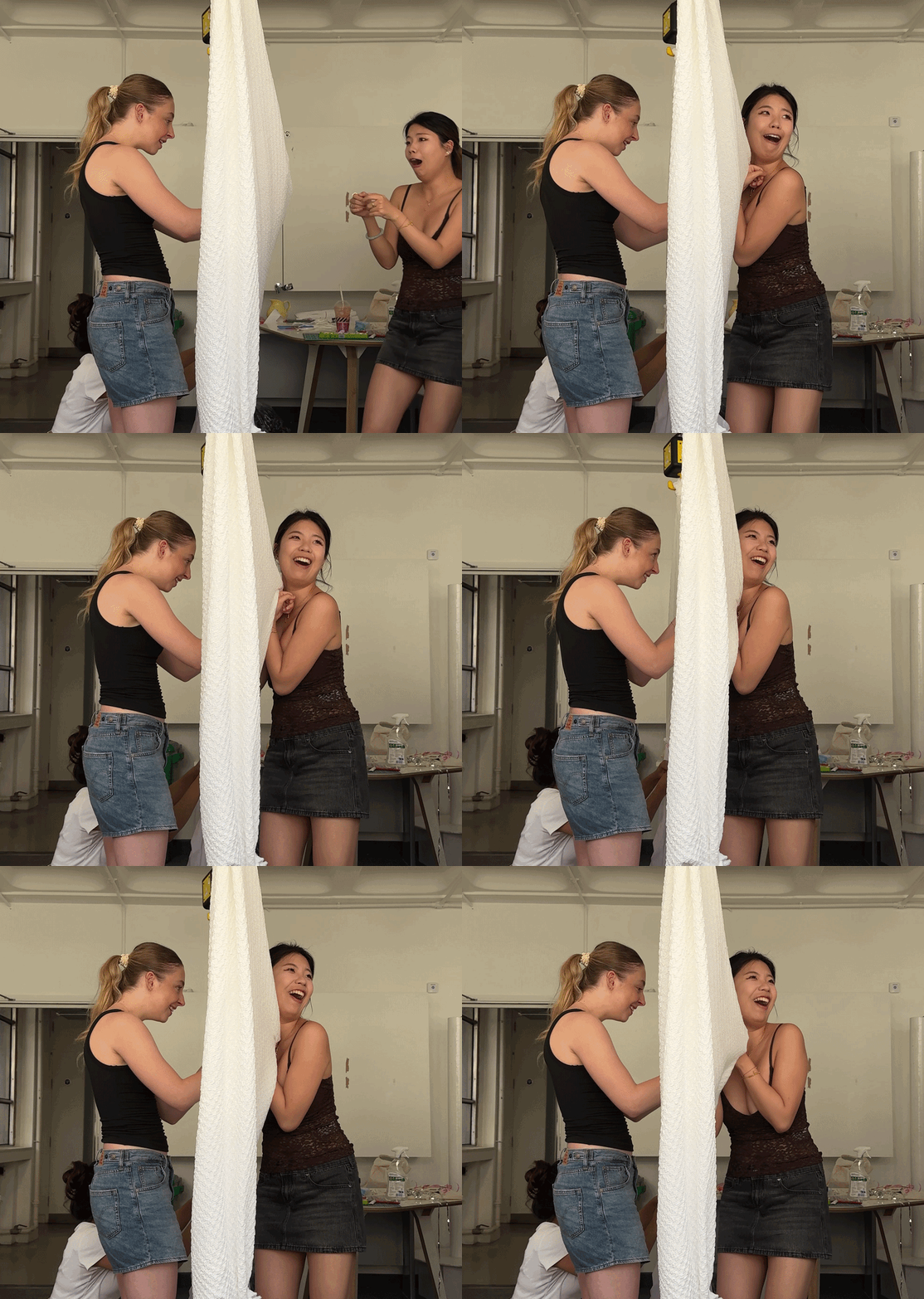
During this activity, we had participants on each side interacting with the sheet. This helped create a 3-dimensional memory of someone using the towel on the other side. Our value was to bring out the personality in each towel. We thought this interaction would create an embodied experience.
Idea 3 - The life of a towel
This idea stemmed from an idea about the reincarnation of a towel. In this exercise, we had Luis play the role of the towel and then perform the life cycles of a towel. While this idea was not something that fully connected to our hidden value, seeing the origin story of the towel did bring perspective.
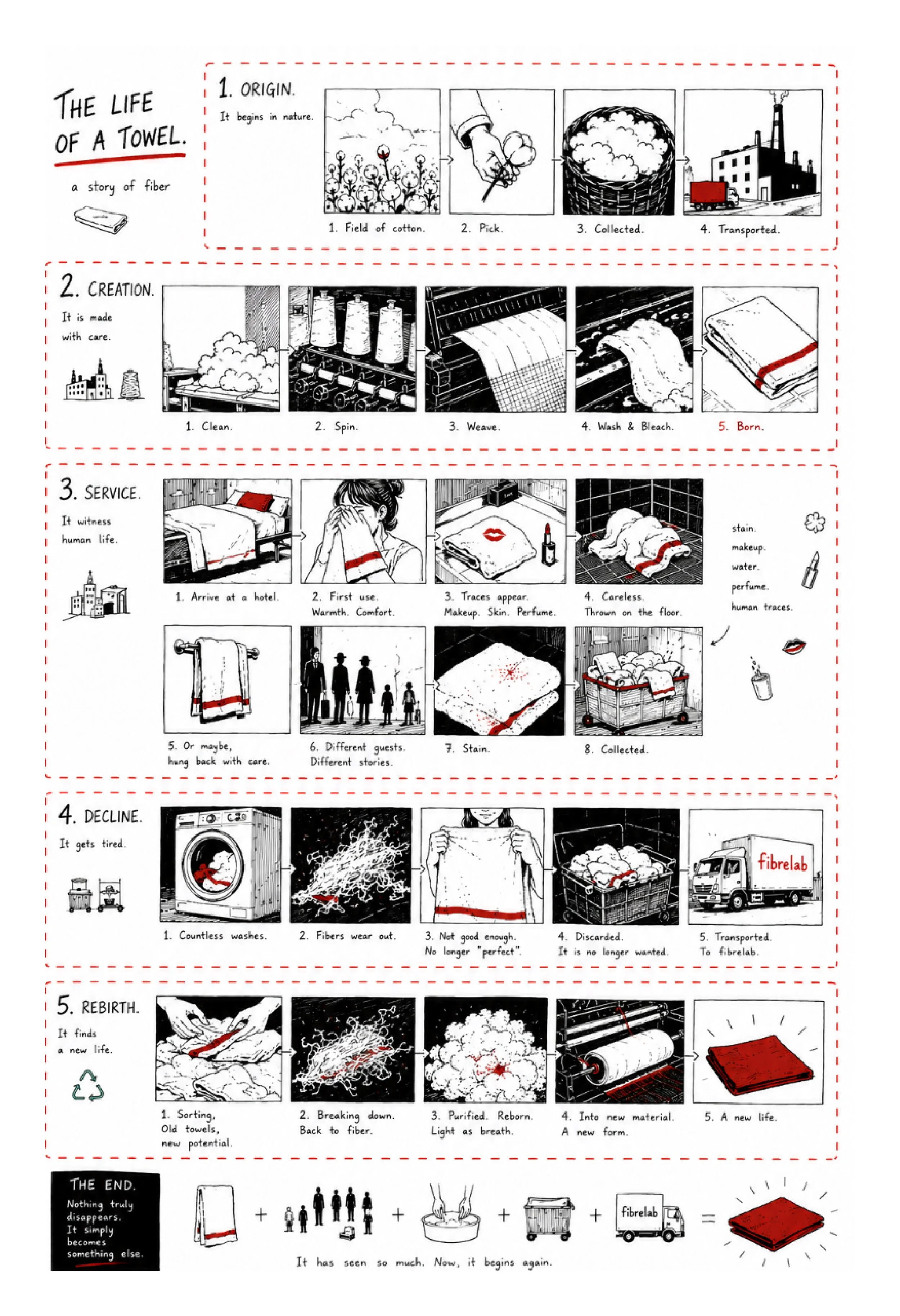
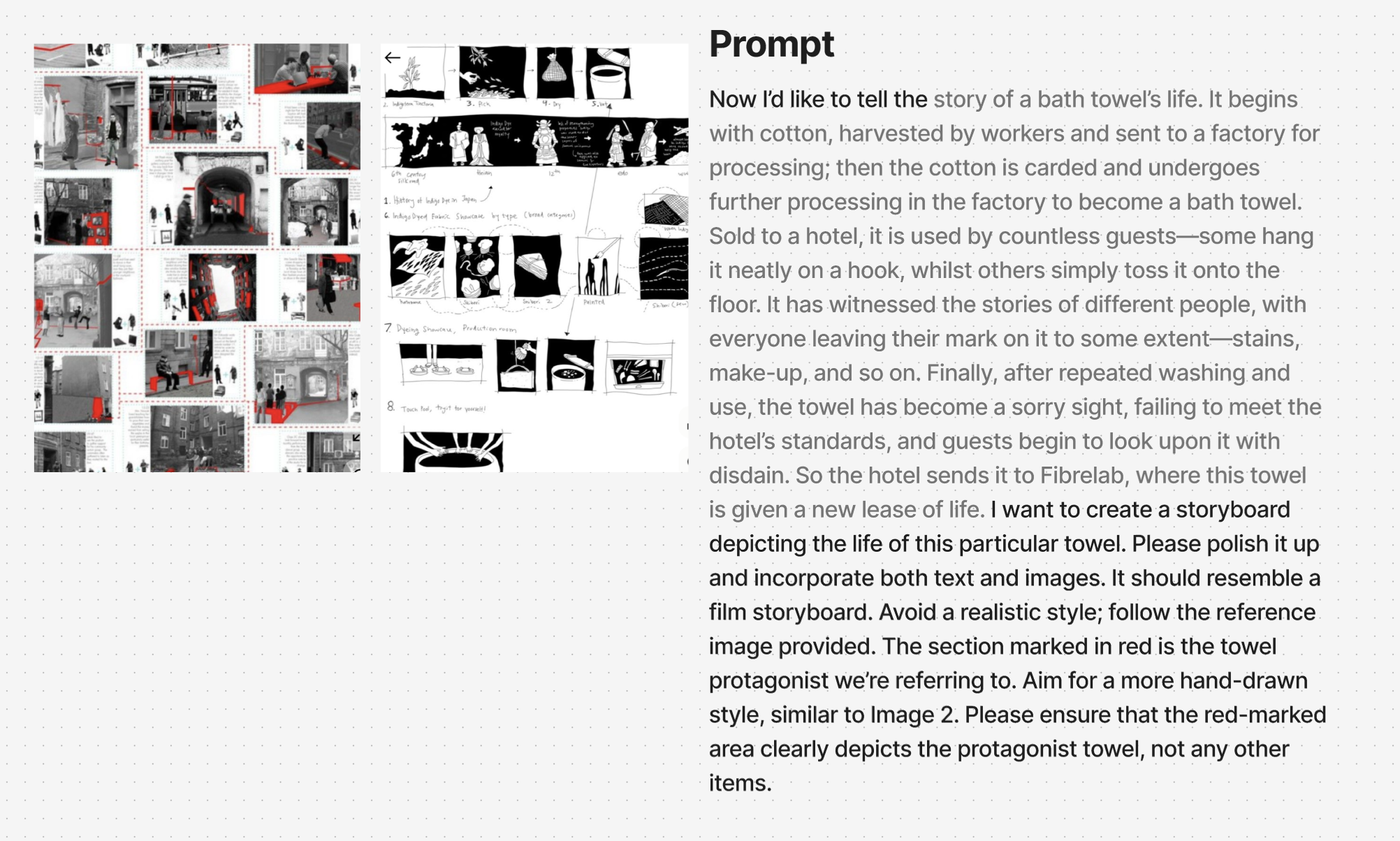
We also generated a storyboard of the towel’s journey using Claude AI, which helped us better understand and visualize the process that Luis had just embodied (Zhong, 2026).
Idea 4 - Towel Chair
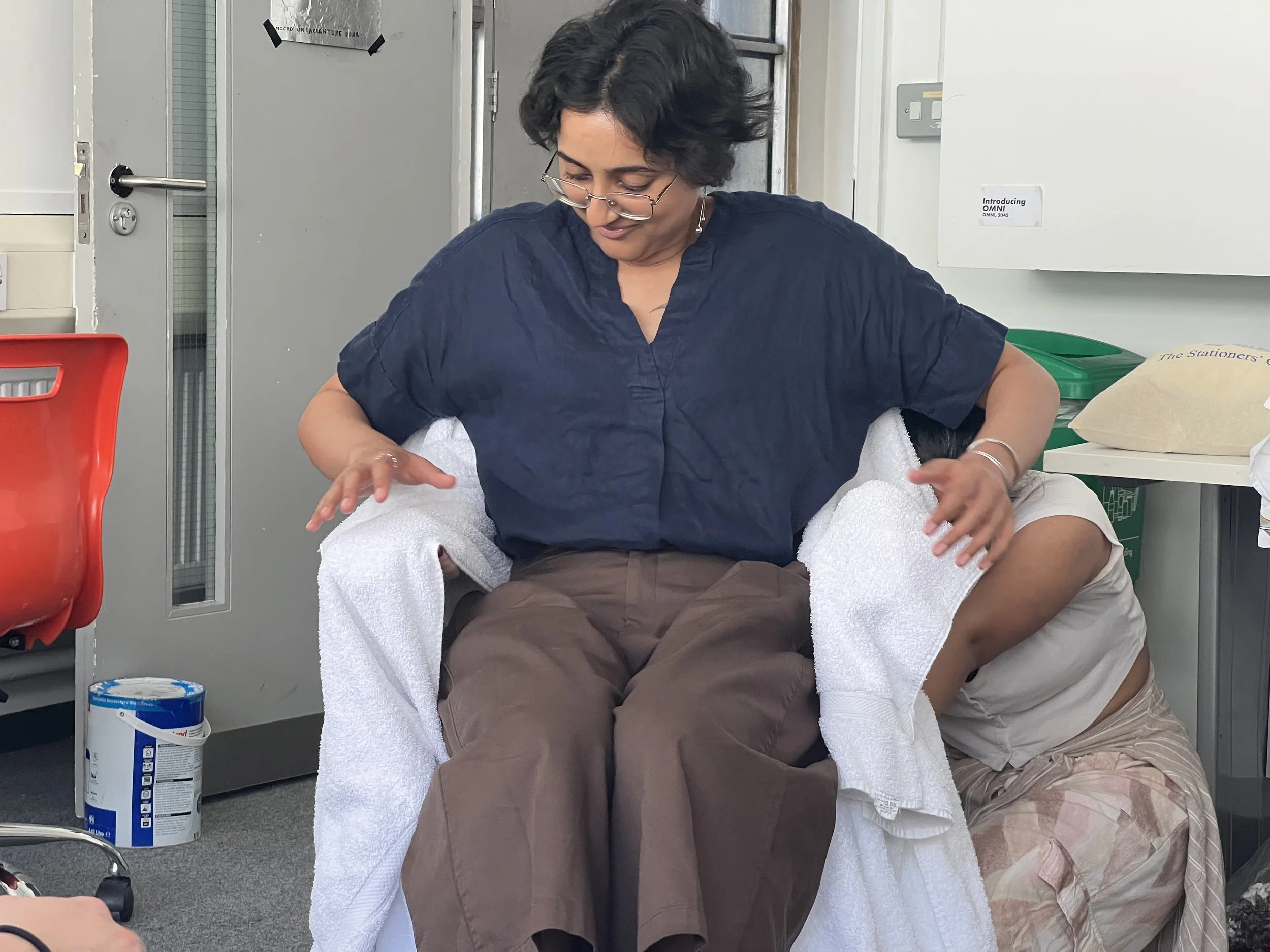
People tend to judge textile waste, calling it dirty and gross. We wanted to flip that narrative and have the towel do the same. We embodied the arms of the chair, and when someone sat down on the chair, we spoke and judged the person. Pictured is our colleague, Vibhooti, testing out the chair as the towel verbally judges her (Vana and I ‘were the chair,’ so we were the ones acting as the towels) (Zhong, 2026). Vibhooti said it made her feel weird and want to double-check how clean she was. (Vabooti was told that all ‘judgments’ were hypothetical, and she understood not to take them as reality).
Reflection of the activity
This activity was a big turning point for us. While some of these ideas felt silly, they helped us start to prototype and pull our research together to create something. I was stressed going into this week with no ideas, but I began to realize that even though these will not be our final ideas, they are a great starting point for our group.
Idtiating and Prototypeing
We decided to explore the ‘towel memories idea.’ While we were all happy when we decided on this idea, it became clear that we all had completely different ideas bout how to execute it, leading to some tension. It was nothing personal. It just showed how passionate we all are about this project.
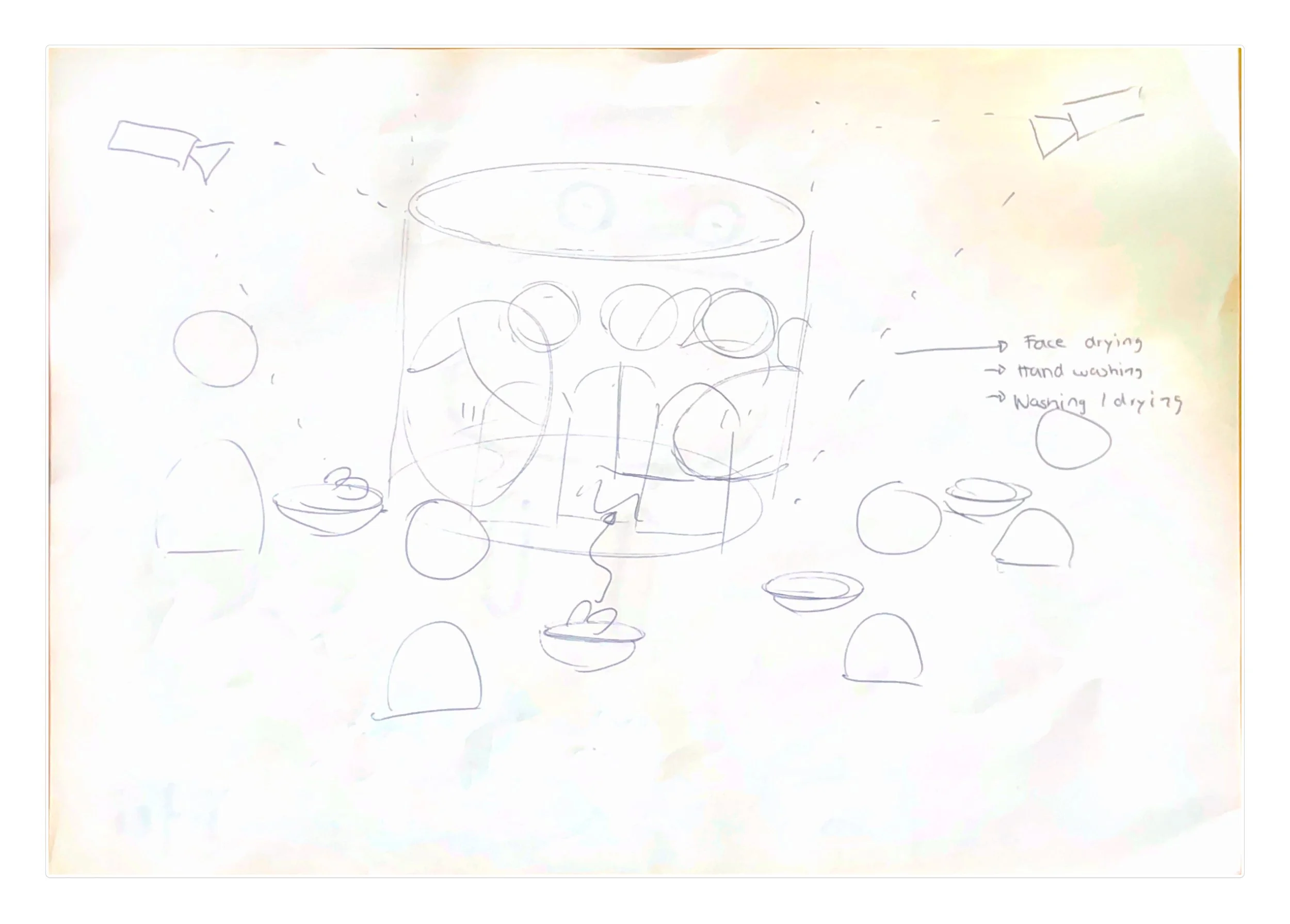
After a few hours of sketching, conversation, and compromise we decided to start prototyping.
We had taken a video using back lighting and a bed sheet to showcase the person or shadow using the towel. We then used a large projector to showcase that video directly on the towel.
This prototype reveals the towels’ ‘biography.’ The textile is no longer just a towel; it is a witness to labor and past usage. By animating the towel, it reconnects the discarded material with its past life (Boyle and Pearlman, 2024).
Original Video: The colors from this original video changed drastically. In this case, I believe the changing colors added to the overall feel of the video, but it was still something to evaluate if we take this route for the final product.
This render is an example of how we might want people to experience our interaction; we want them to feel like the towel so they empathize with the the textile, just like in the 10-minute workshop with did last Friday.
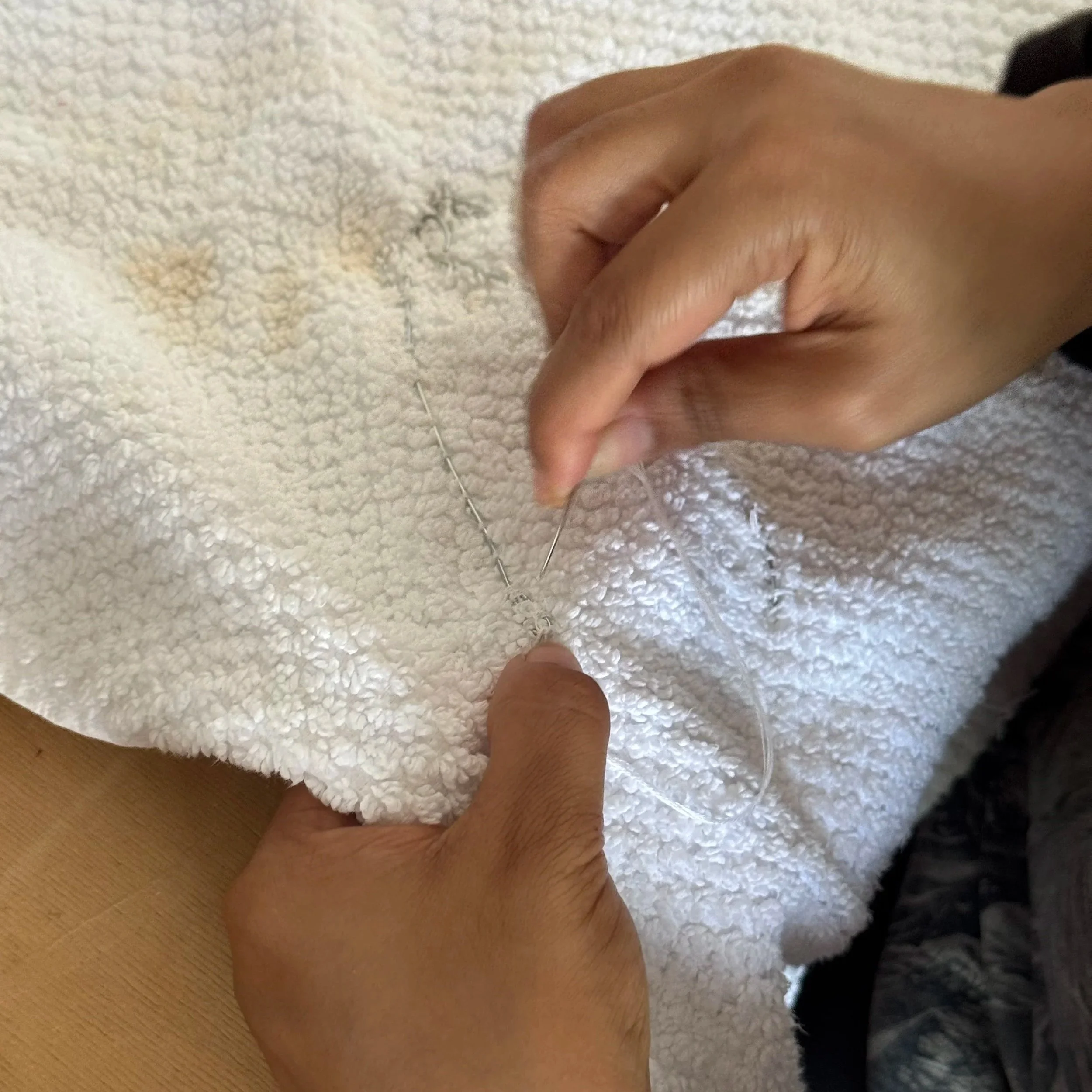
Vana did material testing with embroidery string and wire to try to keep the towel in certain positions, while the towel was projected on.
Reflection of Prototyping
While difficult at the beginning of this stage, we came up with an idea that we all thought was strong. While there were some healthy disagreements, I felt that it made our project concept stronger. Vanas material exploration helped us add an element of storytelling and interaction that we hope to continue to add in our project.
Stain Stories Workshop
After we had some feedback about adding more personality through material rather than projection, we decided to have a workshop activity in the park. Participants were invited to embrace the towel and try to understand the stories behind these textiles.
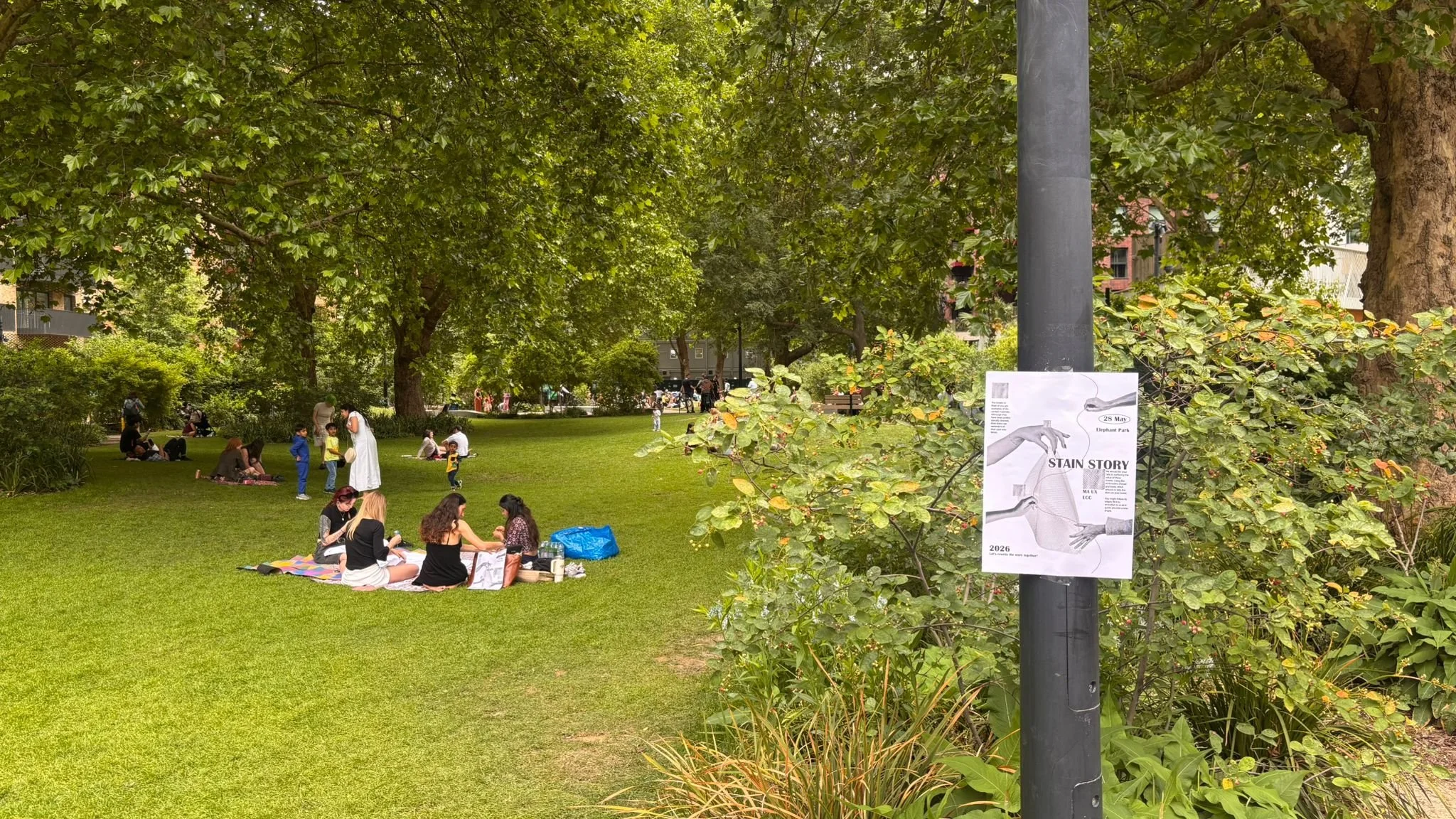
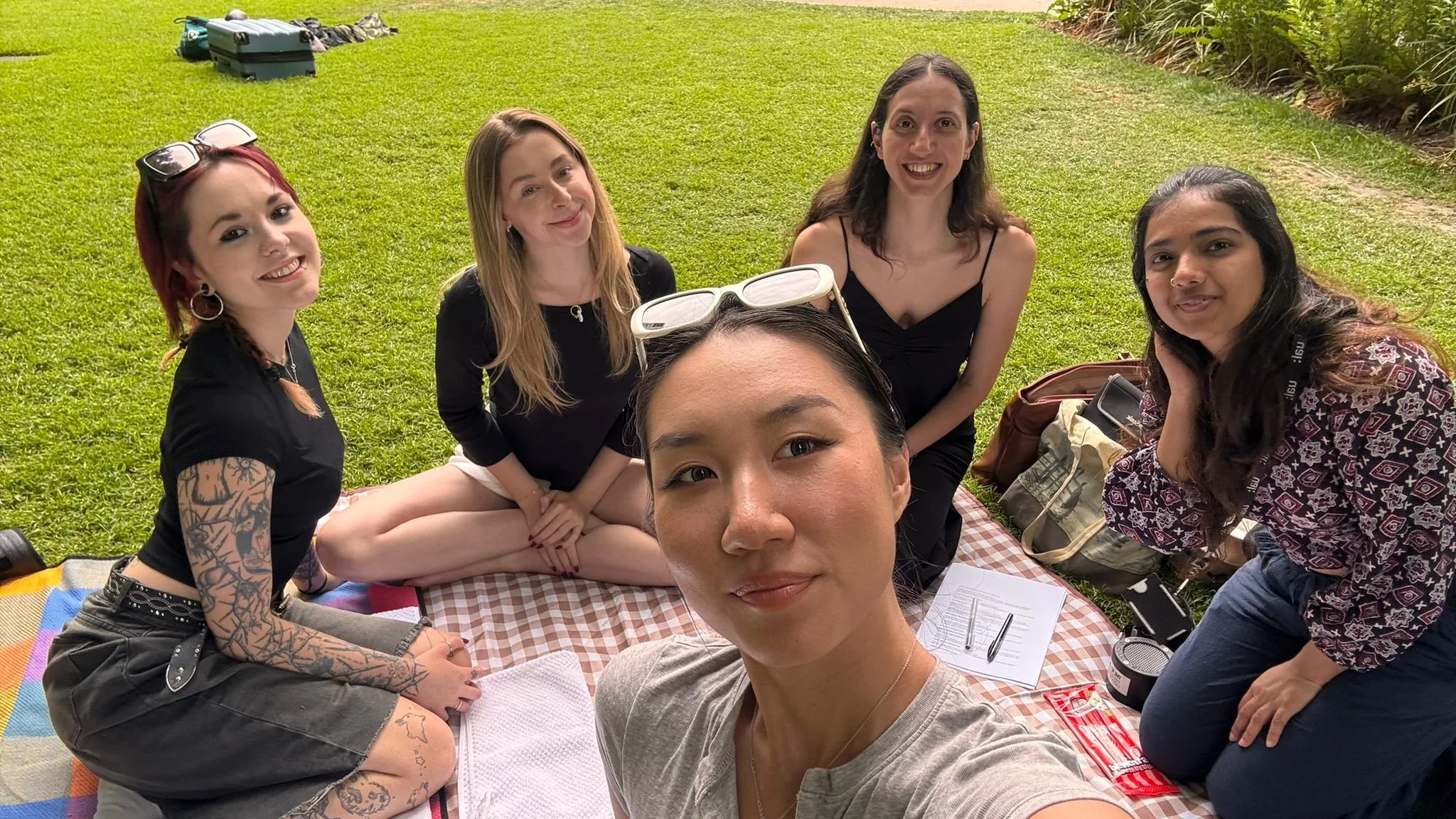
We chose to conduct this research in Elephant Park, as it was a warm day but not too sunny. We knew people would be sitting in the park and willing to help us with this fun activity (Zhong, 2026).
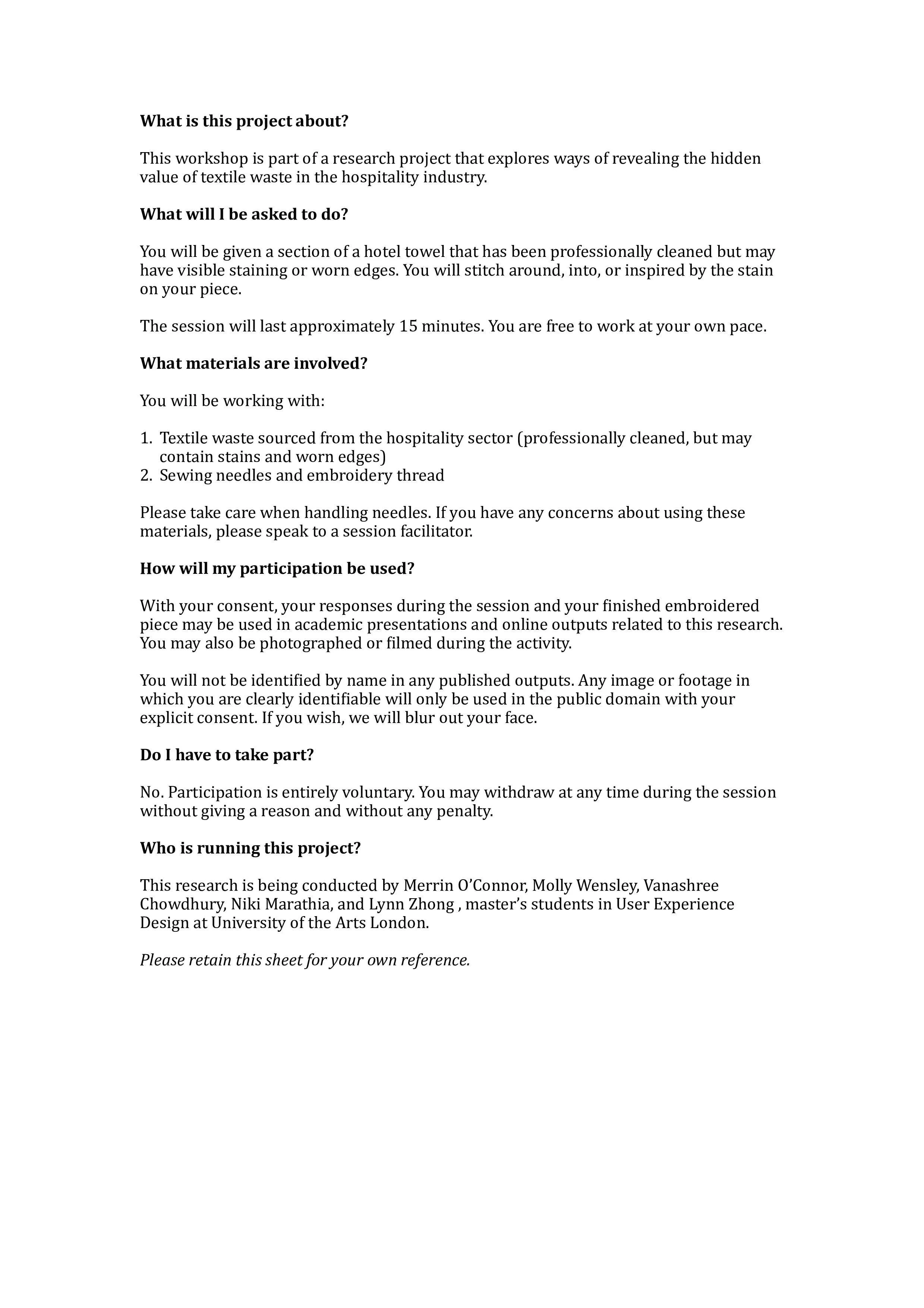
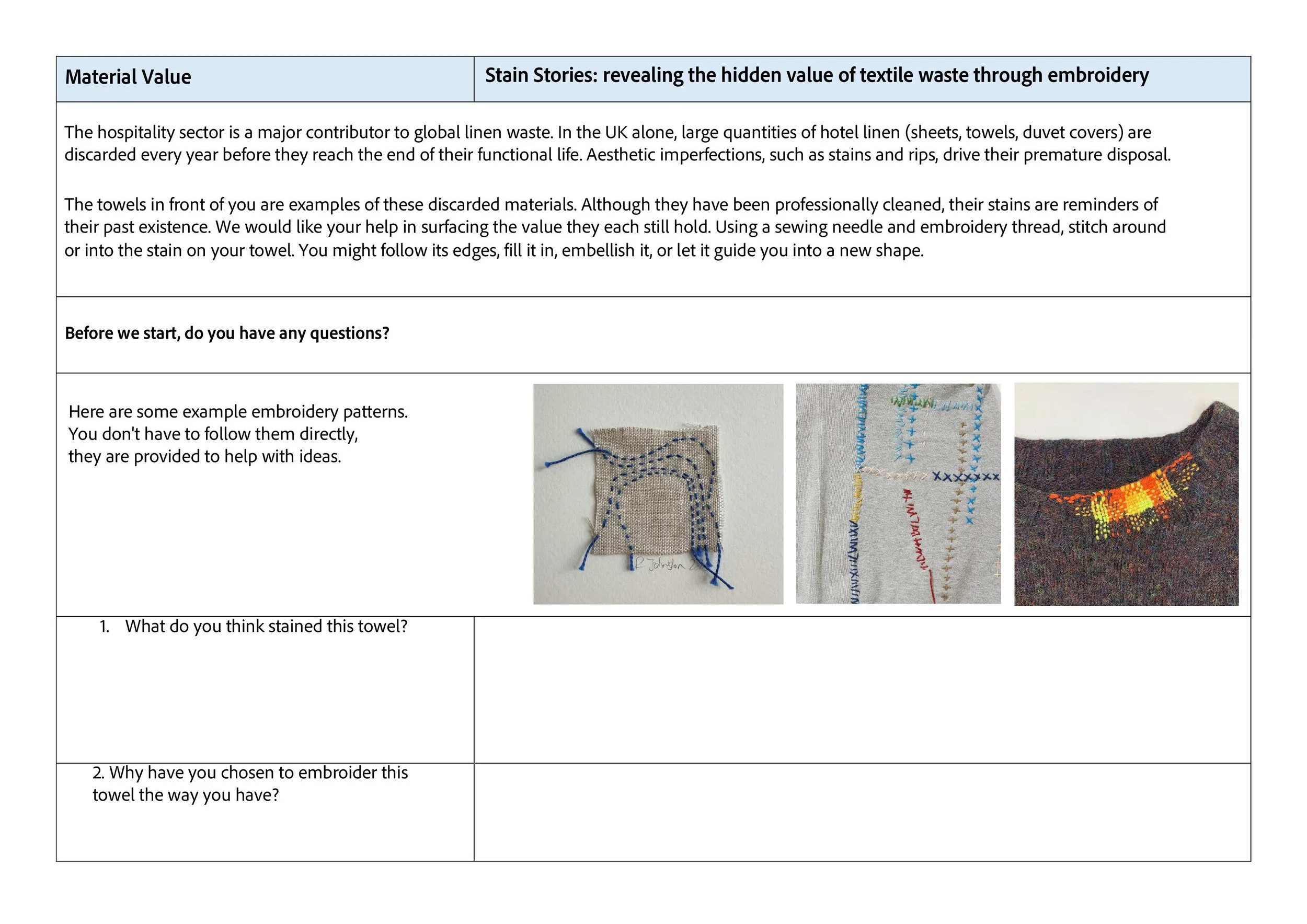
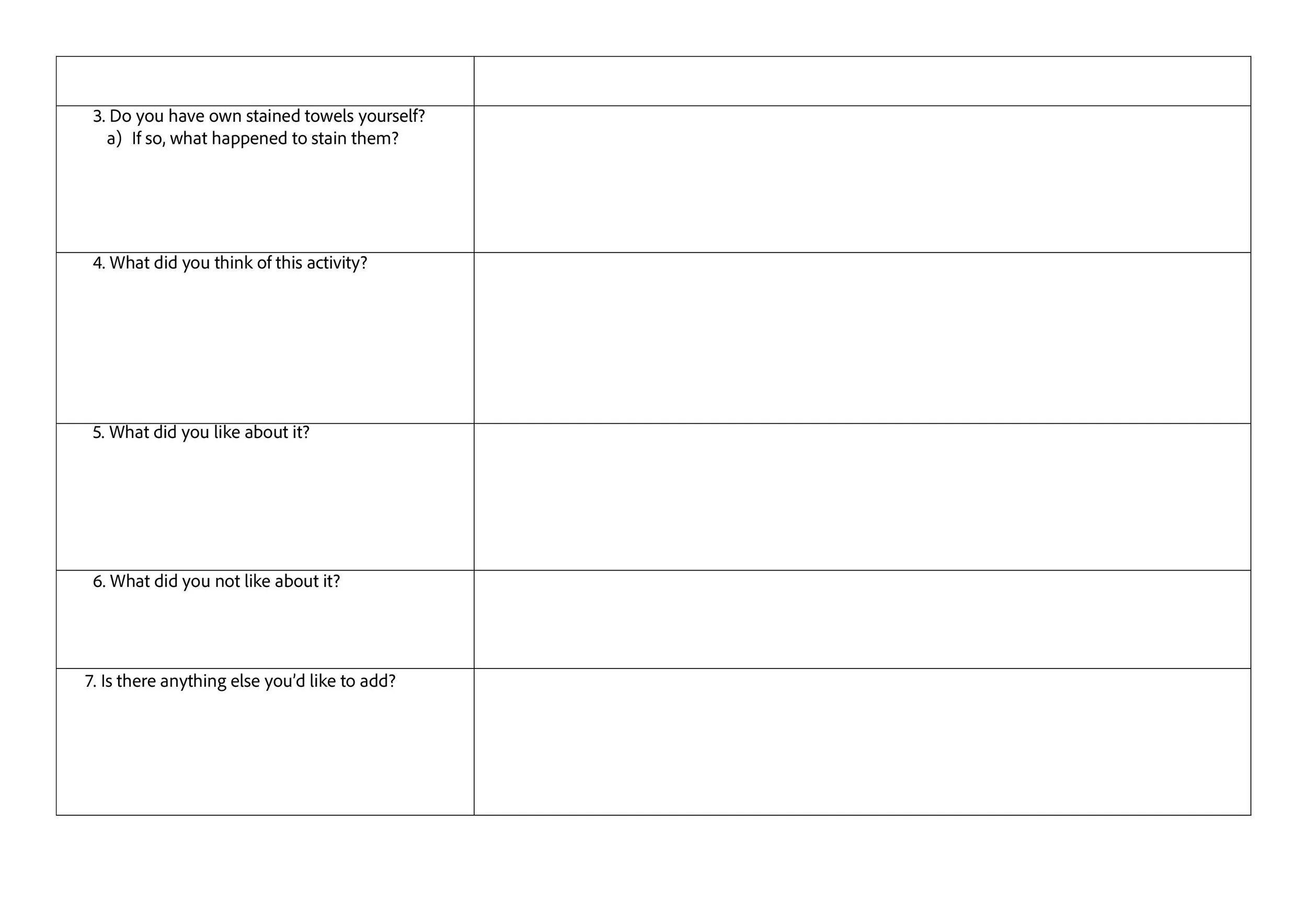
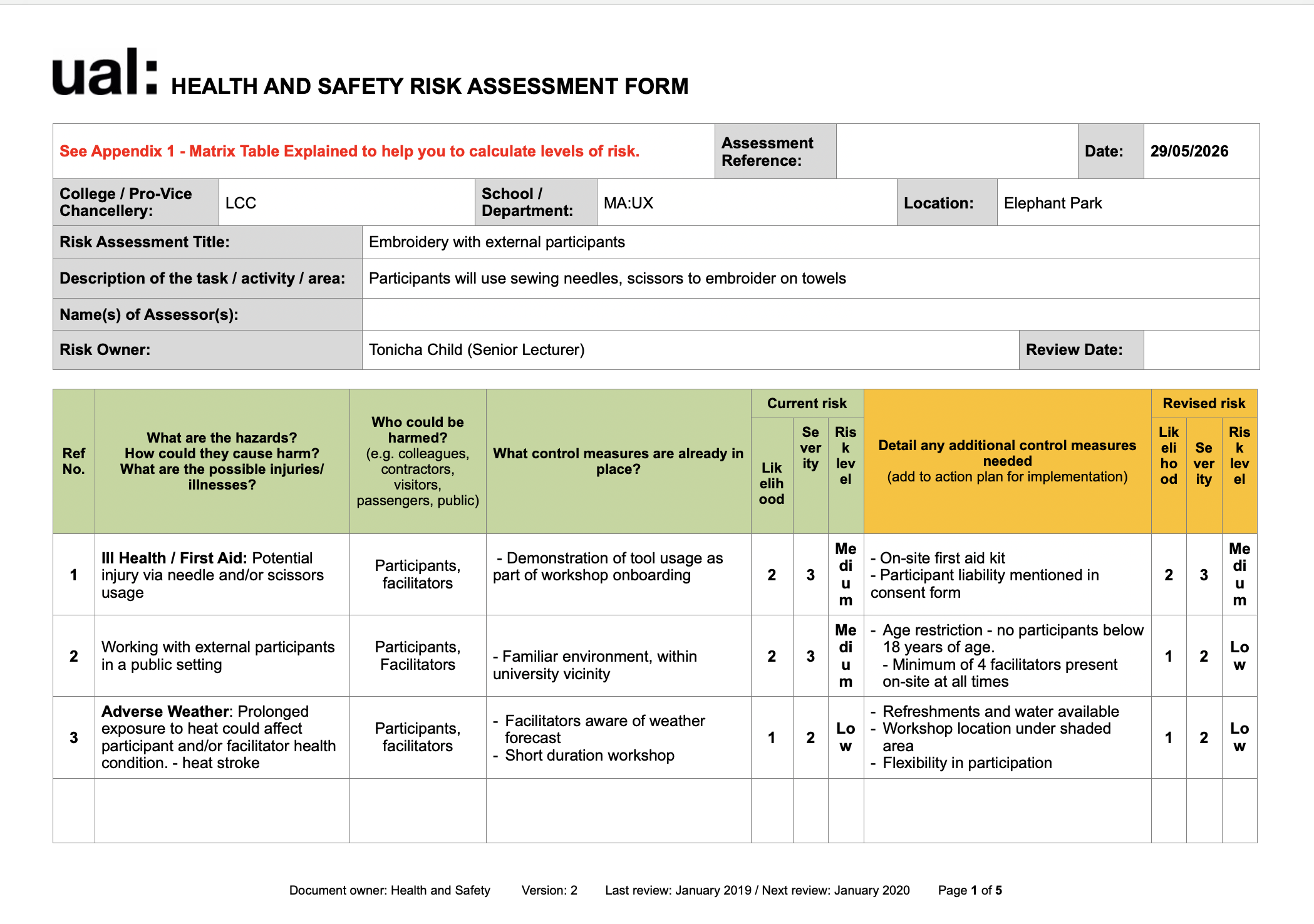
Before we could do this activity, we had to do administrative work. We created an information sheet that the participants could take home with them. We also created a consent form and a worksheet (we did not have them fill the worksheet out, but we asked them the questions verbally). We had to conduct a small risk assessment as we were working with external participants in a space outside of the university.
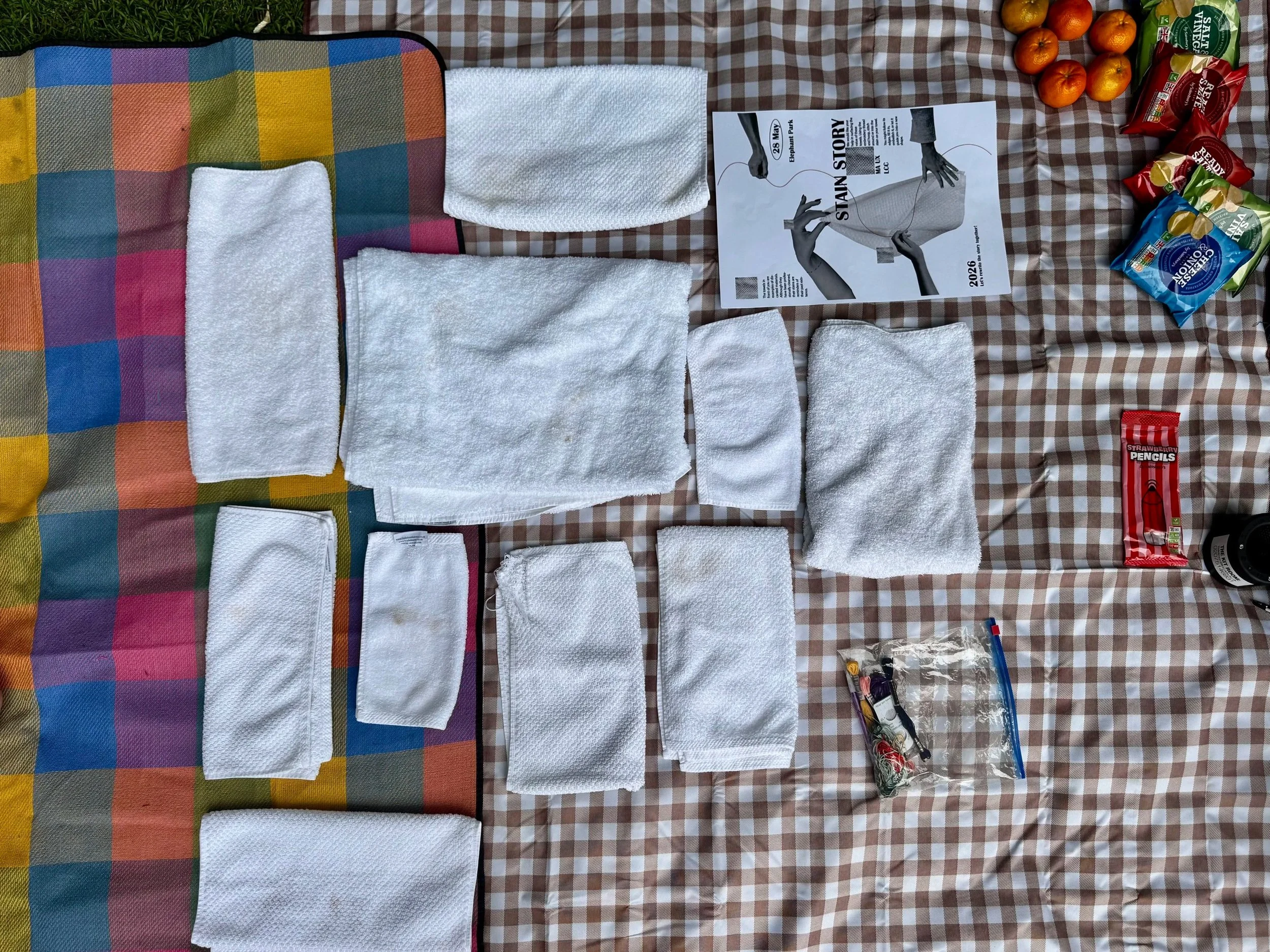
Materials and Set Up: We brought two picnic blankets, our hospitality textile waste provided by Fibre Labs, thread (color choices), needles, a speaker with relaxing music, posters, examples, snacks, and water. We wanted our participants to feel as if they were in a comfortable and casual setting.
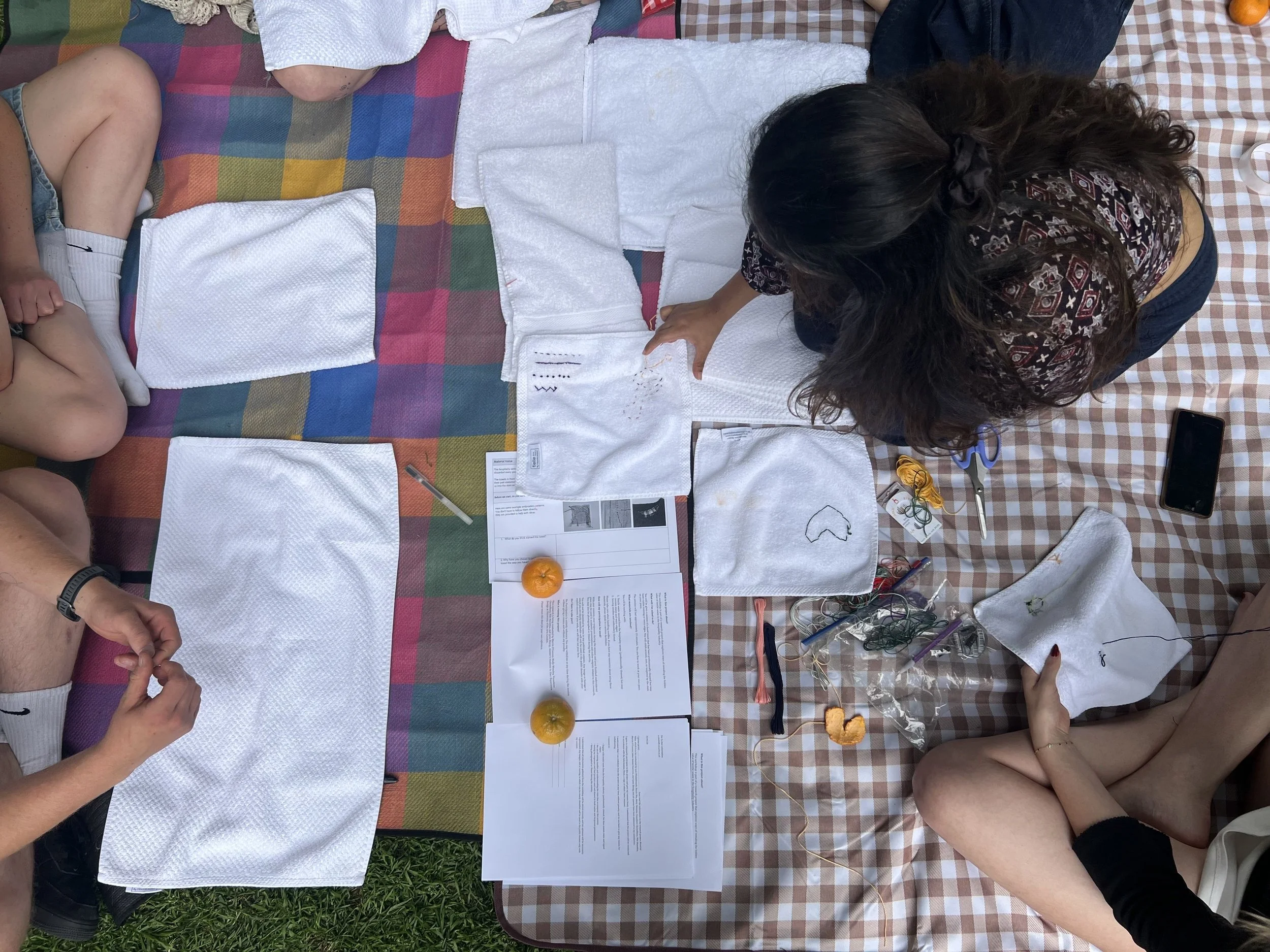
Vana, who has a background in fashion, gave our participants some guidance and examples of stitches they could do. After she was finished, we asked them what they thought happened to the towel, and 4/4 of the participants said the stains were from makeup, which does make up a majority of hospitality stains. However, we got into an interesting conversation about how, after they are washed, all stains start to look very similar, so it could be anything.
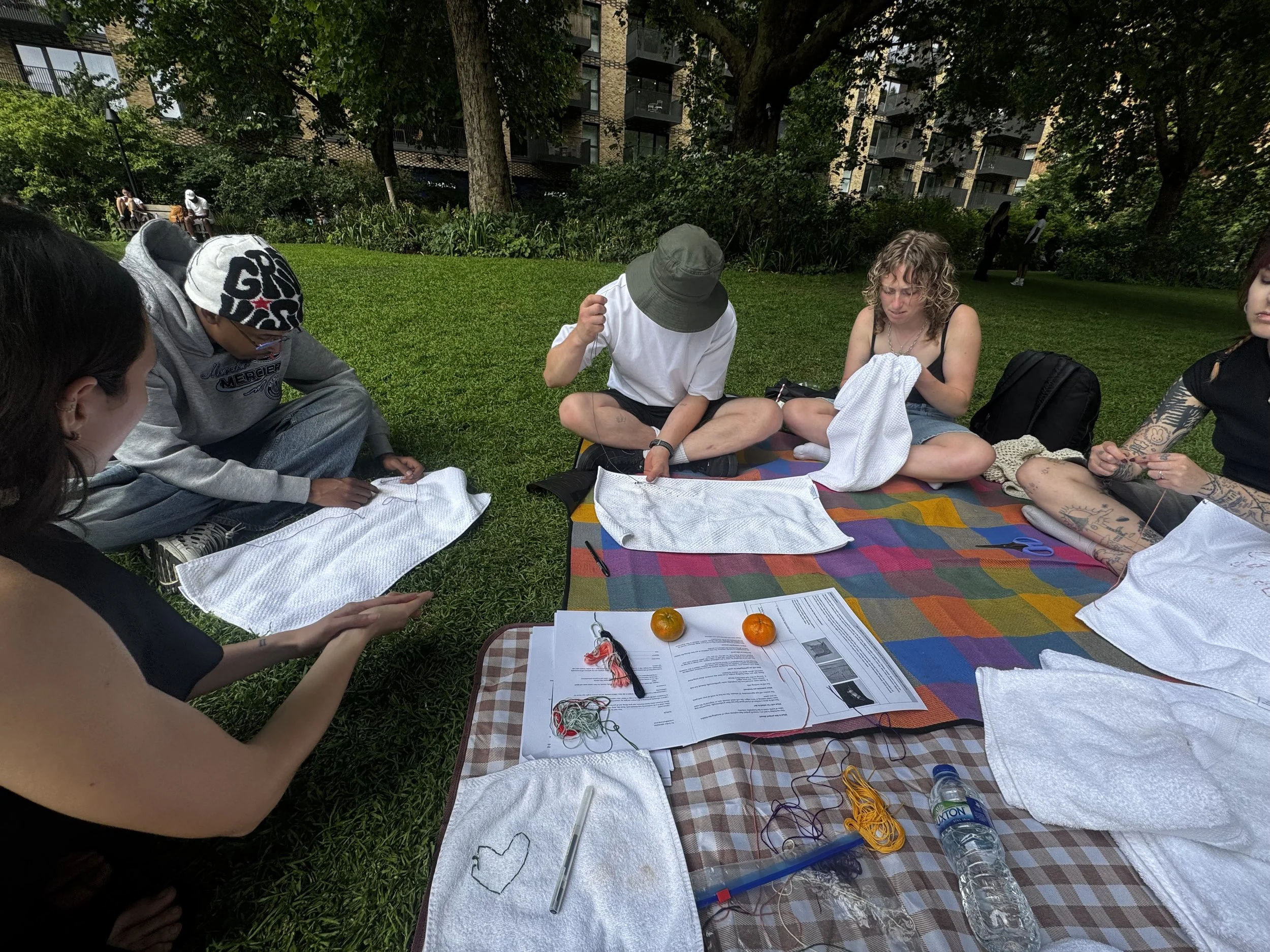
I was surprised at how much our participants wanted to interact with the stains. They were not scared of them in this setting. Although they did say that if they saw a towel like this in a hotel, they would not use it because they did not know what the stain was from. Although the towel was stained, participants trusted us, even though we were strangers. They were open to exploring the towel and engaging with it outside of its typical setting in the hotel environment.
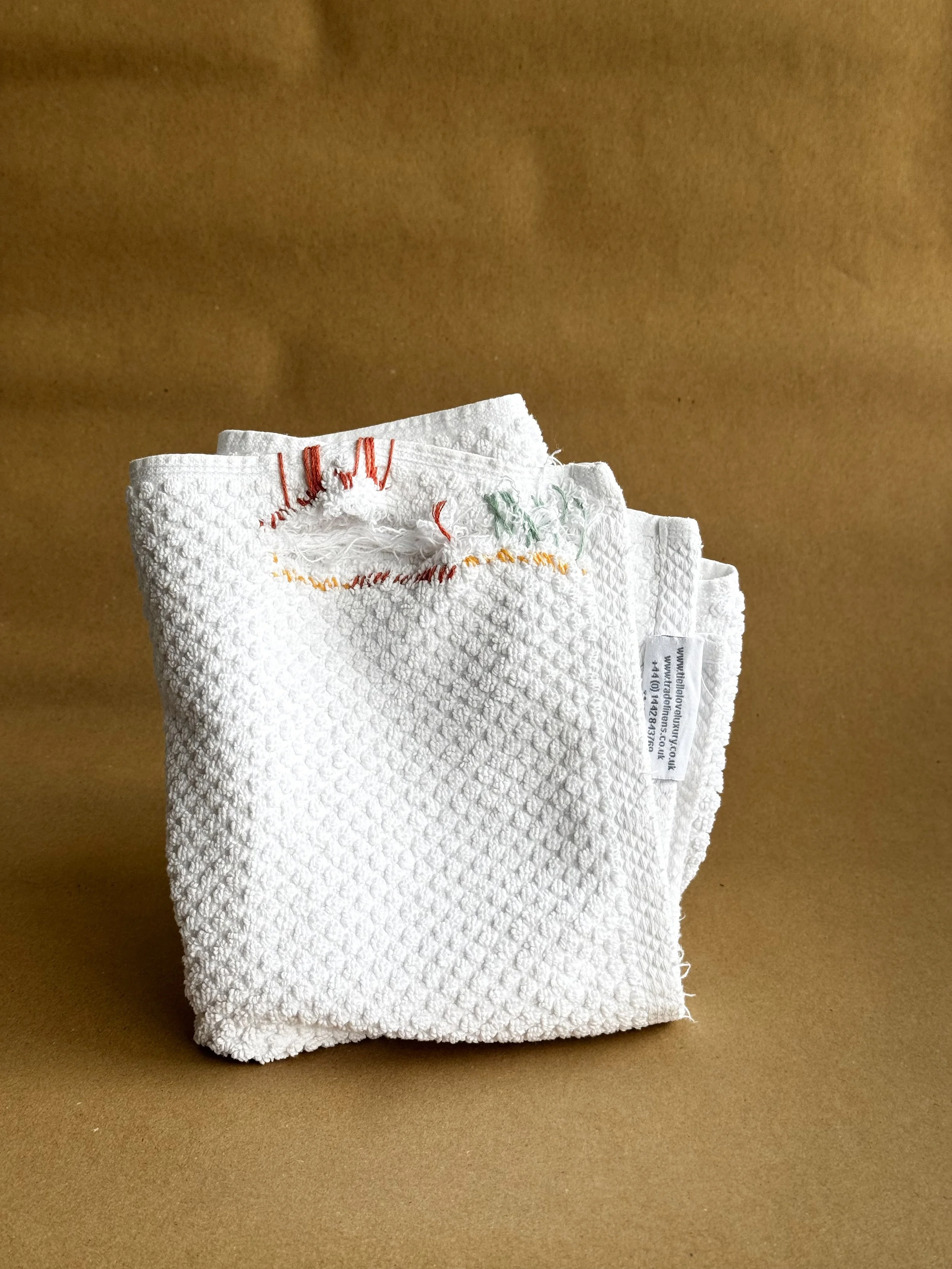
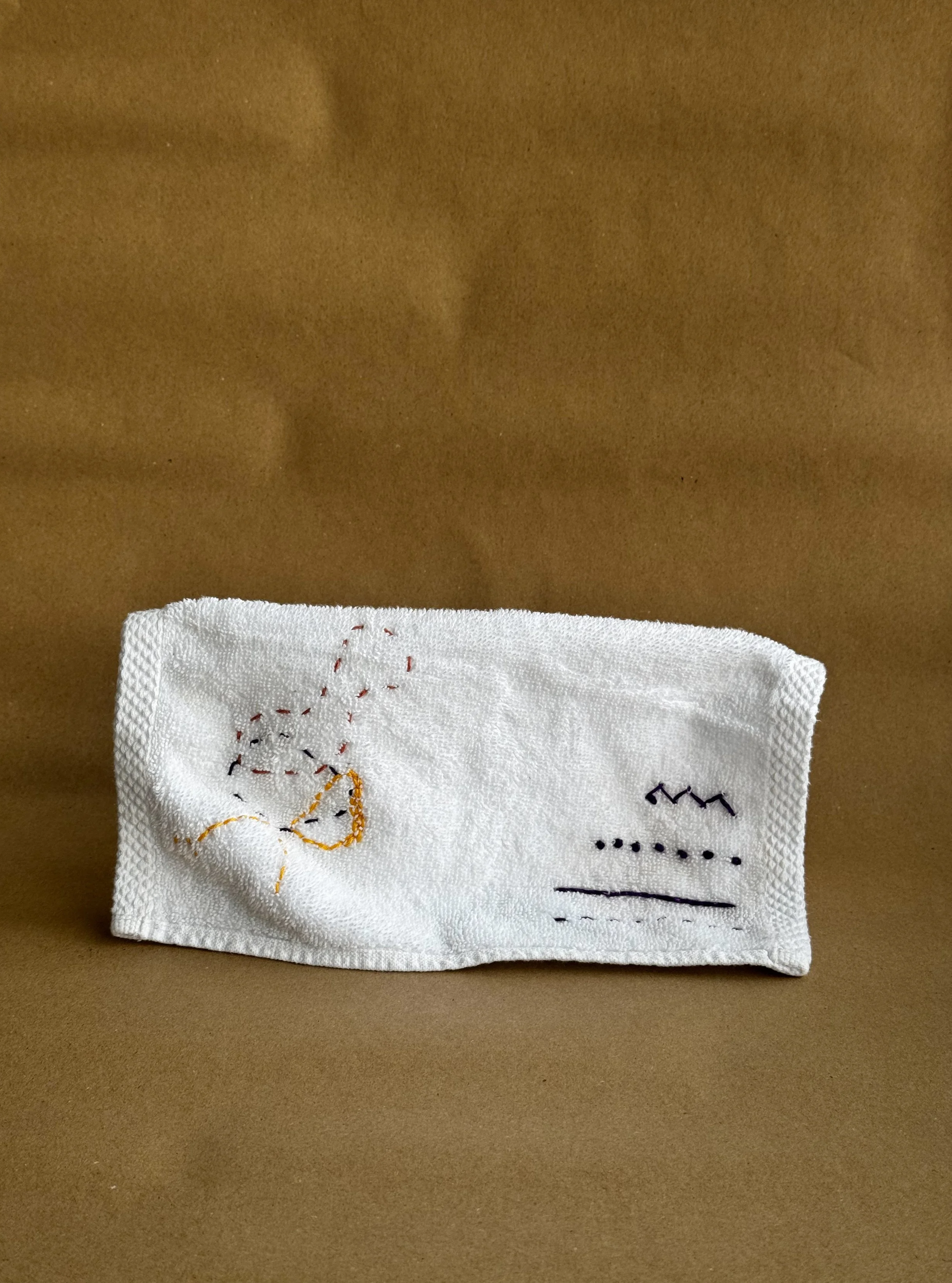
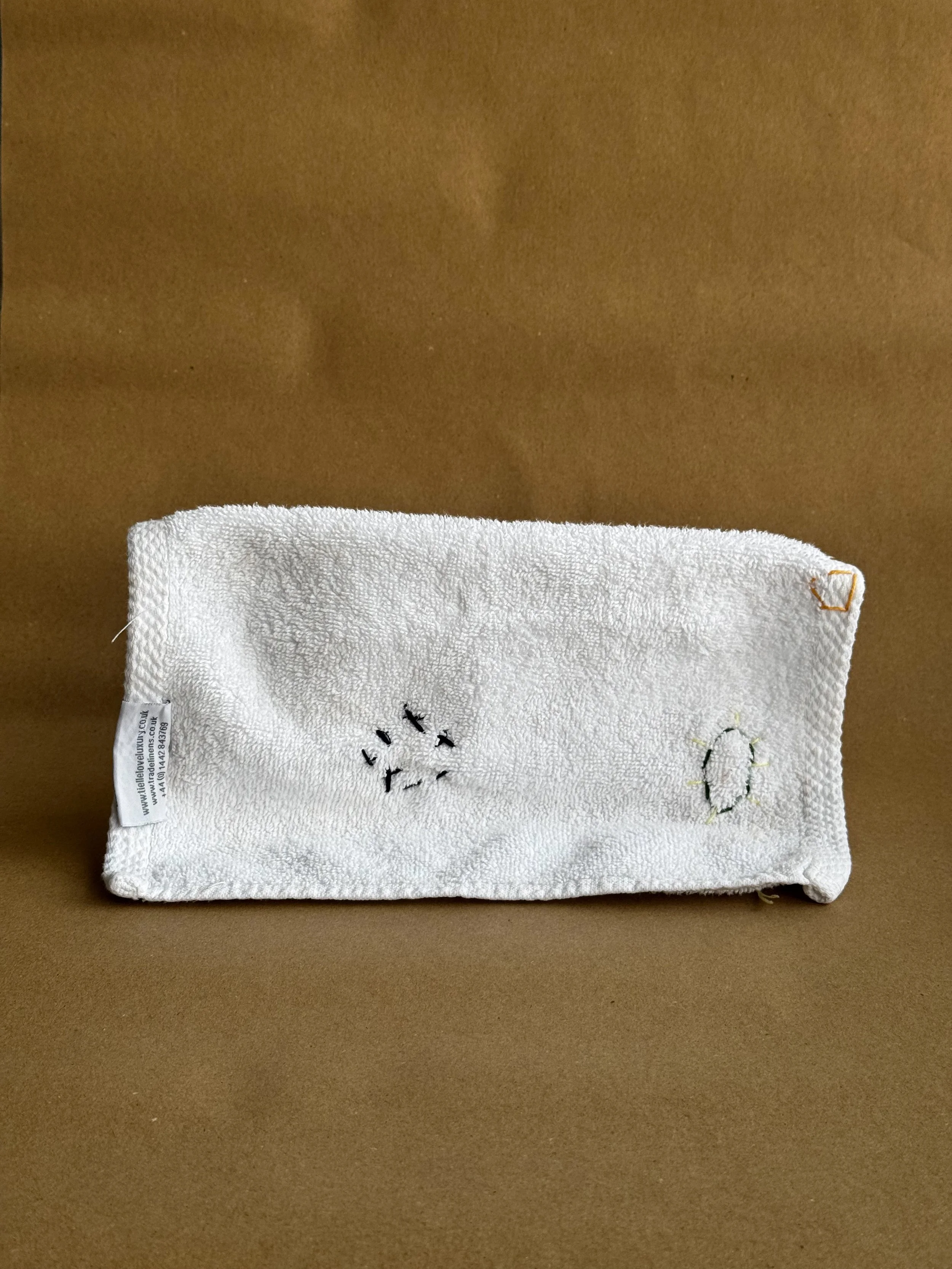
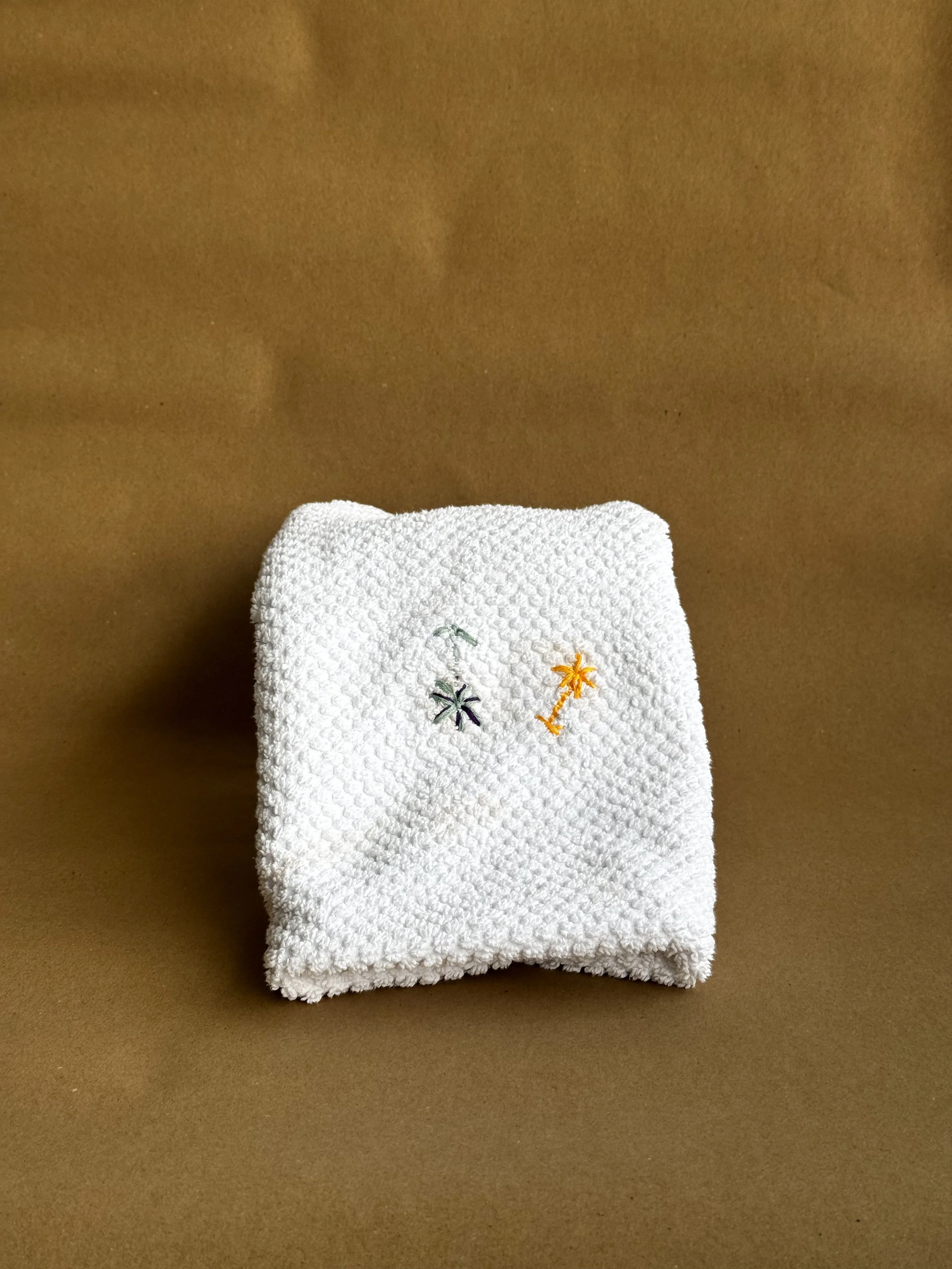
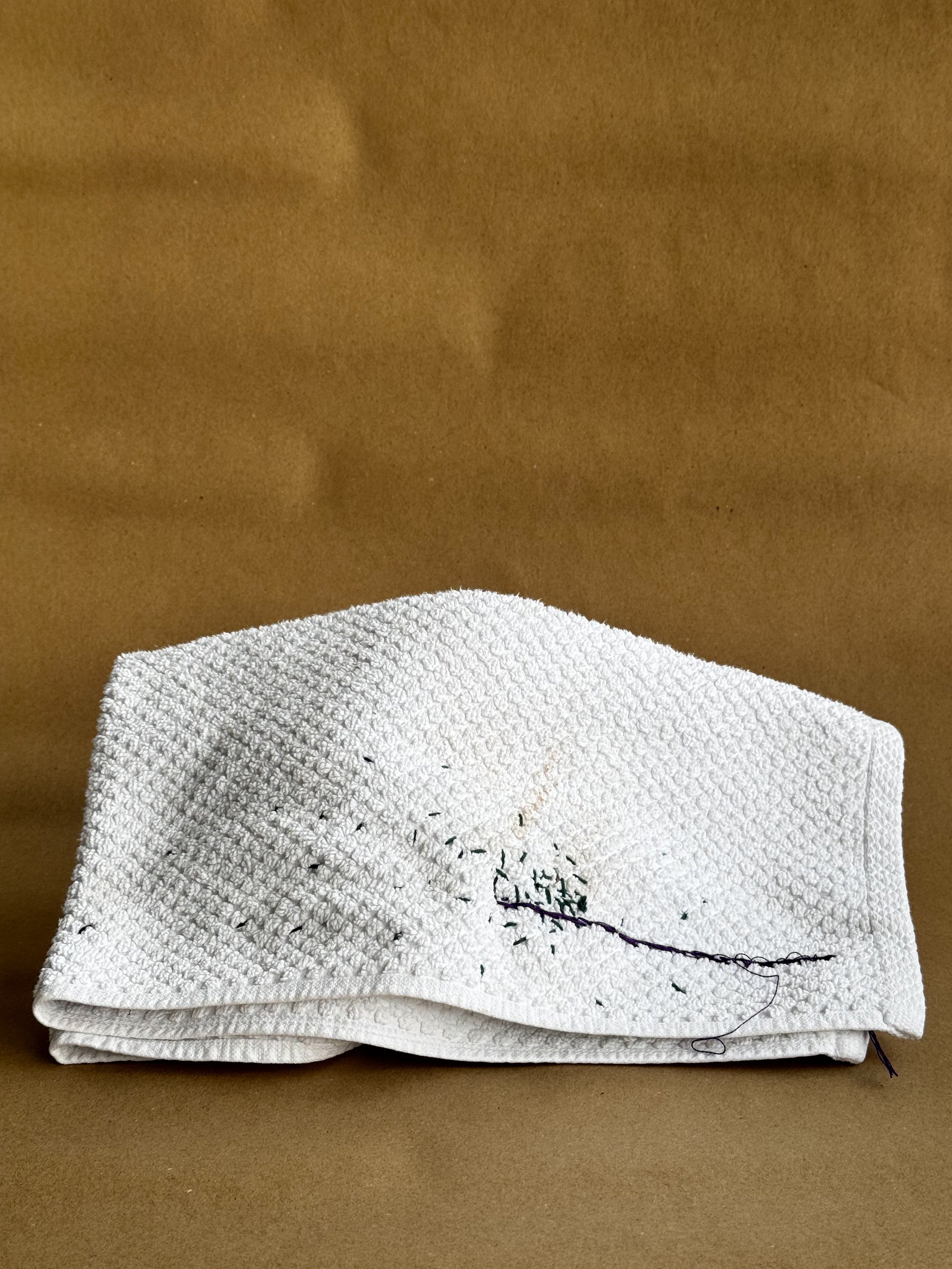
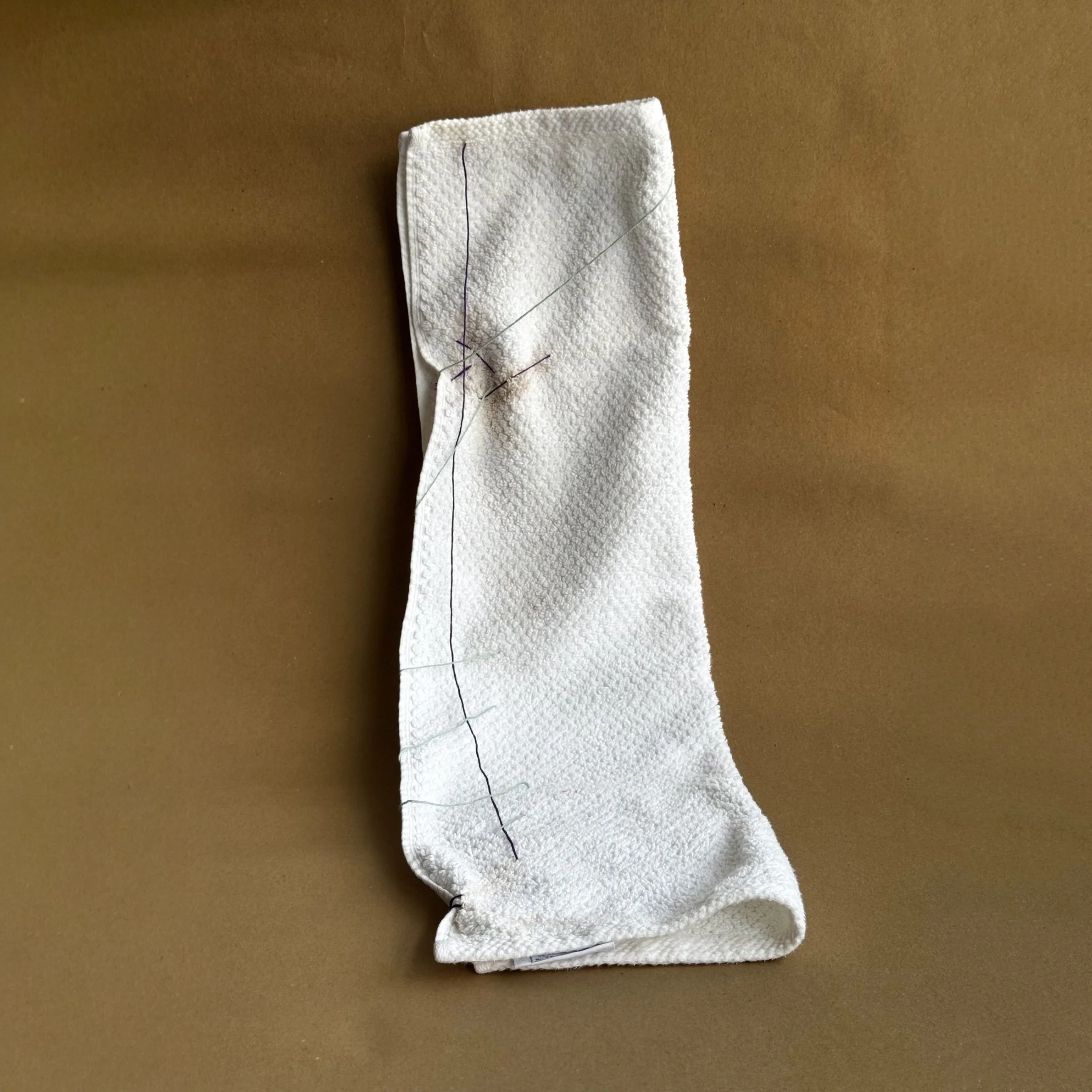
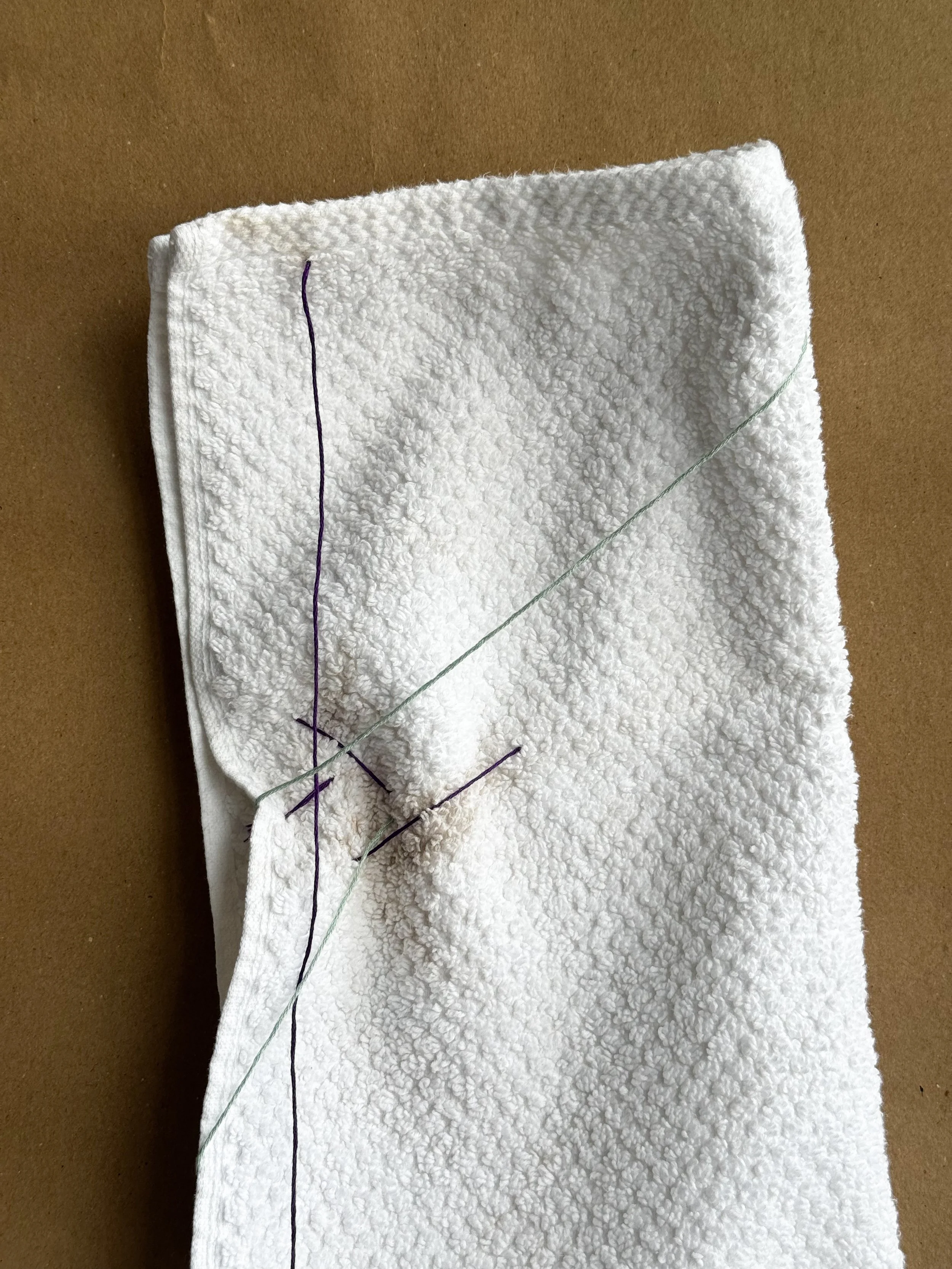
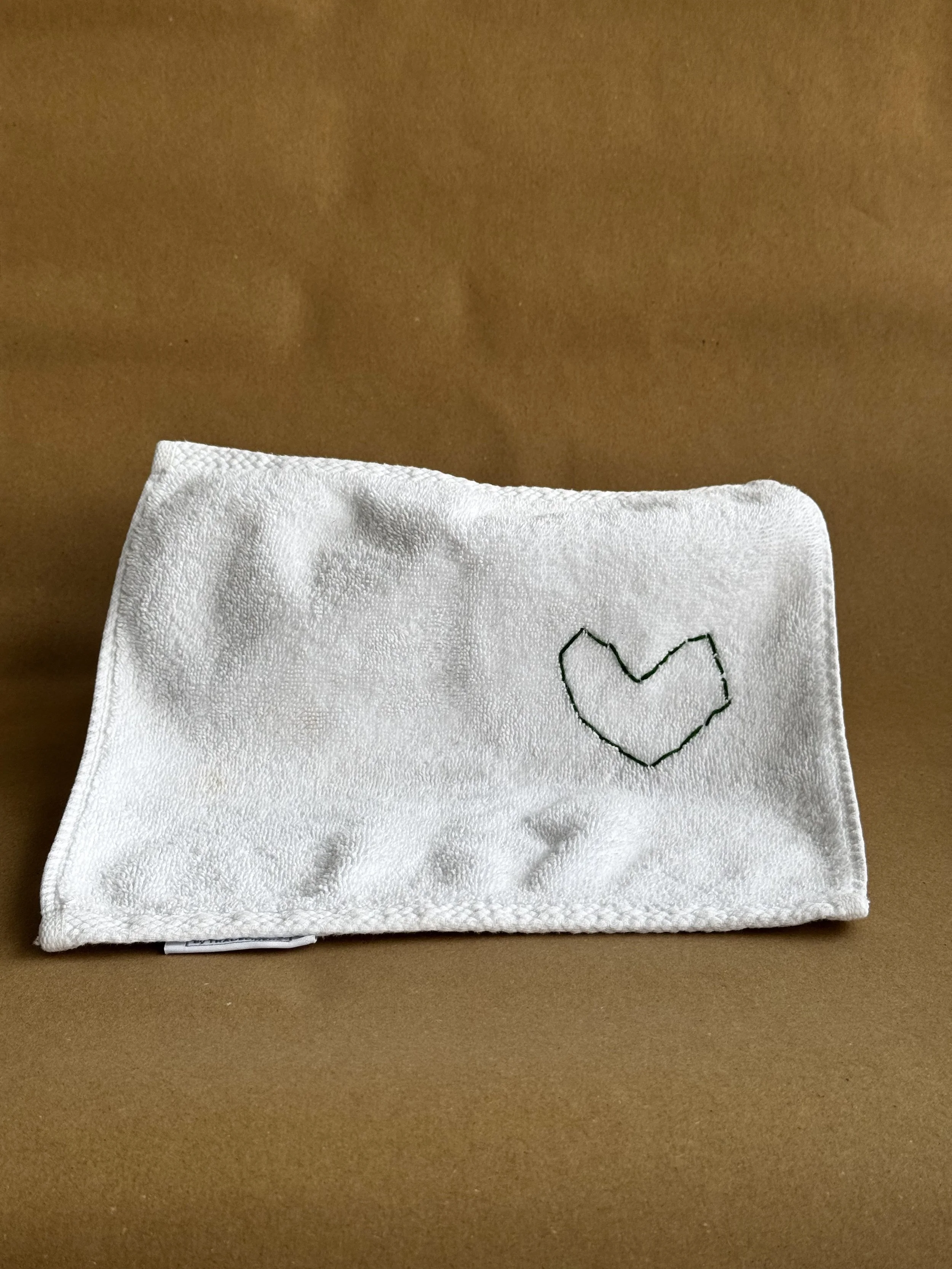
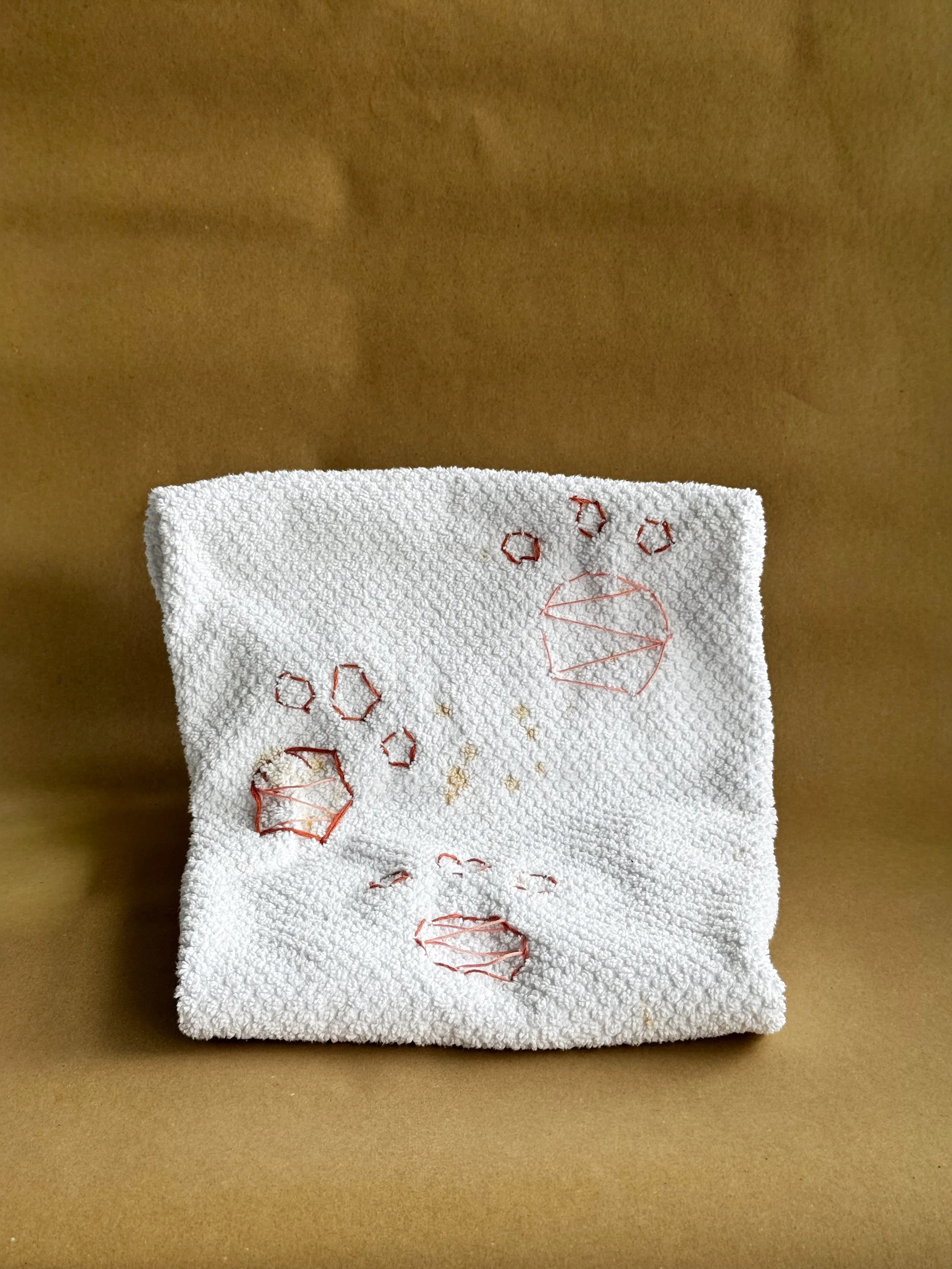
Final embroidery outcomes
Next Steps:
While we did complete our brief, we still want to incorporate our prior projection exploration along with the embroidery. Putting these two together would prove to be a challenge, as one is bright and fun, and the other tells a more ominous story. Potentially starting with the dark revealing, bringing out the bright side/hidden value of what the textile was can mean, might make for a great combination.
References
Boyle, E. and Pearlman, R. (2024) Making Things: Finding Use, Meaning, and Satisfaction in Crafting Everyday Objects. London: Hardie Grant Books.
