Micro Unit Part Six
Brief: Design a way for textile waste to reveal its hidden value.
Team Members: Luis Winkelbrandt, Nicole Shu, Molly Wensley, Amen Maheen, Vanashree Chowdhury, Niki Marathia, Jaime Santos Guerrero, and Lynn Zhong
Workshop (again)
After the last workshop, we still had a few leftover discarded textiles, so we decided to hold the workshop again for a few of the students and staff at LCC.
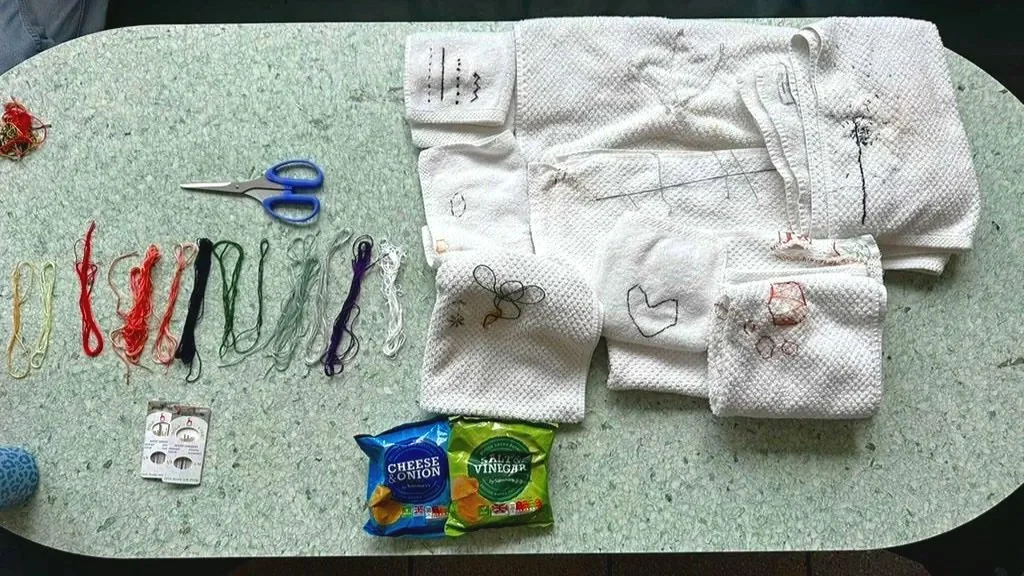
We chose to set up in the ground-level cafe, as it is the place where most people take breaks and have lunch. We were able to find a lot of willing participants, many of whom were from the BA animation course, and one faculty member (Shu, 2026).
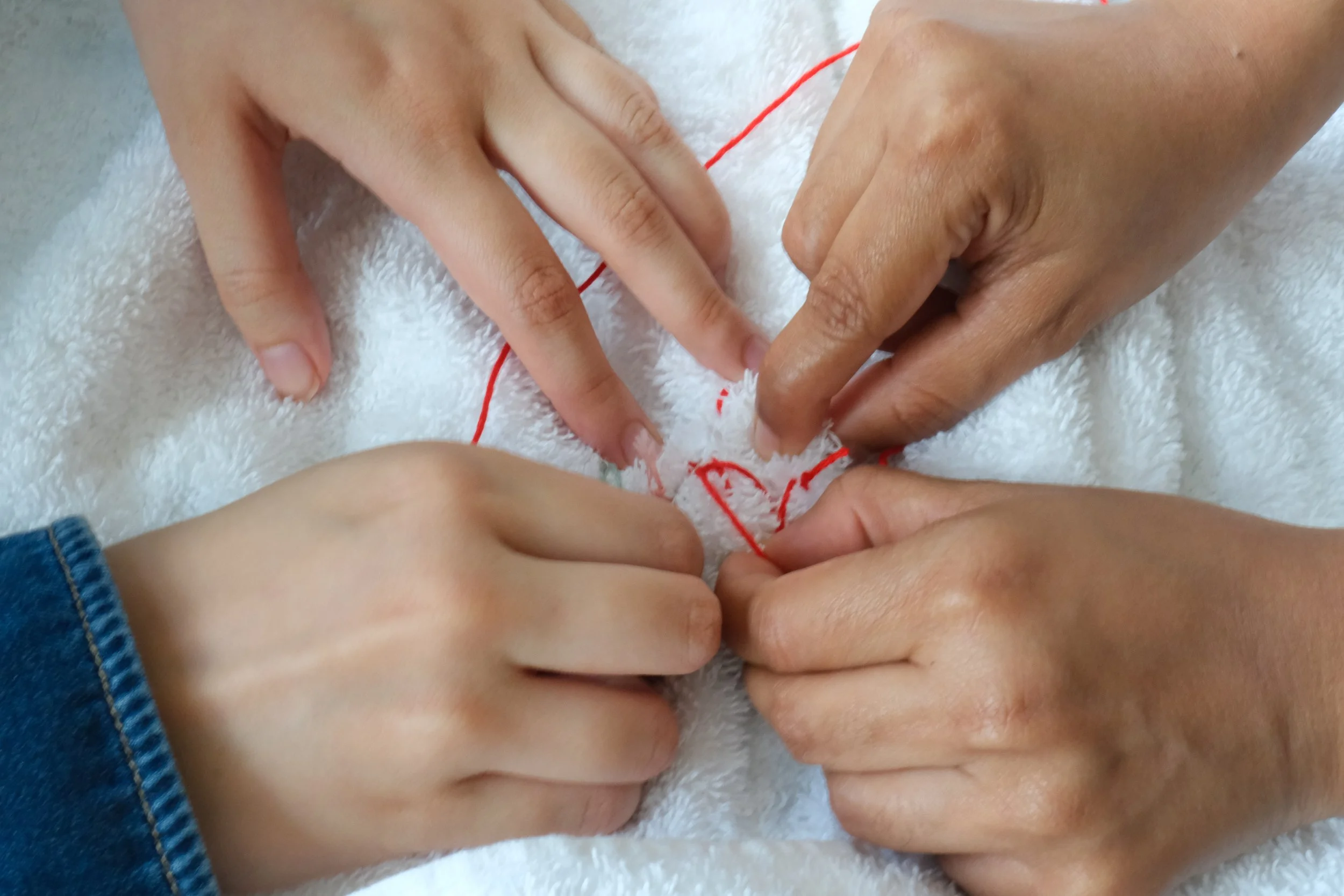
Both workshops were able to take these towels outside of the hospitality environment and allowed participants to frame them in a new way. They did not have to be cautious of the hygienic risk that most people feel within the hospitality industry (Pretorius, 2024; Goffman,1974; Shu, 2026)
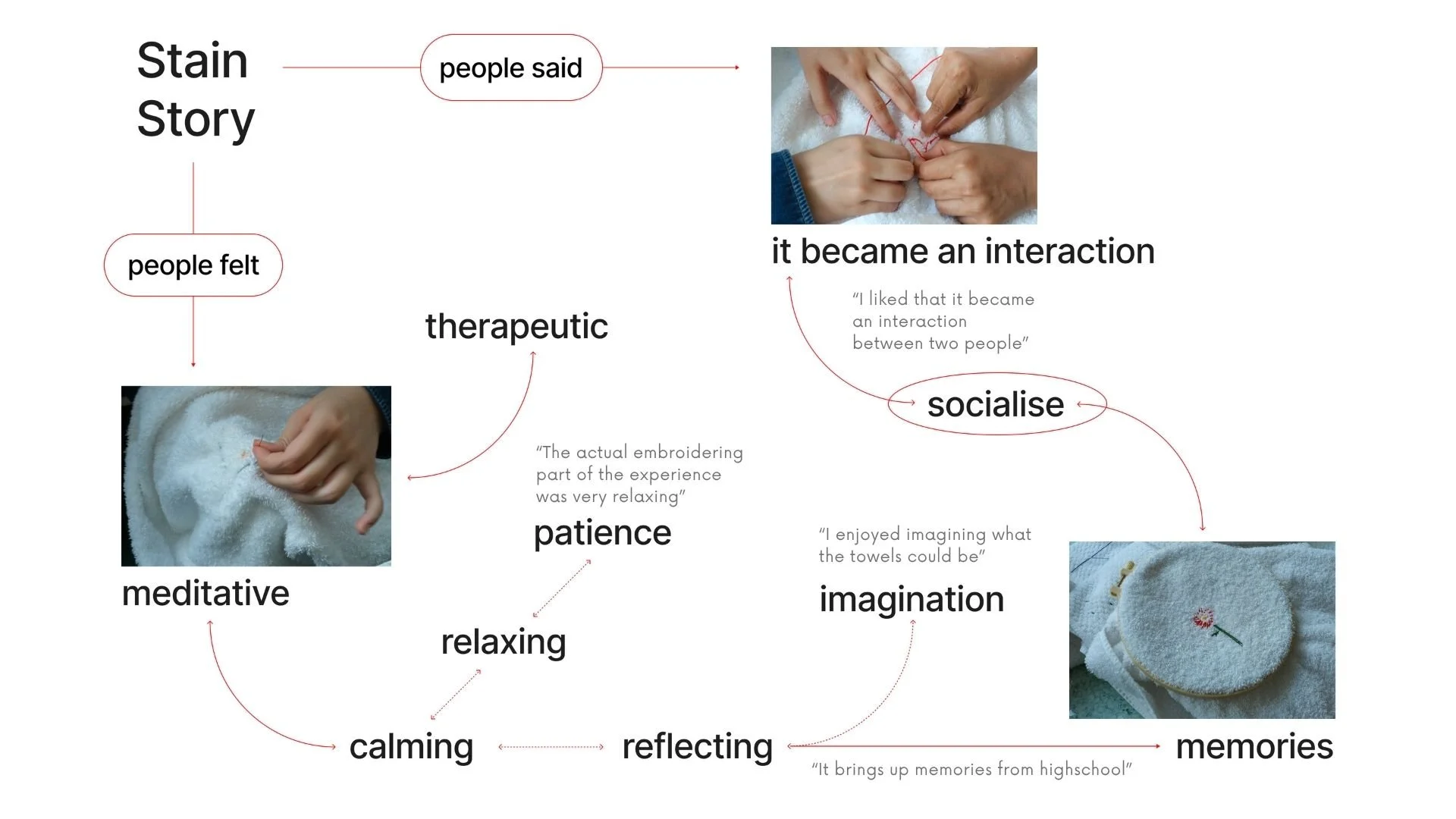
In our final analysis of the feedback and results of both workshops, we noticed that people found it a calming interaction and a fun way to engage with a textile they otherwise would not think of touching. This is the exact reaction we were hoping for, as we wanted to contradict our findings in week 3 with the manufactured towel, which participants called gross and disgusting (Marathia, 2026).
Reflection of Second Workshop
I felt more confident going into this workshop, as we had already conducted it once and been successful. This workshop, compared to the first one, felt more work-based as we did inside an academic institution with students and faculty. They all had similar feedback compared to the first workshop, but it was more focused on the interaction and the image they created rather than the relaxing and meditative experiences.
Presentation Preparation
While we had completed our brief, it was important to us to create a compelling product/presentation to make sure the concept was clear to our partners at Fibre Labs and the rest of our colleagues and tutors. While we really liked our projection exploration, we ultimately had to make the decision not to move forward with that concept as it did not fully represent what we wanted to convey.
During a tutorial, we were told that if we wanted to make more than one product, it could be very compelling. But if we were to make three, as having only two would look as if they were competing.
I. Stain Stories Facilitator Kits
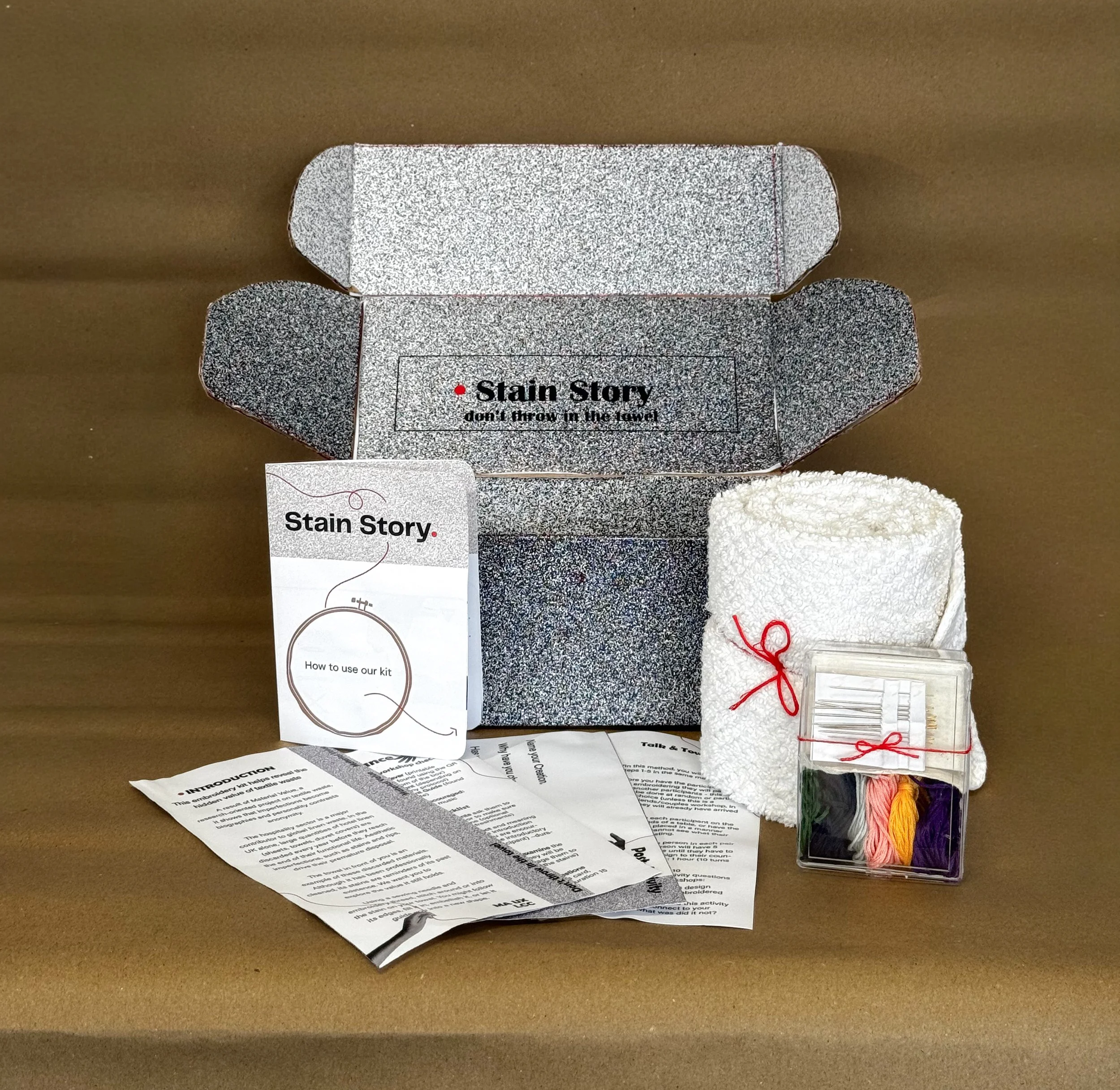
One aspect of our brief asked us to imagine how our project could be presented on a larger scale. We created the facilitators' kit, which includes a discarded towel, stitching tools, stain‑story introduction, workshop guides, a participant booklet, reflection questions, and accessible workshop variations. Facilitators can conduct this workshop, bringing new context and value to textile waste.
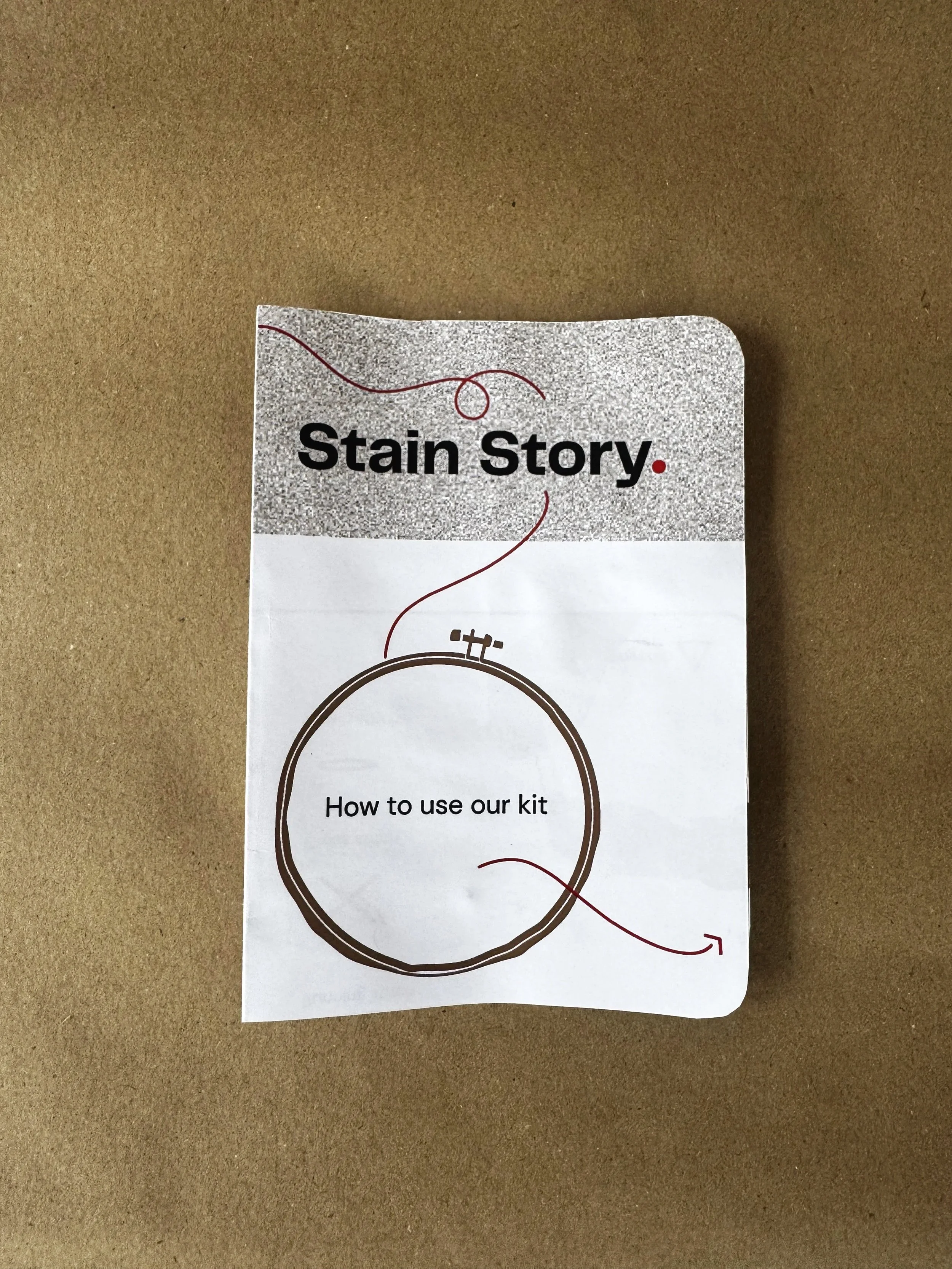
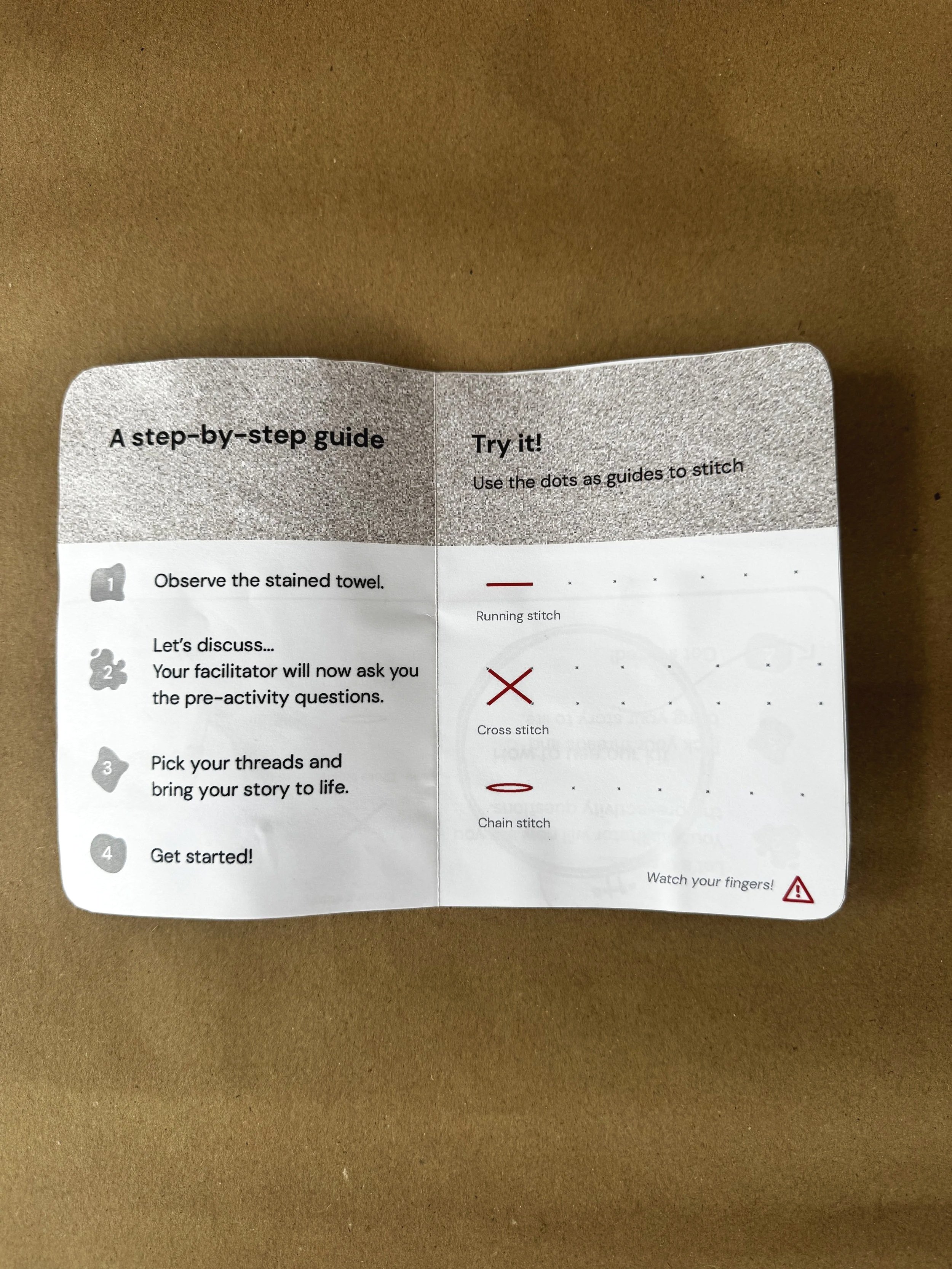
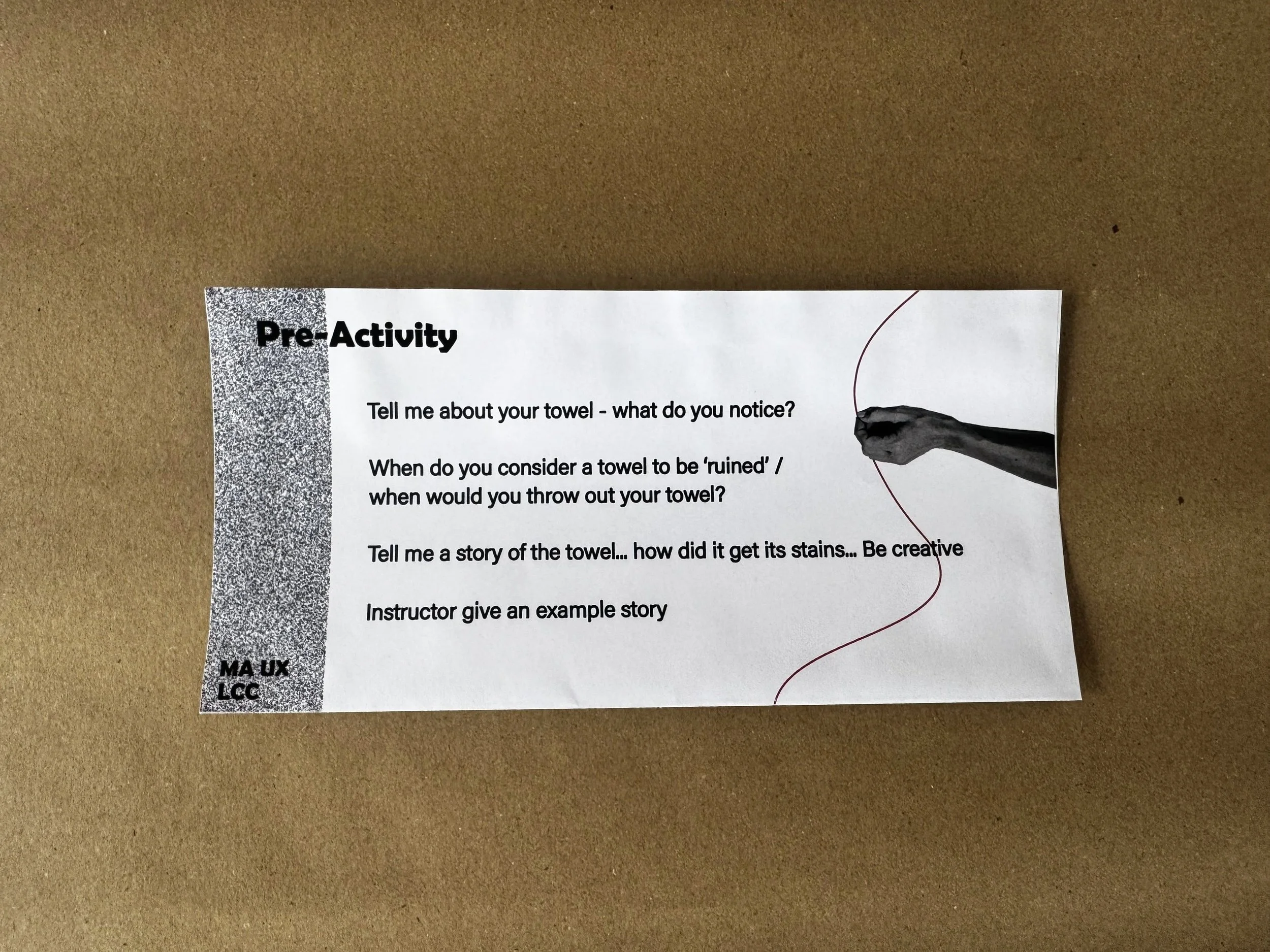
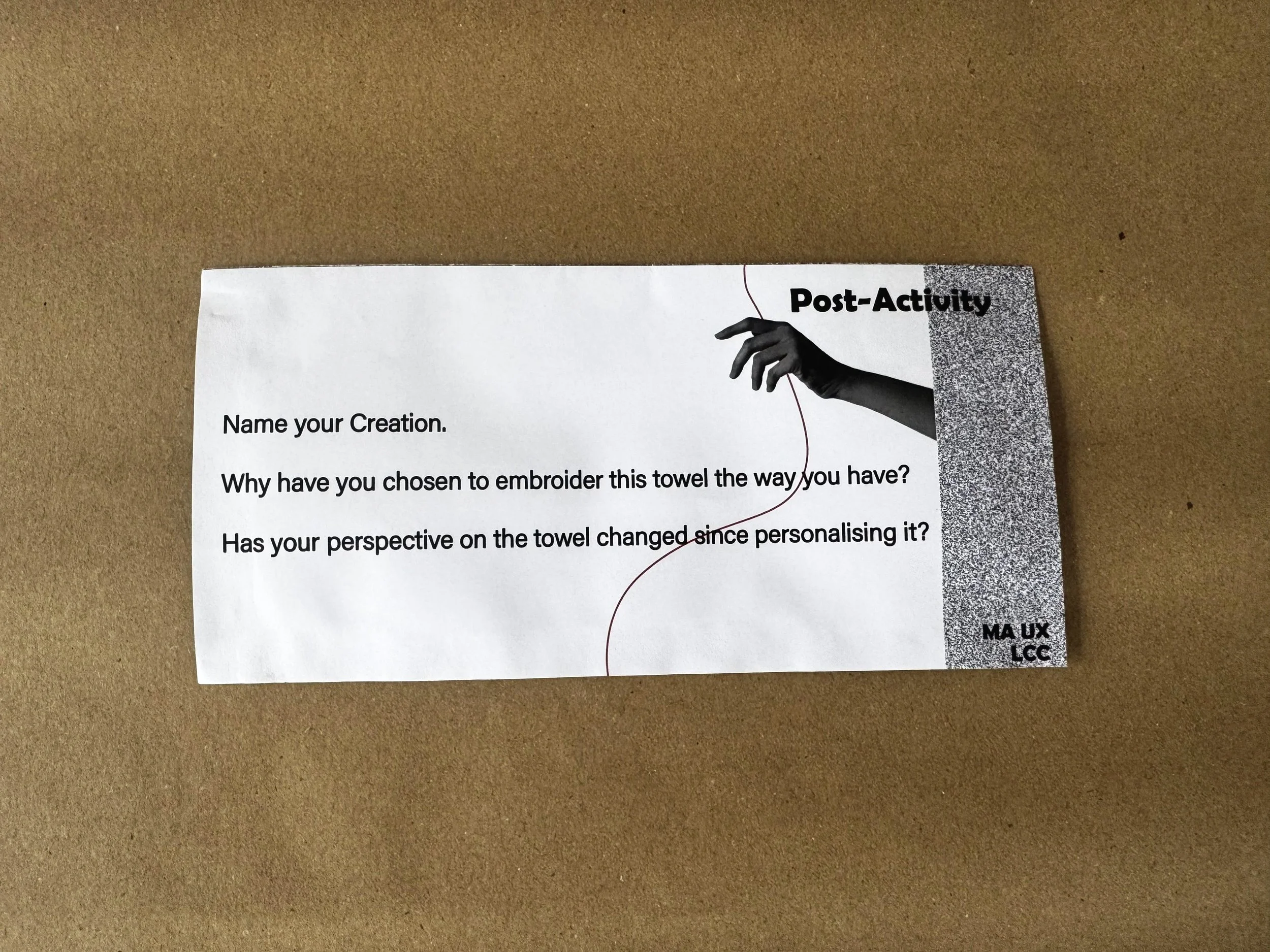
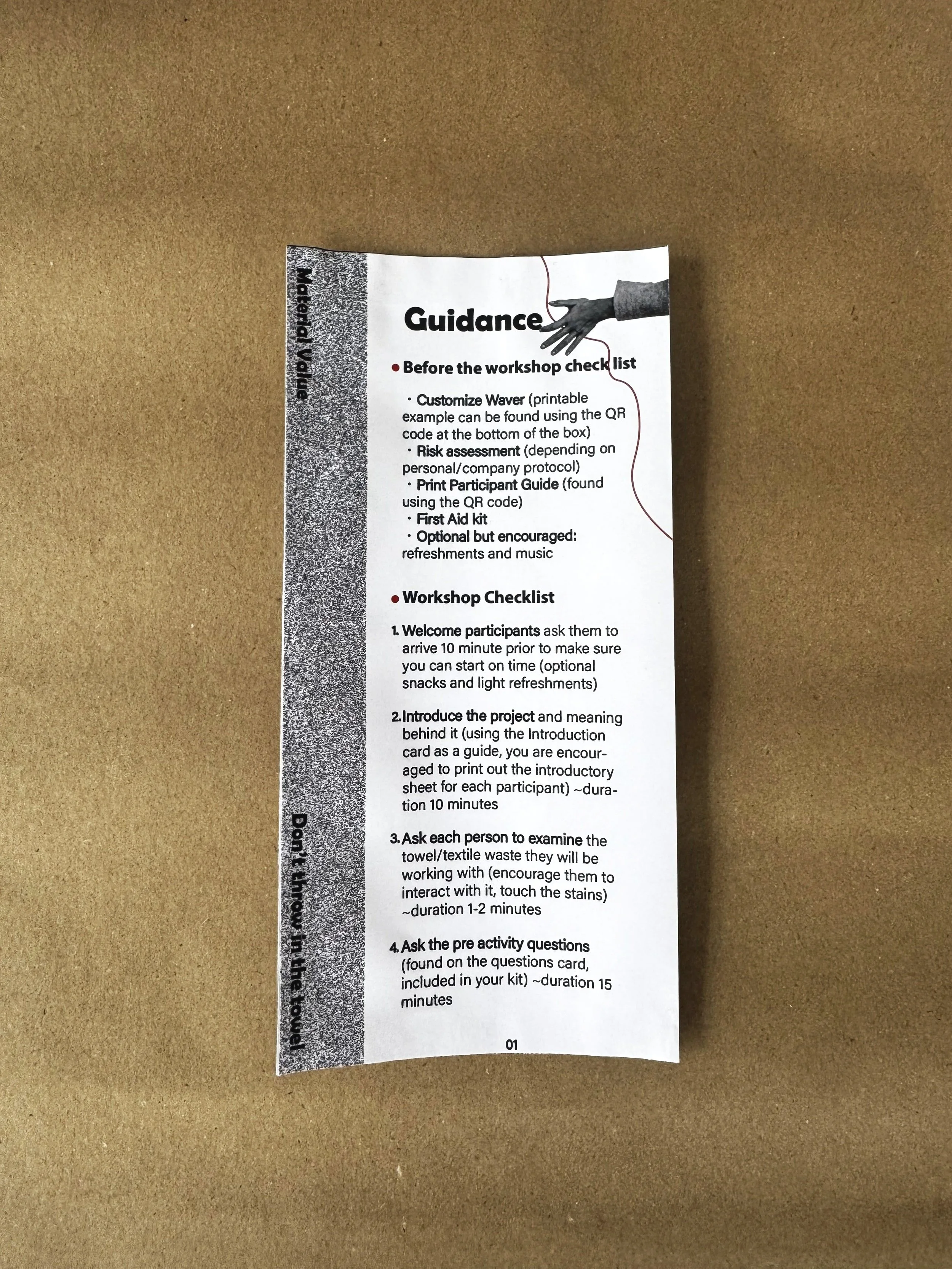
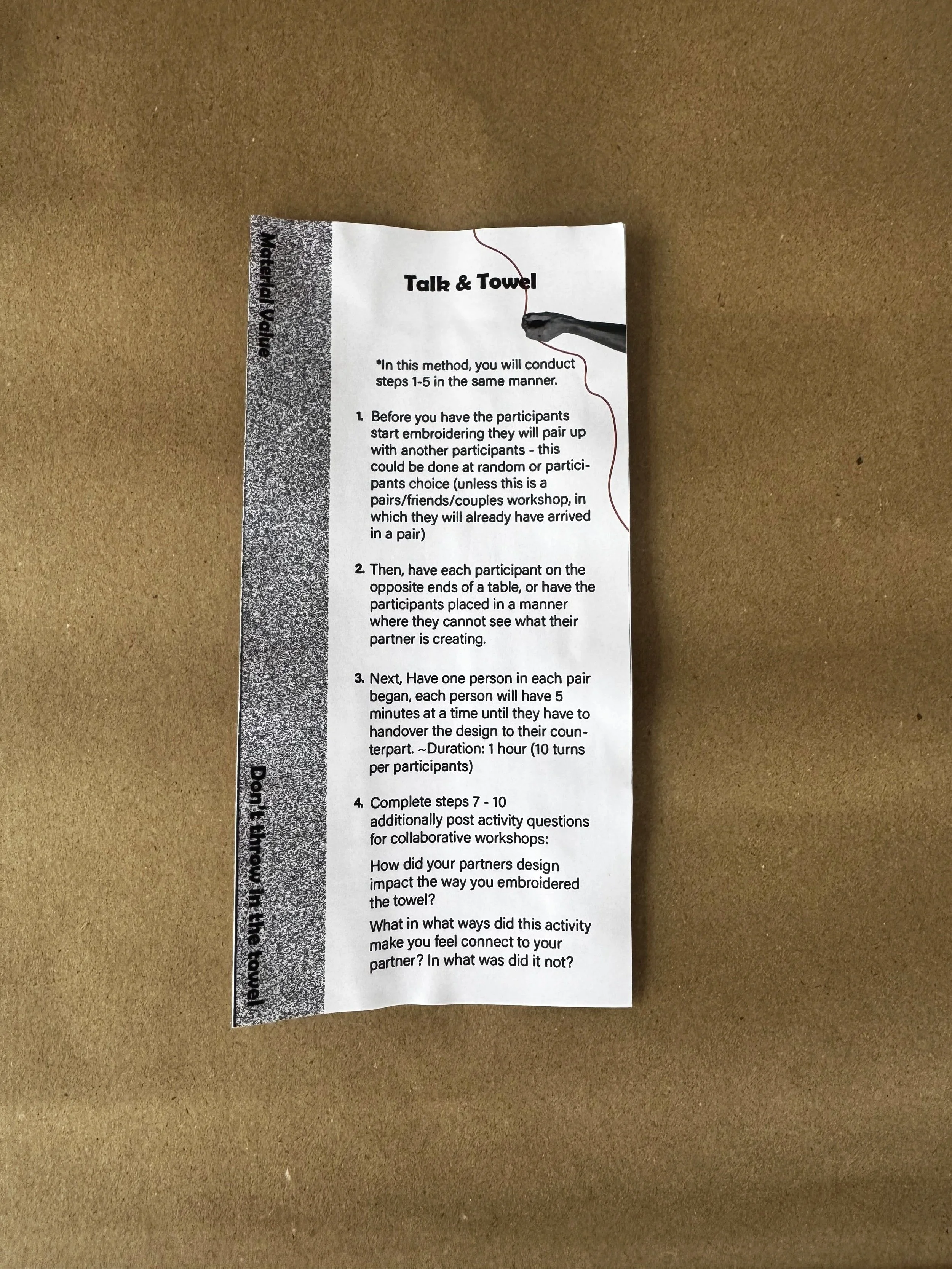
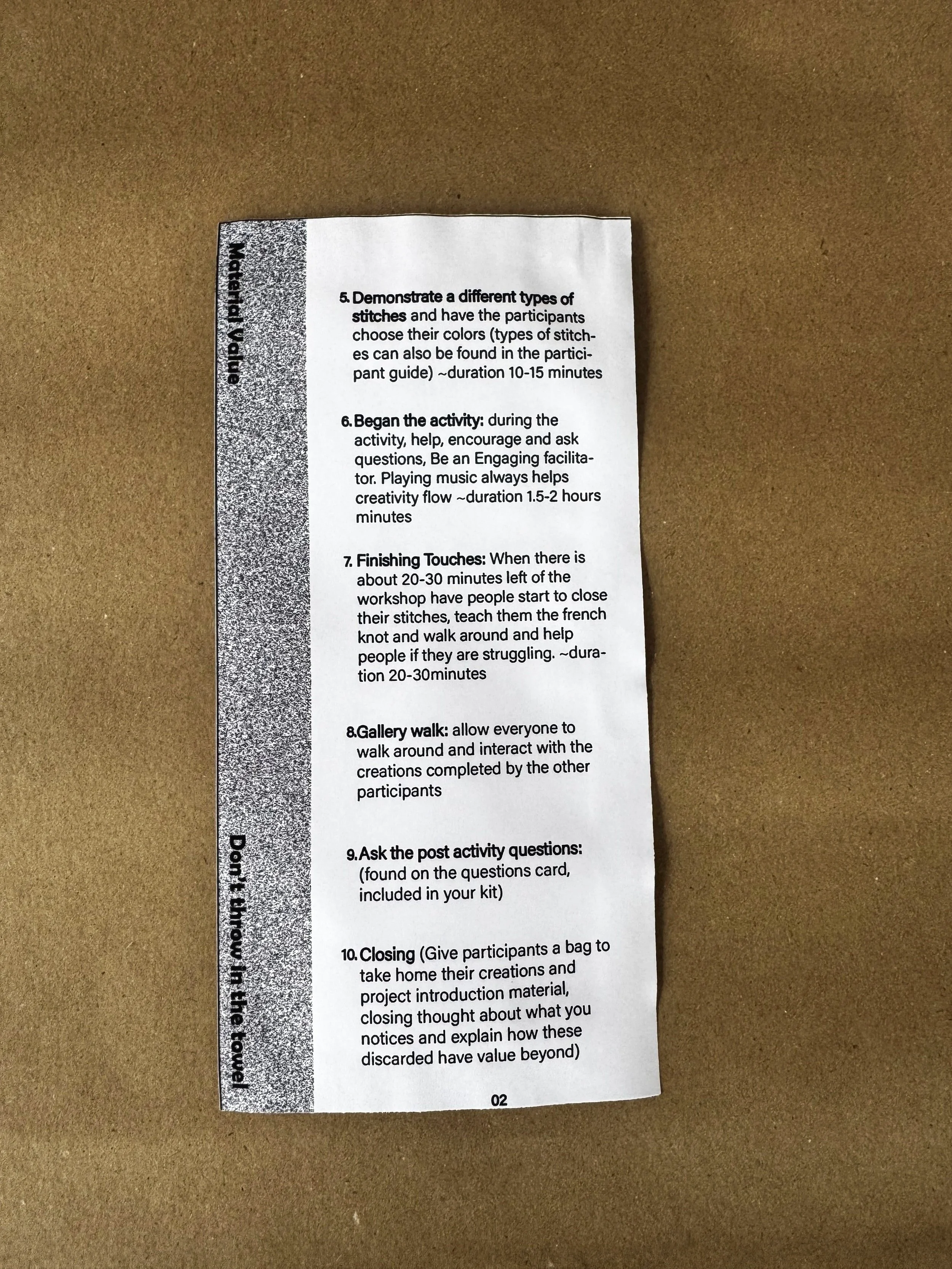
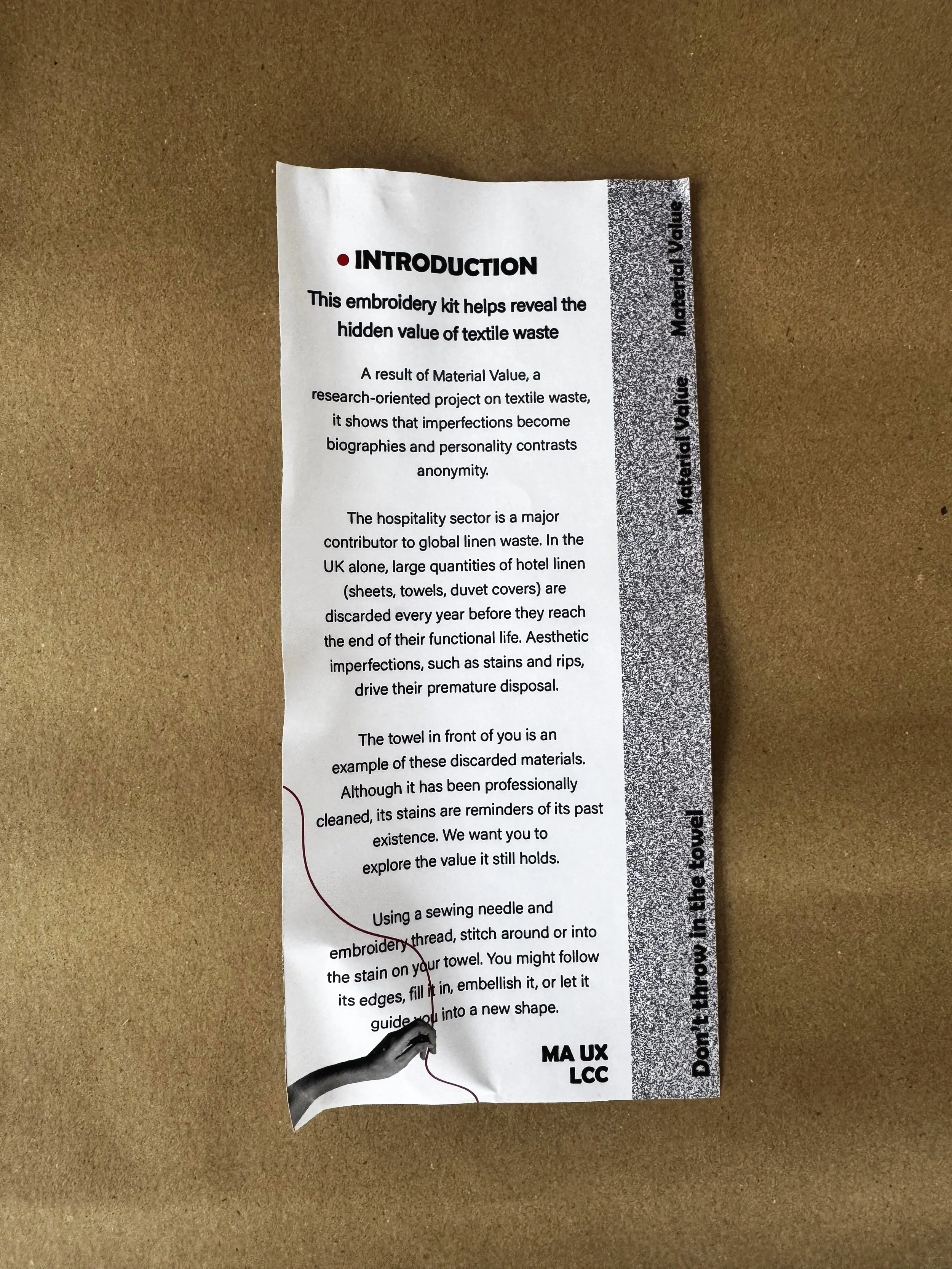
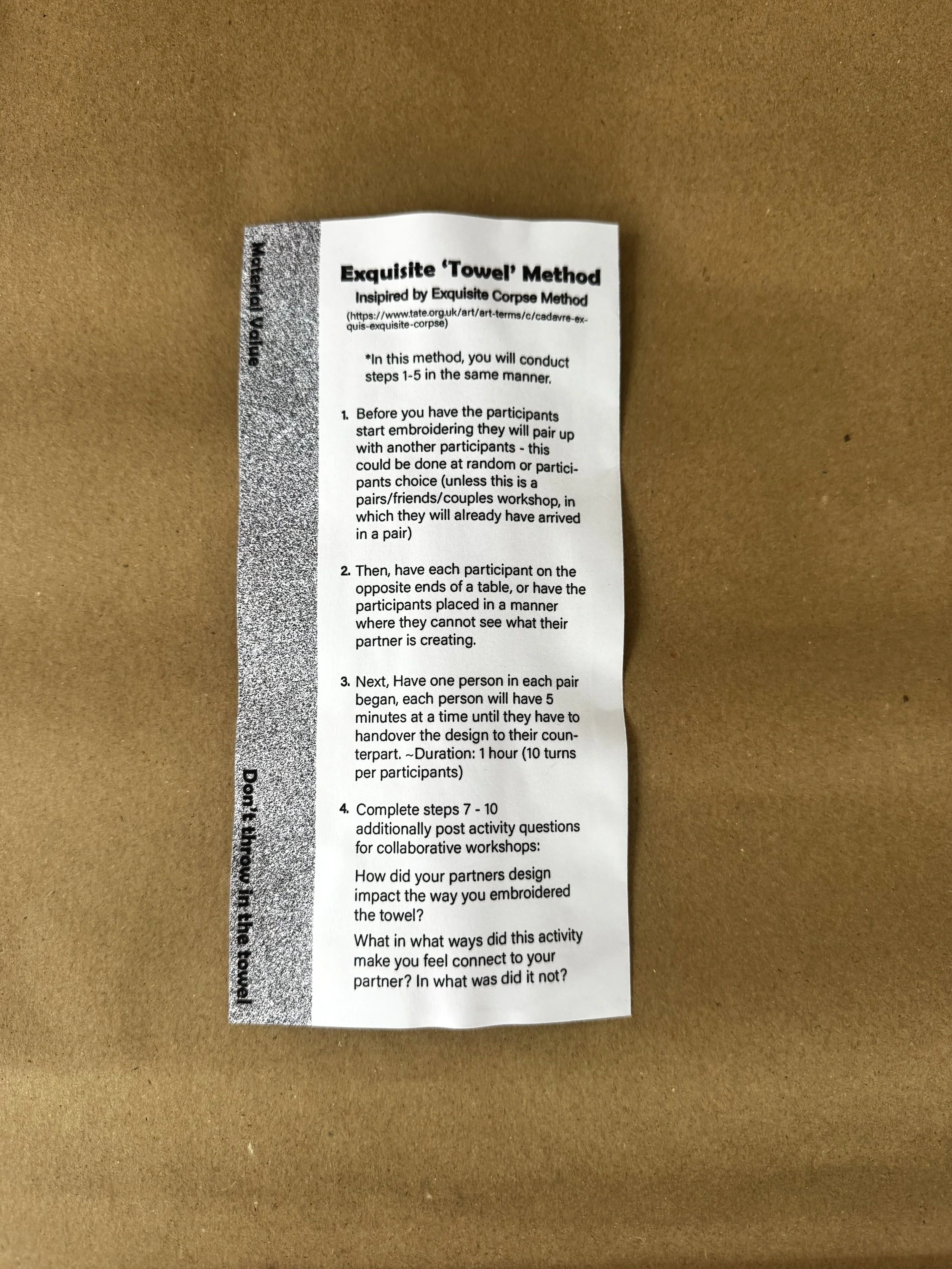
The informational materials that are included in the box.
II. Outcome Robe
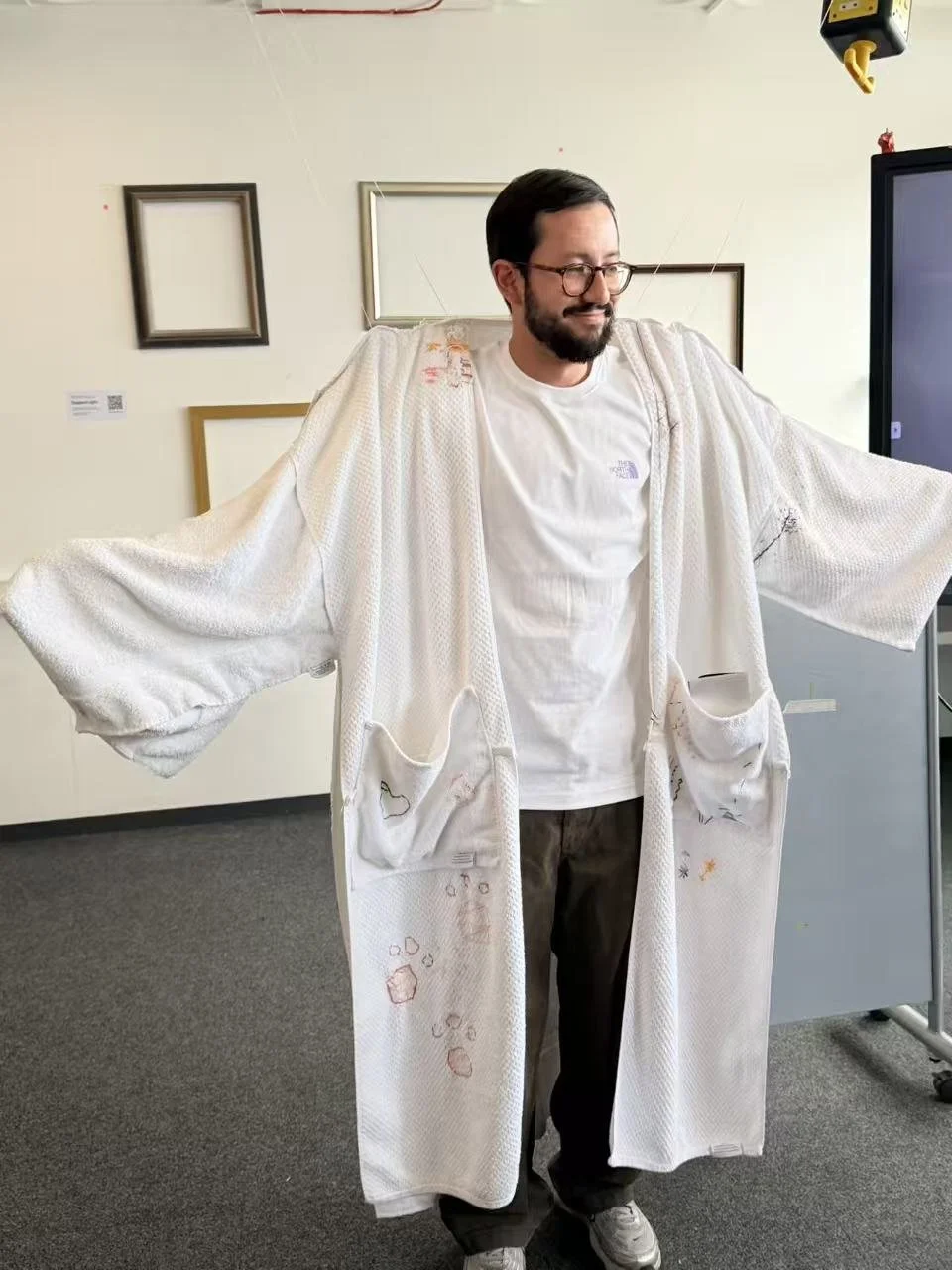
The robe was created by stitching the workshop outcomes together into a wearable product. This stemmed from our brief, which mentioned that we should think about how textiles could be embodied. We also wanted to note the crossover between our towel swap and clothing swap, and the perceptions around interacting with textiles used by others, from the hospitality industry.
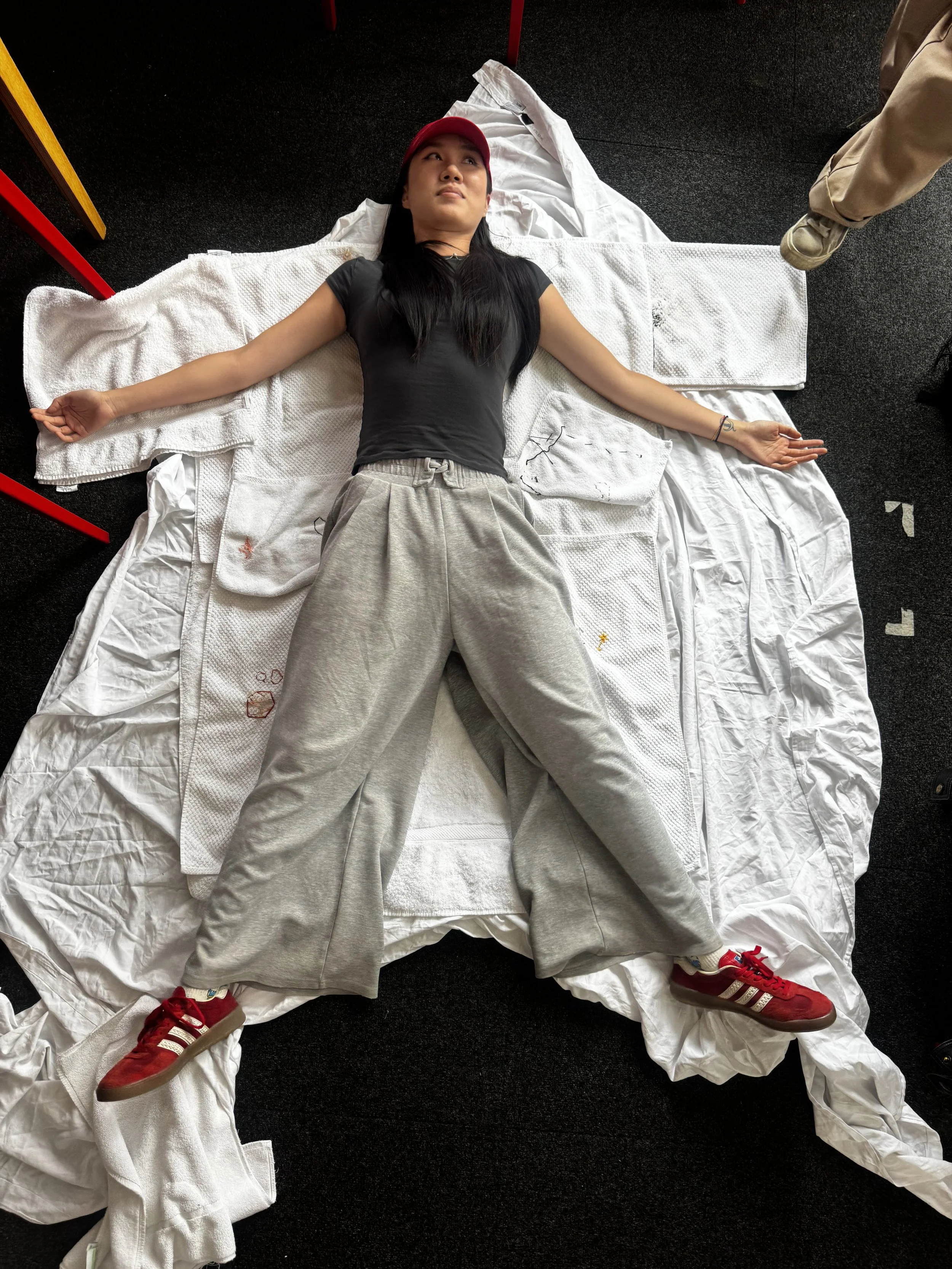
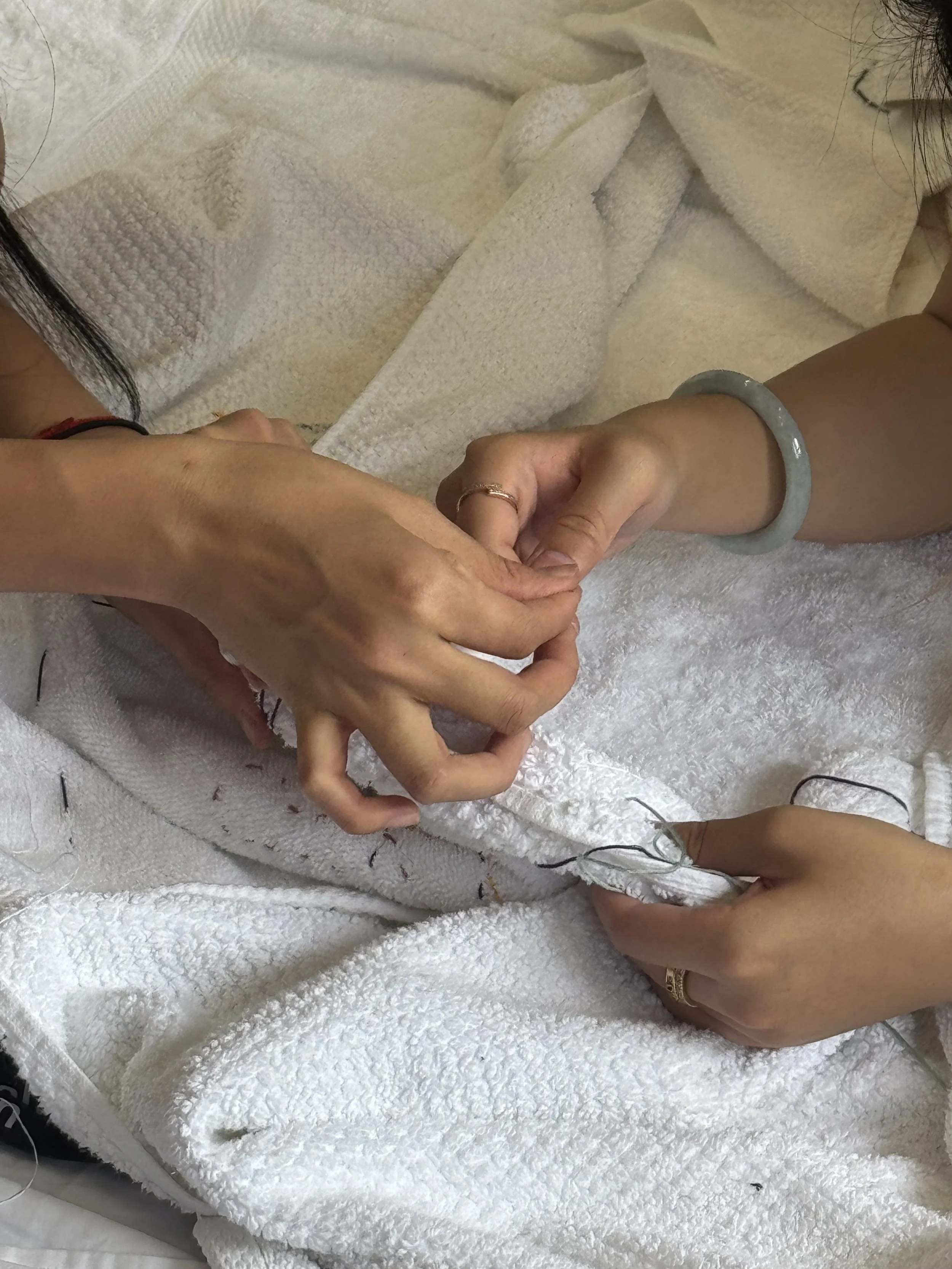
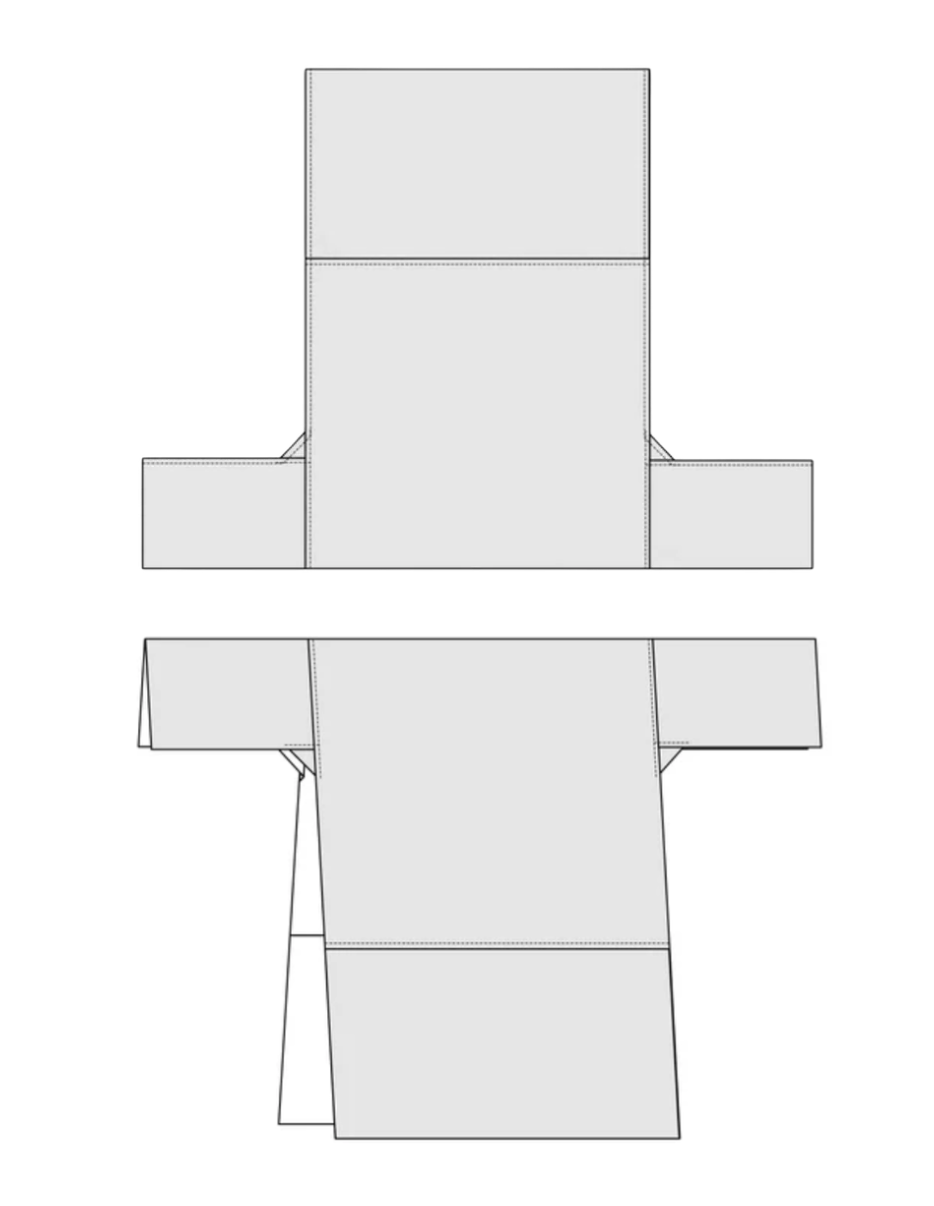
Vana, who led this product design, used zero-waste pattern-making (Gözene, H.Y. and Metlioğlu, H.H. 2024) to create an embodied artifact from our co-created outcome. This product was hand-stitched and then hung so that our colleagues could easily embody our experience.
III. Embroidery Wall
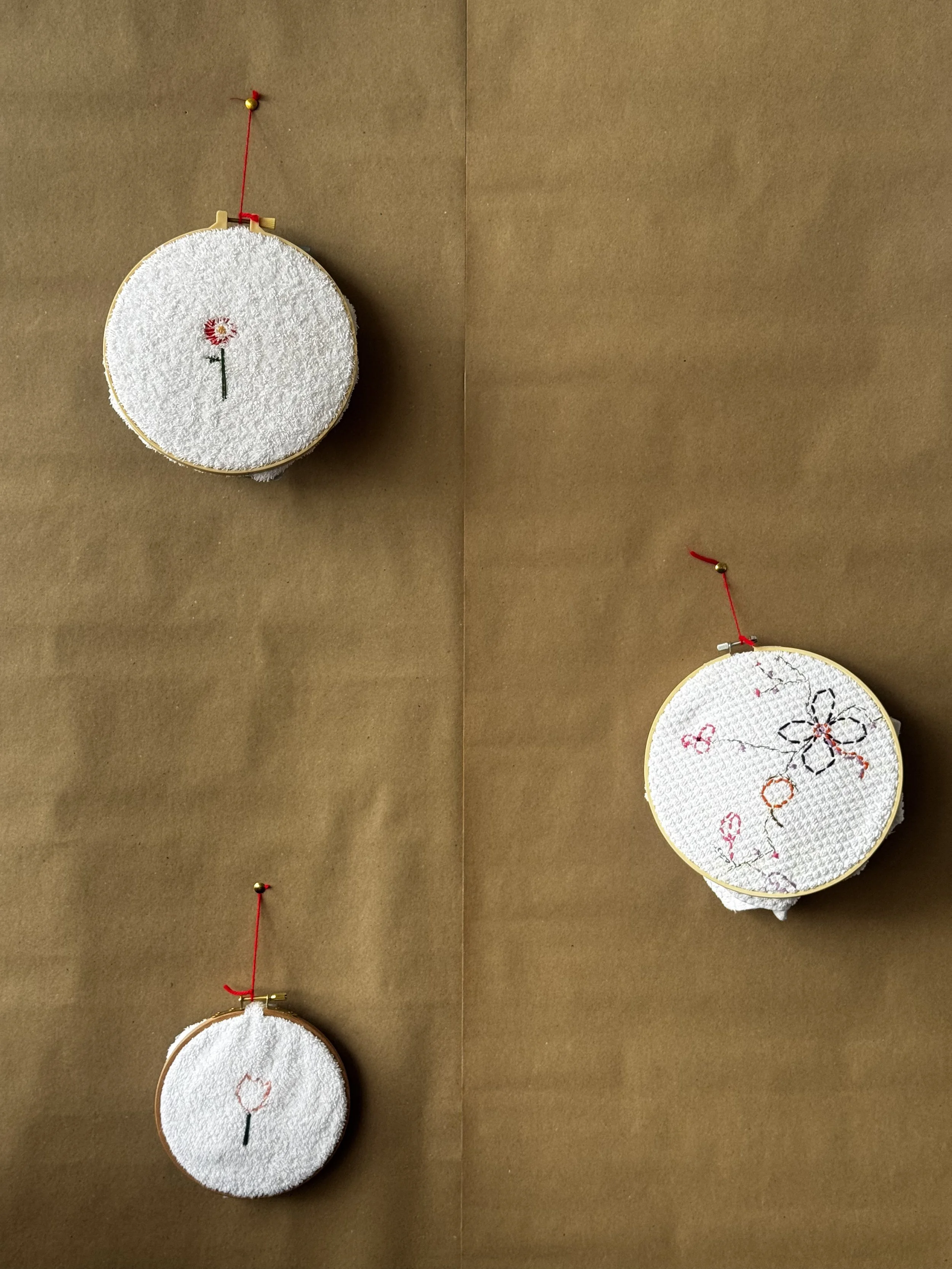
The third component of our installation was the embroidery wall, featuring three of our workshop outcomes in embroidery hoops. This product this allow us to emphasize how towels can shift from functional textiles that are easily discarded to decorative storytellers.
Final Presentation Reflection
I believe that our final presentation was a strong showcase of not just our products but also a reflection of our research. From swapping towels to embroidering with strangers, we made an extensive amount of progress during these six weeks. It was important to us that we showcased our progress. Before introducing any of the products, we showed the panel, our colleagues, and our tutors a short synopsis of our research. Showcasing our research in a visual way allowed the audience to understand our story and how we came to our conclusion.
Feedback and Final Reflection
A piece of feedback that stood out to me was from the founder of Fibre Labs, Kae…
“Satin towels are such a difficult thing to change peoples’ midset about... it does really add a lot of value to it (towel)... It is such a great concept because you are educating people at the same time”
The other piece of feedback was that this could be seen as a critical design project that lives within the industry it is critiquing, not just in a gallery or magazine like most critical work. This kit could be sold or even given away in the lobby of a hotel to bring more awareness to how people approach using textiles within the industry.
After hearing our panel member speak about our concept and idea in such a positive manner, it was an embellishment on what we already knew was a strong project. During the first few weeks of the project, we wanted to please Kae and create something that she could use in her own process, but as time went on, we explored what we felt was most interesting. By doing that, I believe it was more successful for both Fibre Labs and us.
My final reflection is about how much I enjoyed working with this team. While every day was not perfect, we all undoubtedly cared not just about the project but also about each other.
References
Pretorius, L. (2024). Designing for Multisensory UX. Bird Marketing. Available at:https://bird.marketing/blog/digital-marketing/guide/ux-design-principles/designing-for-multisensory-ux/
Goffman, E. (1974) Frame Analysis: An Essay on the Organization of Experience. Cambridge, MA: Harvard University Press
Gözene, H.Y. and Metlioğlu, H.H. (2024) 'Zero waste approach in sustainable fashion design: Designer perspective for pre-consumer waste management', Journal of Textiles and Engineer, 32(137), pp. 79–93. doi: 10.7216/teksmuh.1471793.
