UX of Slowness
BRIEF: Design an encounter that values patience, presence, or pause
Group members: Sakshi Pansare, Xiyan Lou, Andre Dinis, Amen Maheen, and Drishti Takrani
During this week’s brief, the UX of Slowness, my group and I talked about how this brief felt more attainable than the others. The one question that challenged my confidence was, “How is slowness perceived?” What is slow to one person could be fast to another. Our goal was to find a way to slow everyone down, no matter their perception of slowness.
We decided that for our first research method, behavioral mapping, we would go to the Queen’s House Museum in Greenwich. We all assumed that a museum would be a place where people would slow down and appreciate the art. While the 65 to 70-year-old couple that I mapped did slow down and engage with each other about specific species, my team, who mapped younger teenage visitors, found the complete opposite. They found that once the teenager got a photo, they rushed to the next room for the next photos oppunitnity.
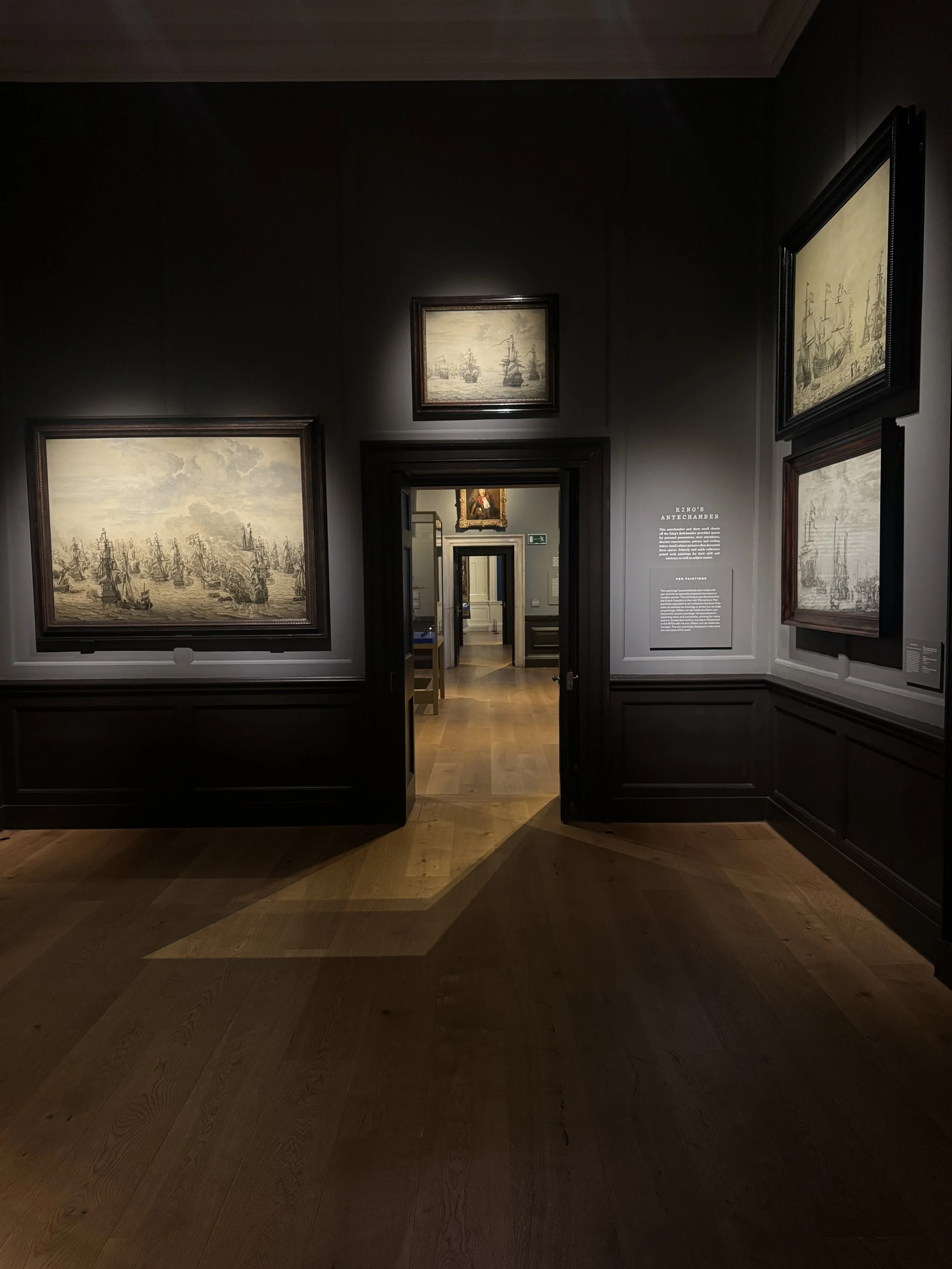
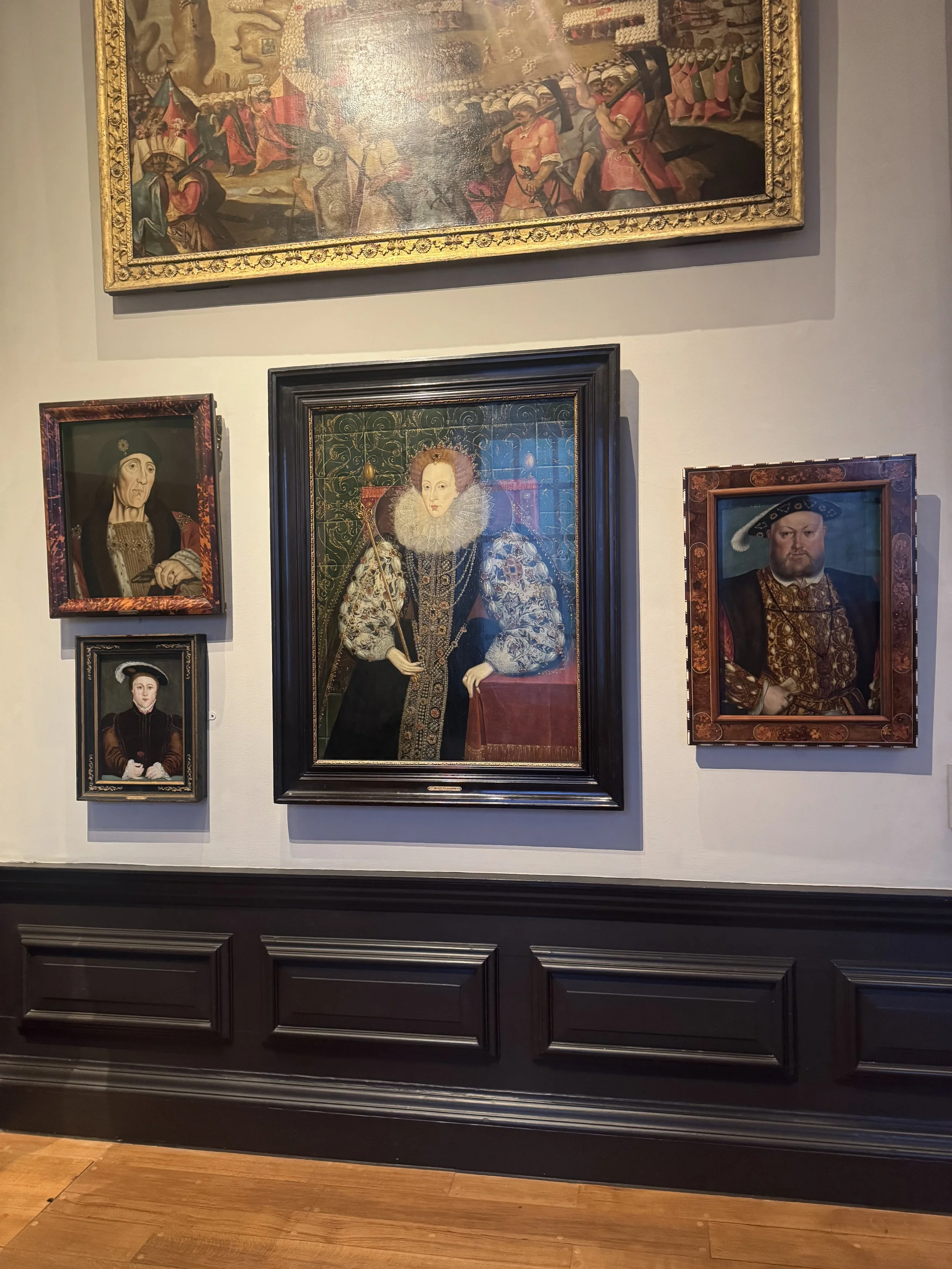
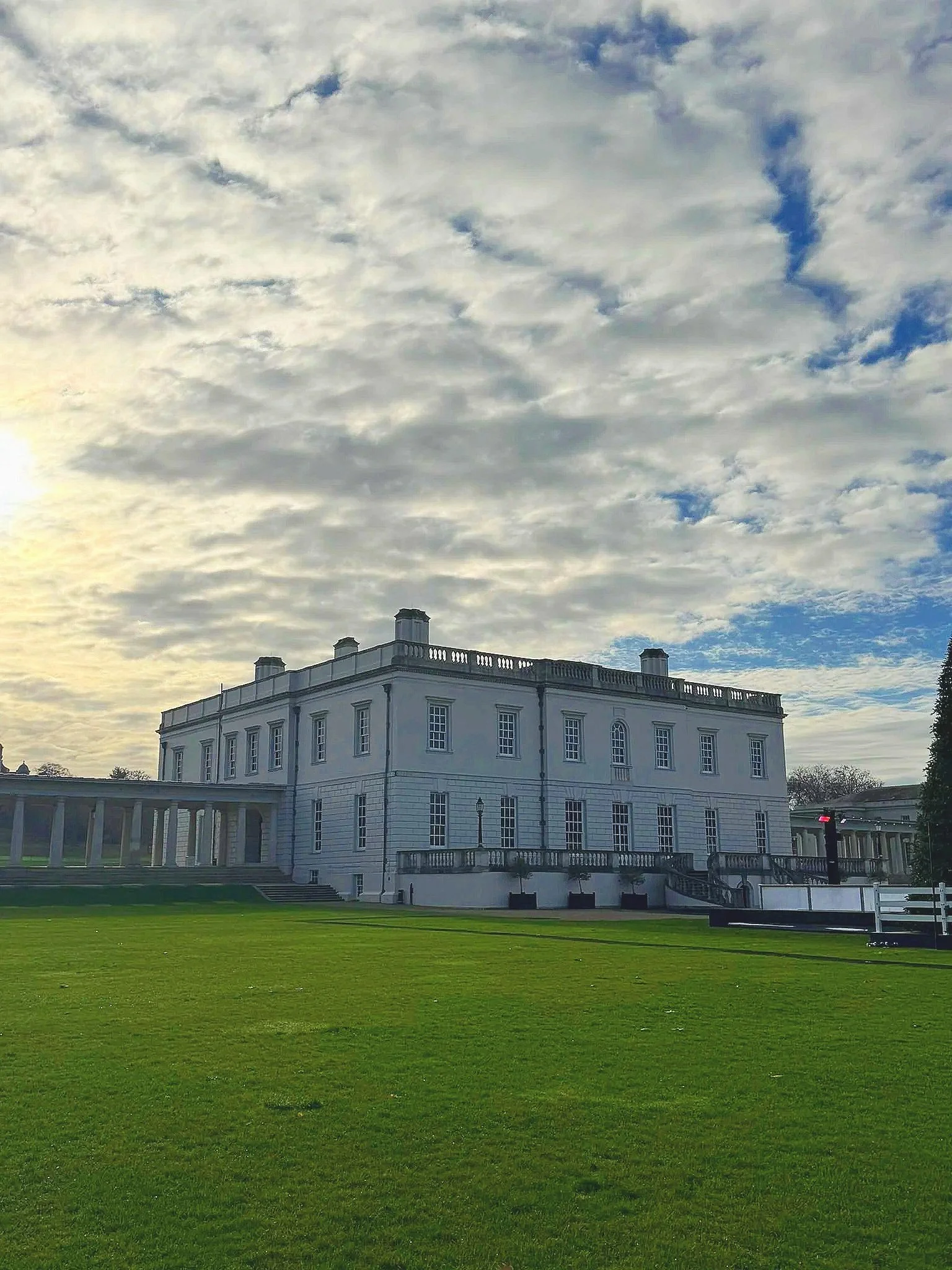
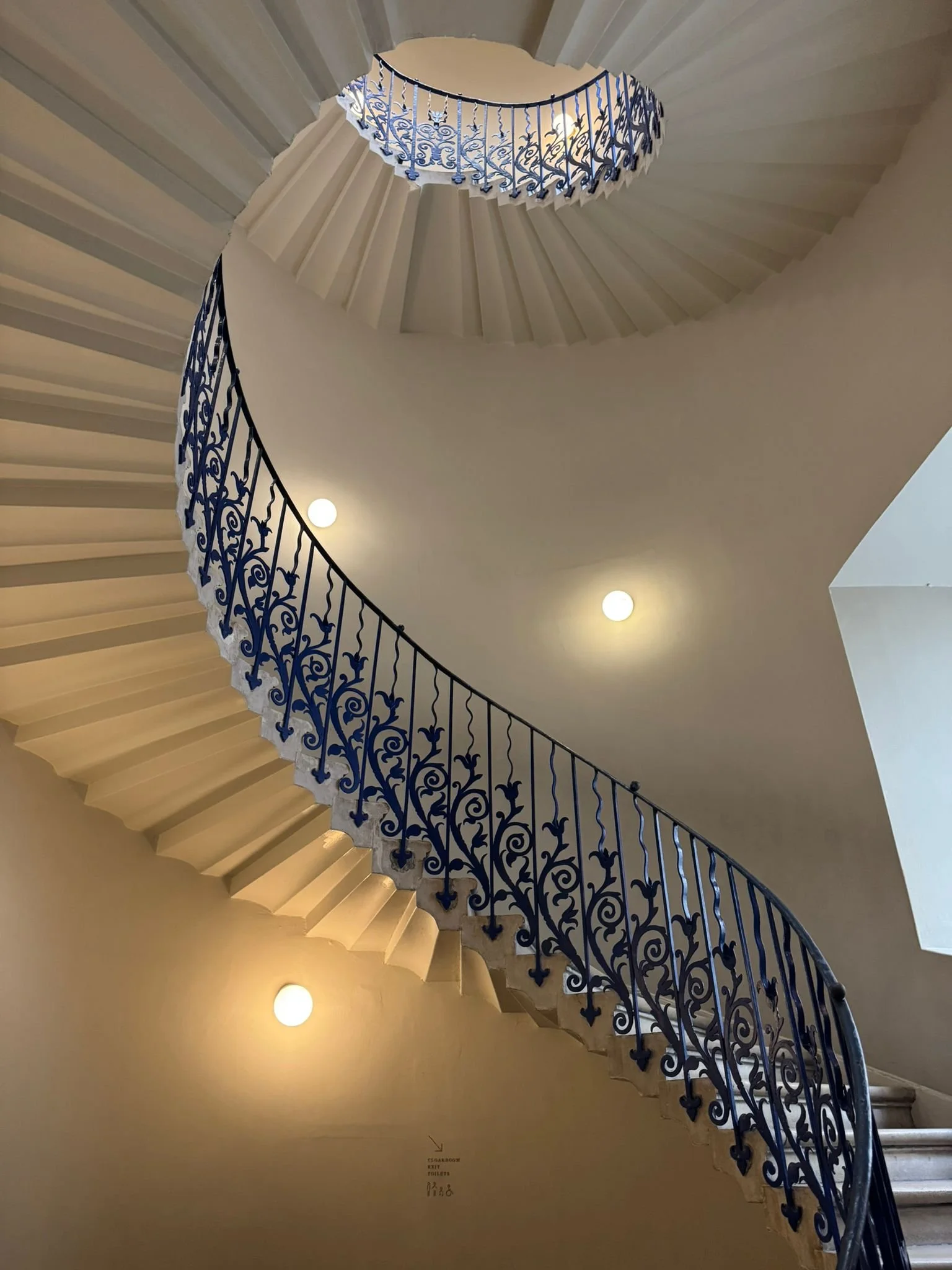
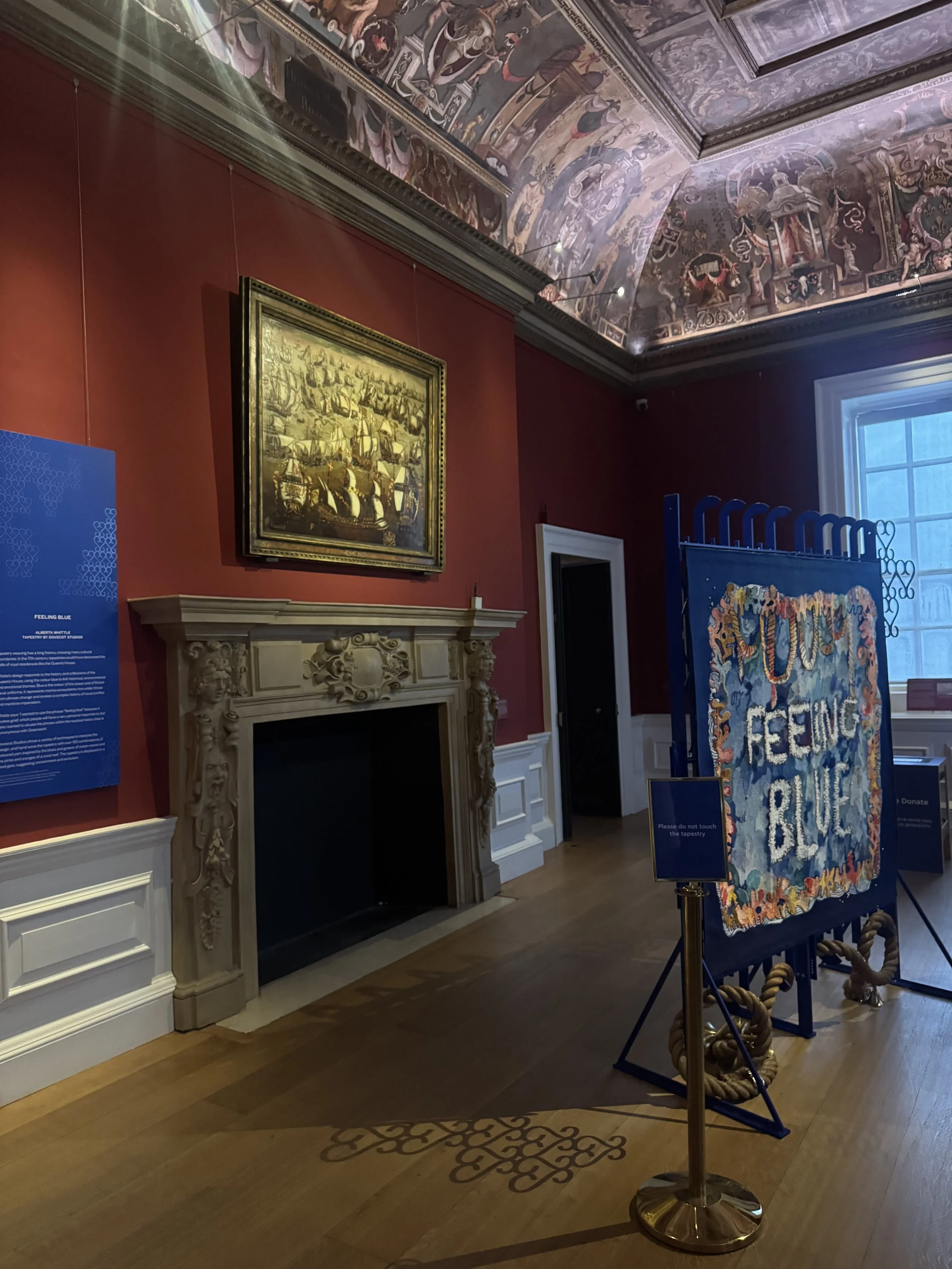
Images from behavioral mapping at the Queen’s House. While a smaller museum, it consists of portraits and stunning architecture (Dinis, Takrani, and O’connor, 2025).
Above is a visual representation of our group’s behavioral mapping. Each line’s path represents a different group of people mapped, and the dots represent where they stopped to slow down. The orange angled lines represent areas where people gathered or spent a prolonged period of time (Dinis, 2025).
While the gender difference intrigued me, a theme that emerged was actually from some of our group not noticing aspects of the museum and focusing on the mapping, and what others were looking at, that we did not notice the beautiful ceiling and architectural elements, which another group member noticed. We added the art of noticing to the list of potential concepts. I felt very intrigued by this topic and, through secondary research, connected this theme to Jenny Odell's (2019) How to Do Nothing.
Odell (2019) argues that presence and slowness are the most important factors when it comes to the art of noticing because they create space for “mental stillness” in todays fast paced world. This is also connected to the Attention Restoration Theory, which states that our attention can only be shifted when we interact with environments that invite slowness and mental presence (Kaplan and Kaplan, 1989; Kaplan, 1995).
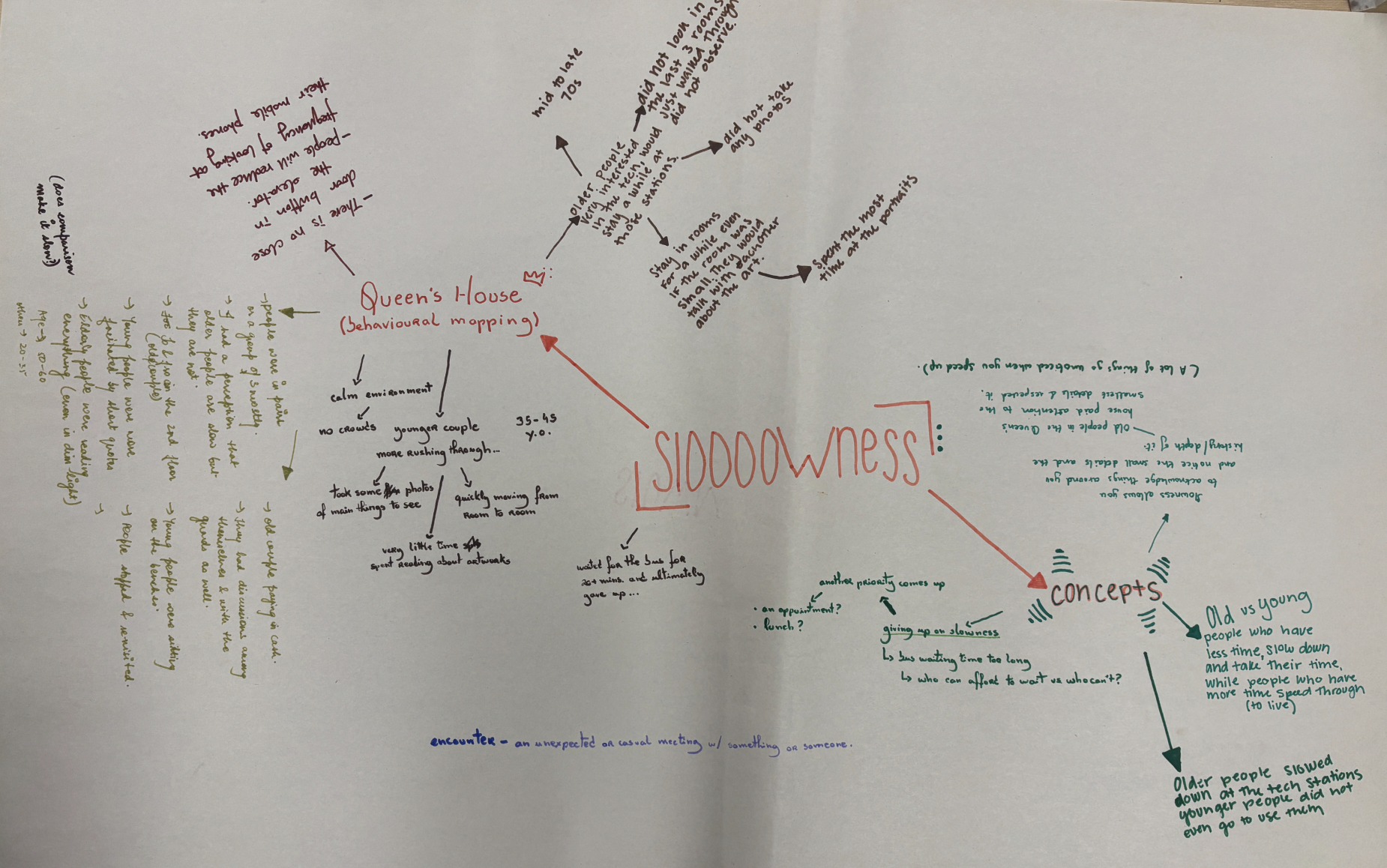
My team’s Slowness map took all the observations from our behavioral mapping and helped us work with data in concept (Dinis, 2025).
Viewing the exhibition 24/7: A Wake-Up Call for Our Non-Stop World at Somerset House, which I viewed online, gives me a better understanding of how attention spans are disturbed. These exhibitions showcase that we rely heavily on digital connections and how constantly being connected warps our sense of time, therefore making us think negatively about the thought of slowing down and mental stillness (Creative Review, 2019). We rely on stimulation, so we inherently miss things.
Going into the final week of this project, we knew that we wanted to focus on the art of noticing. We started our week with a brainstorming session, coming up with 8 ideas based on factors that slowed people down, and whether they helped someone notice something. We then narrowed it down to 5 ideas to start our speed dating method.
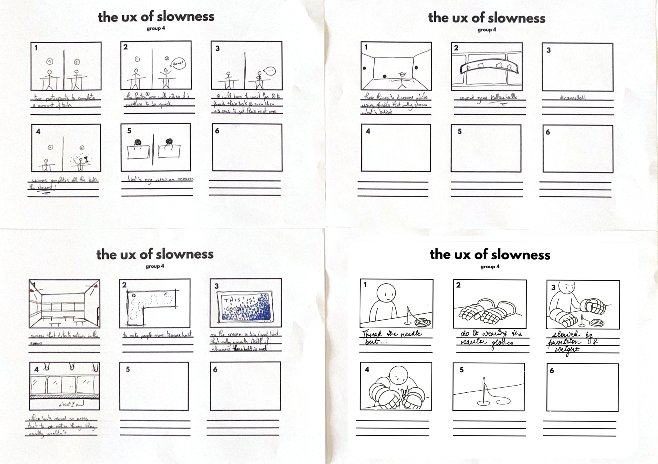
4/5 of the ideas on the storyboard to help with clarity during the speed dating method (O’Connor, 2025).
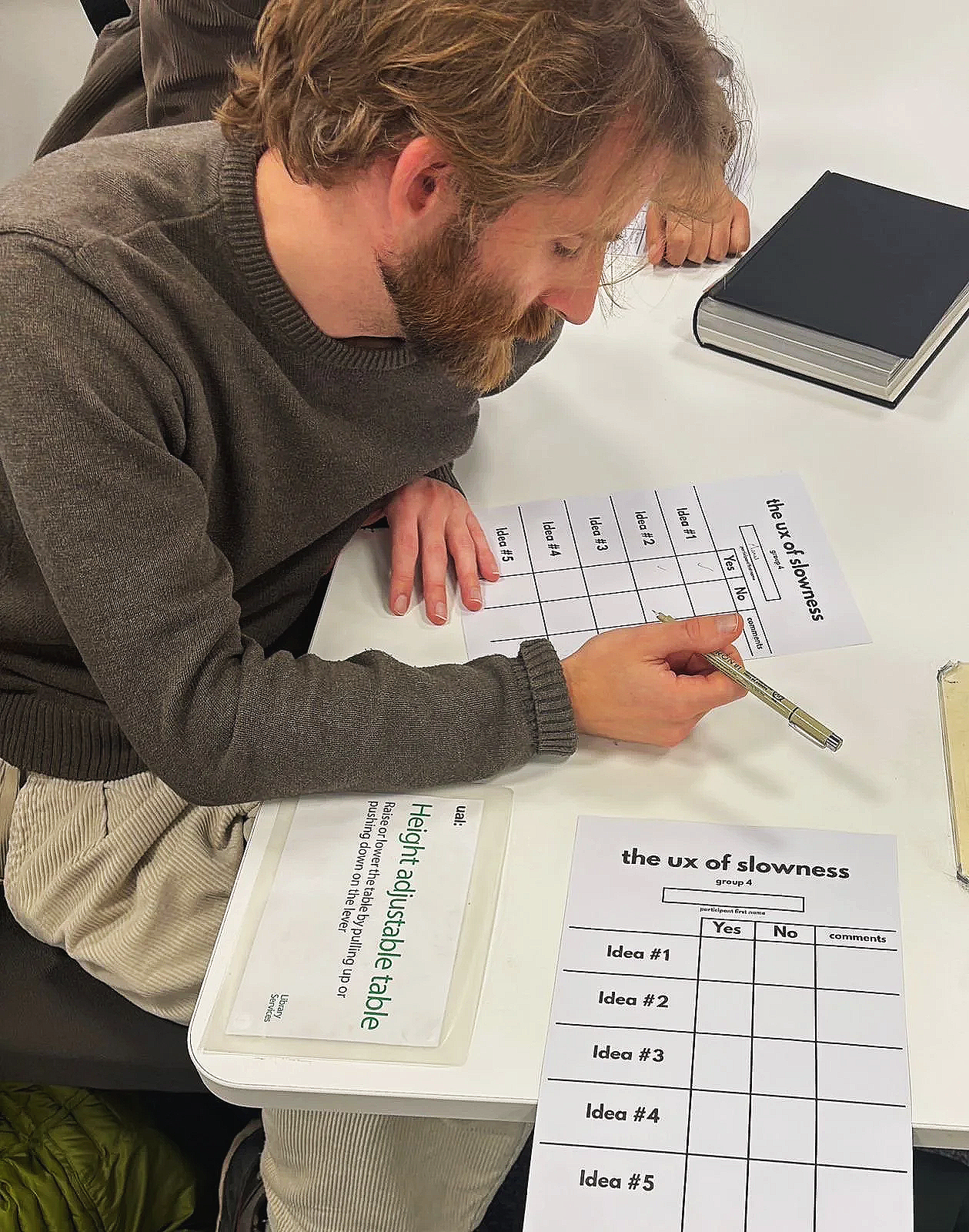
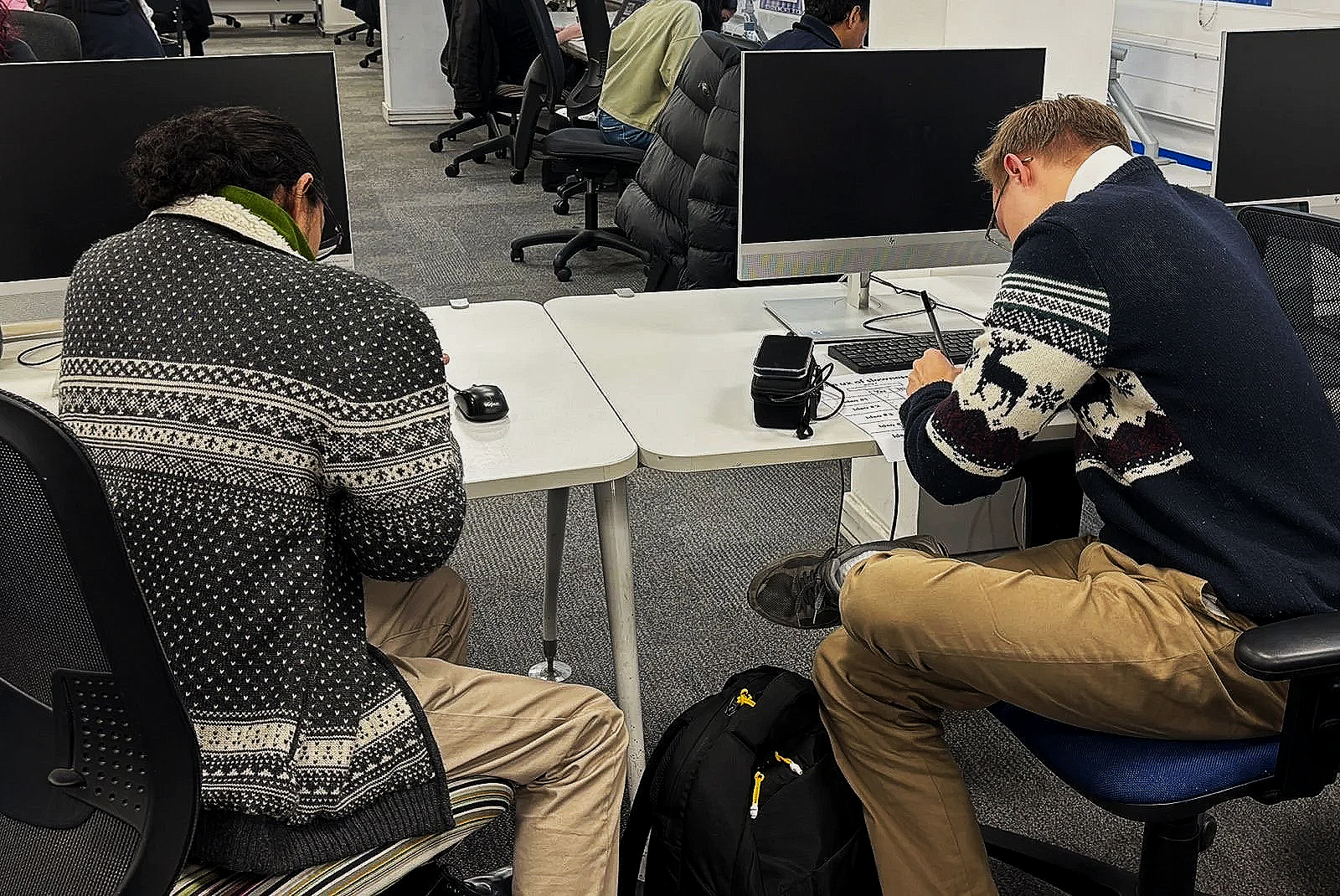
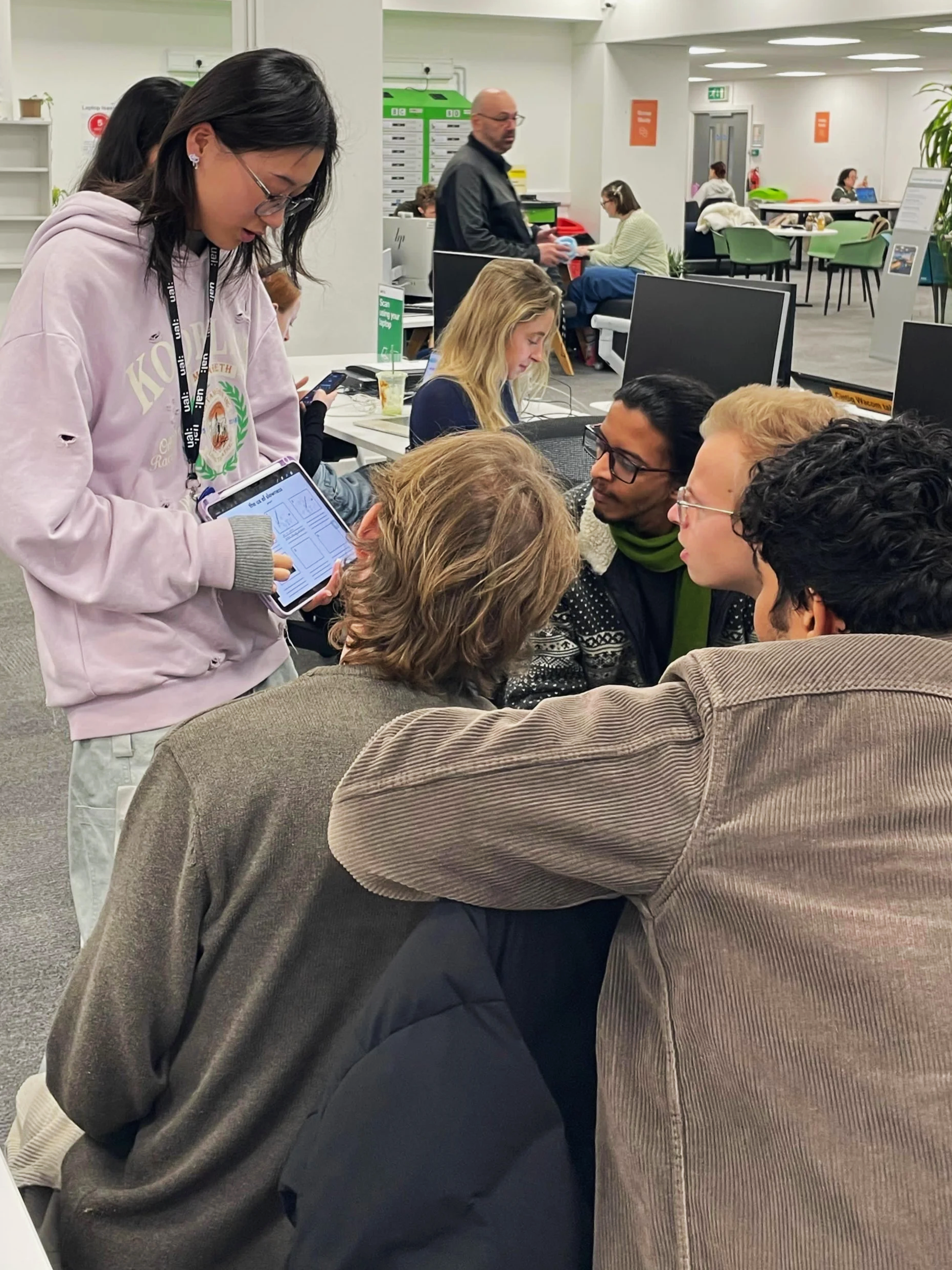
Pictured here are MA commercial photography students giving feedback, listening, and asking questions during our speed dating presentation. Some of the feedback was “feels a little unnecessarily difficult” and “let people think for themselves rather than telling them exactly what to do” (Dinis and Takrani, 2025).
All of our participants were very critical of the ideas and asked lots of good questions, some of which we did not know the answer to. They were also very confused about what we were asking them to do, so next time I want to be more prepared going into this type of research. All their feedback helped us when choosing which ideas we want to design and present.
We presented 2 ideas in our tutorial, and while we did meet the requirements of the brief, we were missing the deep meaning of the art of noticing. As a group, we wondered how we could turn one of these ideas into a strong statement about noticing. This made me think about some secondary research I had done at the beginning of the project. Kahneman’s (1973) Attention and Effort made me think about how attention is a limited resource.
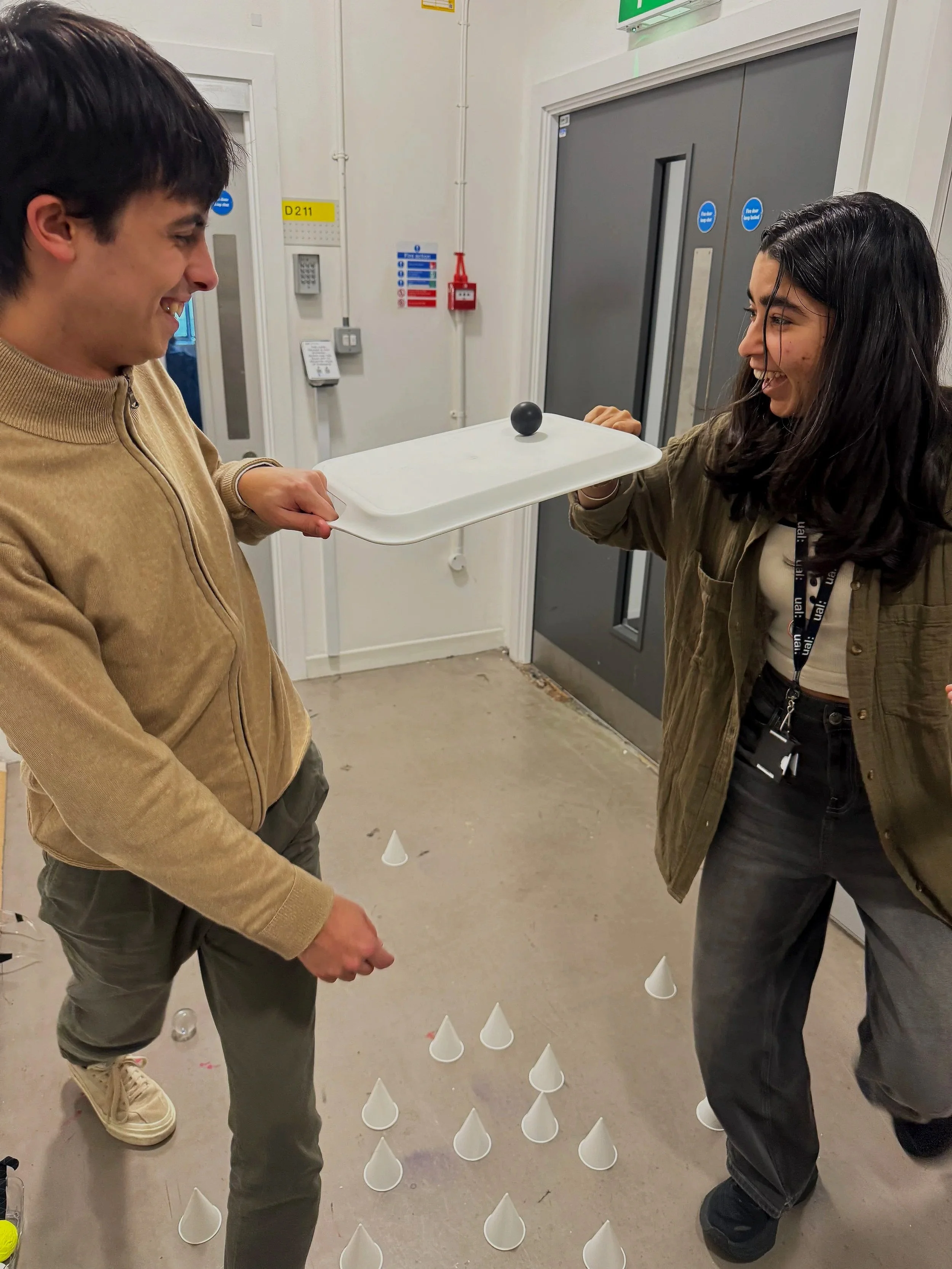
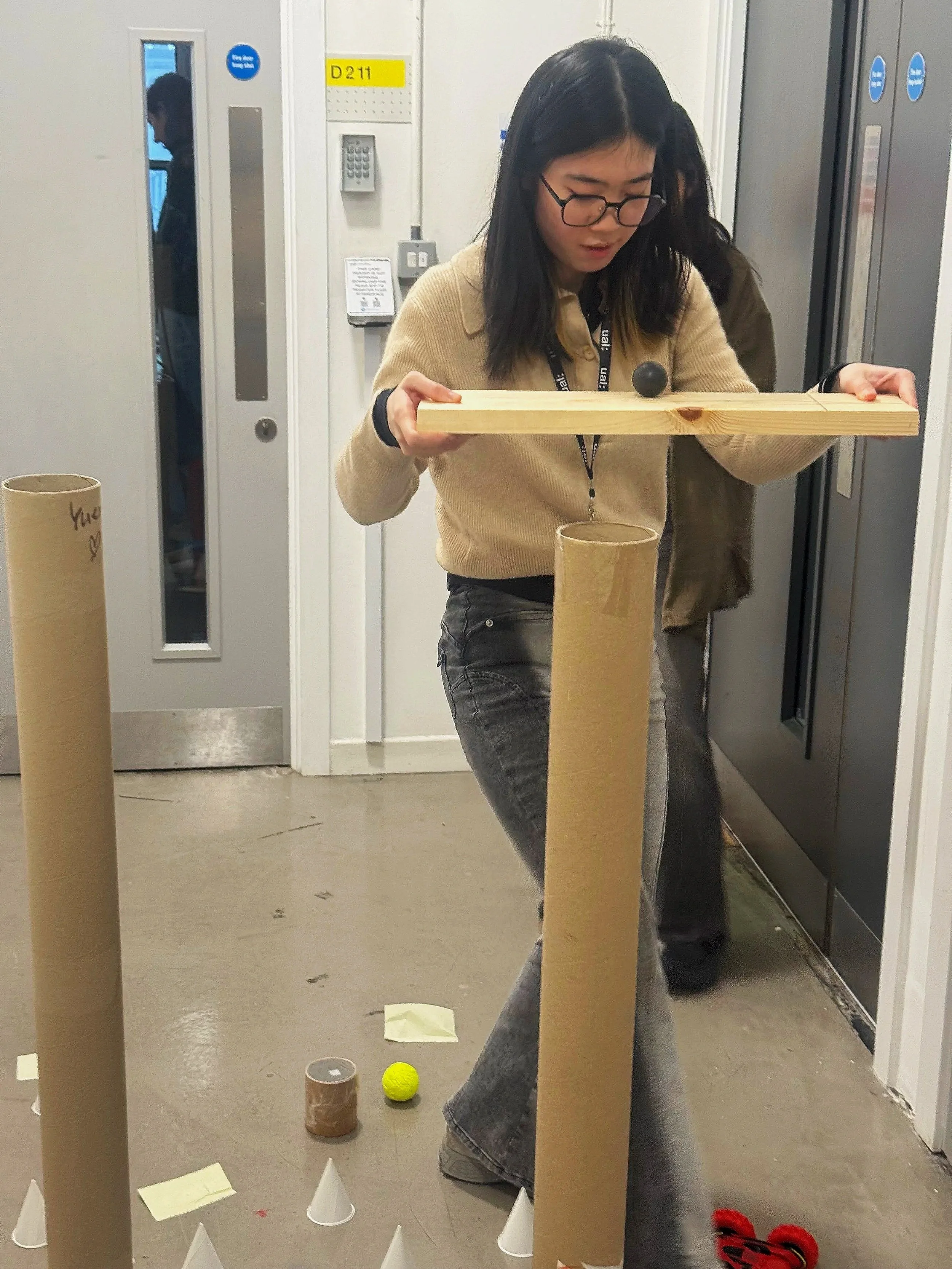
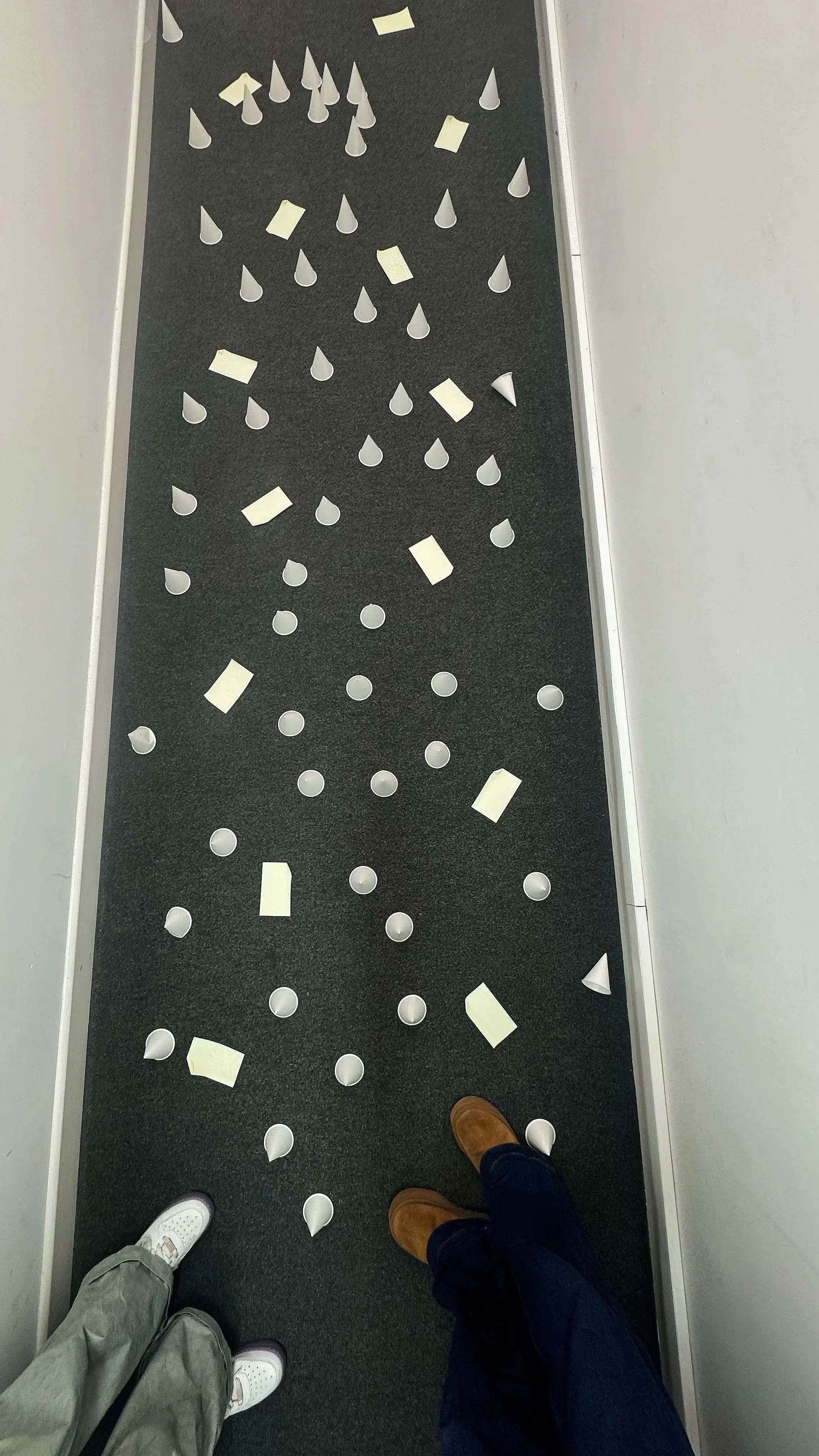
Tishman’s Slow Looking (2018) helps with the choice of activity. She states that real noticing has to have “intentional slowness” and “prolonged attention.” Because our activity required focus on a different part of the experience (the ball, the steps, the other person), participants didn’t have the space slowly look and see the answer to the trivia questions, which contributed to them missing the number on the footstep.
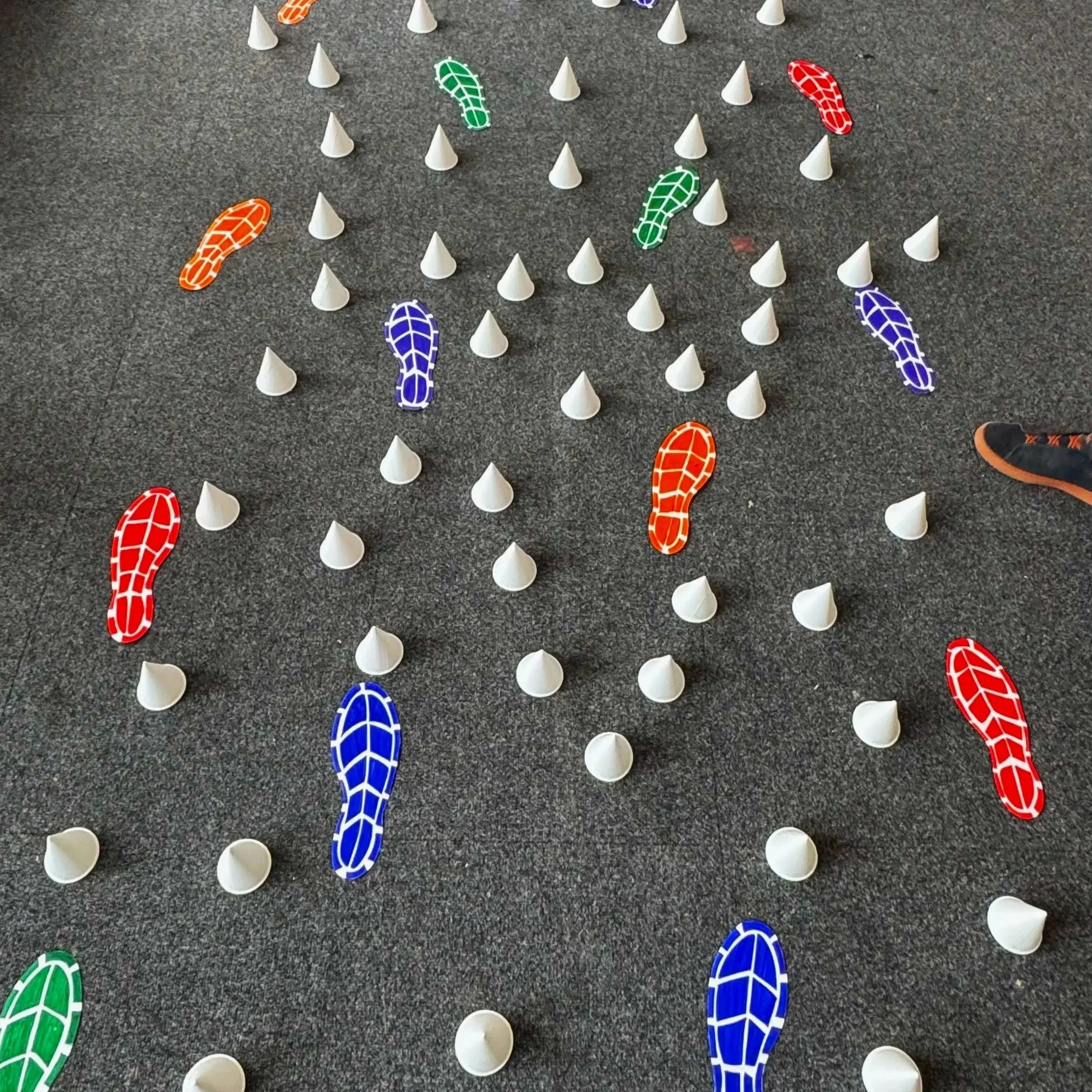
The Final Map
This map consists of bright footprints to help the participants see where they are supposed to step while also balancing the ball on a wooden plank with a partner (O’Connor, 2025).
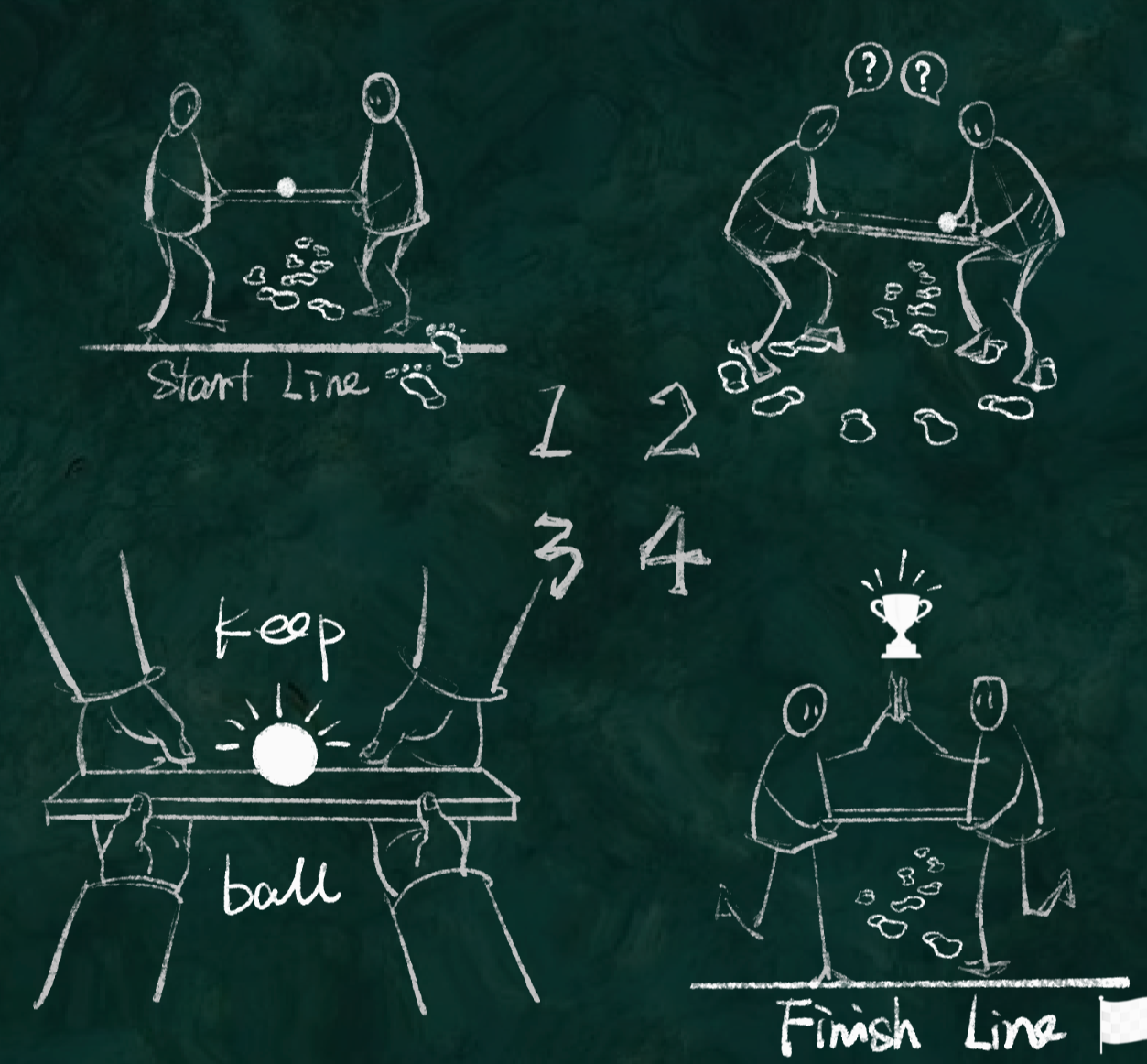
This Sketch (Lou, 2025) is the graphic displayed while explaining the game to the participants.
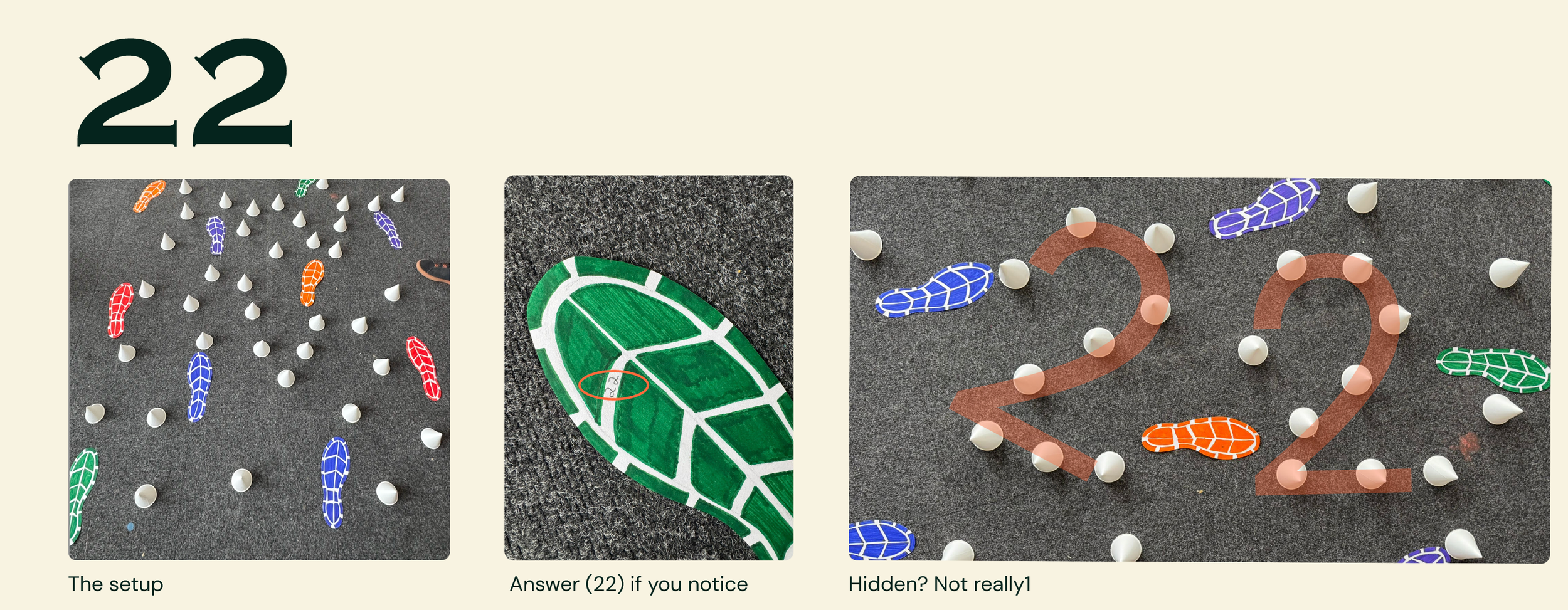
Graphic (Takrani, 2025) from the presentation revealing the answer to the question asked after the activity. “How many rooms are in the queen's house?” Participants were very confused by this question as we gave them no context to why we were asking.
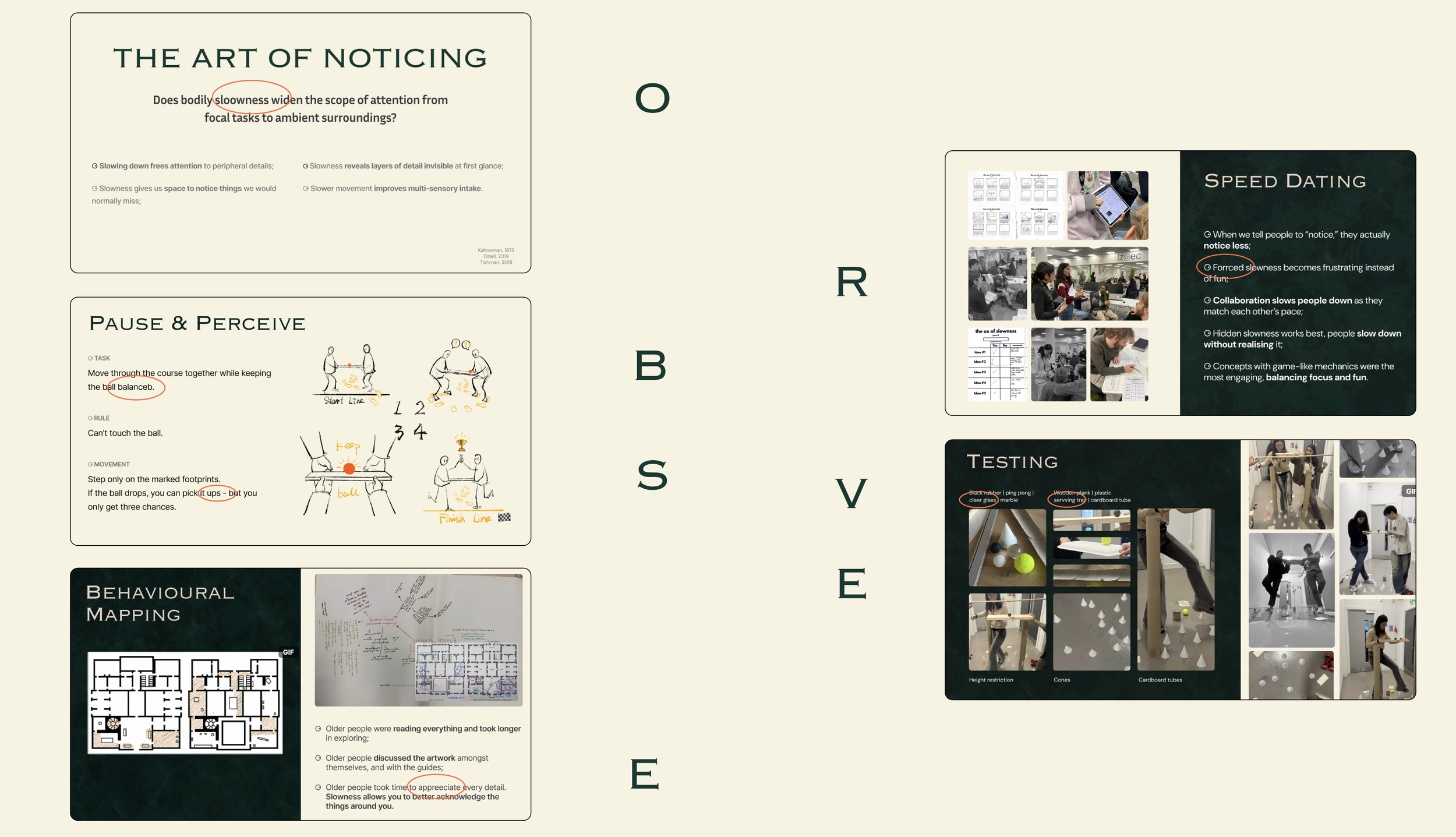
The final graphic (Takrani, 2025) was shown after we asked, “Did anyone notice anything unusual about our presentation?” Some noticed a few details, but no one looked close enough to realize the hidden meaning behind the additional letters added to certain words.
After our presentation, we were met with some harsh feedback, and while I understand and took note of it, I don’t necessarily agree with it. Many said that they didn't even have the time to notice the hidden number or see the mistakes in the presentation because they were either focused on the activity or the information. However, I do feel as if we could have clarified our concept and what the meaning behind the distractions was in the presentation. Our research showed us that personal and work responsibilities take over, and we forget to slow down and notice. All of the distractions represented aspects of the real world that steal our attention. While the art of noticing may have gotten overlooked, it is an important aspect of UX design. How does people’s attention shift, and how can we design ways to support people's mental health by slowing them down?
References
Creative Review (2019) ‘24/7: A wake-up call for our non-stop world at Somerset House’. Creative Review, [online]. Available at: https://www.creativereview.co.uk/247-wake-up-call-non-stop-world-somerset-house/
Kahneman, D. (1973). Attention and Effort. Prentice Hall.
Kaplan, R. and Kaplan, S. (1989). The experience of nature: A psychological perspective. Cambridge: Cambridge University Press.
Odell, J. (2019). How to do nothing: Resisting the attention economy. S.L.: Melville House.
