Collaborative Unit
Brief: Design and stage a sonic intervention that amplifies, distorts, or reclaims public space in Walworth.
Group members: Aishwarya SajI, Andre Dinis, Lindy Qin, Merrin O'Connor, Mingzhi Zhang, and Oindrilla Sinha
Introduction
In this two-week brief, we engaged with sound in the area where we go to class every day. Walworth is a place full of culture and history, a history that is often overlooked. This is especially evident when it comes to Saint Peter’s Walworth, a church designed by architect Sir John Soane (Brayley, 1829). Through this project, we aimed to create a Sonic Timeline to reflect on the history of Walworth and the church, while also looking ahead to what the church could do for the community in the future.
Sounds as a Research Method for Understanding a Place
Since the church is a historic building, we wanted to honor the structure and its purpose as a building that has witnessed the streets of Walworth change.

Exterior of Saint Peter’s Church in Walworth, London (Author’s image).
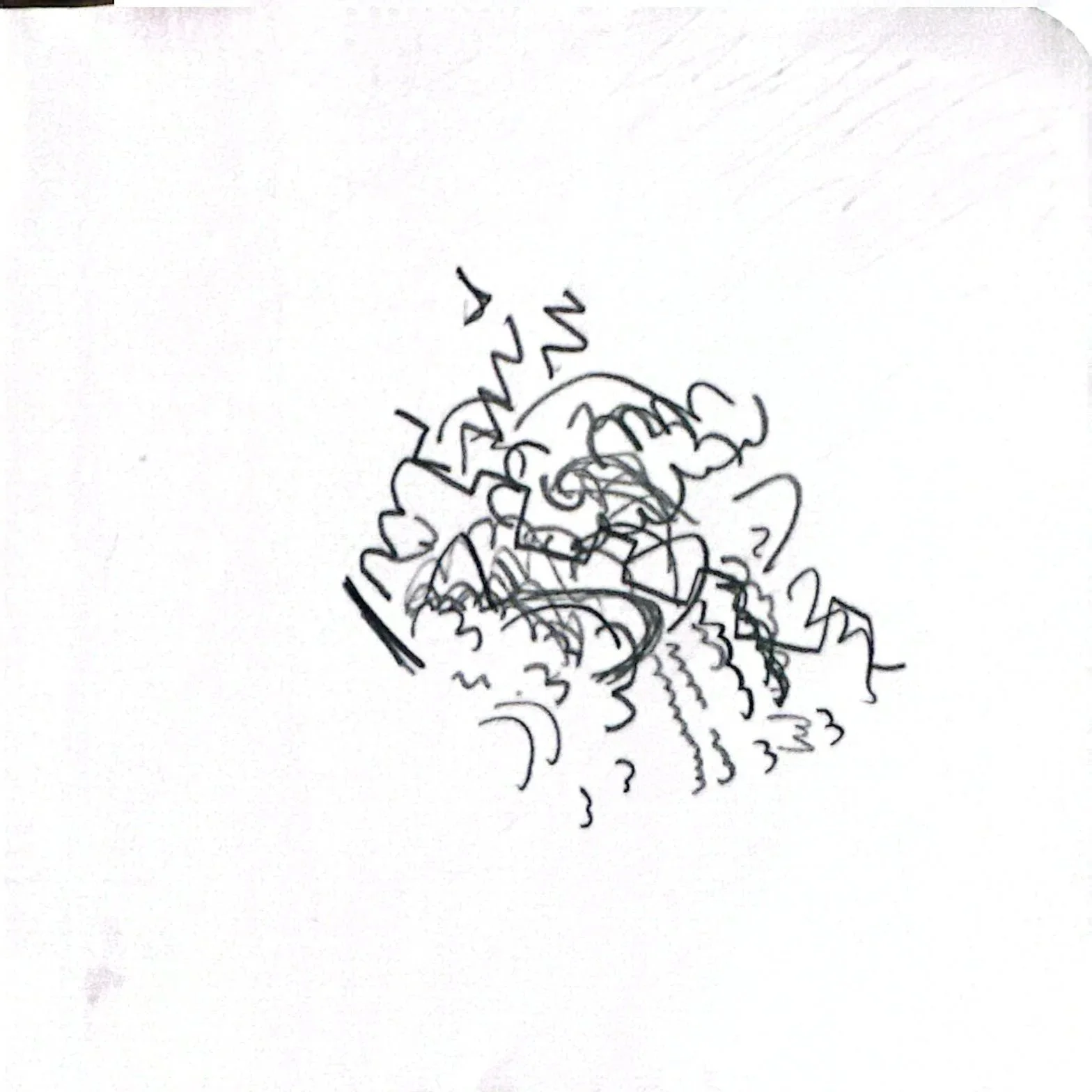
Abstract sketch of Saint Peter's Soundscape during our soundscape walk in Walworth, led by Ronnie Deelen (multidisciplinary artist focusing on sound). During this stop on our tour, I had already learned about some of the history, as I had been to Saint Peter's prior with Rosie Oliver (Audio producer and London guide)(Oliver, 2024).
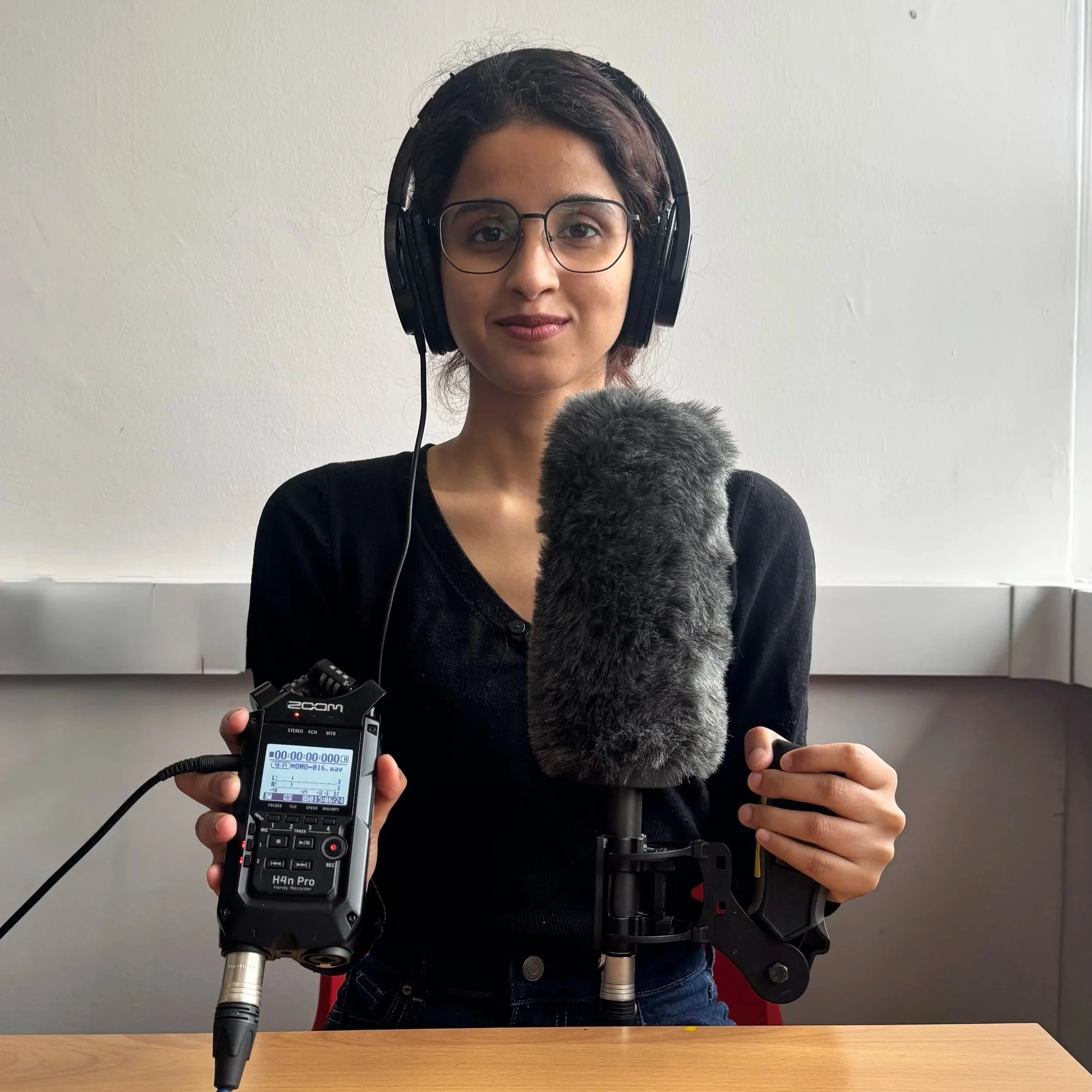
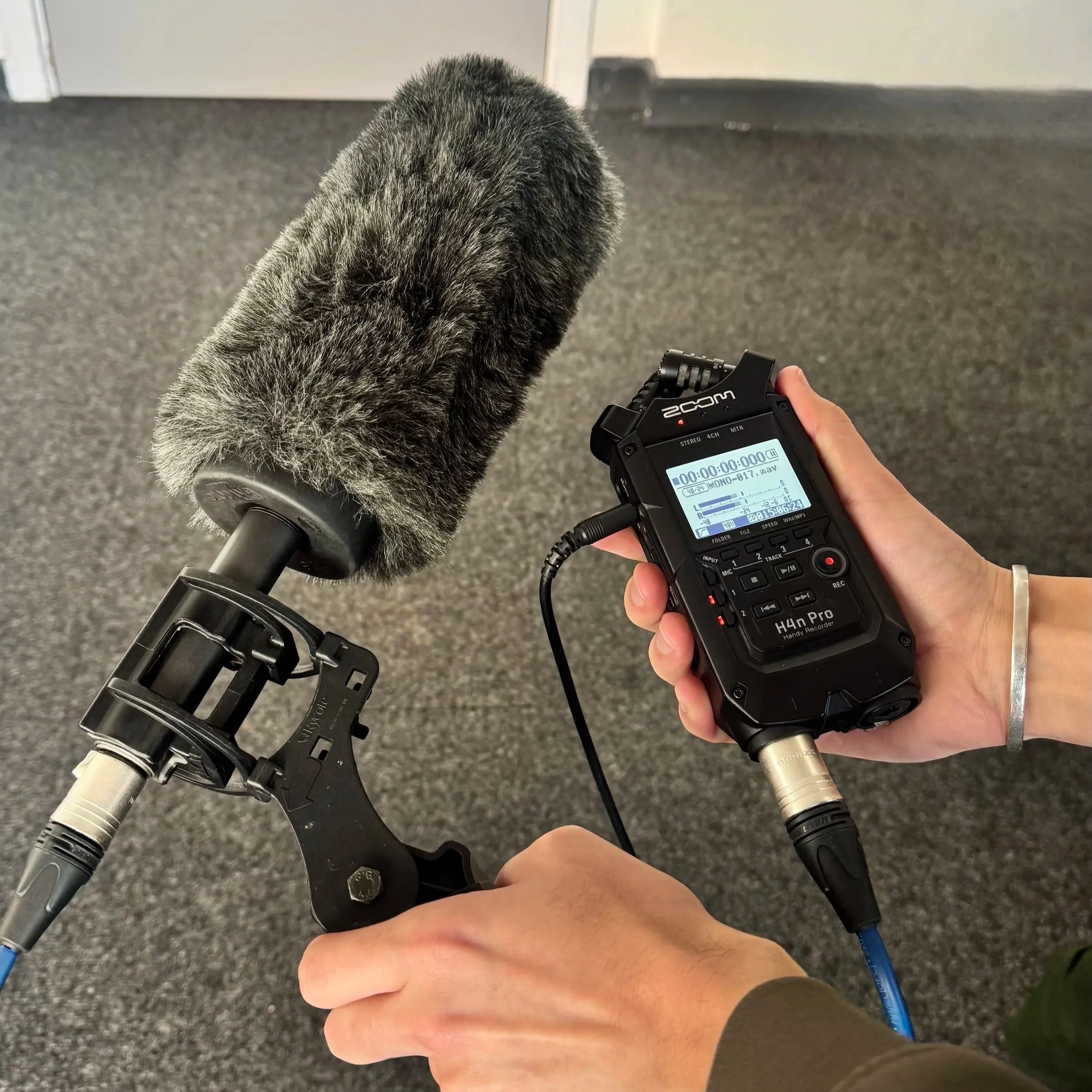
Oindrilla Sinha, testing the Zoom H4n Pro (portable audio recorder) and microphone. This device helped us hear and record sounds that we would not have been able to detect with the human ear (Author’s images).
Listening to the soundscape of Saint Peter's helped us merge the relationships, the people, and the history of the space. We used listening as an embodied research method. Along with artifact analysis, it helped us uncover the sounds and rhythms of the church. As explained in The Soundscape: Our Sonic Environment and the Tuning of the World, initial listening can provide insights into how users experience and understand an environment (Schafer, 1994).
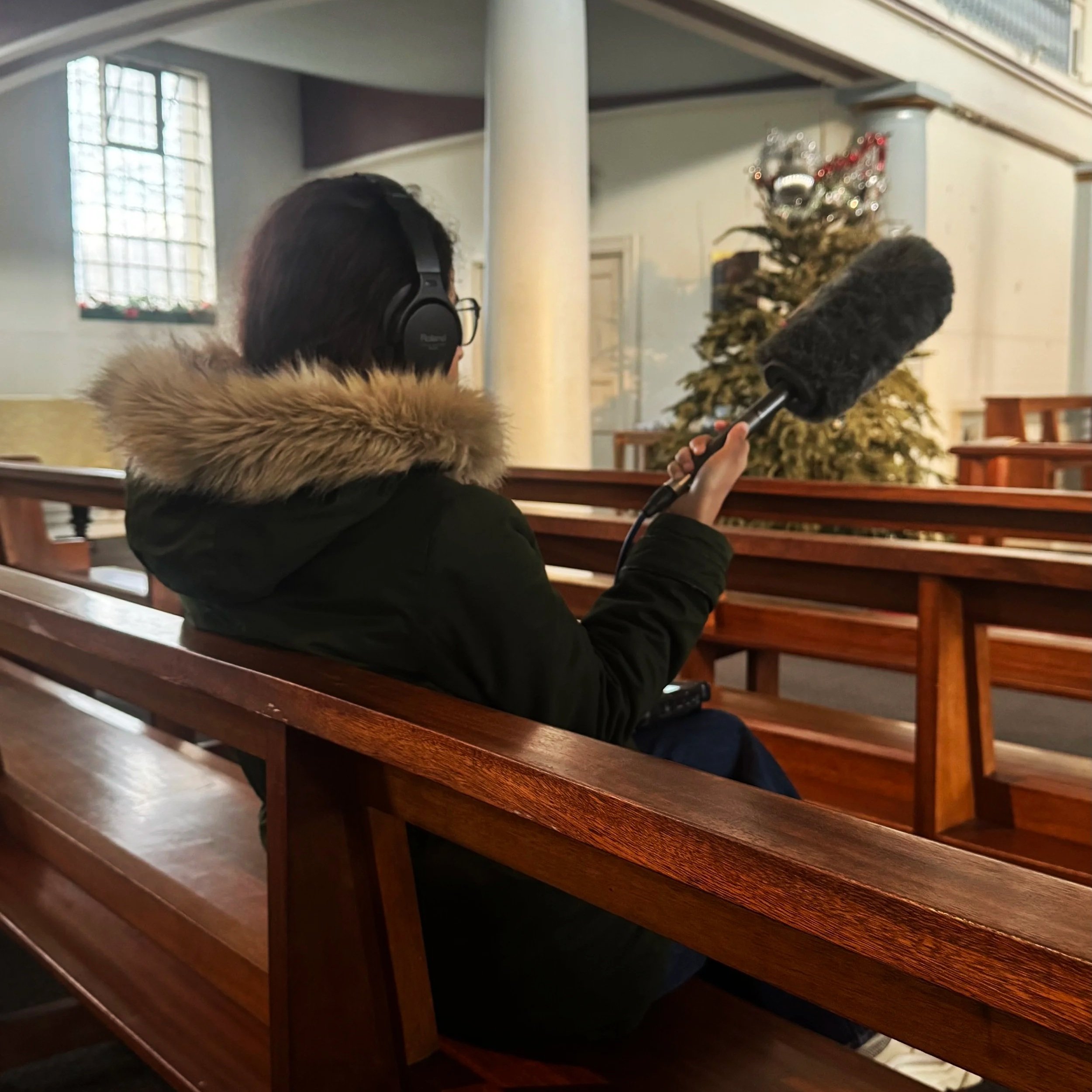
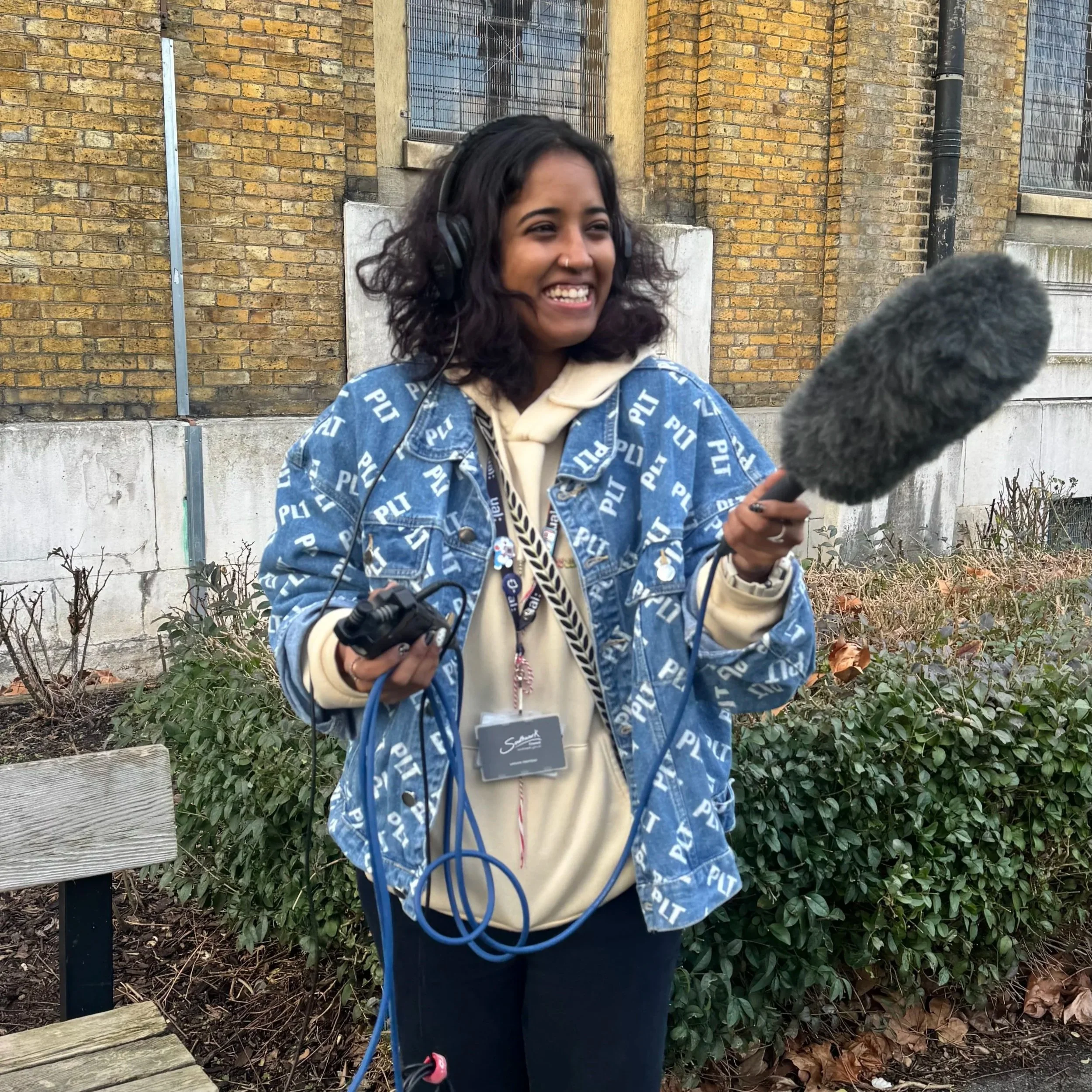
Aishwarya SajI and Oindrilla Sinha, recording and observing the sounds inside and outside of Saint Peter’s Walworth. Many of the sounds we recorded during this initial phase were used in the final product (Author’s images).
Contrasting with traditional research methods, simply listening gave us a unique opportunity to use real-world sounds from a specific site. I had a conversation about the subjectivity of sound with Mother Doris (a curator at Saint Peter's), and it helped me understand how subjective sound really is. She said she loves hearing children play in the back of the church during mass, but some people do not like the disruption. The sound is the same, but these two groups perceive it differently. This helped me frame our work not as a historically accurate reenactment of sound but as a sonic interpretation, for our listeners to decide how they perceive it.
Why Saint Peter's Walworth?
While exploring Saint Peter's, we learned that this place, while a sacred space, is also a historic landmark, a community centre, and an event space. Saint Louie’s Cafe is located in the old Saint Peter's Crypt. A space that was used for death is now used for gathering and socialization. We even had our interview with Father Andrew in the Cafe.
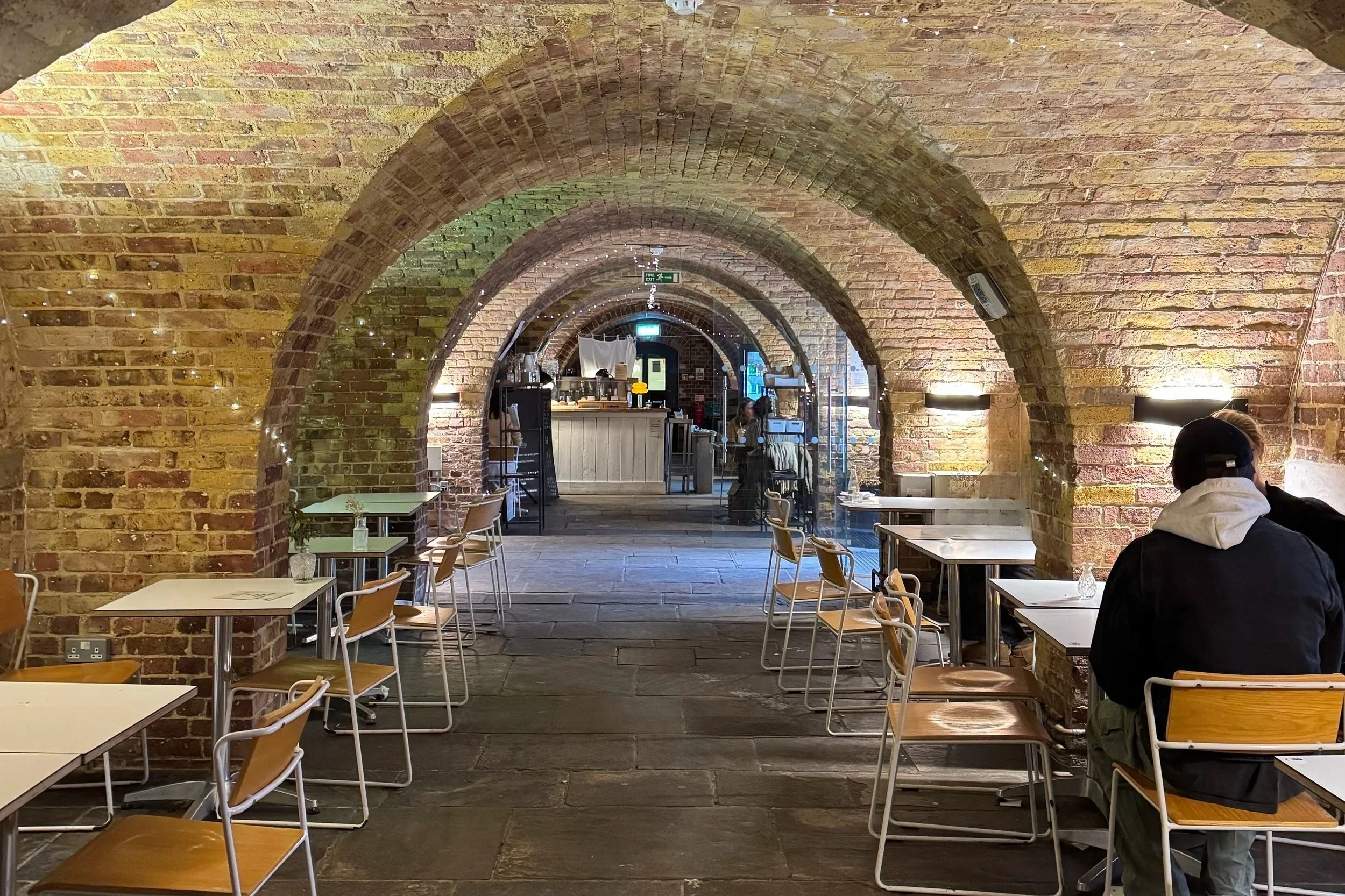
The crypt as it is today, St. Louis Cafe. A space where many people from inside and outside the community come to work and be together. We took advantage of this space and worked there most days (Dinis, 2026).
Using sound felt suitable for the building's history, as it has “heard” first hand a war, social change, street riots, gentrification, and had two bombs dropped directly on the structure. The change this church has “heard” and endured through its almost 200 years would make a strong sonic intervention while also educating people about its history.
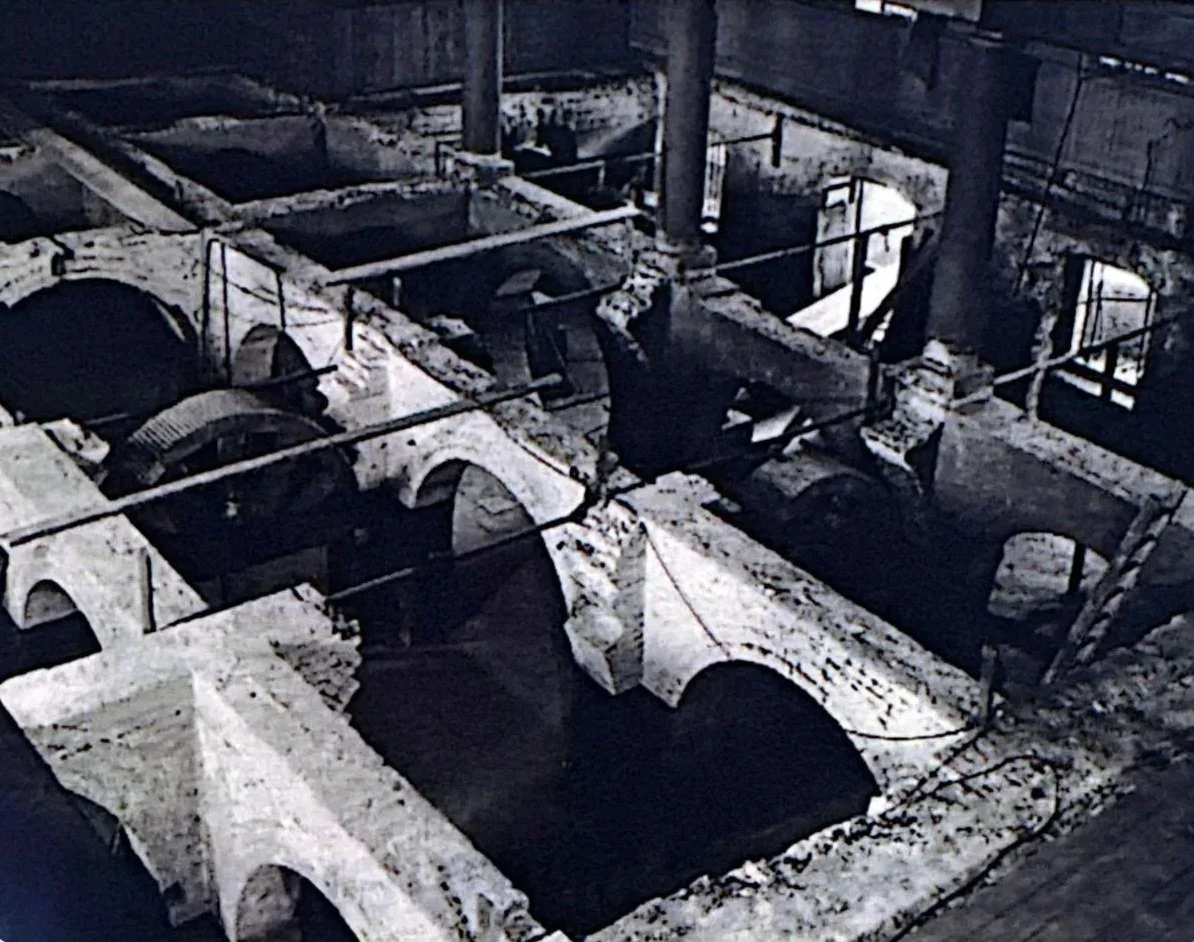
Image of Saint Peter’s post World War II bombing while being reconstructed (St. Peter’s Church, Walworth Conservation Management Plan).
Research Constraints
During our research process, we were immediately faced with a constraint: time. While we had two weeks to complete this sonic intervention, we wanted to respect the time that Father Andrew (Rector) and Nina Swann (Heritage Manager) were willing to give us. Unfortunately, our interview was scheduled two days before our final presentation. This led us to think about what information we could collect before this interview. We began diving into the history of the church, which was limited to secondary sources and interviews.
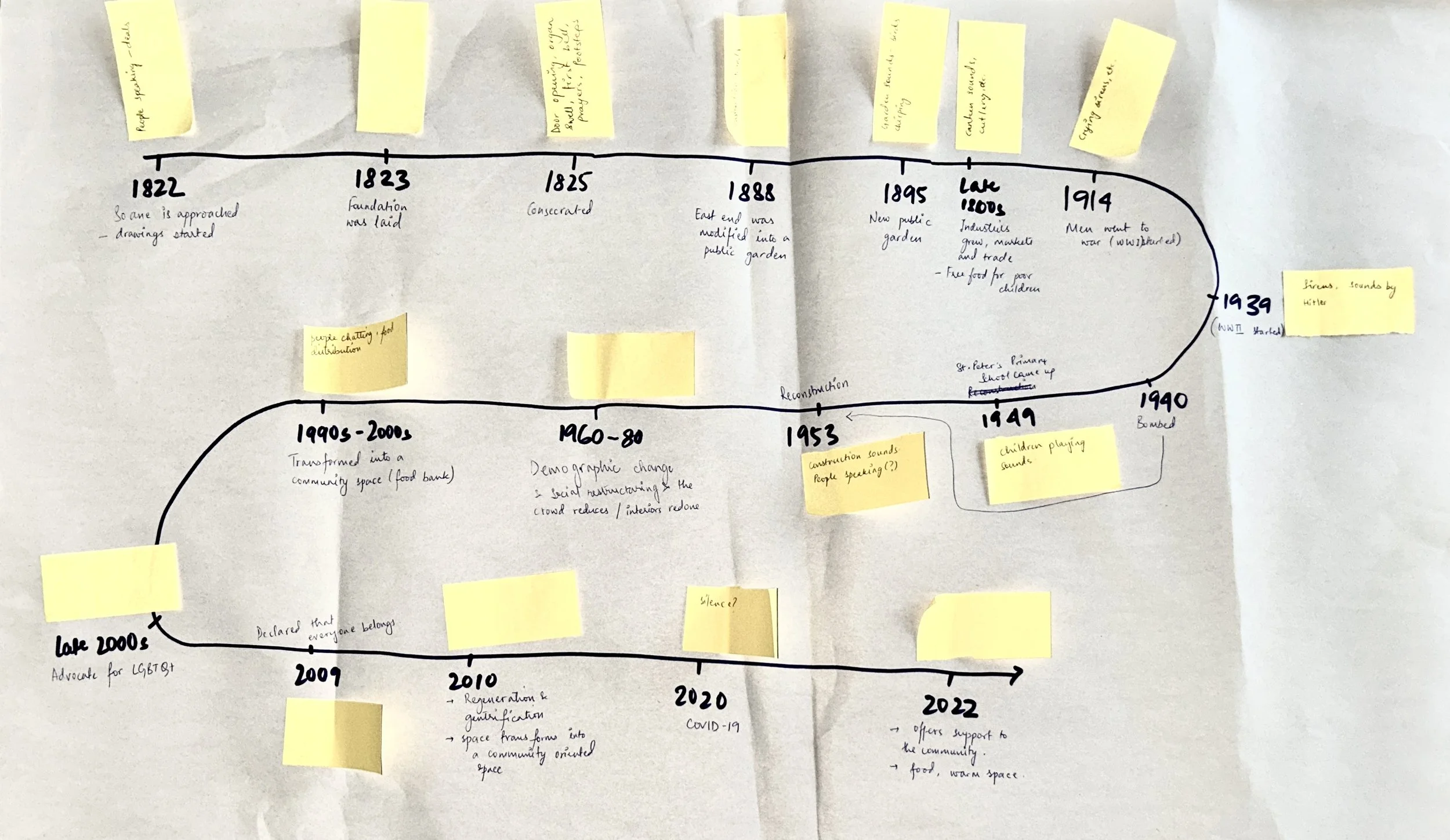
Physical timeline made using secondary research and interviews. The yellow tabs indicate which sounds we wanted to create for each time period (Author’s image).
Luckily, Saint Peter's is a Grade I building (National Churches Trust), and its history is well documented. Still, we knew that this was not the only way to get information, so we went to the Sunday service to speak with some members. As Ursula K. Le Guin (1986) states in her Carrier Bag Theory, stories are a collection of experiences rather than a complete narrative. This theory relates to how we approached our interviews, we did not look for a full narrative. We wanted people’s lived experiences. We were able to gain information on how people felt about the different sounds of the church and its role in the surrounding area. Although the constraints made our process difficult, they inspired us to be more independent and think about this design process in a more creative way.
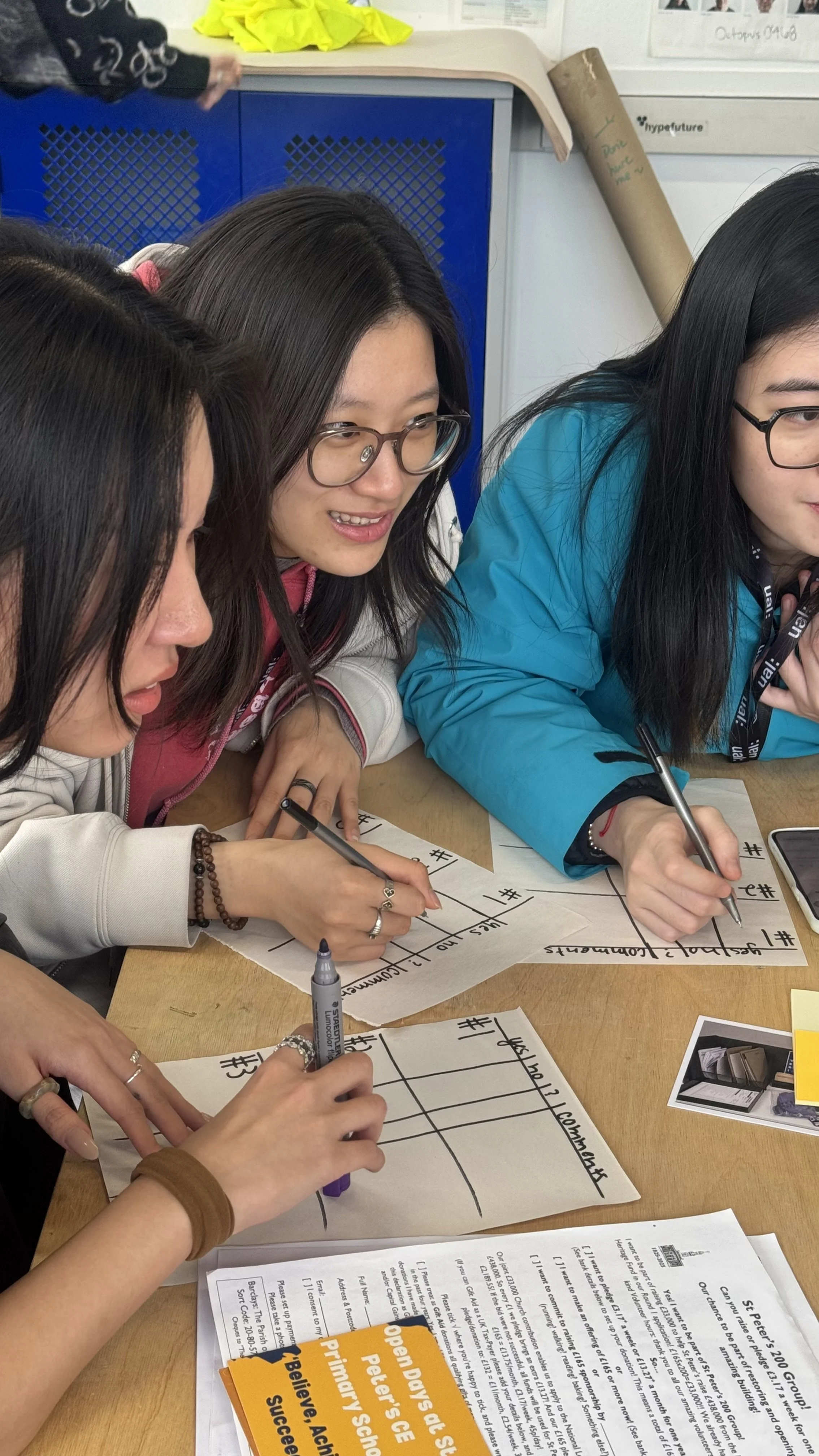
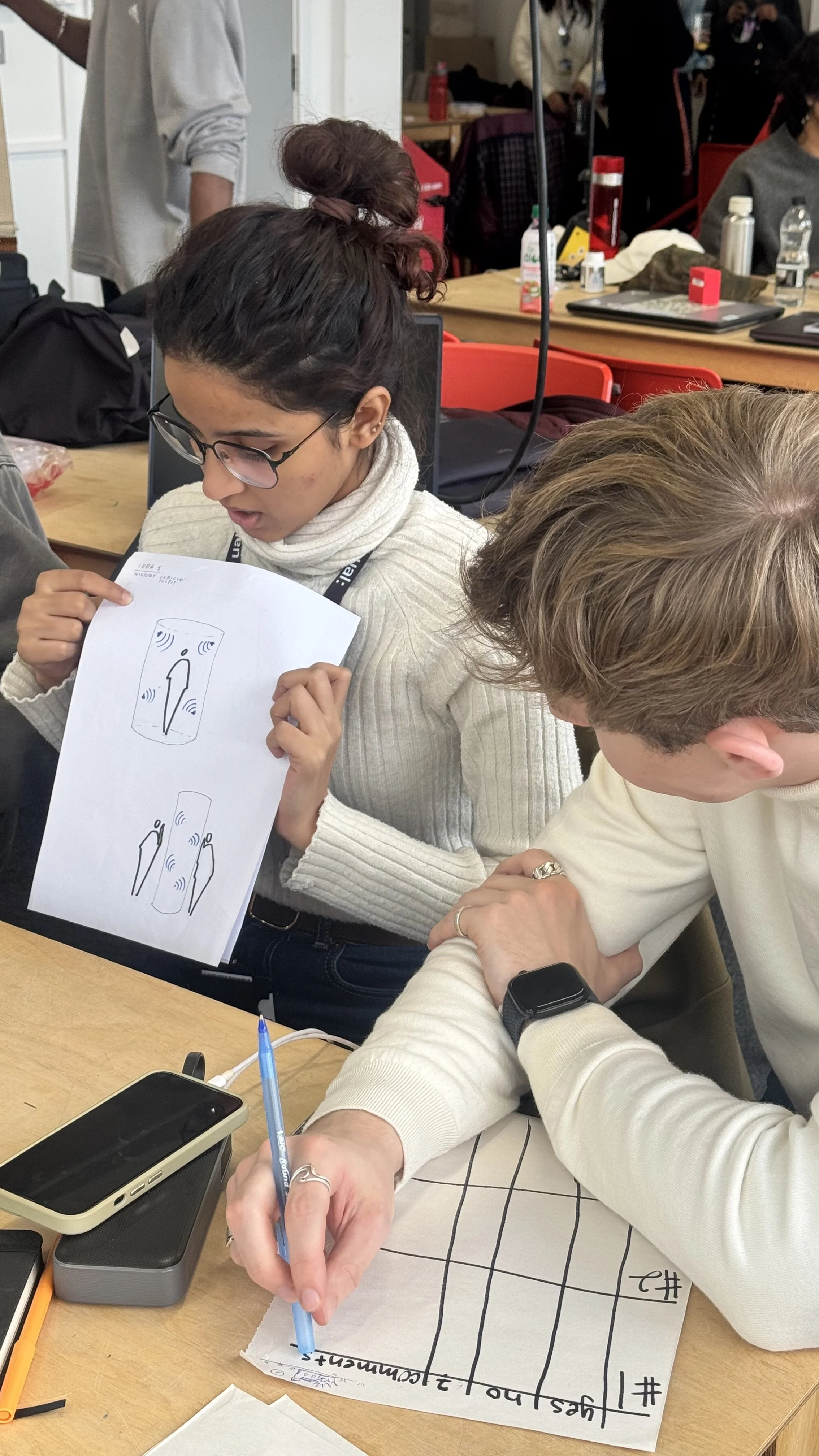
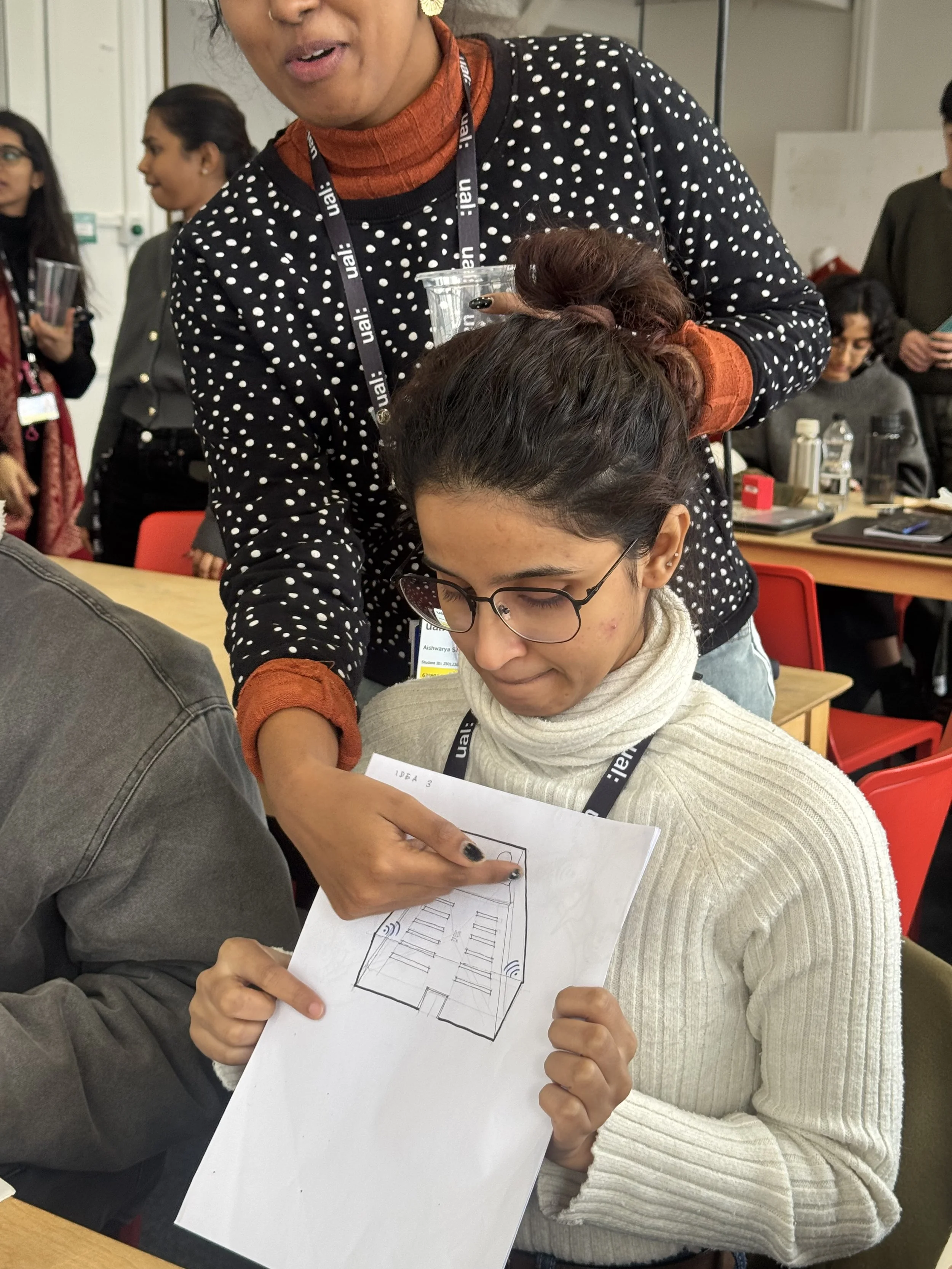
Conducting Speed Dating Research. Our participants were asked to listen to three ideas about where the sonic timeline should be placed and give feedback quickly after hearing a short description (Author’s images).
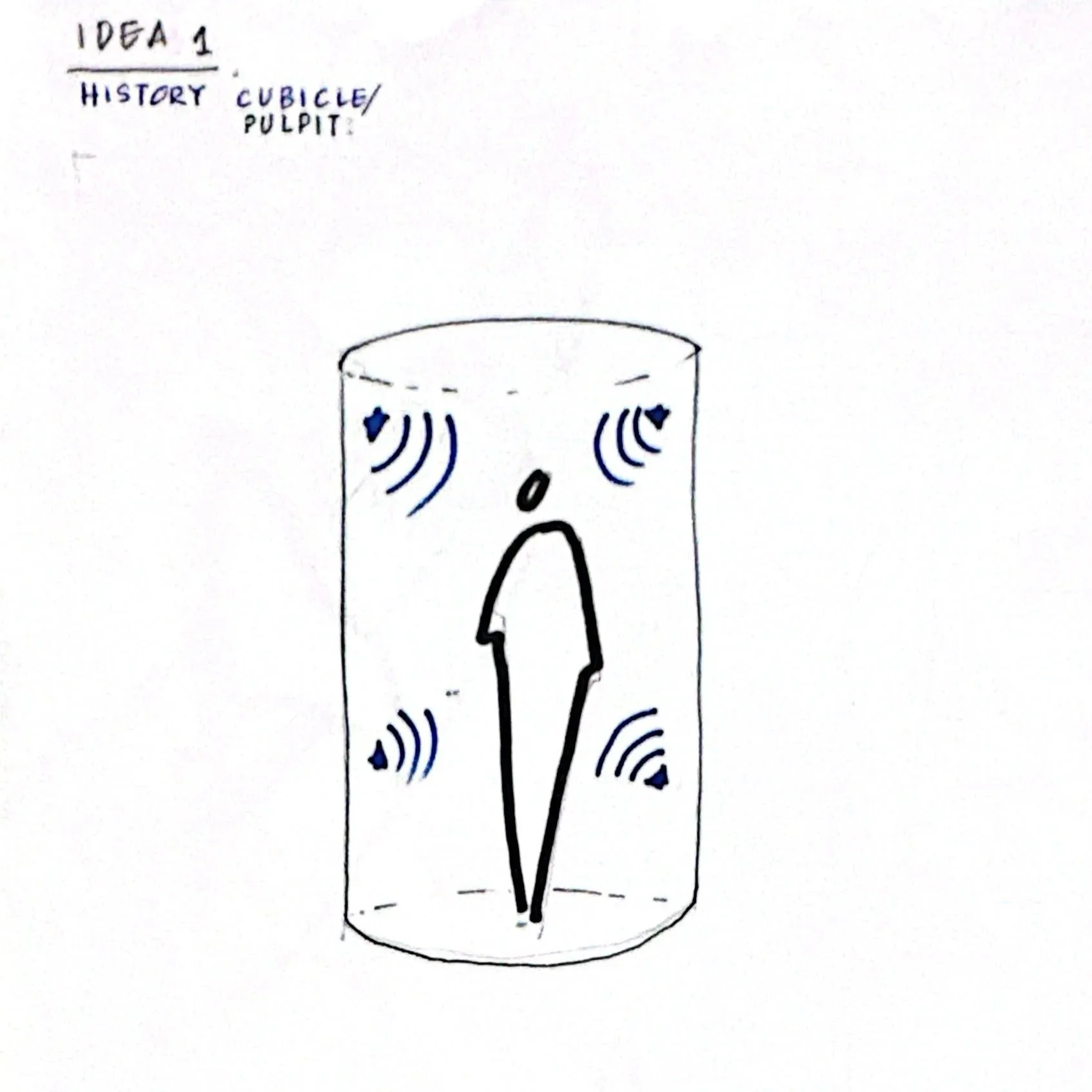
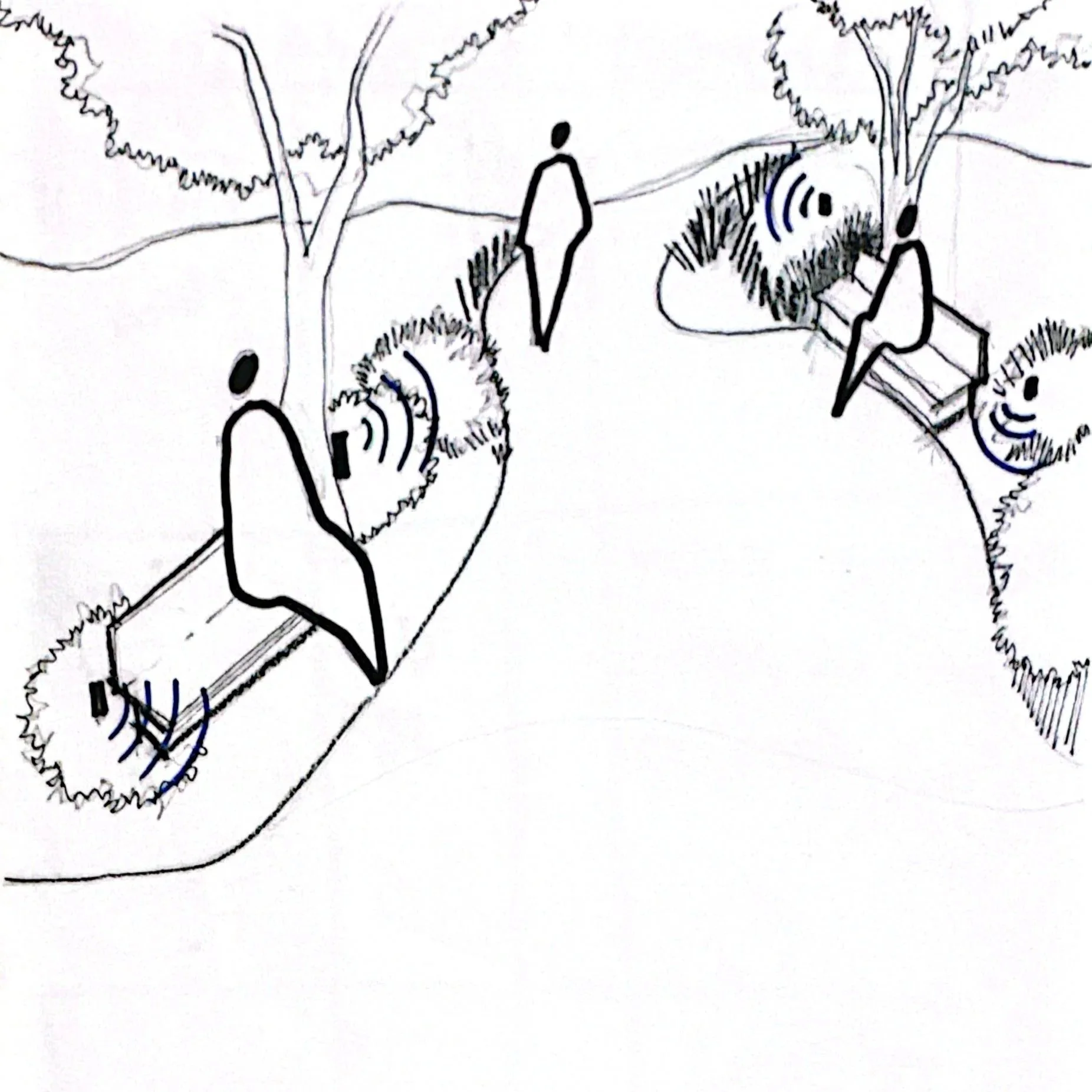
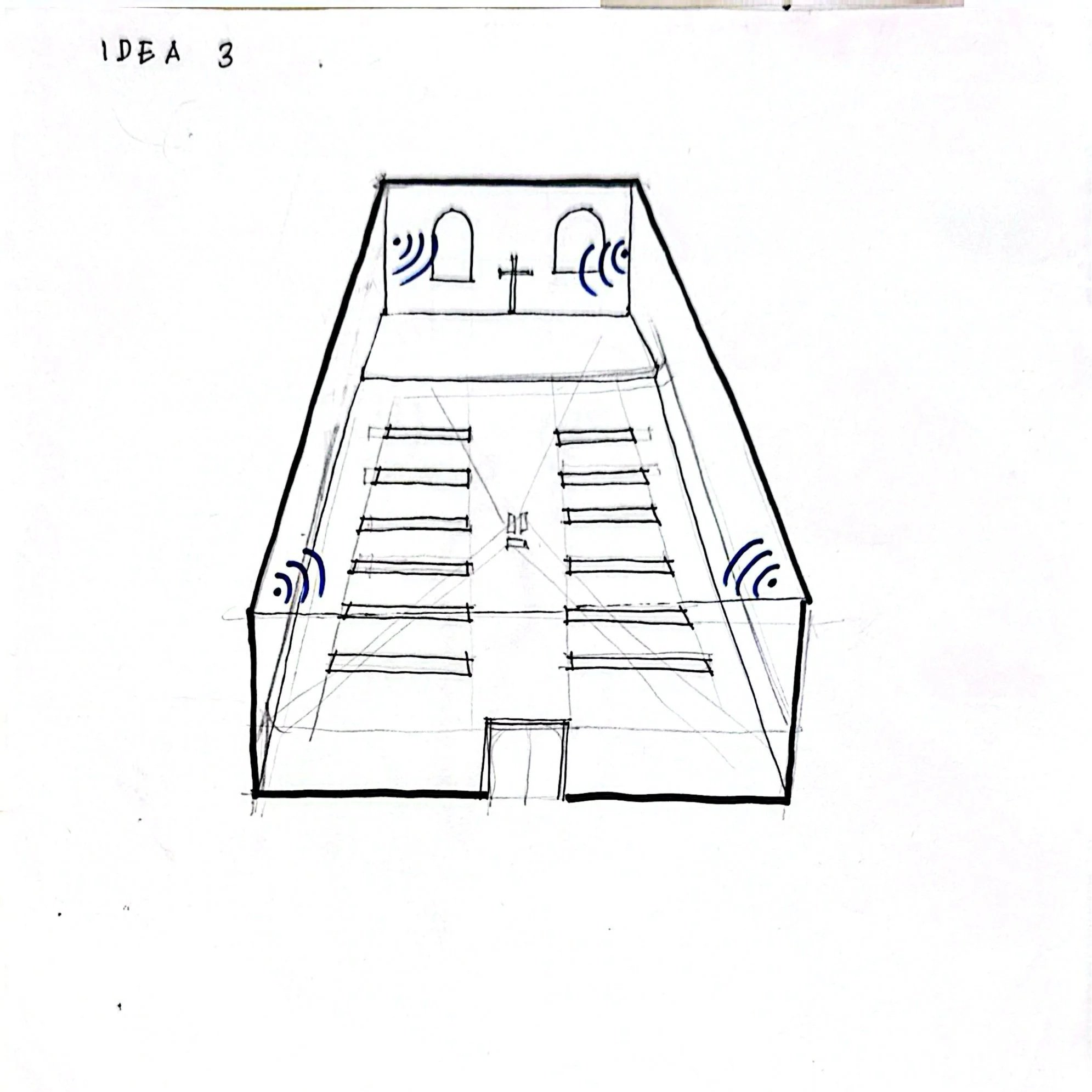
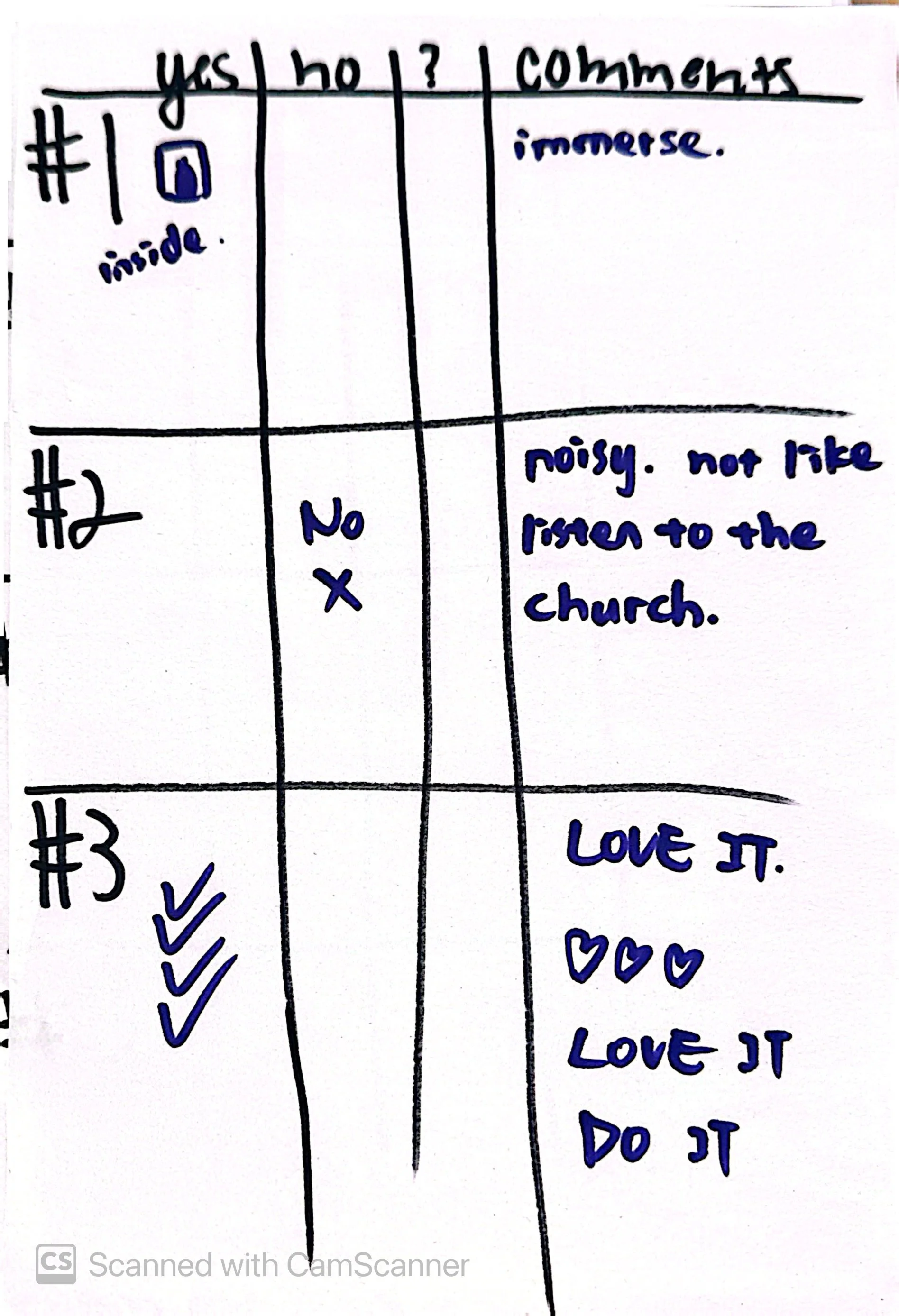
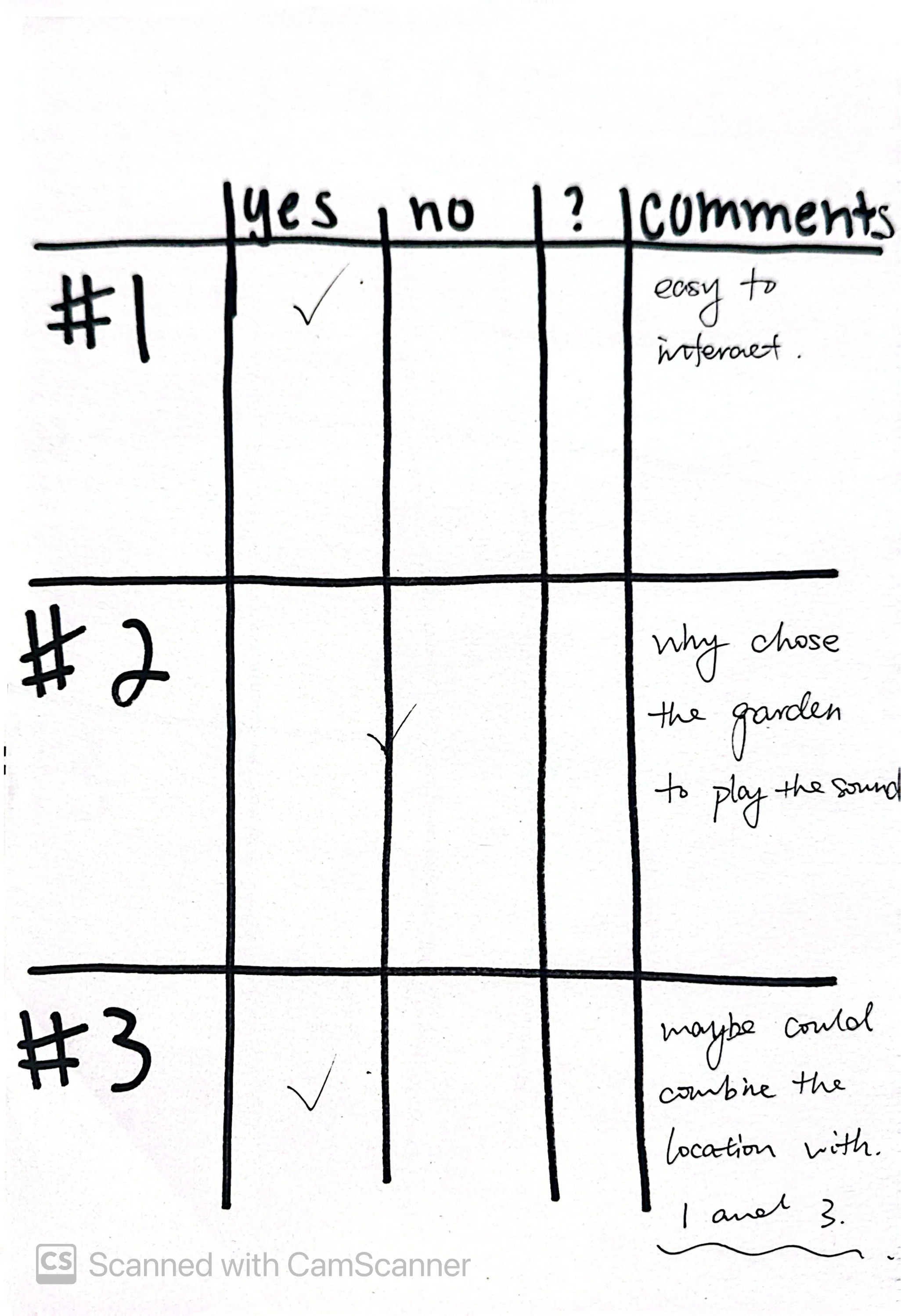
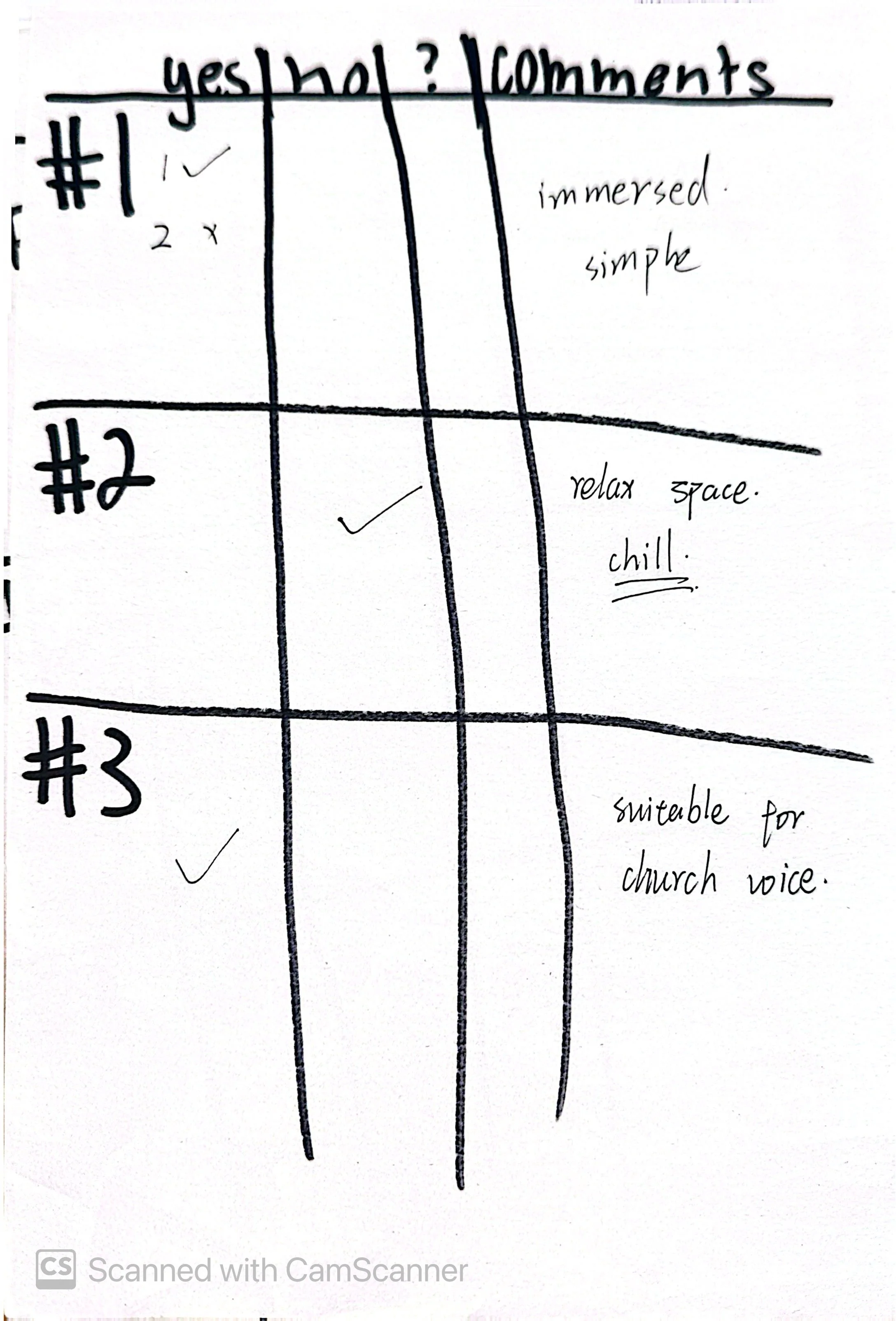
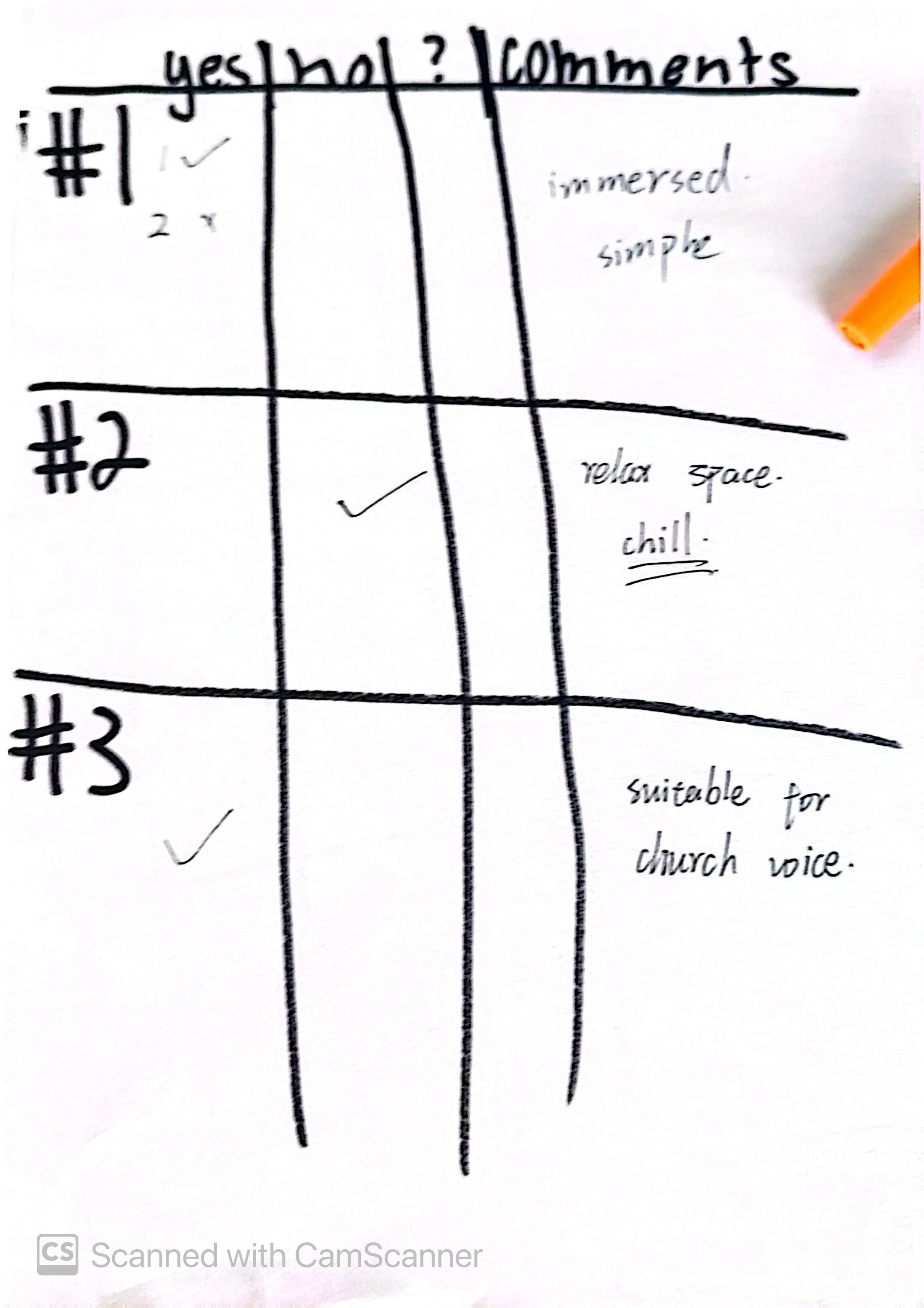
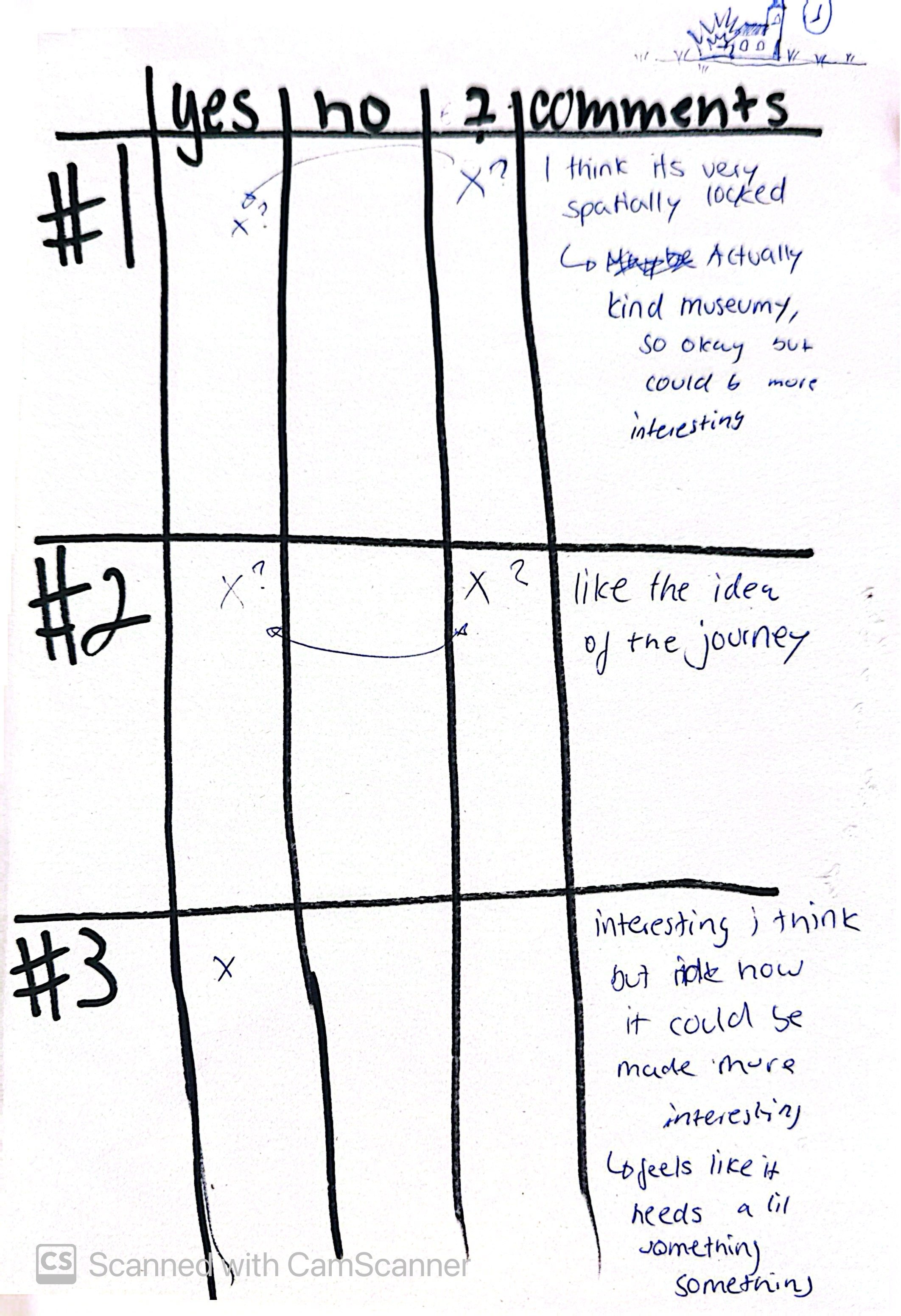
Initial sketches were shown to the participants (SajI, 2026). Feedback from the speed dating session, which was in favor of the idea #3, having the sounds within the church itself, as the other two felt disconnected from the church, as one was in the garden and the other was an embodied pod style experince (Author’s image).
Constructing the Sonic Timeline
When documenting each time period, we had to think about each sound and how it might be interpreted. As designers, we were in a unique place, as we do not necessarily have to represent each sound to be exactly sonically correct, especially in the historical context. We had the opportunity to create these sounds artistically. We recorded sounds at Saint Peter’s and the Imperial War Museum, but mostly used Foley sounds.
Three of the many Foley Sounds we created for our timeline. Foley sound creation is the art of recreating everyday sounds (Ament, 2014). This was inspired by many cartoon sound artists who use this technique (Author’s image).
Example of before and after sound manipulations of “bells.” The original sound was a metal spoon hitting an empty metal water bottle, then transformed into church bells through sound manipulation.
Spatial Sounds and Experience Design
Our decision to place the sounds throughout the church was inspired by a classic timeline. Just as one would normally move through a timeline, we wanted someone to walk through and hear the different sound effects we created along a historical timeline.
Recording our sonic timeline within the church required us to use many different devices and speakers. We played all the sounds while one person walked through and recorded. While this technique was not simple, we believe recoding the sounds in the church helped drive our concept further (Dinis, 2026).
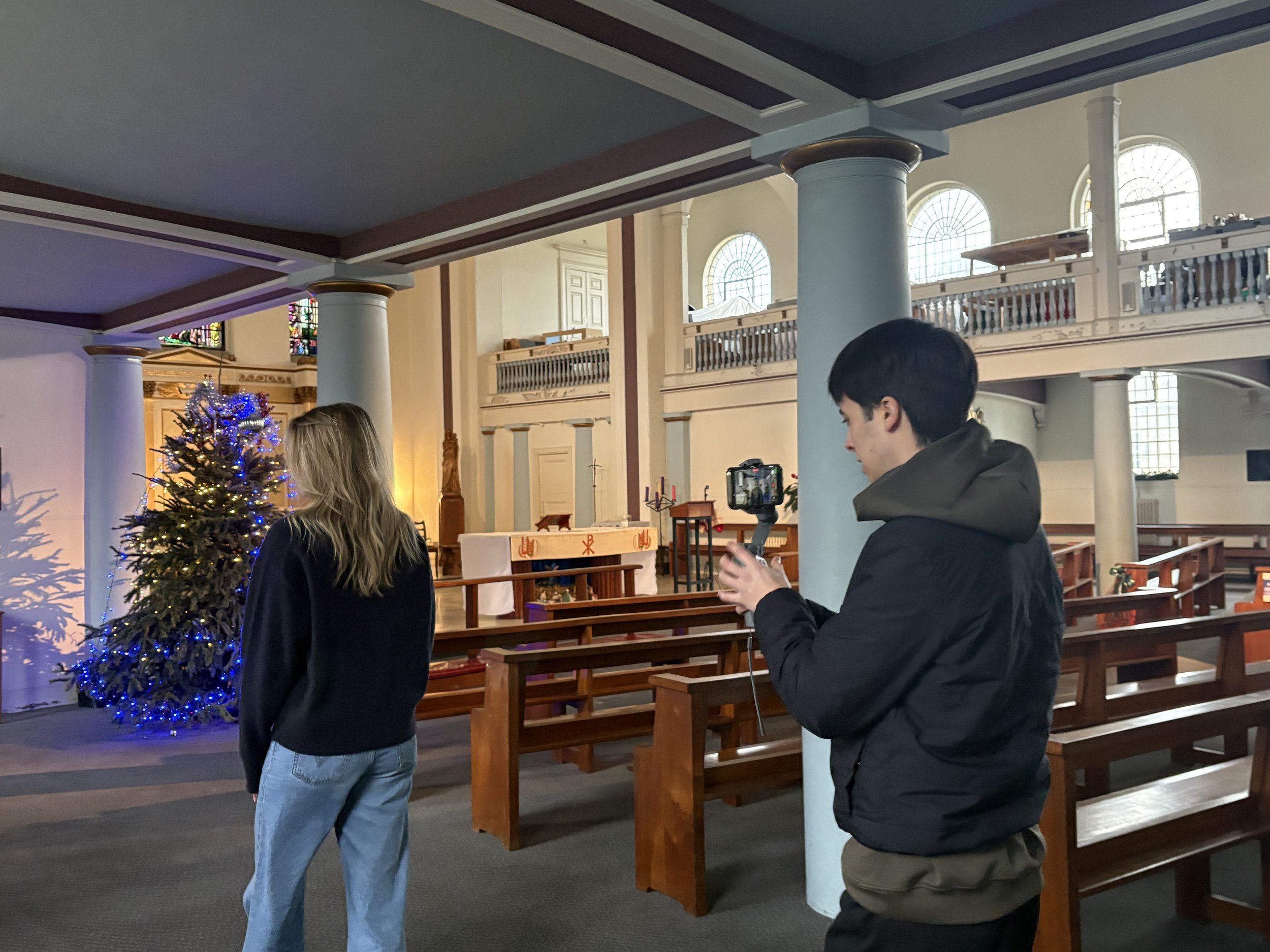
After recording the timeline, we shot the video that the recorded sounds would play over. We wanted the video to represent how we hoped this would be set up if it were a long-term project. The person would move through the church and listen to the curated timeline (SajI, 2026).
There were many spatial and technical challenges, including where to place each sound, making sure each sound played as the person would be walking by, considering whether sounds would be too overpowering, and recording in an uncontrolled environment where people were organizing and cleaning. We also had to make sure sounds from outside the church would not interfere.
Final Sonic Timeline (Videography by Dinis, 2026)
Even though our sounds did not come off clearly, recording them in the church gave them an authentic sound and gave our project a place to live in the world. The sounds the user would hear could help them understand the building they love or have just walked into.
Our final challenge was about giving our classmates a similar experience in the classroom. We tested multiple different applications and found that the application AmpMe would allow us to play the same audio at the same time from different devices. We then placed one person in the back of the room, one in the middle, and one in the front, so the sound played in different places in the room to emulate the experience in the church
Conclusion: Feedback, Reflections, and Future Direction
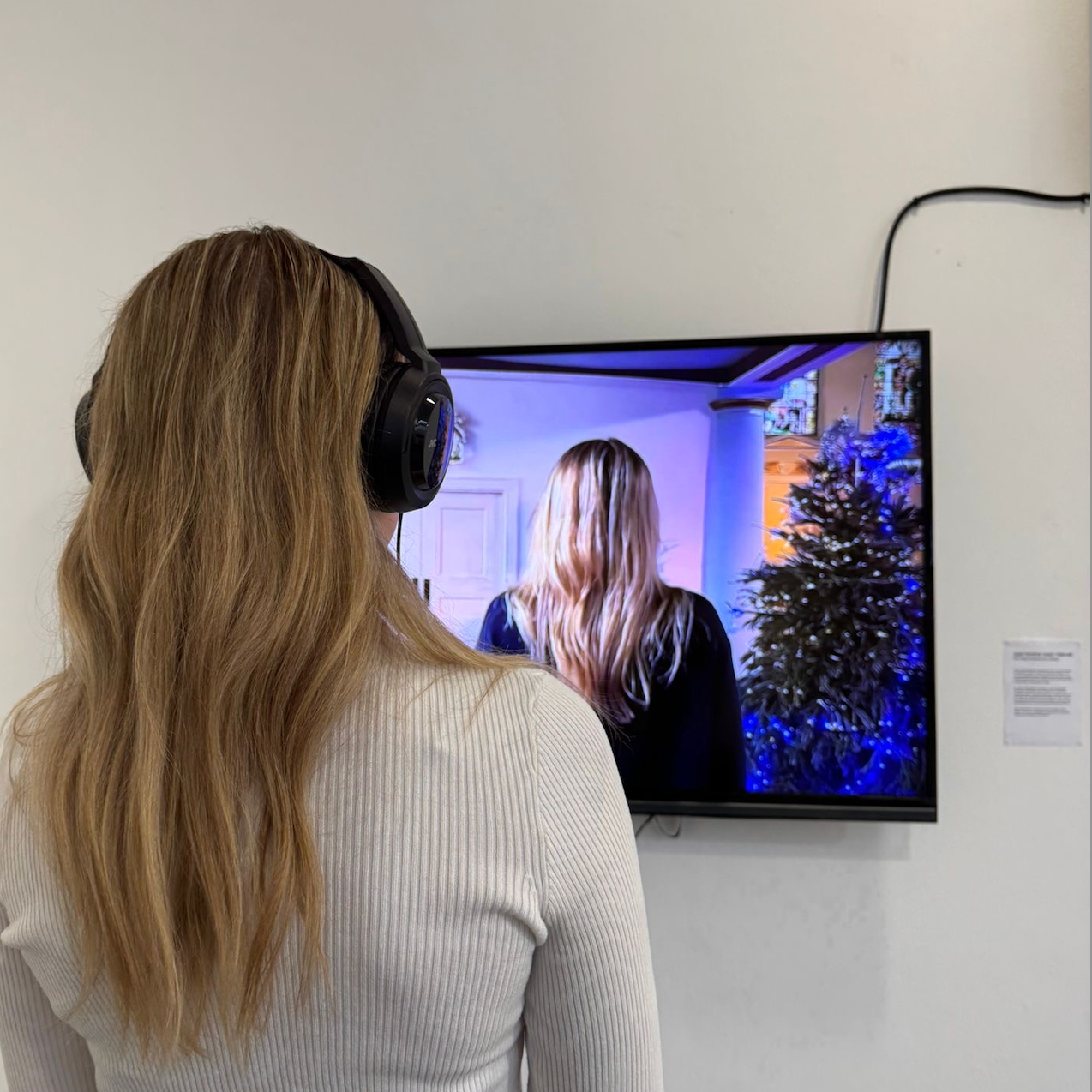
Our Sonic timeline was on display during the “Work in Progress” show in the London College of Communication. This allowed us to bring the sounds of Saint Peter’s into our own institution (Dinis, 2026).
Feedback on our final product highlighted the immersive nature of the video and the audio together, along with the arrangement of the different speakers throughout the space, which gives the audience a sense of time and place. The ambiguity of many of the sounds was praised because viewers could have more of an emotional response to the material rather than purely a historical response. Future versions of the Sonic Timeline could involve more local voices that have experienced some of these historical events to have the timeline become more accurate, while also sharing the emotional stories of the people of Walworth and Saint Peter's. We want the voices of Walworth to continue sharing their stories and their history. Turning this into an extended project would require more research into accessibility and different ways of engagement, including photos, graphics, and more videos. This project showcased that sound is not only something that can be heard, but it’s also something to be felt.
References
Ament, V.T. (2014). The Foley Grail. Elsevier, Inc.
Brayley, E.W., (1829). Londiniana: Or, Reminiscences of the British Metropolis: Including Characteristic Sketches, Antiquarian, Topographical, Descriptive, and Literary (Vol. 1). Hurst, Chance, and Company.
Le Guin, U.K. (1989) 'The Carrier Bag Theory of Fiction', in Dancing at the Edge of the World: Thoughts on Words, Women, Places. New York: Grove Press. File
Schafer, R. Murray. (1994). The soundscape: Our sonic environment and the tuning of the world. Destiny Books.
Walworth St Peter. National Churches Trust. Available at: https://www.nationalchurchestrust.org/church/walworth-st-peter
