United Nations: Week One
BRIEF: Derive a future vision for an organization based on its website
Group members: Clara Chow, Andre Dinis, Shivangee Mishra, Diya Agrawal, Nicole Shu, Susilkumar Kumar, Drishti Takrani, Kai Lin, and Eric Zhang
As we started our Maco unit, we heard from each of the four companies that came to work with us.
These four partners presented to our program as a whole on the first day. Each had a unique brief, in which they would mentor us in groups of 10.
As the presentations went on, I felt drawn to the Athon design firm's brief: “Derive a future vision for an organization based on its website.” I realized early on that this task would be complex, as we did not have a physical space to visit.
We were able to meet with Victor and Scott from Athon, who helped us dissect the brief. Setting communication expectations was the main priority of this meeting. As Victor and Scott both work full-time at Athlon, we understood that they could not be available to us daily for five weeks, so we opened a Slack channel. Every Friday, Athlon would respond to our questions and give us feedback. While this plan was well initiated, it left room on both ends for little follow-through. Next time, I want to set clear expectations about response times and what type of feedback and questions should be sent.
For this project, we were given a choice of five websites and chose the United Nations.


The five organizations we were given to choose from were Boots, The British Museum, Oxfam, Screwfix, and The United Nations. We initially took the time to look through all the websites individually, then, on a weekend Zoom call, chose the three we found most interesting.
We performed a thorough, detailed artifact analysis of the three we were initially most drawn to: the UN, Boots, and the British Museum.
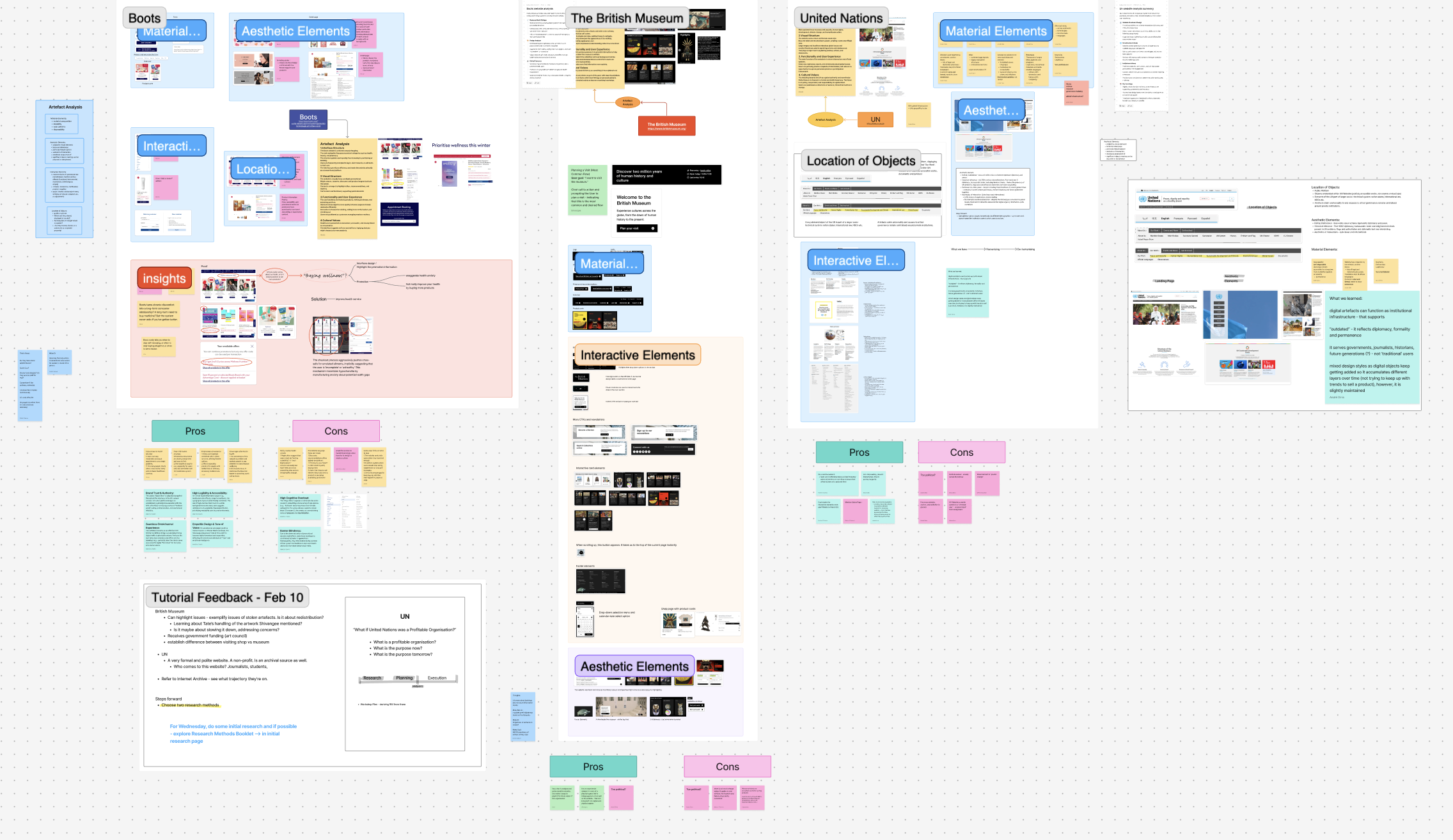
Large Overview of Artifact analysis fig-jam. This research method was completed as a group. Each group member took on a different role. Some looked at aesthetic and material elements, others delved into the location of certain information, and the rest tried to gain an understanding of the organization's values based on the websites.
After our analysis, we felt we had information overload. While we had adequate information, it was difficult to see which website was the best choice for us. We synthesized the analysis and made pro and con lists, which made it much easier to understand.
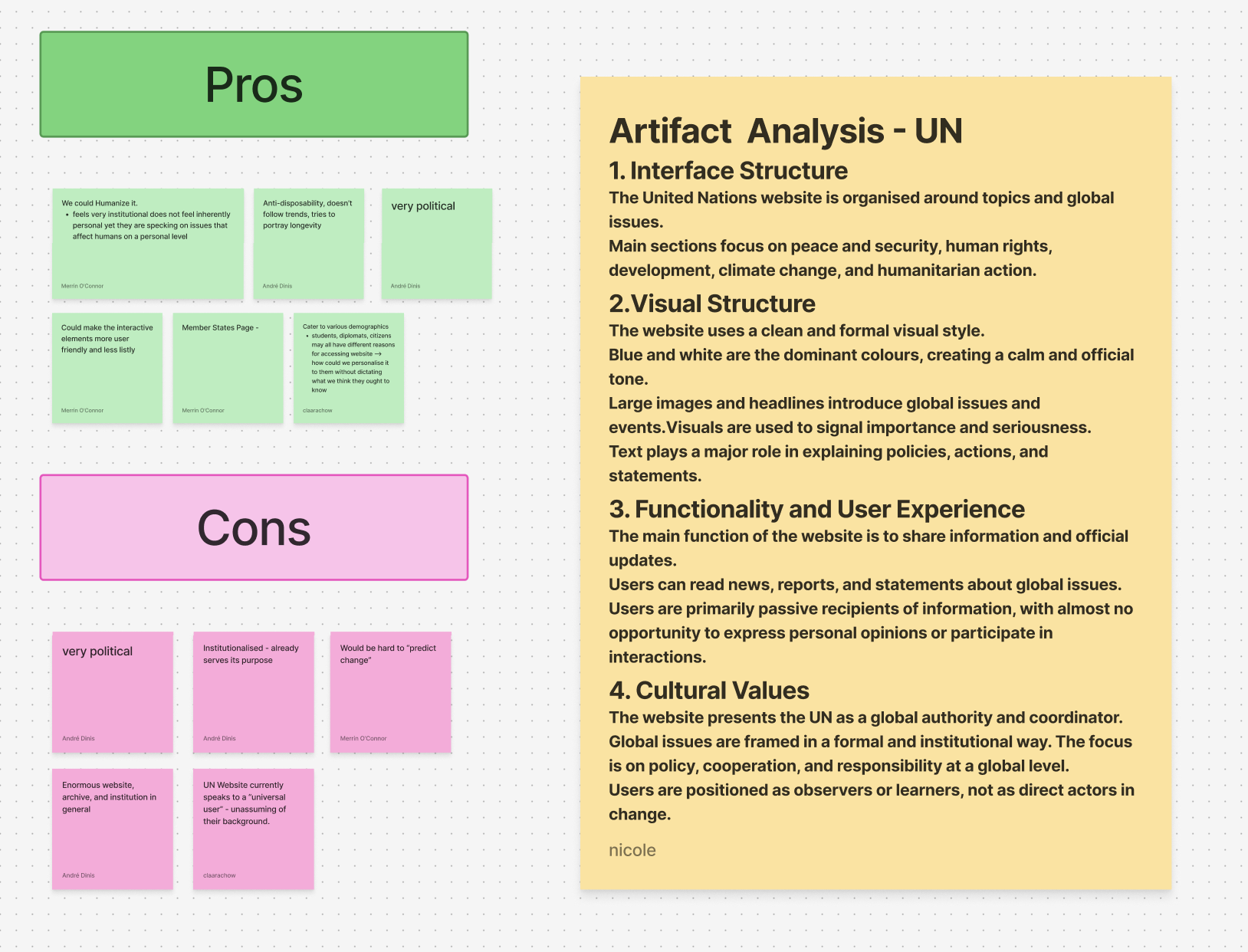
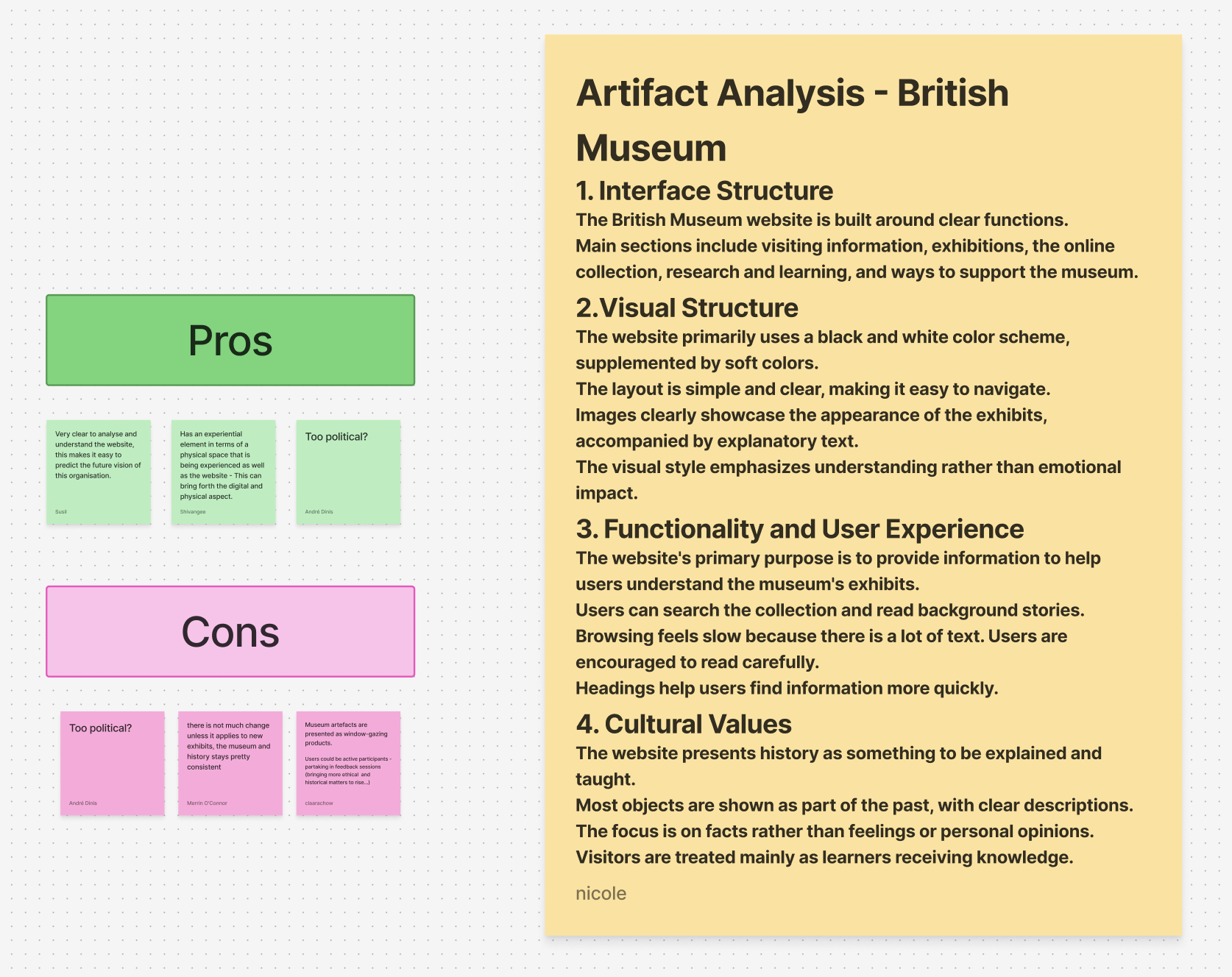
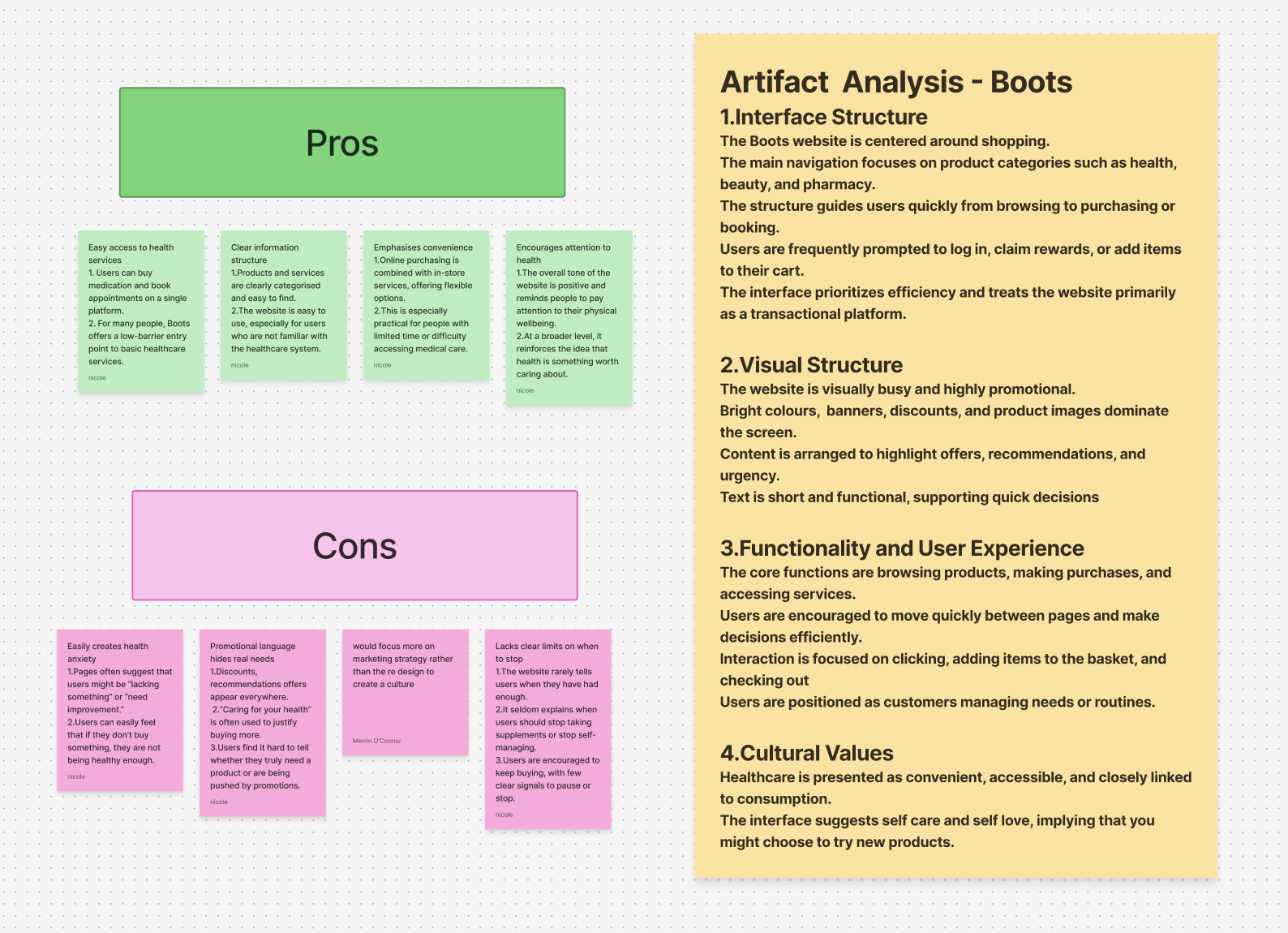
We came up with two concepts, one that had to do with only the UN and the other in which we would create a strategy for both the UN and Boots. We switched the strategies to see if they would work for the other, as they are vastly different organizations. These two organizations have different sets of goals and motivations; they live in different pluriverses (Escobar 2018). This idea would test if what works in one pluriverse could apply to another.
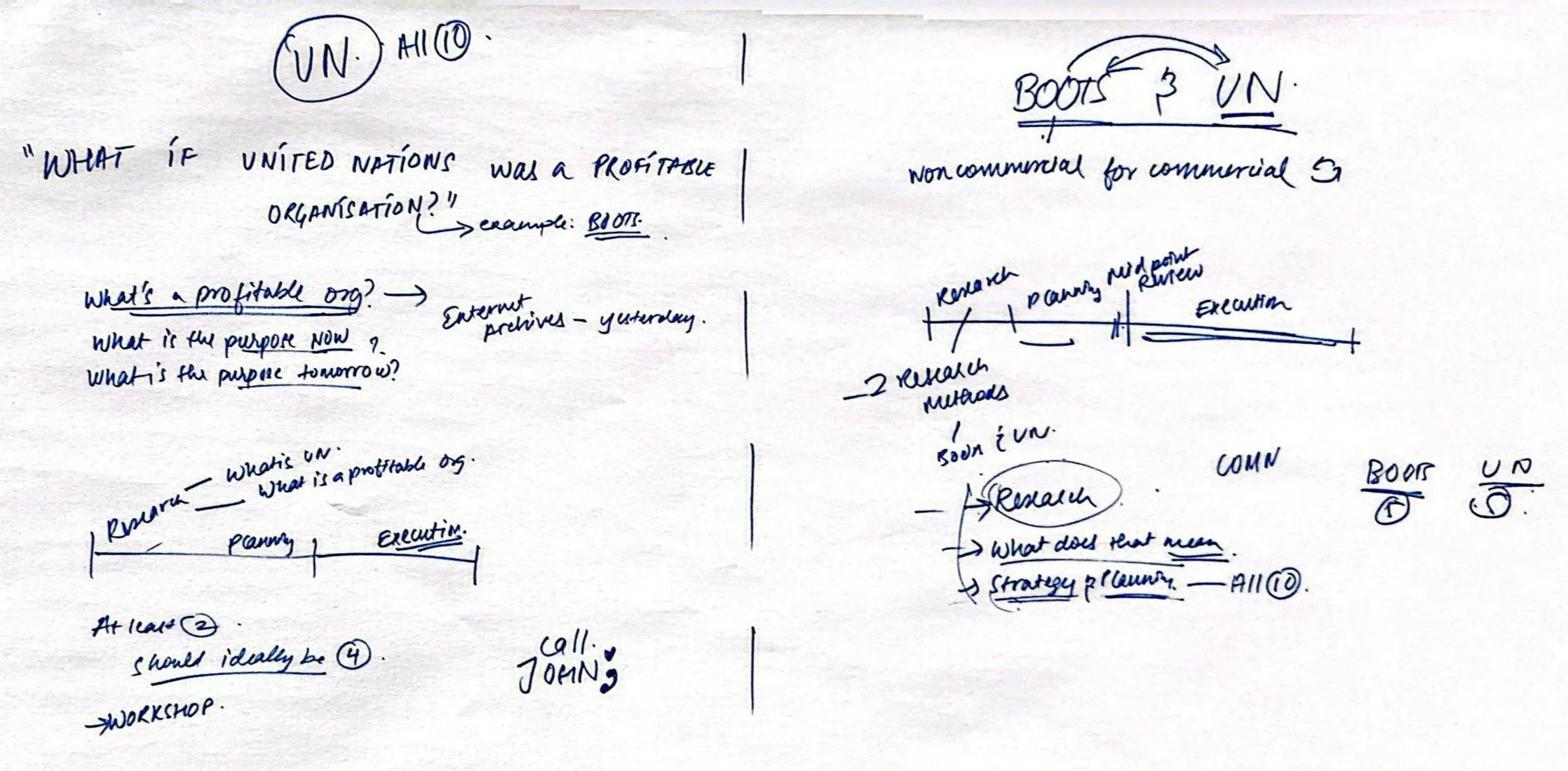
Pictured above is our ideation process for both the single and mixed ideas. While the Boots/UN plan seemed complex and the UN seemed like it would take a pivotal turn, we were satisfied with both plans.
We all really enjoyed the idea and the challenge of swapping the UN's strategy with Boots and vice versa. However, a majority of our group was interested in further researching the UN, so we made a group decision to solely focus on the UN.
We chose to start with the love letter and break-up letter method; some of our group members wrote letters, but we also asked coursemates not in the groups to draft some letters.
Muskan Gupta writes her love and breakup letter after a short look at the United Nations website. This method allows users to analyze a product and write all the things they love about it, sometimes even in a romantic tone. Next, the user writes the breakup letter, telling the product why they don’t want to be with them anymore (use them anymore). This method helped us point out potential pain points and successful features within the UN website (Agrawal, 2026).
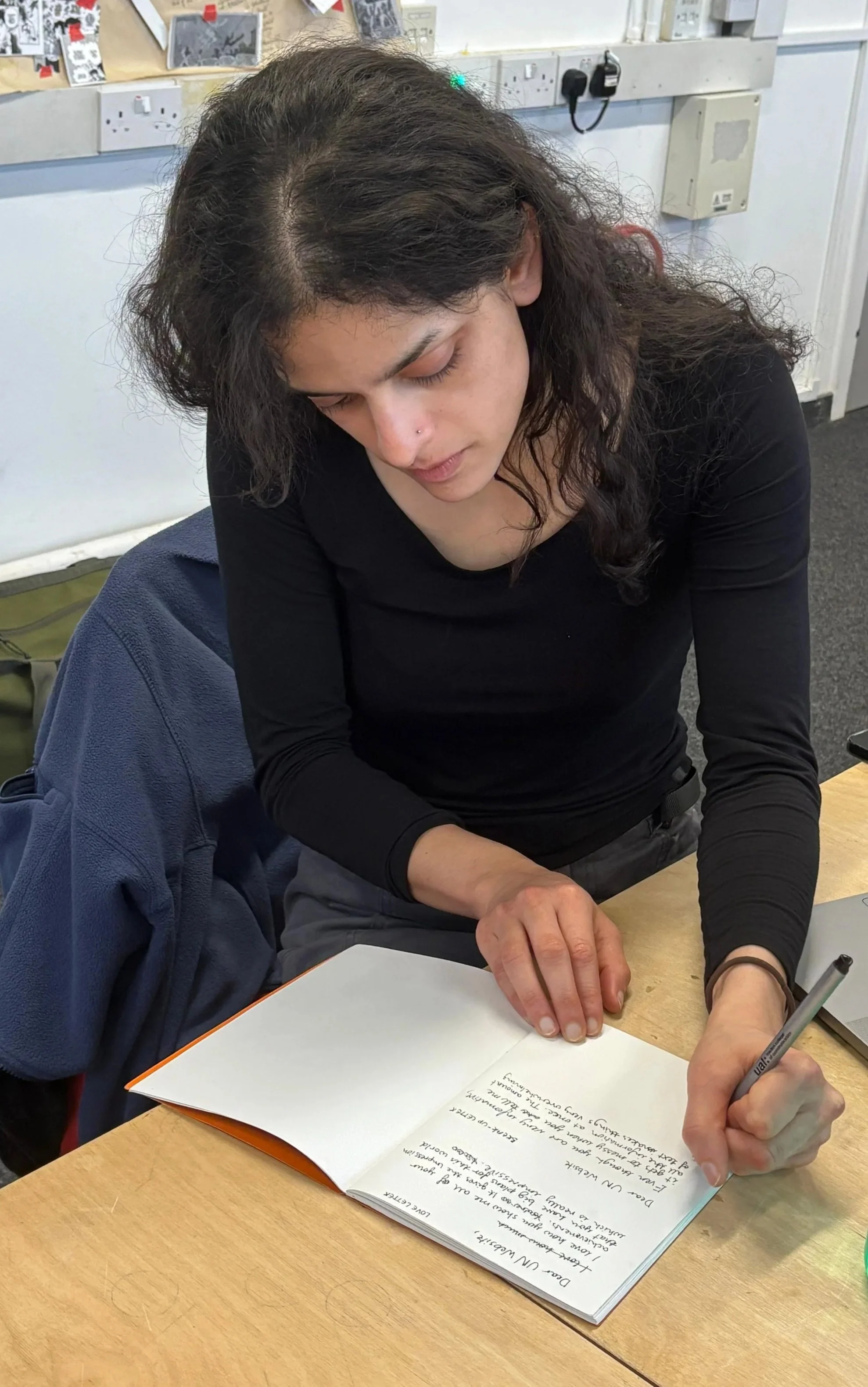
Student, Amita Tulpule, writing her love and breakup letters. In her love letter, she stated, “I love how you show me all your accomplishments,” and that she enjoyed seeing the UN’s “big plans for the world.” In her breakup letter, she mentioned it felt “messy,” “very overwhelming,” and “unattractive” (Takrani, 2026).
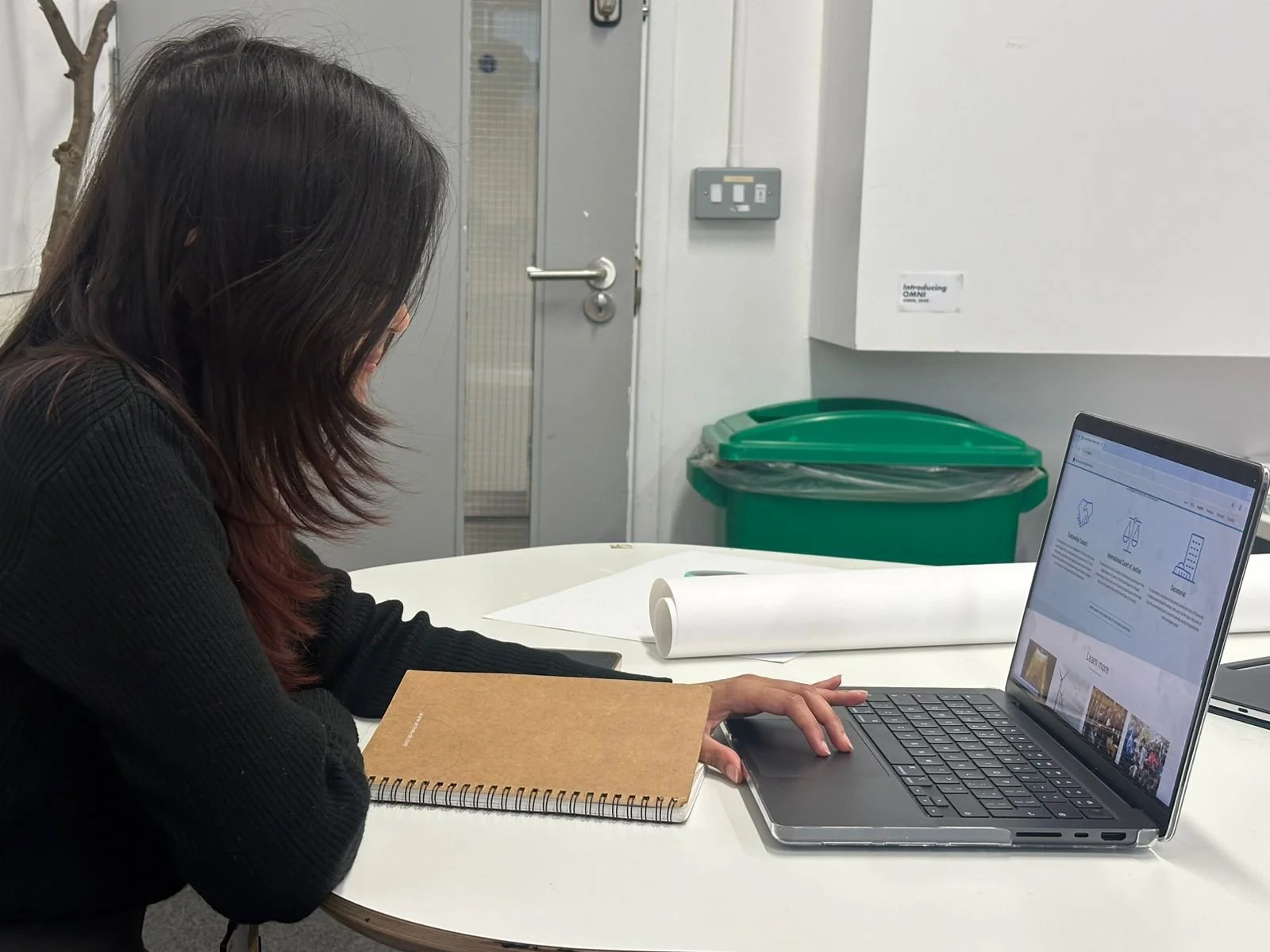
Gupta, examining the UN website. Her love letter mentioned, “ The issues were listed so I know you recognize and take action for the issues happening around.” In her breakup letter, she noted “Nothing is highlighted well, looks like a vomit of information all at once,” and “You come across as the arrogant person. You don't want to help, but it is just true here for publicity. Be better” (Agrawal, 2026).

After we read all the letters, we started to notice key words that also crossed over with our research. We then found antonyms for all of them to see what the radically opposite UN website would look and feel like.
In the beginning, I was worried about the number of people in our group. Ten people felt overwhelming for a five weeks. Initially, I thought we should consider the option to split into different groups. Looking back now, I am happy with the decision to address the project in one large group, as we were able to have an abundance of worldly perspectives about the UN.
References
Escobar, A. (2018). Designs for the pluriverse: Radical interdependence, autonomy, and the making of worlds. Durham: Duke University Press.
