United Nations: Week Two
BRIEF: Derive a future vision for an orginization based on its website
Group members: Clara Chow, Andre Dinis, Shivangee Mishra, Diya Agrawal, Nicole Shu, Susilkumar Kumar, Drishti Takrani, Kai Lin, and Eric Zhang
Understanding the United Nations: P5
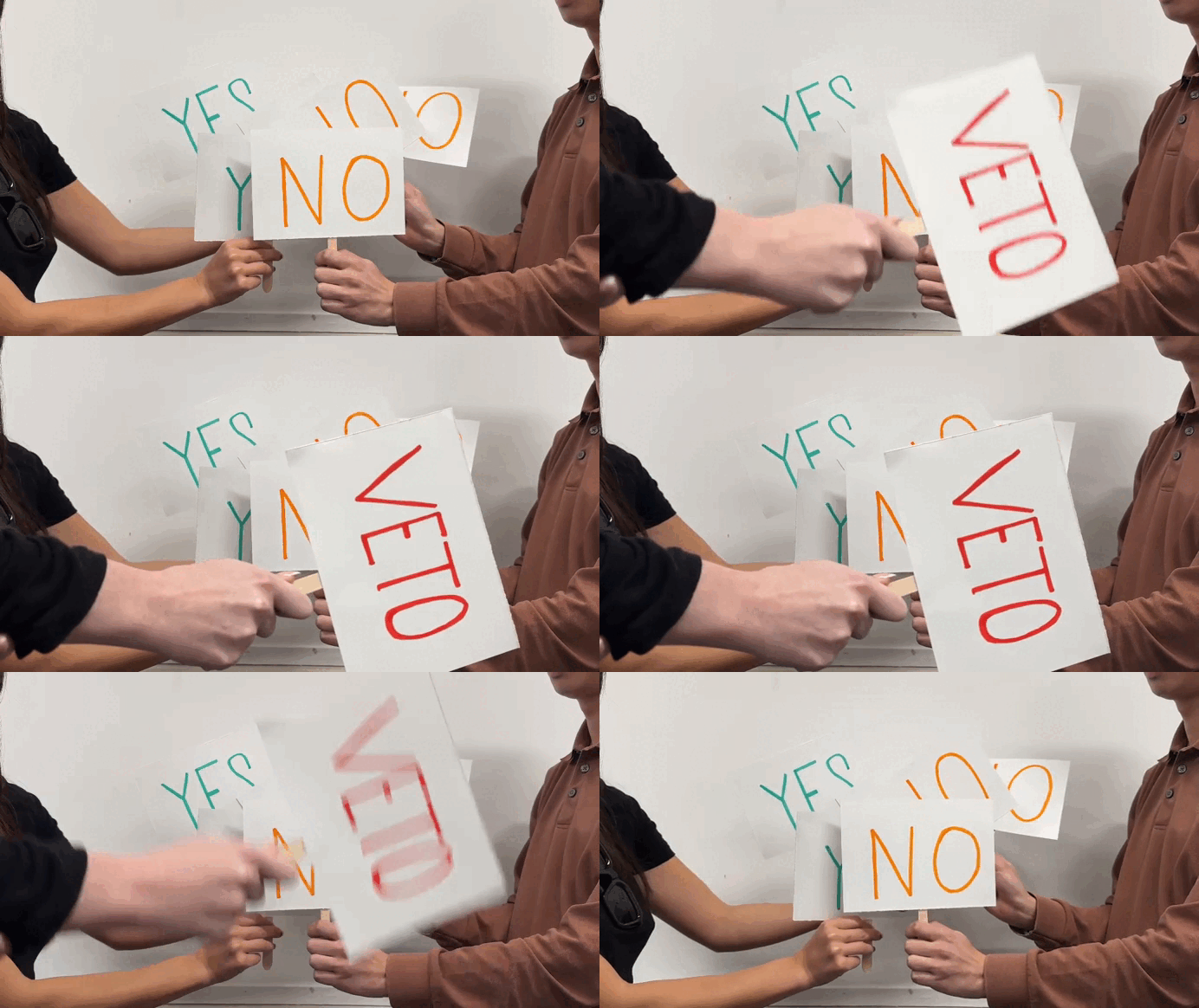
The P5 (USA, Russia, UK, France, and China) have veto power in the United Nations, so no other country can veto a draft resolution or decision (no vote of any other country can be vetoed). Many critics of the UN say any solution other than removing permanent membership and veto powers would be detrimental to the UN (GCSP, 2025)
(Dinis, 2026)
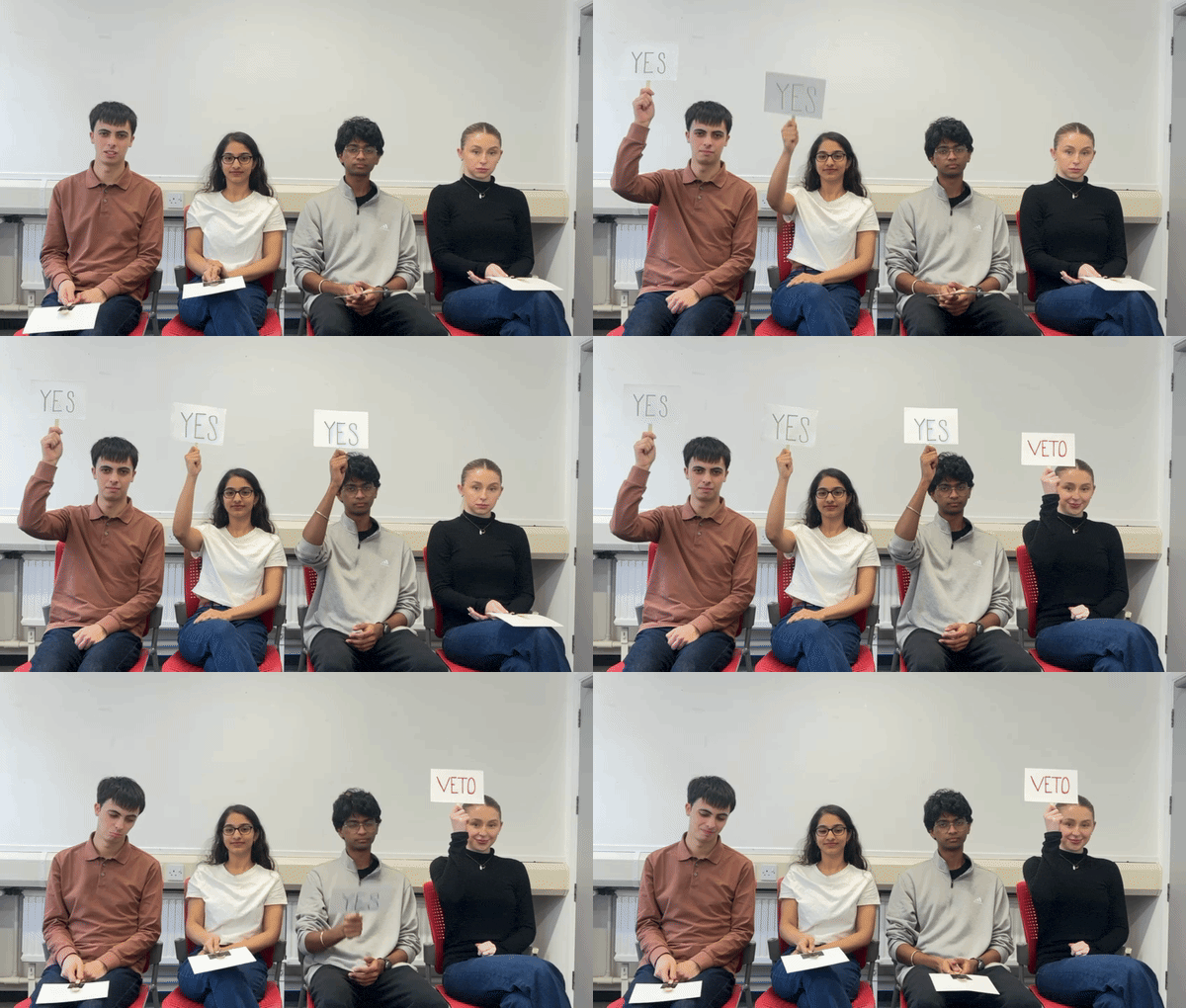
Representation of a P5 country causing a motion not to pass is important to many other member states.
(Dinis, 2026)
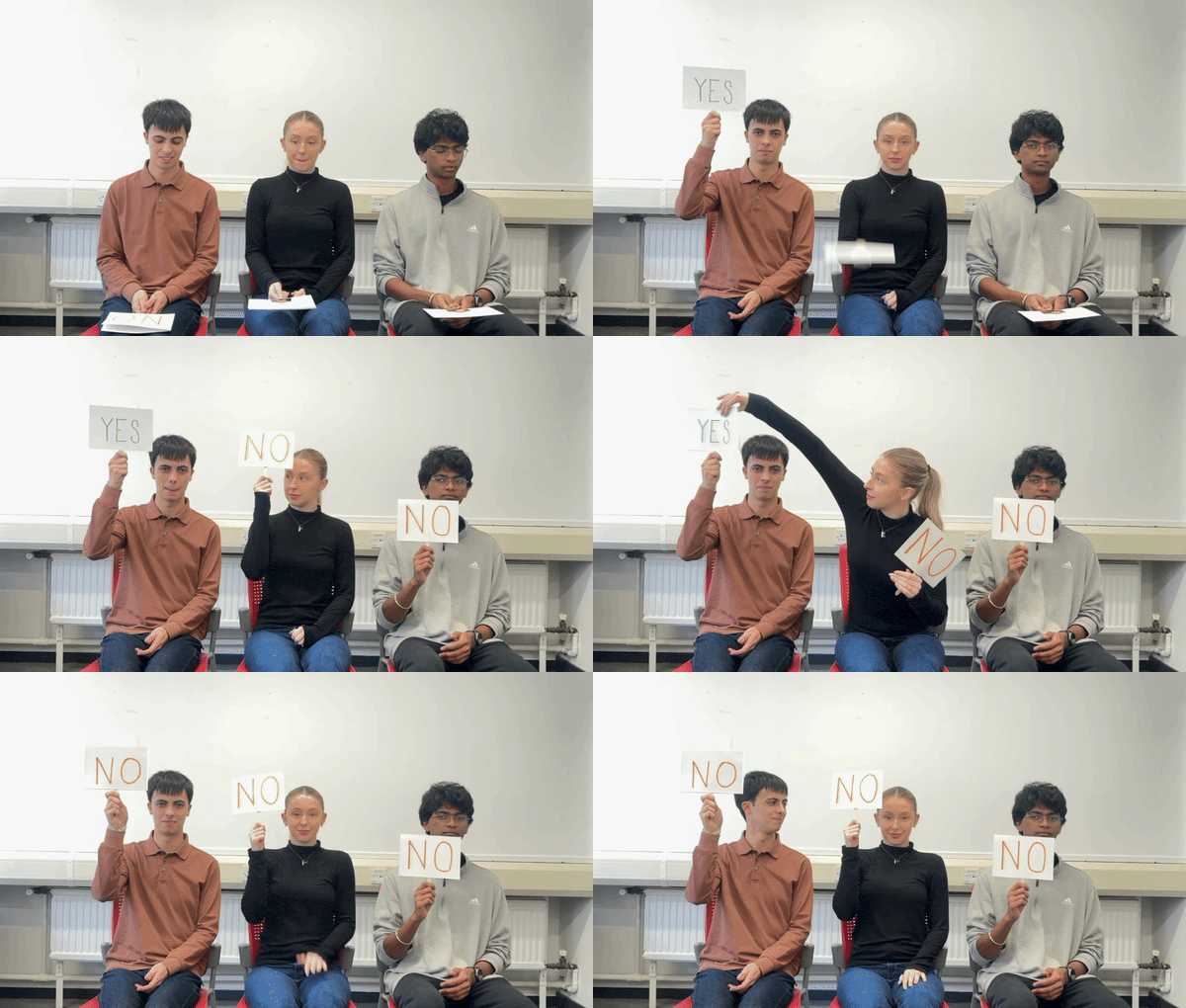
In addition to veto power, the P5 countries exert major political influence. Many member states align with the P5, supporting motions regardless of whether they benefit their own national interests.
(Dinis, 2026)
During our tutorial, we received feedback and were motivated to take a risk. We had lots of research, but wanted our future vision for the UN to be something that felt dystopian yet possible. Coming back from the weekend, we all came up with three radical concepts to present to one another. My concepts consisted of…
While very radical, our ideas translated well in our tutorial, especially the game show. Since the UN is a serious organization, the game show is a heavy contrast, as game shows are mainly commercial and fun in order to keep viewership (Roe et al. 1996).
The UN is currently in a financial crisis and is at risk of running out of money by June of this coming year (BBC News, 2026). Our new strategy for the UN is to take the controversy of the P5 and the financial crisis aspect, and make it a new worldwide game show, giving all countries a chance to have that power to create revenue for the UN.
There were many discussions among our group about who/what would be able to judge or how the composition would be scored, as people will always have a bias (Monaghan and Just, 2000), AI has bias (Costanza-Chock, 2018), and the world voting would have overwhelming political intentions, as we see in Eurovision (Kretz, 2025).1996
We were mainly inspired by the Eurovision song contest, as it showcases talent from all over Europe and also has political influence. We also look for inspiration from games like Jeux Sans Frontières (“Games Without Borders”), Jeopardy, and the Netflix show “Squid Games” (BBC, 2024).
We brought up our concerns in our tutorial and were asked if we would consider taking a critical approach to the game. Instead of a real-life solution to the system, we could look into the future of what could happen if the UN became a commercial organization. This intrigued me because the UN is a very strong organization with fairly high approval ratings, but it also has its faults and depends on countries with large economies.
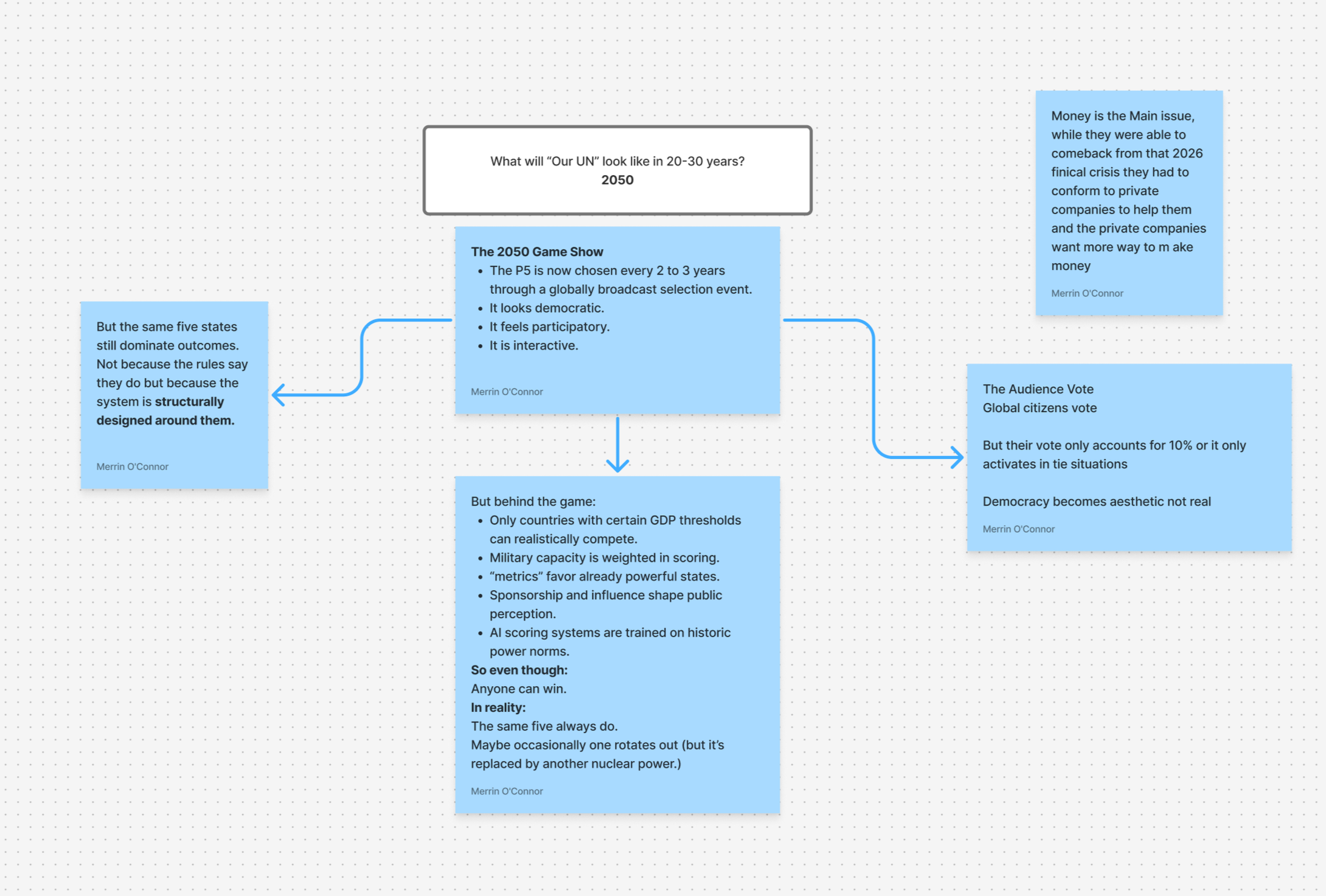
At this point, we started to think of how our game show, which we named “The Unity Games”, would look. We created a simple system to build off of.
After discussing the pros and cons of doing a satirical, critical game show, we decided that it would be interesting to look more into that approach.
This week consisted of a significant amount of discussion as a group. It was important to ensure everyone was on the same page, since we were still a large group of ten. I began to think we needed to implement the concepts we were discussing. It was difficult to be constrained to the website and secondary research sources. It was new for me as I am used to looking at outside research and site visits for inspiration.
References
BBC (2024) Eurovision 2024 trailer: Olly Alexander – “Dizzy”. Available at: https://www.youtube.com/watch?v=t1_b2VLkJY0
Costanza-Chock, S. (2018) 'Design Justice, A.I., and Escape from the Matrix of Domination', Journal of Design and Science
Geneva Centre for Security Policy (GCSP) (2025) Meaningful UN Security Council Reform Requires Aligning Principles and Practices
BBC News (2026) UN risks 'imminent financial collapse', secretary general warns.
Kretz, V. (2025) It’s Never Not Political When It Comes to the Eurovision Song Contest”: A Reception Study on How Political Implications Affect European Viewership and the Vision of ‘Uniting by Music.
Monaghan, J. and Just, P. (2000). Bee larvae and onion soup: culture. In: Social and cultural anthropology: a very short introduction. Oxford: Oxford University Press, pp. 34-52.
Roe, K., Messing, V., Vandebosch, H., and Van den Bulck, J. (1996). Television game show viewers: A cultivated audience?.
