United Nations: Week Three
BRIEF: Derive a future vision for an orginization based on its website
Group members: Clara Chow, Andre Dinis, Shivangee Mishra, Diya Agrawal, Nicole Shu, Susilkumar Kumar, Drishti Takrani, Kai Lin, and Eric Zhang
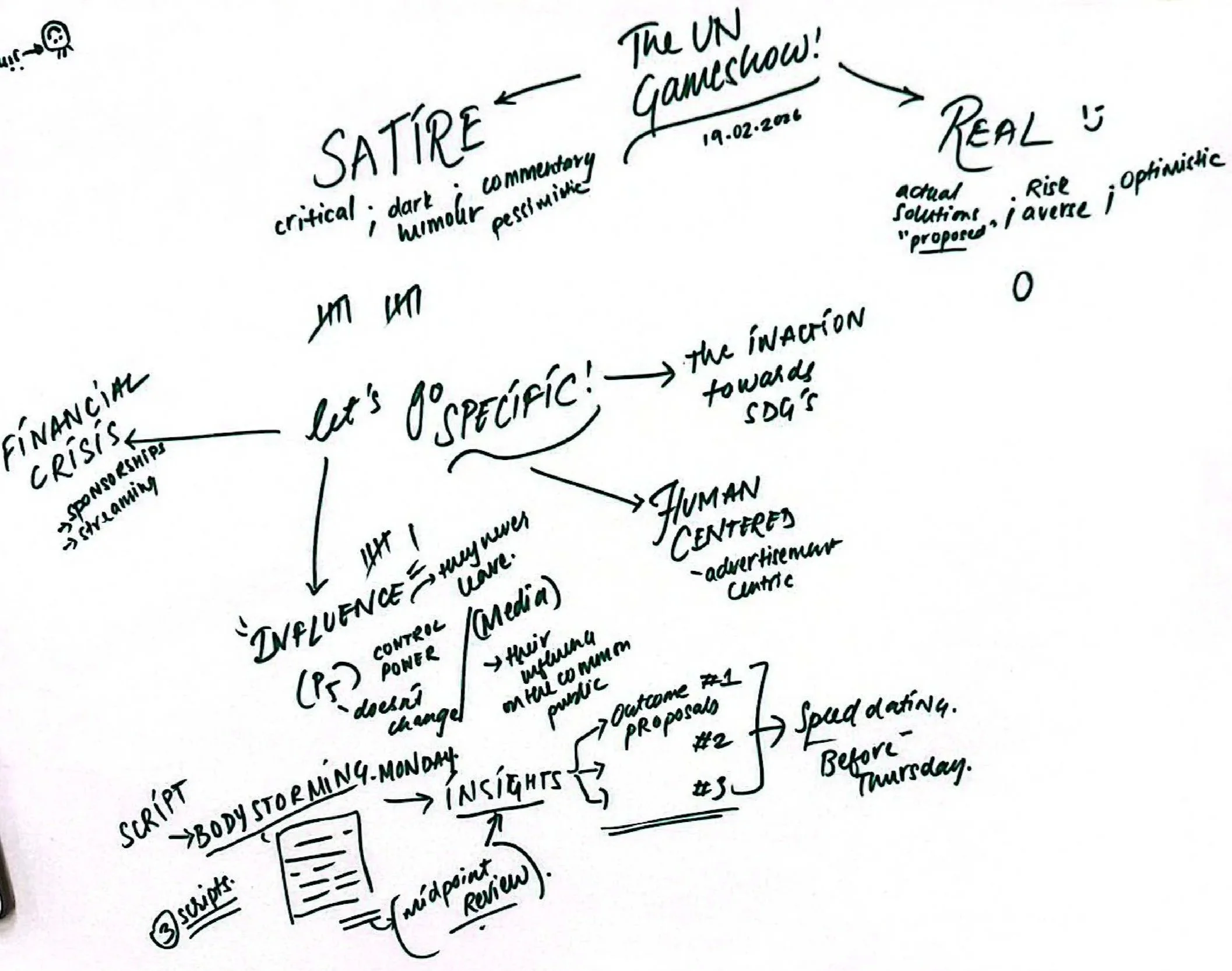
We had a discussion about whether to take a realistic or satirical approach. Although the satirical route felt like a greater risk, we believed it would make a stronger statement about the United Nations and worldwide power dynamics.
We started this week by obtaining a better understanding of the UN as a system. We assumed the role of member-state representatives, some with veto power, but a majority without. We debated issues, and when it came time to vote, not many things passed. The P5 countries would veto motions, so none of the other votes mattered.
Time-lapse video of one of our roleplay “debates." We each chose a member state at random, and then the topic/question was debated. Most of the P5 members were more confident and tried to get their colleagues to join them in supporting or opposing.
Example Prompt we used during this roleplay exercise…
We were hoping to uncover a game mechanic that could work for the game show. Instead, we gained insight into power dynamics and how to embody them. This made us want to take a more satirical and critical route.
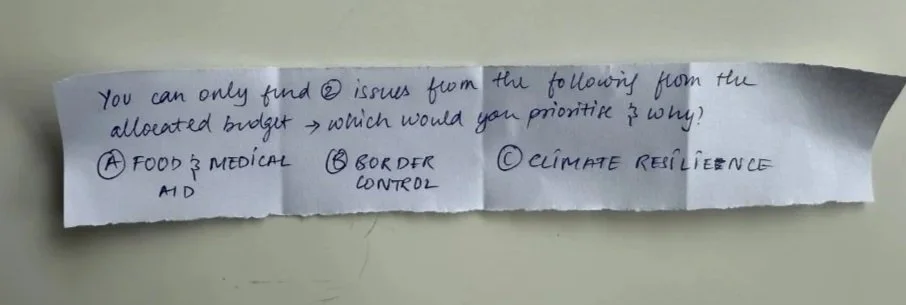
Each prompt was written on a small sheet of paper, and we each wrote two (Mishra, 2026).
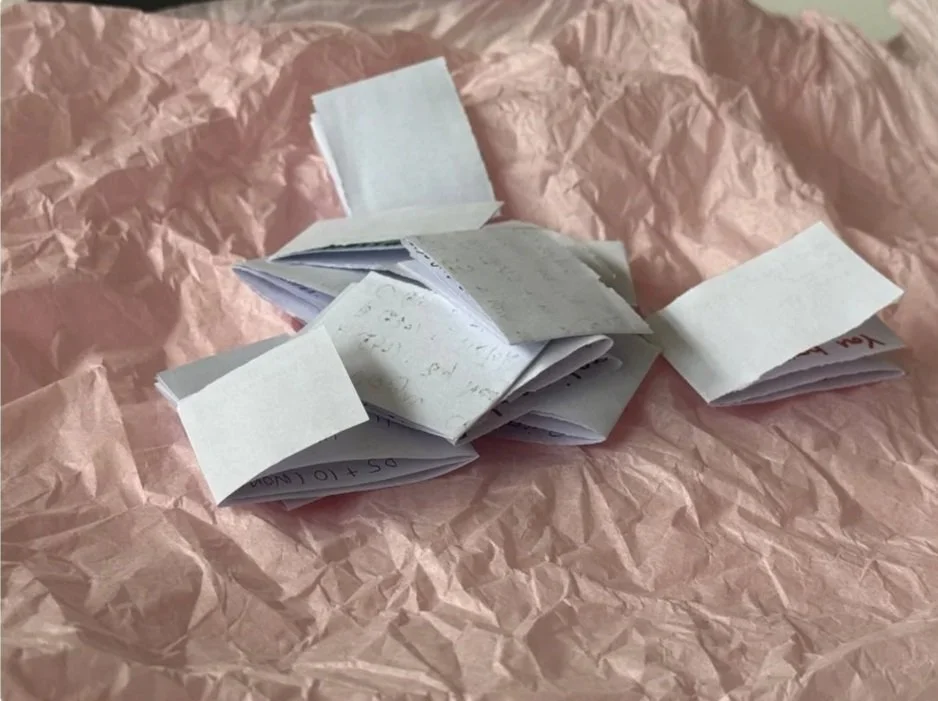
All the prompts were then placed in a piles and chosen at random (Mishra, 2026).
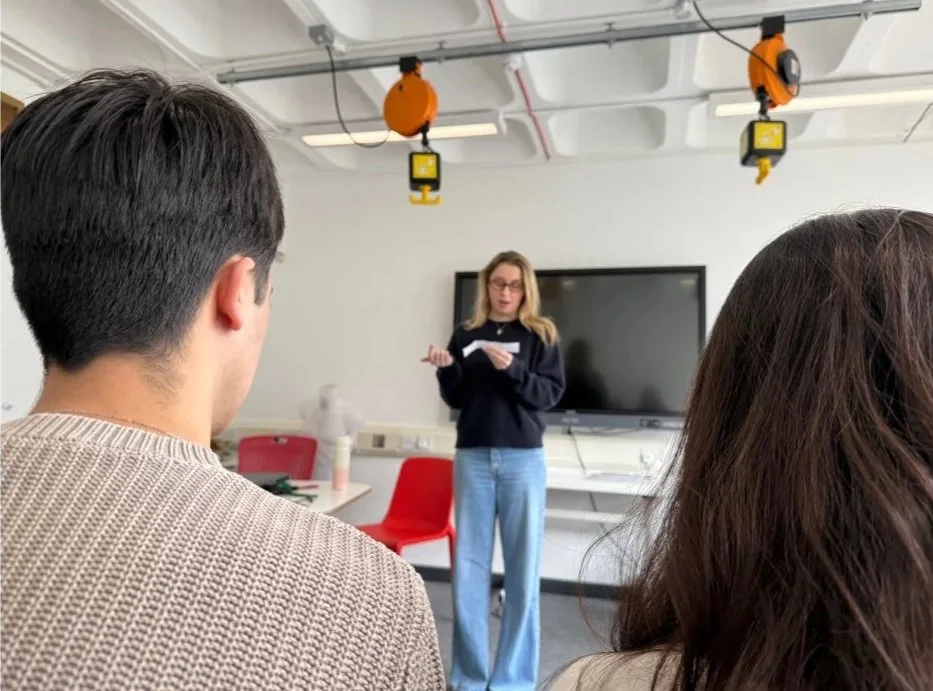
We took turns as the moderator for each debate, and for each debate. We each randomly chose a new member state to represent. We used “Model UN” as a reference for how we wanted to conduct this research, as it teaches students about the UN process and principles (UN, 2026).
(Mishra, 2026).
We also had an interesting debate on whether our process was considered Bodystorming or Roleplay. Bodystorming is more of an embodied experience, but we were pretending to be the representatives of the countries (Hanington and Martin, 2012). Therefore, we decided to categorize this experience as a role-playing method.
After our Roleplay method, we felt like we had more questions than answers. We received some feedback that we were focusing on the organization as a whole rather than the website. So we decided to split into three groups to do more website interaction research. The website sections we researched were the Historical Veto Dashboard, the Donation section, and the Live Streaming Platform.
We reflected on the future vision for these pages and what performative democracy would look like within the organizations in relation to them. I do not think losing sight of the brief was a complete waste of time, as it let us explore beyond our limits. However, after this diversion, we needed to return, implement what we learned, and move forward.
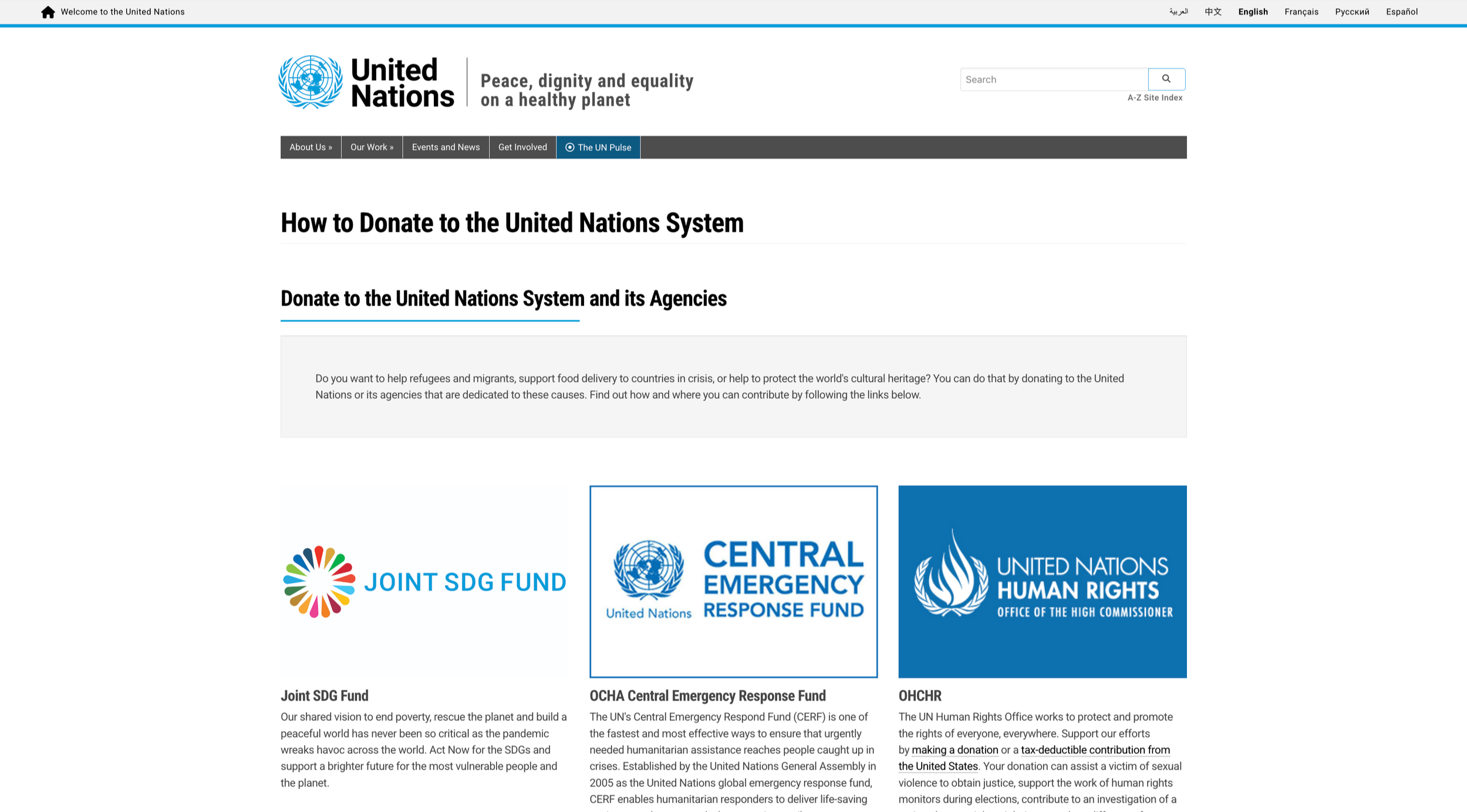
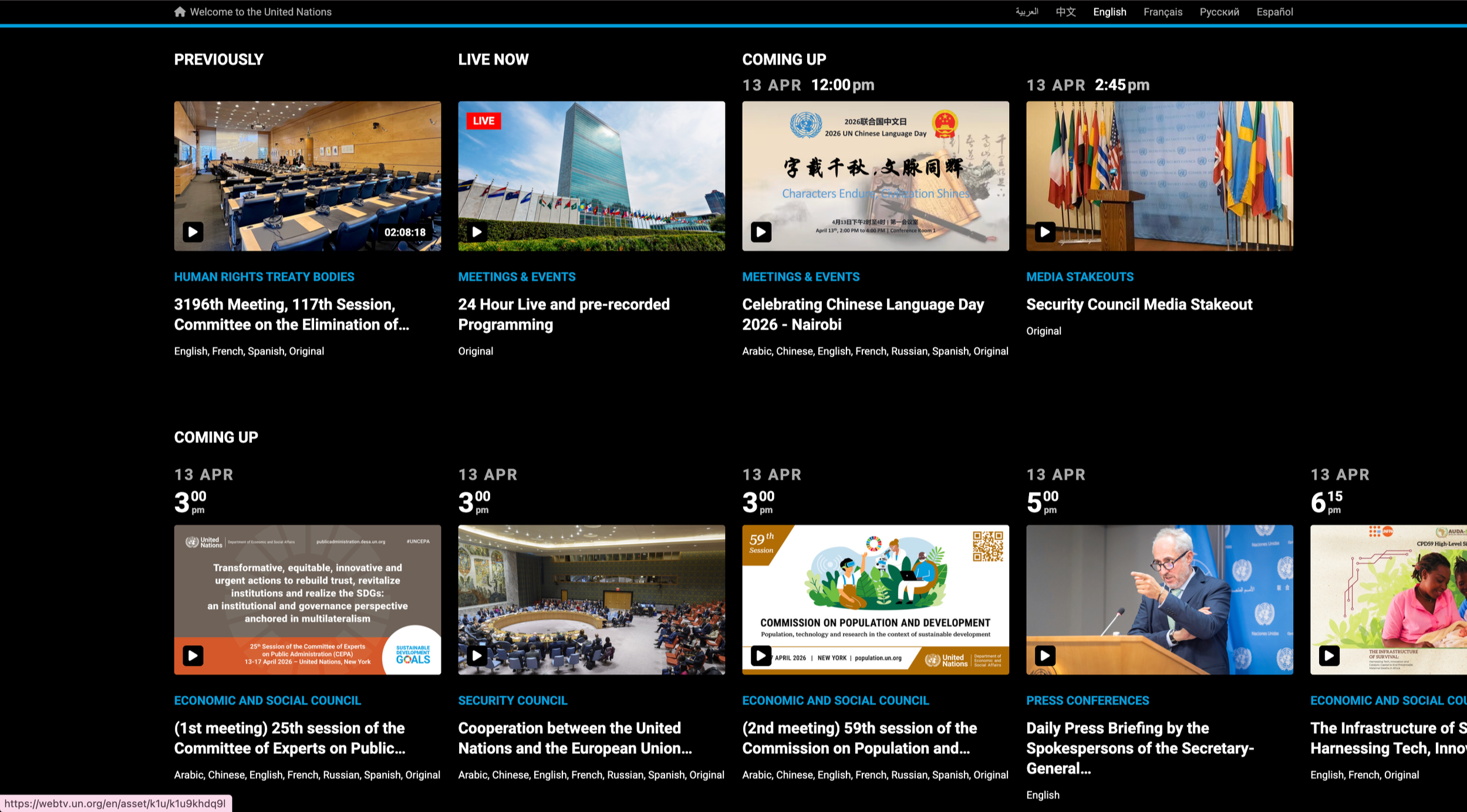
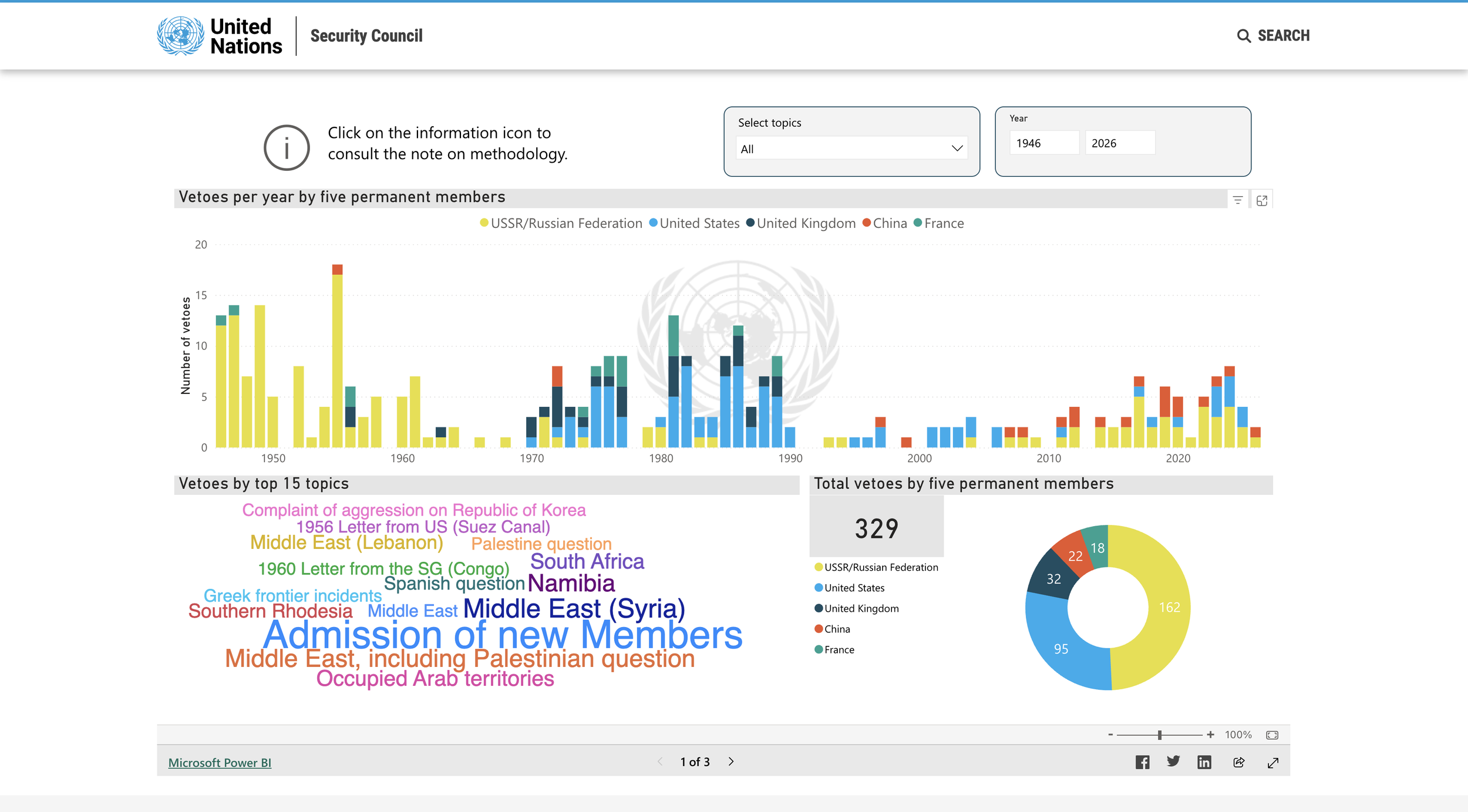
The Donation Section, the Live Streaming Platform, and Historical Veto Dashboard (in order) (UN, 2026)
For our Midpoint presentation, we decided to make a very low-fi video exemplifying our idea. As we were trying to keep it minimal, we came up with more complex ideas and took note of those, Ultimately we decided to keep it straightforward for the sake of the presentation.
After our presentation, as we received feedback on our idea, there was one piece that stood out to me.
Our audience felt as if there was a disconnect between the game show and the betting application. This input made me realize that we were taking on too much, instead of finding a niche area of the website to delve into. We have been struggling because the audience feels universal, but it does not feel possible to design universally, as that can lead to misrepresentation and exclusion of certain cultures (Costanza-Chock, 2018). As the UN is a world organization, the task has felt impossible, but “the who” of our project was a necessary step for a satirical, critical game show to succeed.
References
Costanza-Chock, S. (2018) 'Design Justice, A.I., and Escape from the Matrix of Domination', Journal of Design and Science [Preprint]. doi:10.21428/96c8d426.
Hanington, B. and Martin, B. (2012) Universal Methods of Design. Rockport Publishers. pp 20-21, 148-149
Model United Nations (2026) United Nations. Available at: https://www.un.org/en/mun.
Peace, dignity and equality on a healthy planet (no date) United Nations. Available at: https://www.un.org/en/
