United Nations: Week Four
BRIEF: Derive a future vision for an orginization based on its website
Group members: Clara Chow, Andre Dinis, Shivangee Mishra, Diya Agrawal, Nicole Shu, Susilkumar Kumar, Drishti Takrani, Kai Lin, and Eric Zhang
For the final two weeks, we split into three groups: the game show, the website, and the global impact partners. Andre, Clara, and I were in the gameshow group. Our job was to write the script, make a shot list, and make sure we communicated everyone's ideas for the game show as a whole.
These three groups were chosen based on interest; one group (global impact partners) was fascinated by the commercialization of the UN. Their focus was on creating advertisements for large corporations. This would help amplify the satirical element of our final product. Another group focused on the UX/UI of the website.
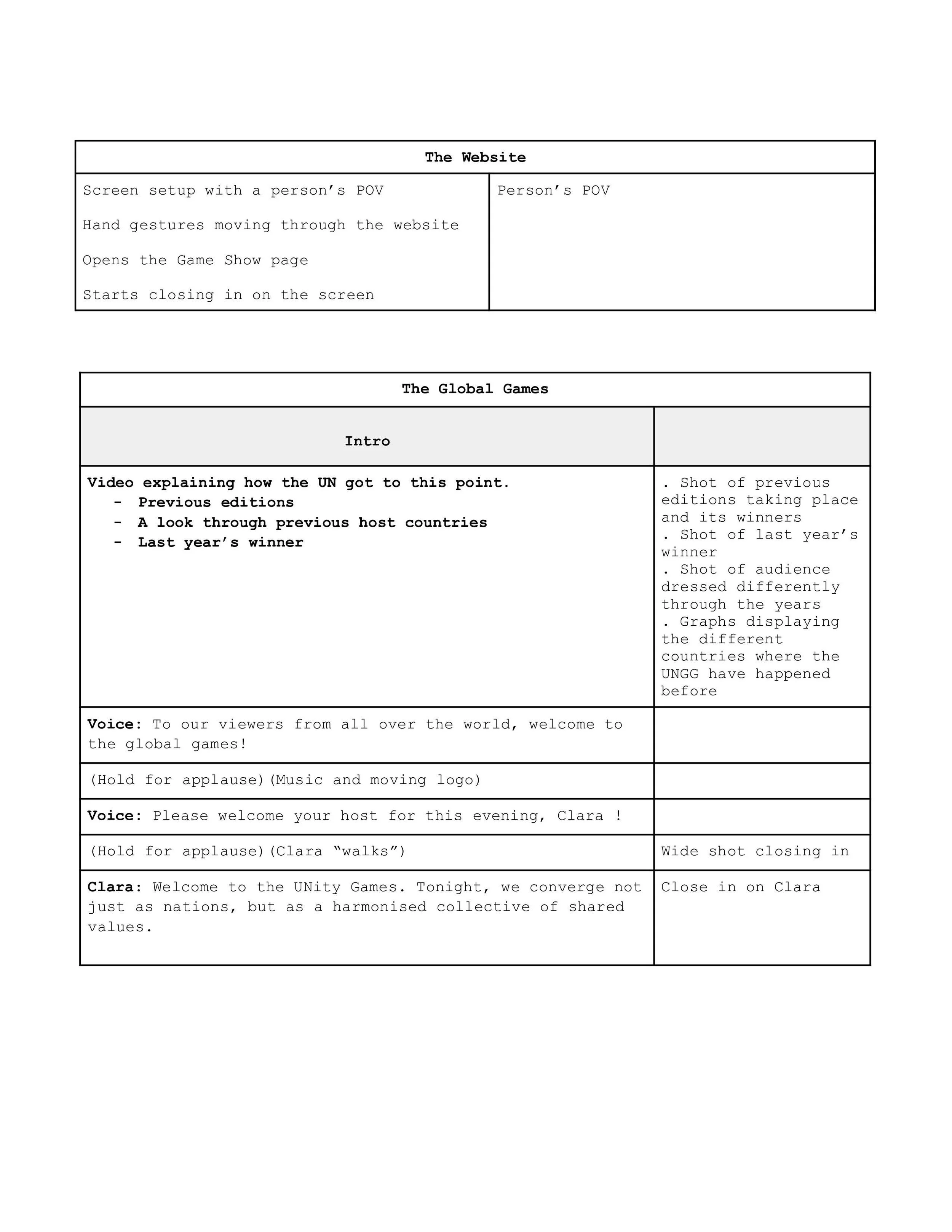
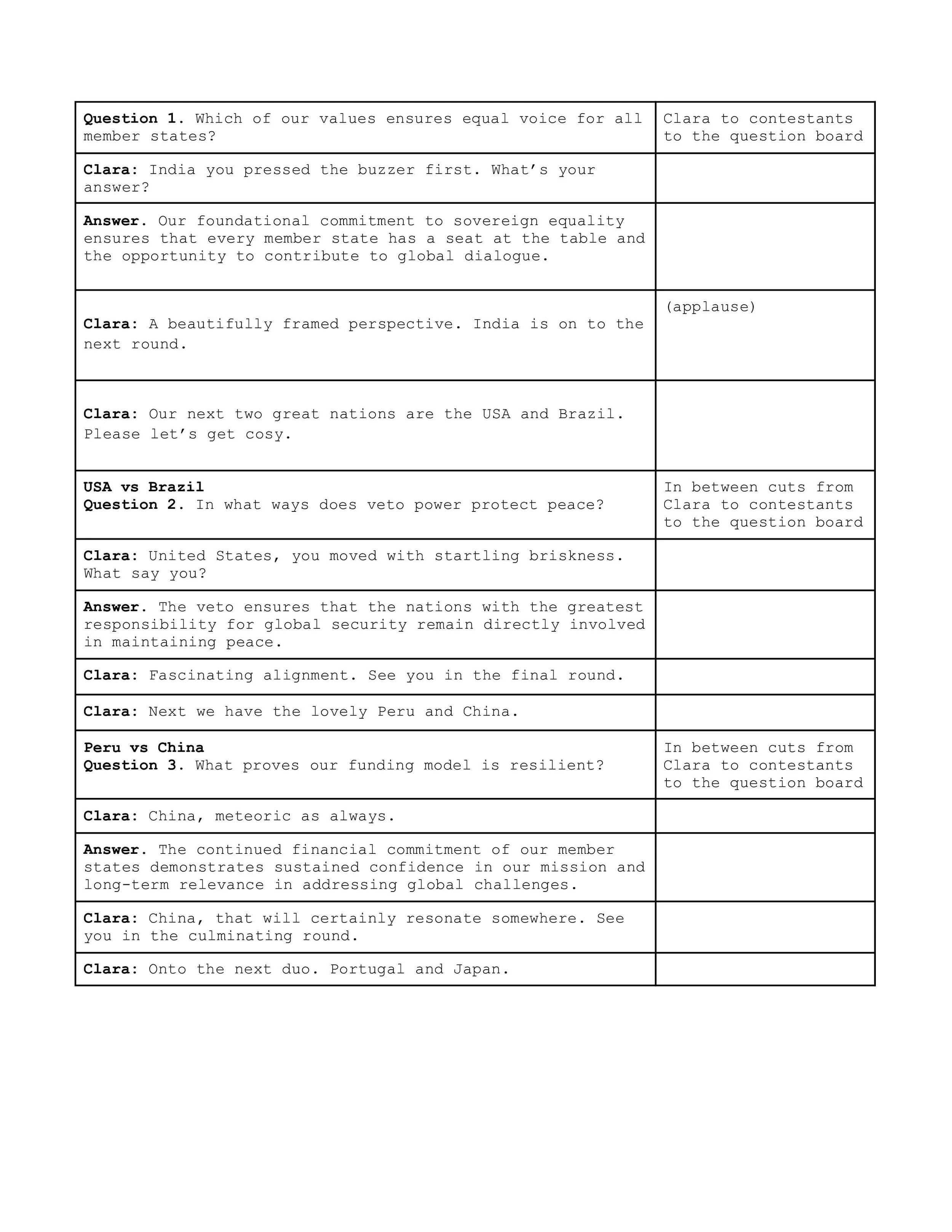
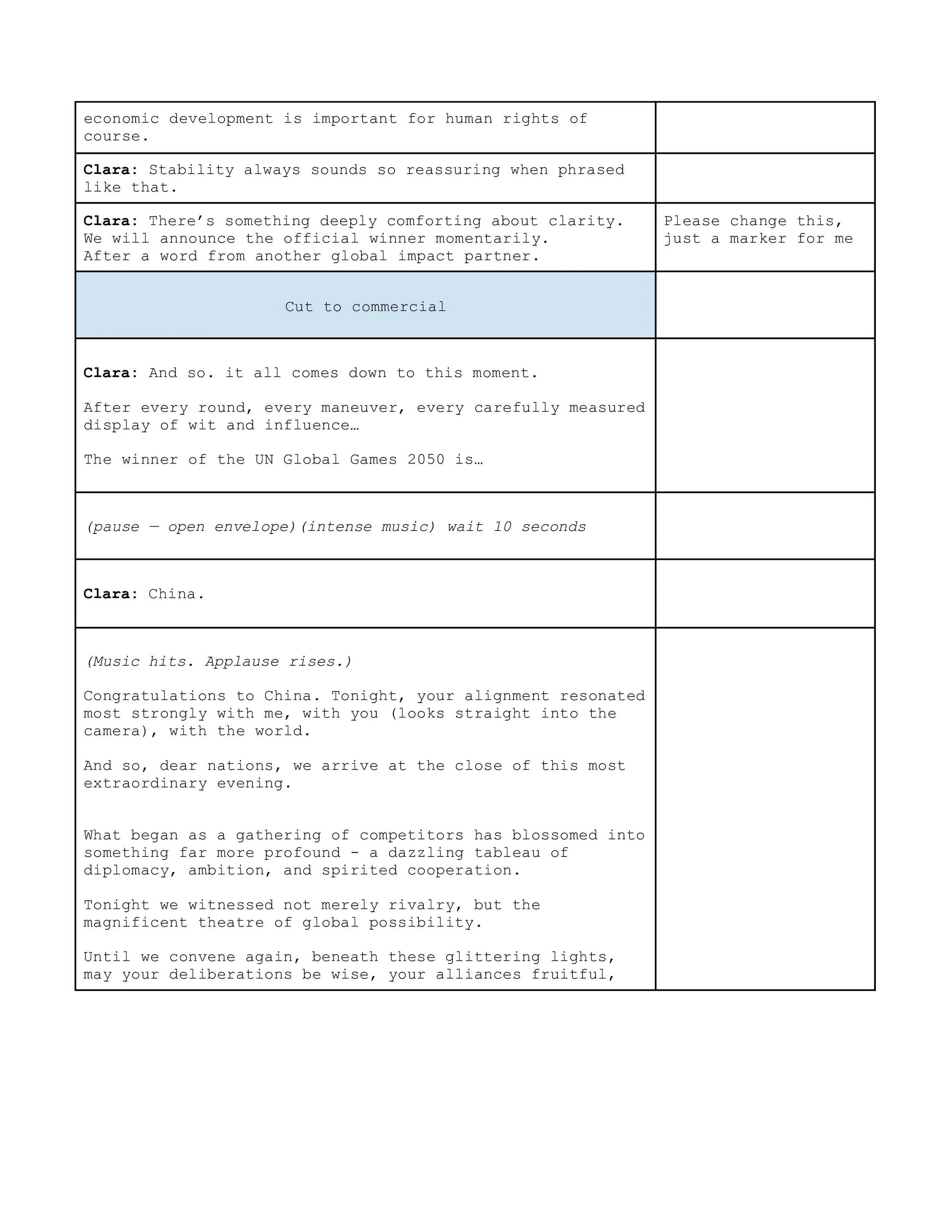
A few paged from our script. This is were we were able to add out satirical elements and be creative about how we wanted to showcase global power dynamics.
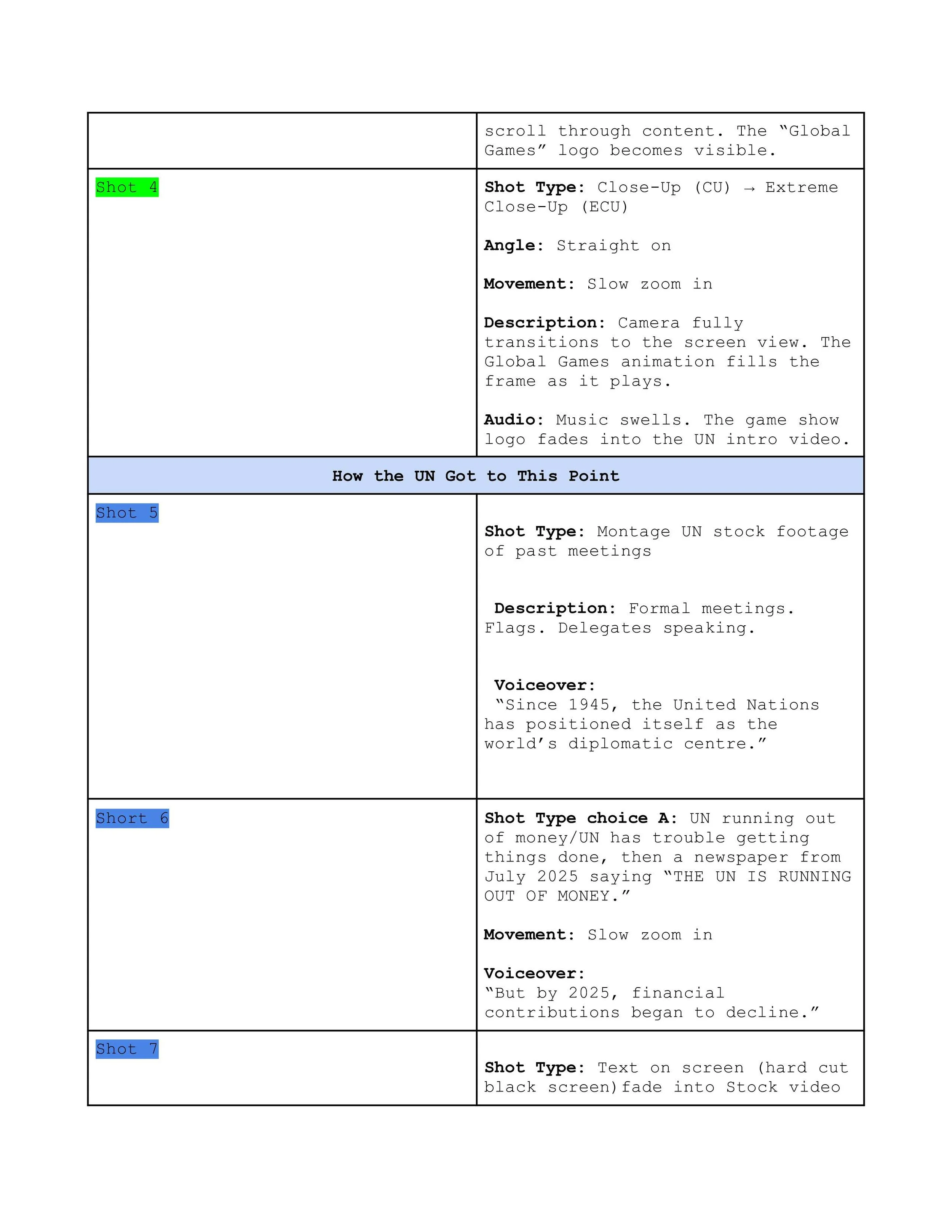
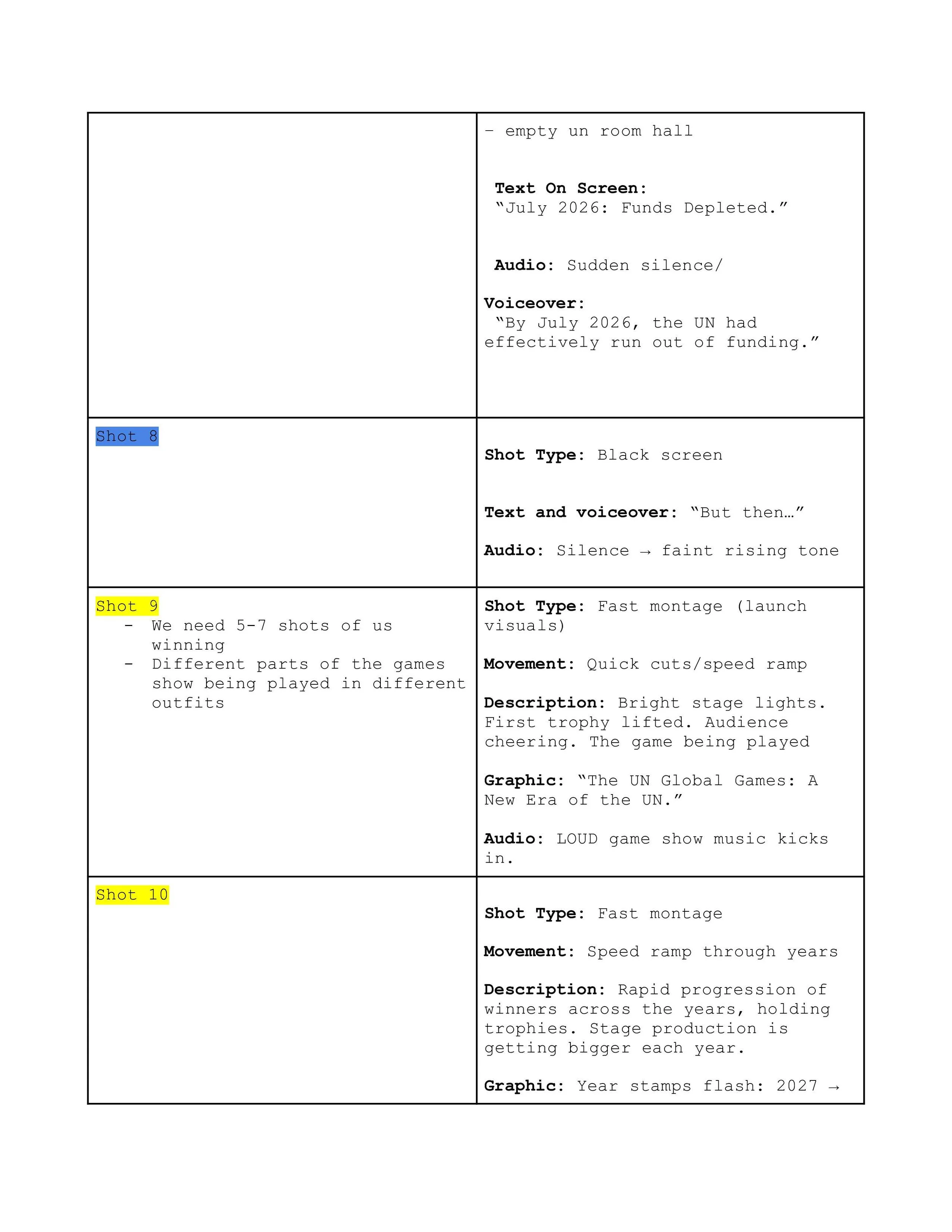
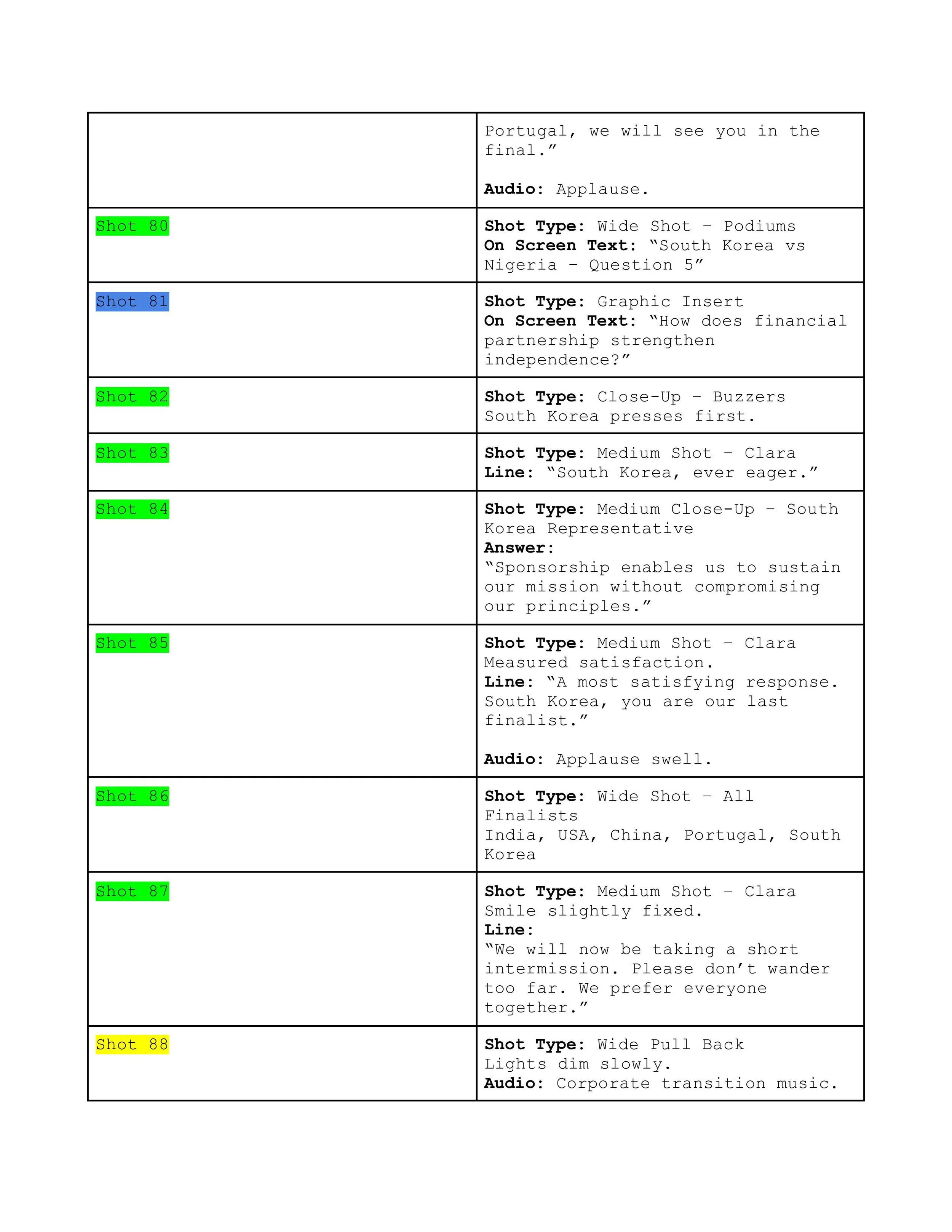
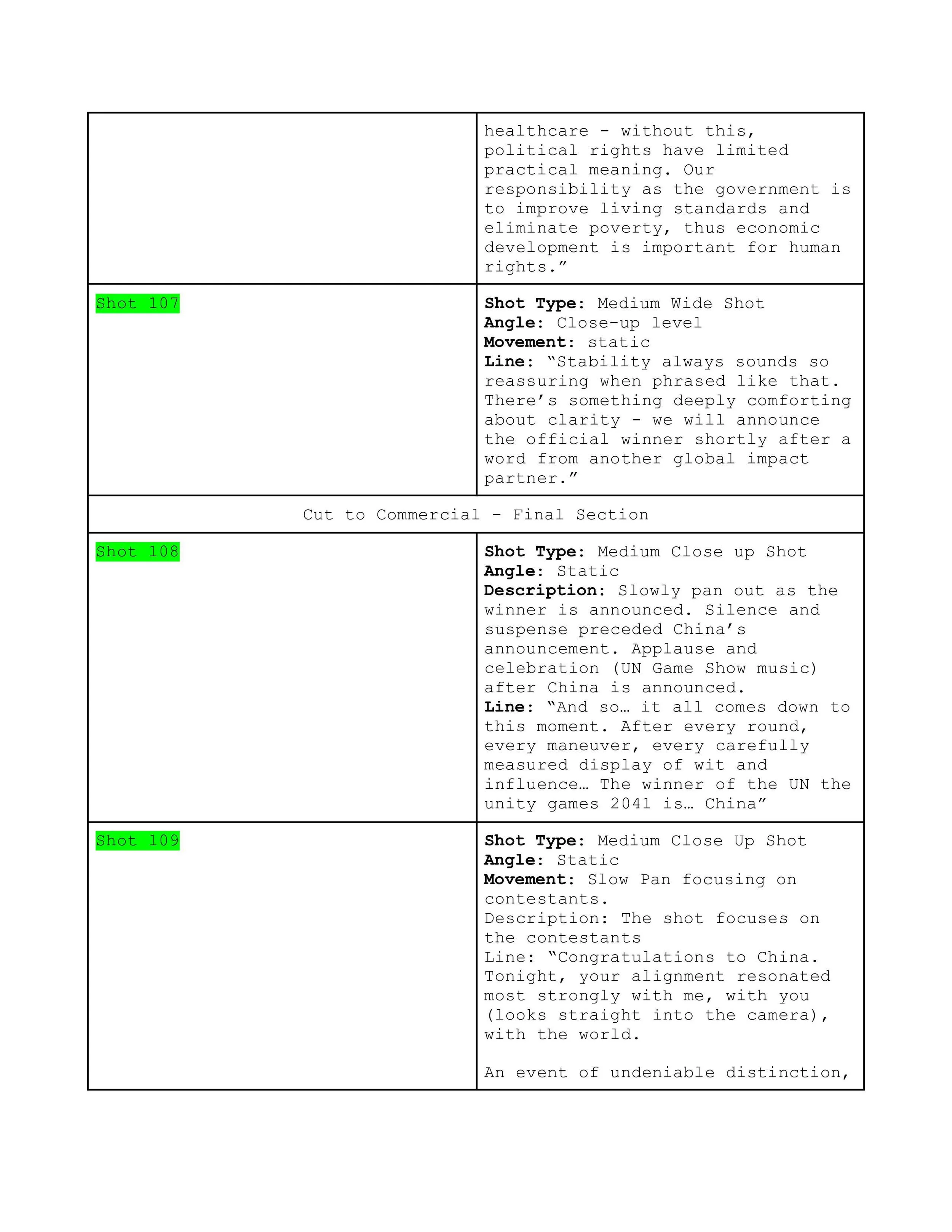
A few pages from our shot list, which helped keep the shoot organized. We used color coding to indicate priority levels, allowing us to manage our time efficiently.
When writing the script and planning our shots, we really wanted it to feel weird, awkward, and uncomfortable. We wanted the host to feel very dystopian and possibly have the viewers see her as an AI figure. We took inspiration from Mikes Whites show “White Lotus.” This show is filled with weird silence and intentionally awkward lines. The shoot was such an important part of our process, as we only had three hours to shoot over one hundred shots.
Scene from White Lotus season one. This type of awkward conversation and pausing is how we wanted to portray our AI host (HBO, 2021)
On the day of our shoot, all members of the group participated as this was the main component of our presentation. After the production team set up the green screen for us, it was time to shoot. We all naturally started taking on roles that helped with the flow. I found myself in charge of the shot list, and I would say which scene we were shooting and who would be in the next scene. Other people were handling the camera, the teleprompter, and the wardrobe.
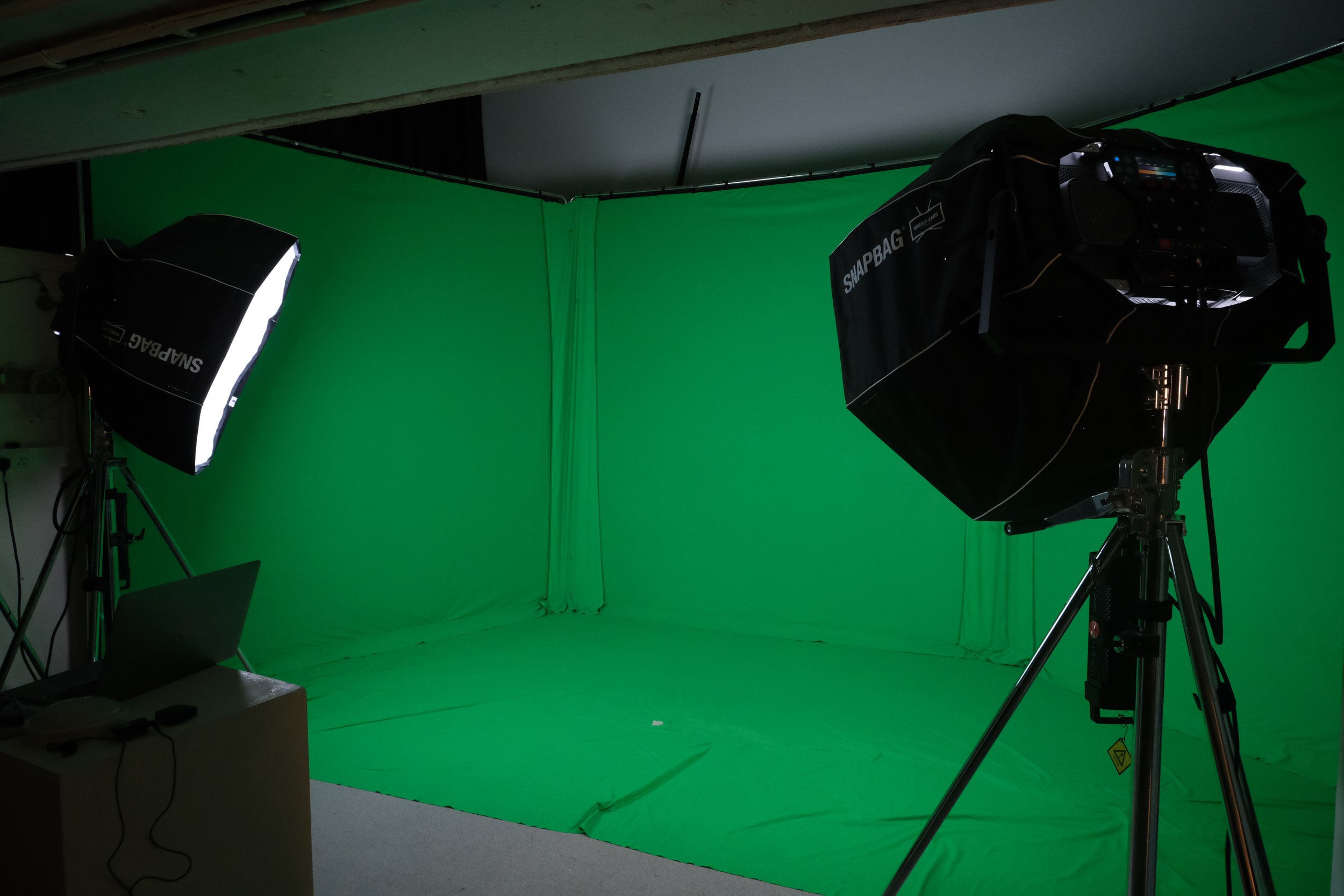
The large filming studio and green screen allowed us to bring our vision to life. We received technical support with lighting and guidance on camera angles from the UAL LCC photography studio technicians.
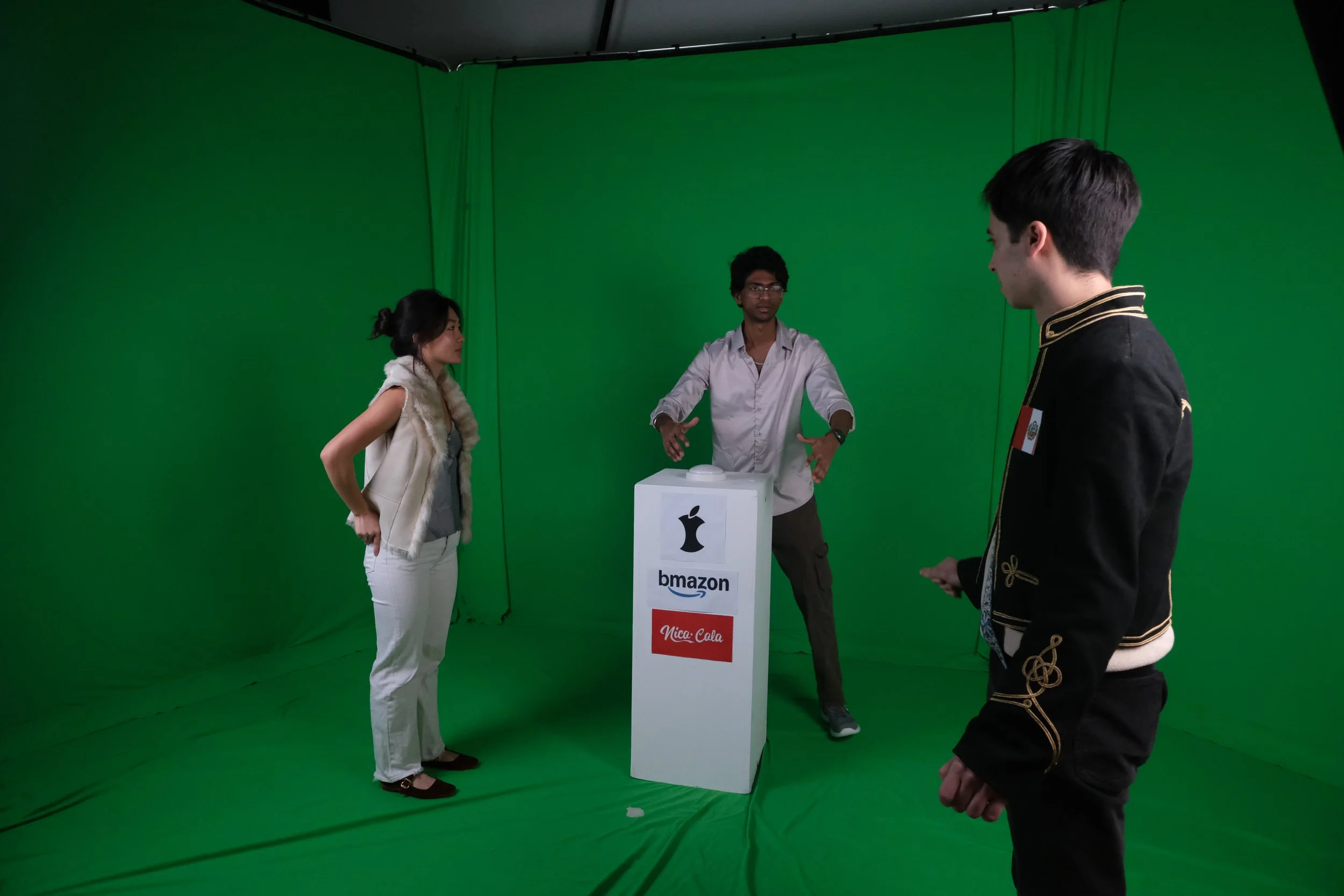
Susilkumar (middle), who was in charge of the camera, gives direction to Clara (left) and Andre (right) as they prepare to shoot a scene. Clara portrayed our host, representing an AI figure.
As we were working on the future setting, we knew we wanted to subtly showcase AI and how we believe it might adapt. We wanted our AI host to feel real, as AI keeps progressing and becomes more human-like, so we had Clara acting as a human but saying her lines in an odd way with pauses that felt almost glitch-like.
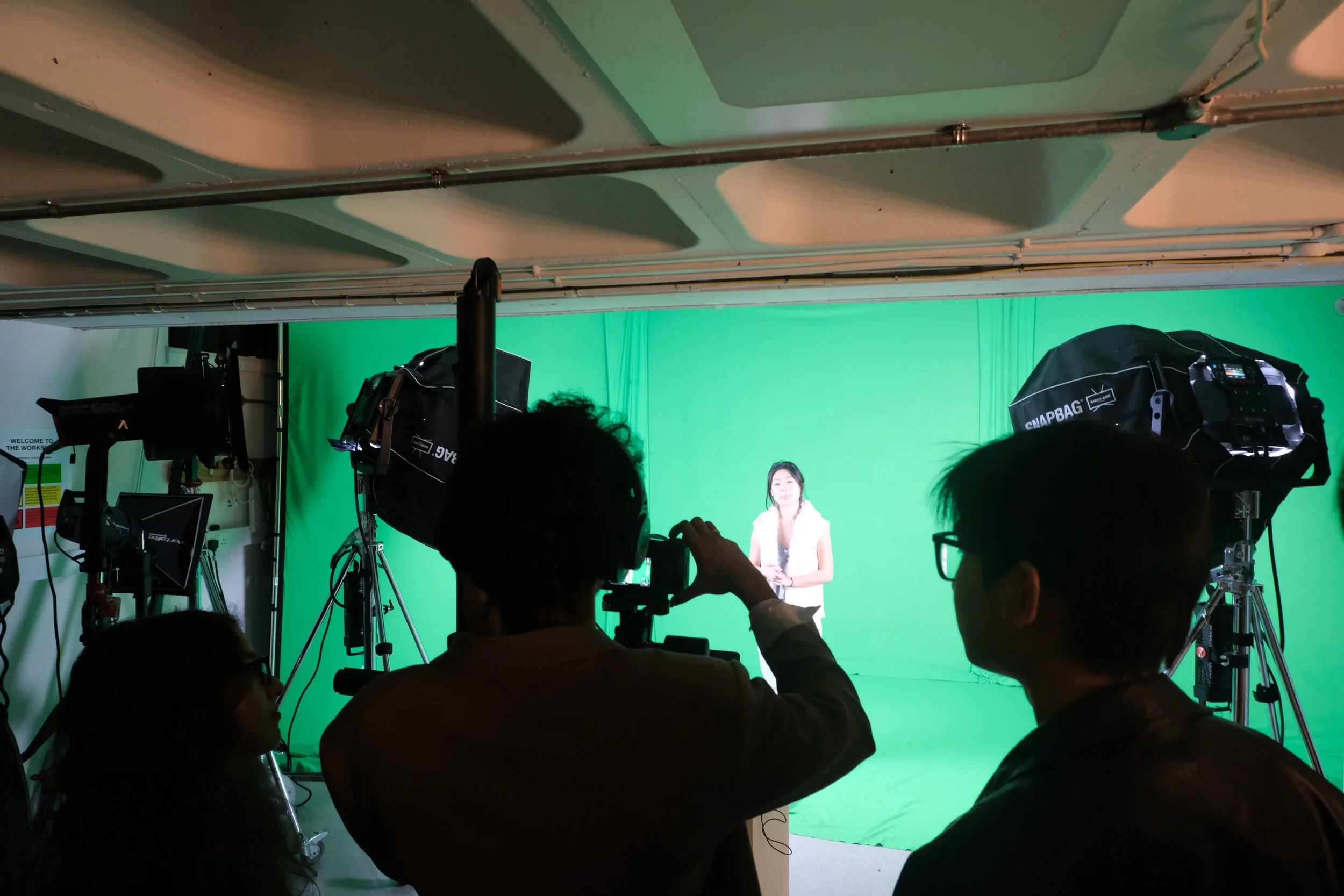
Susilkumar, Shivangee, and Kai working behind the camera verifying Clara is in center frame.
Everyone had a role-playing one or more member states. Our teamwork, while not always perfect, was very strong throughout this whole project. Our shoot day reflected my teammates' ability to use their strengths in the areas they knew were best suited for them. At this point in the process, I felt like we had completed all of Christopher Fraylin's (1994) ways of research. Research into art and design is how we started, looking into the UN website and understanding their design choices. Research through art and design, as we used action research during our role-playing exercise, which revealed how the power dynamics work. Finally, our research for art and design is going to be a conversation piece that makes our audience think about the future. The goal is not to be fully understood, but to be interpreted.
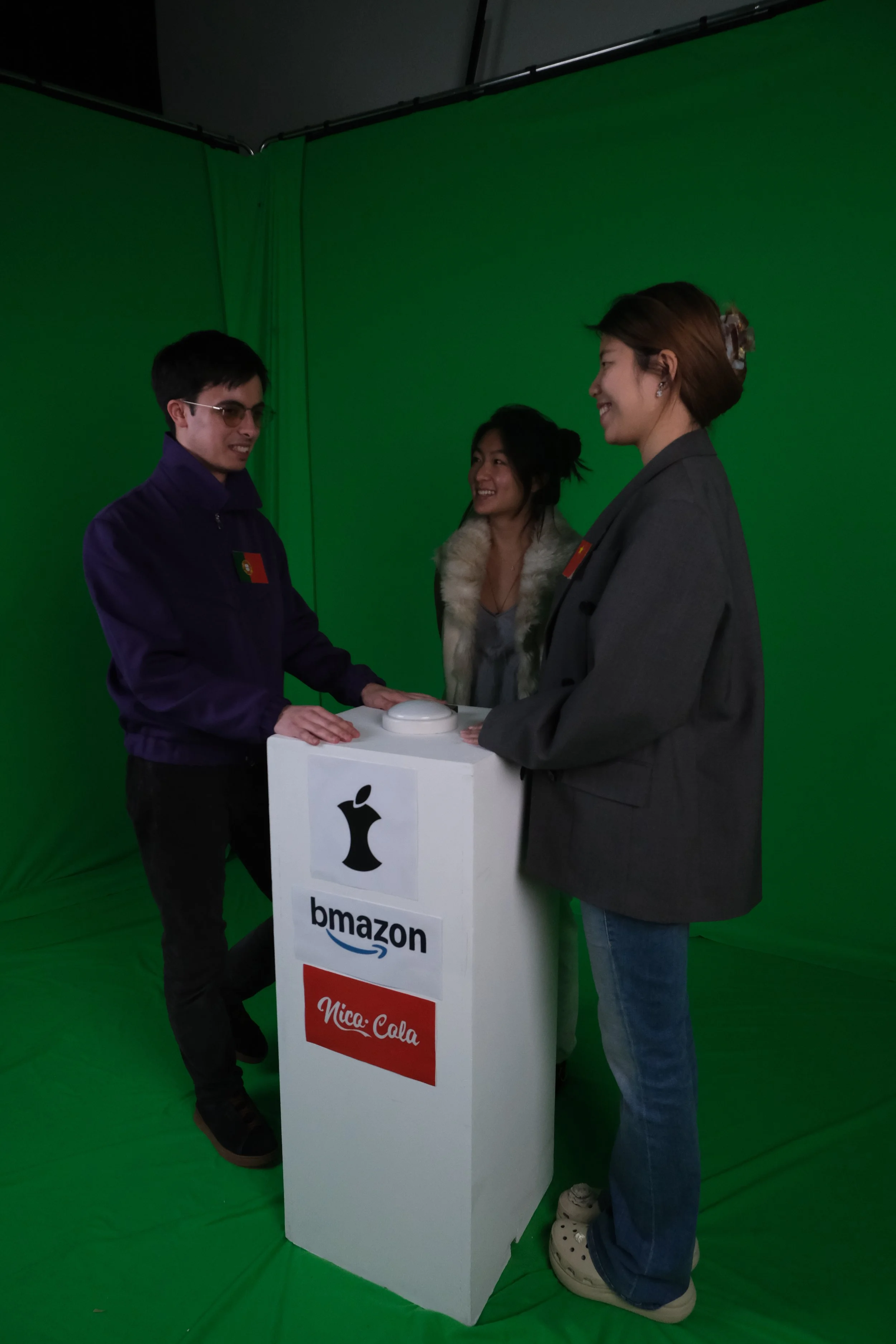
Andre, Clara, and Nicole, filming a scene in the final round of the game show. The podium featured three sponsors created by the Global Impact Partners group. These were inspired by large corporations to suggest how financial influence could cause the UN to look past certain core values.
After this week, I felt very confident in our progress. Next, we needed to move on to the post-production and video editing, as well as branding.
References
Frayling, C. (1994). Research in art and design. Royal College of Art Research Papers, 1(1), pp.1-5.
Rachel Meets Olivia & Paula By the Pool | The White Lotus | HBO (2021). HBO. Available at: https://www.youtube.com/watch?v=LcoDj5G8kZQ&t=32s.
