United Nations: Week 5
BRIEF: Derive a future vision for an orginization based on its website
Group members: Clara Chow, Andre Dinis, Shivangee Mishra, Diya Agrawal, Nicole Shu, Susilkumar Kumar, Drishti Takrani, Kai Lin, and Eric Zhang
We started our last week working on post-production for the video. Susil was the most confident video editor, so he took on a majority of that work. We all made sure he felt supported, and if he needed any help, we were there.
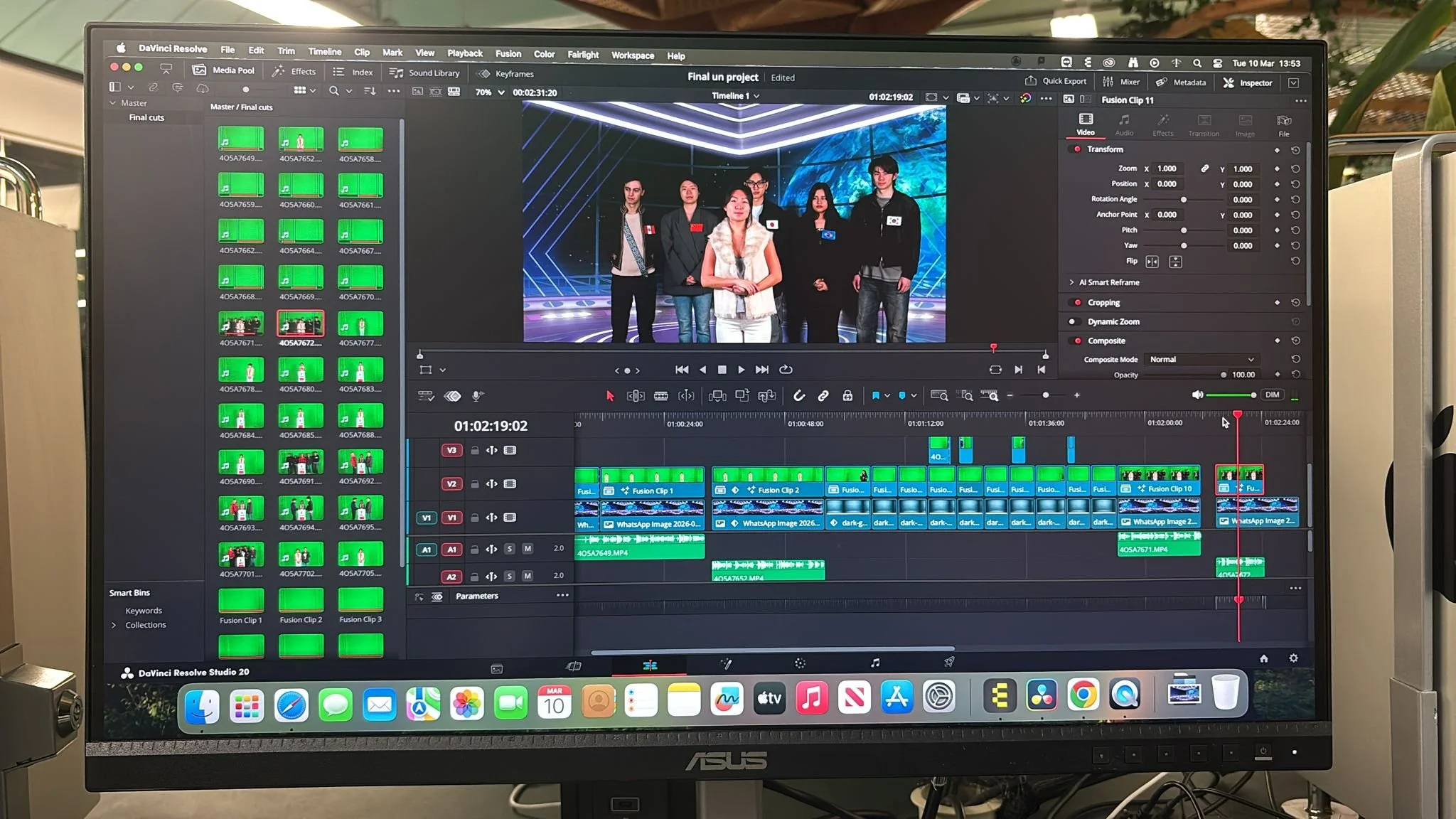
The editing process involved many small cuts, selecting music, working with green screens, and deciding what to include or exclude. As my group was assisting the editing group, we worked to find music that felt futuristic but also democratic (Kumar, 2026).
Overall, I believe we all understood each other's strengths, and that's what helped us achieve a successful outcome. There was some miscommunication across subgroups, and some elements of our UN ecosystem were not showcased in detail due to a lack of understanding. These issues were frustrating for me, but moving forward, I hope to approach situations where I don't fully understand with curiosity instead of frustration.
When Andre, Clara, and I completed the script and the production of the video, we moved on to the branding. The Unity Games needed a logo, an intro, merch, etc. We dove into research about the future of logo design and decided to go with the Unity Games logo you see below. These colors and patterns showcase the simplicity of the future while emphasizing its complex nature. We used our UAL resources to produce stickers to hand out during our presentation to make it feel more commercial.
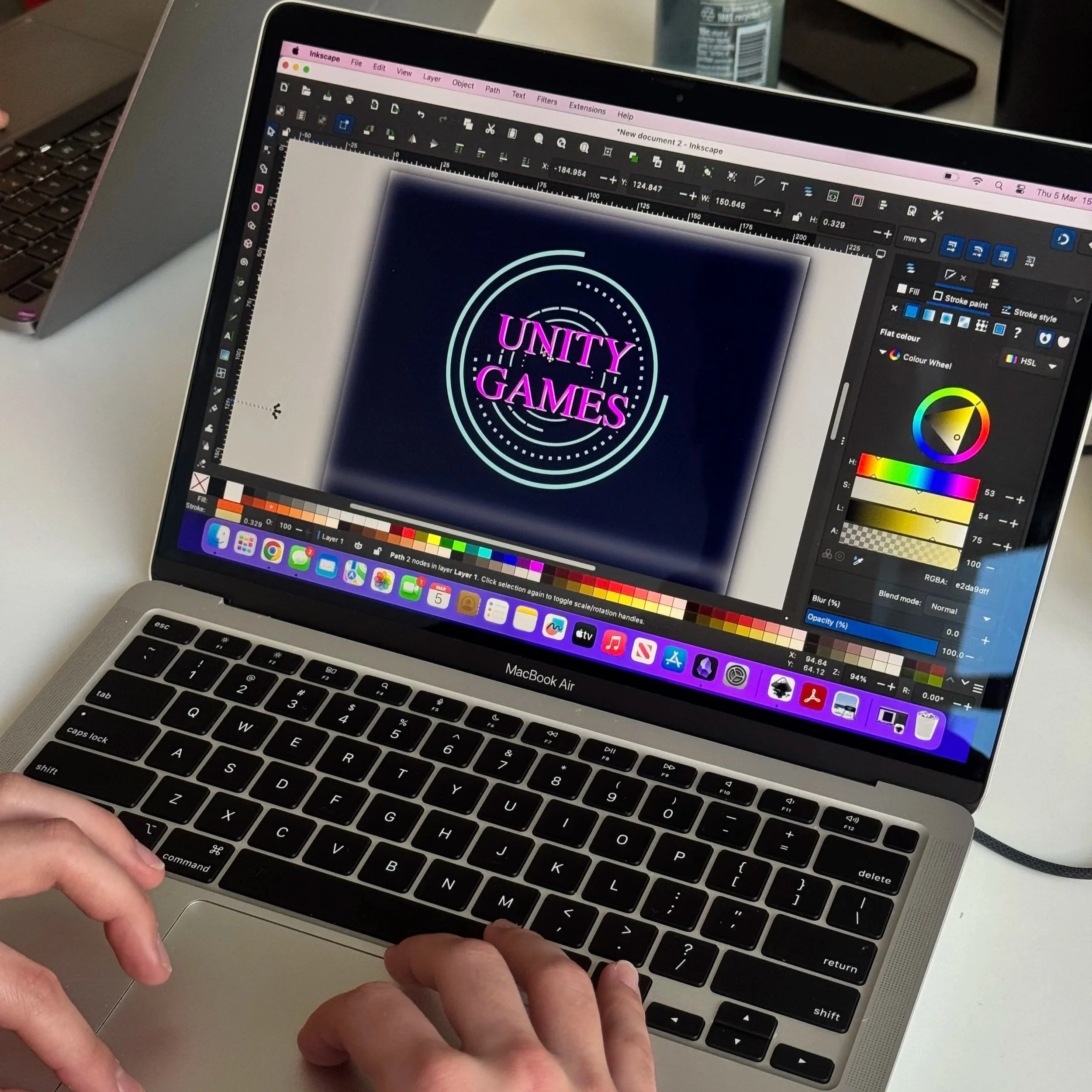
Depicted above is the process of designing our logo and the animation that is seen in the beginning of the final video.
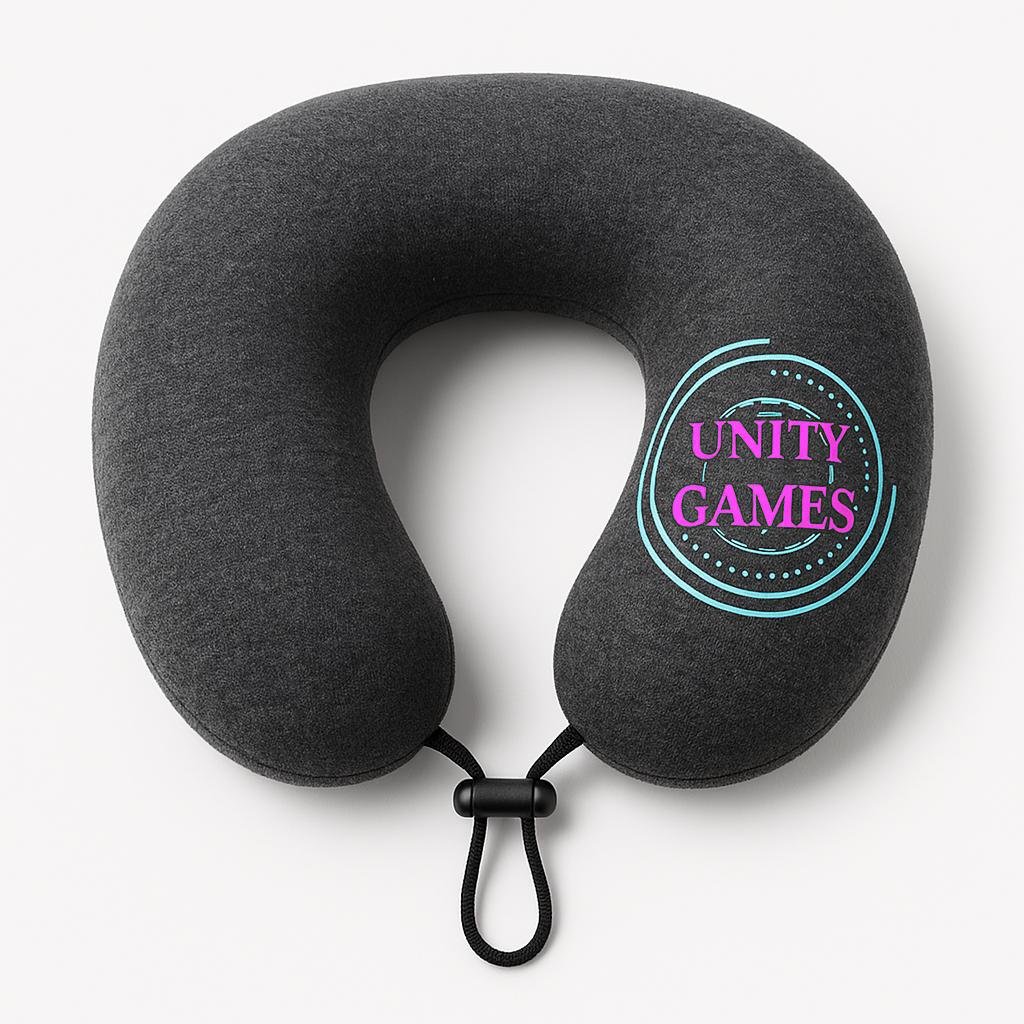
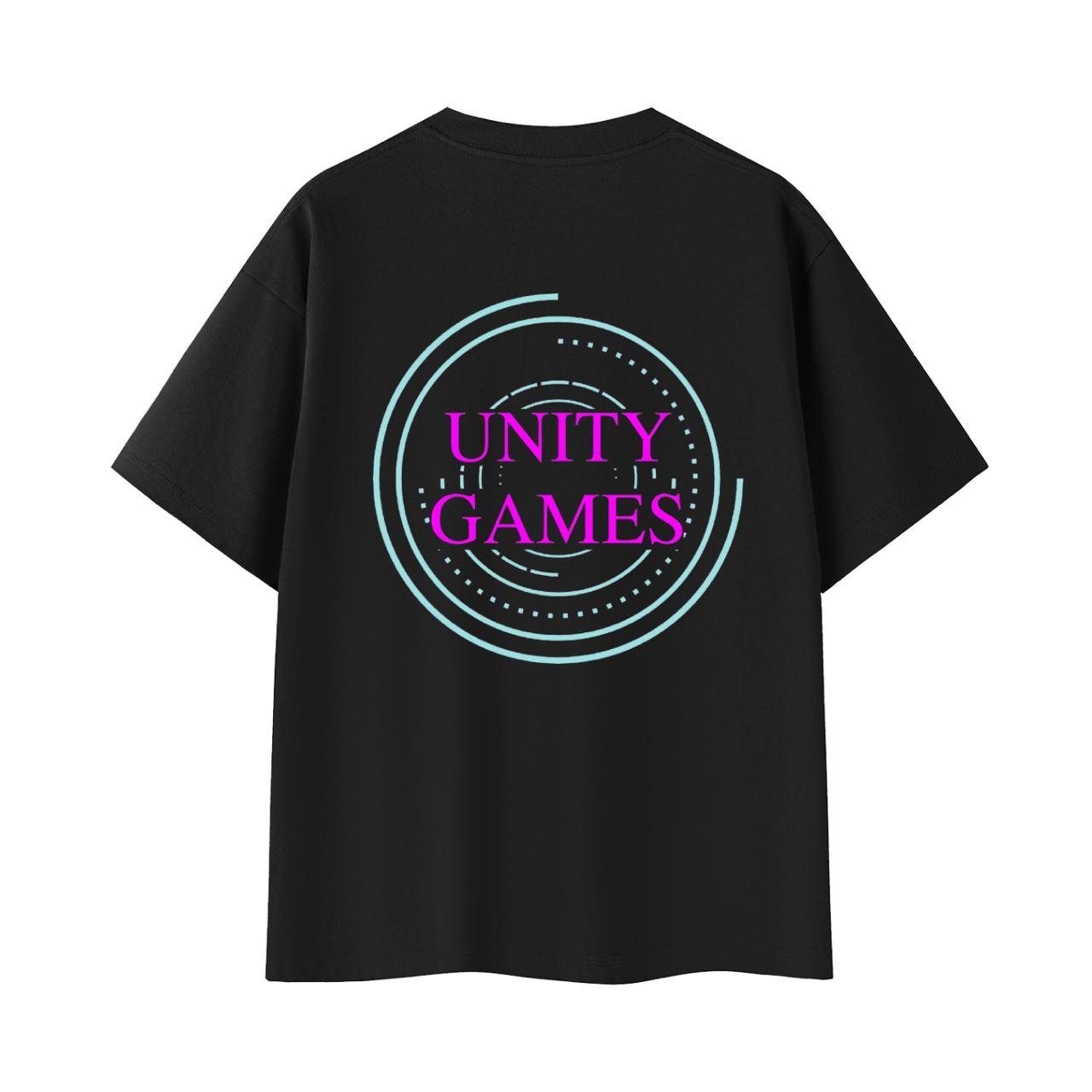
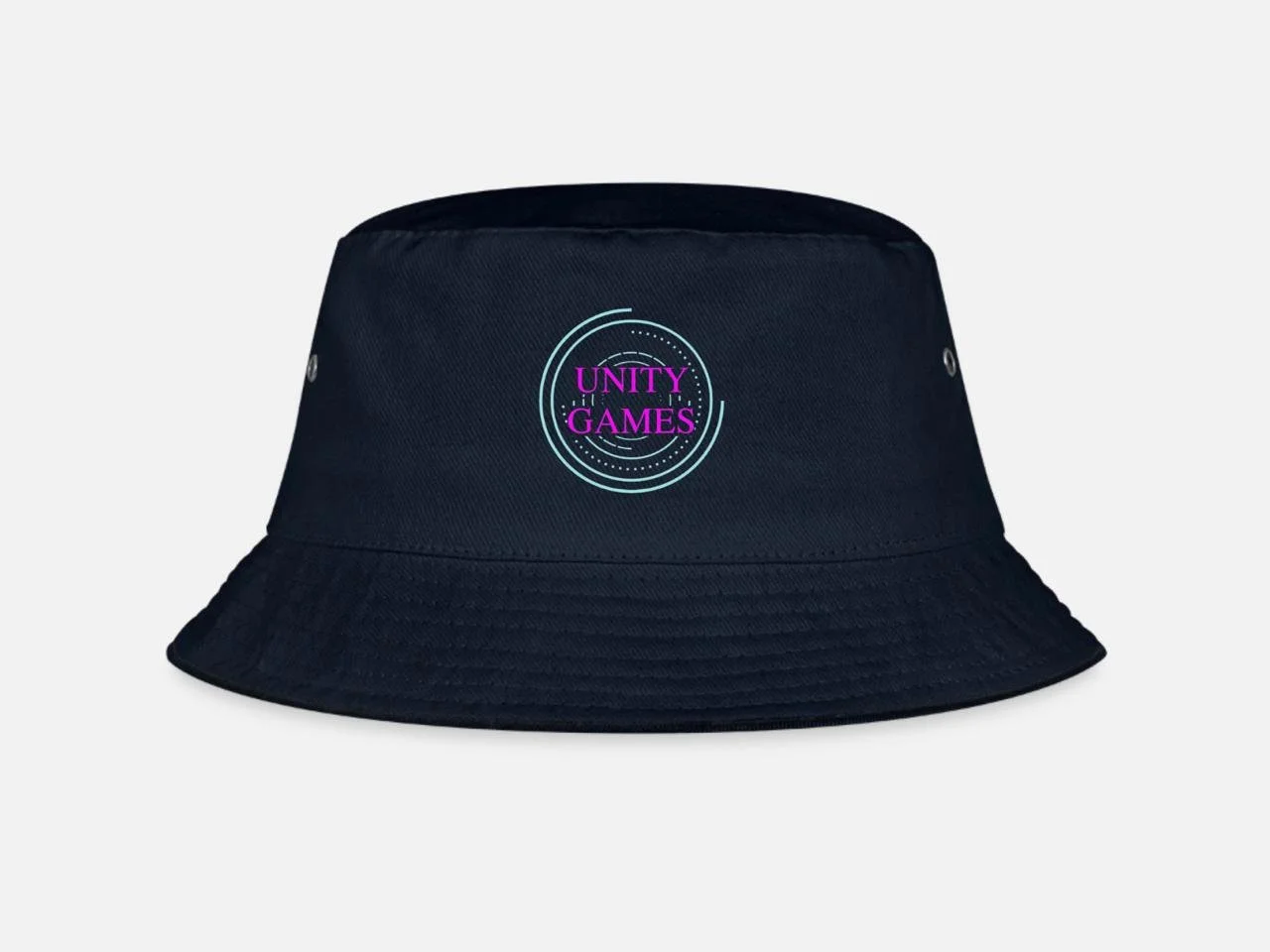
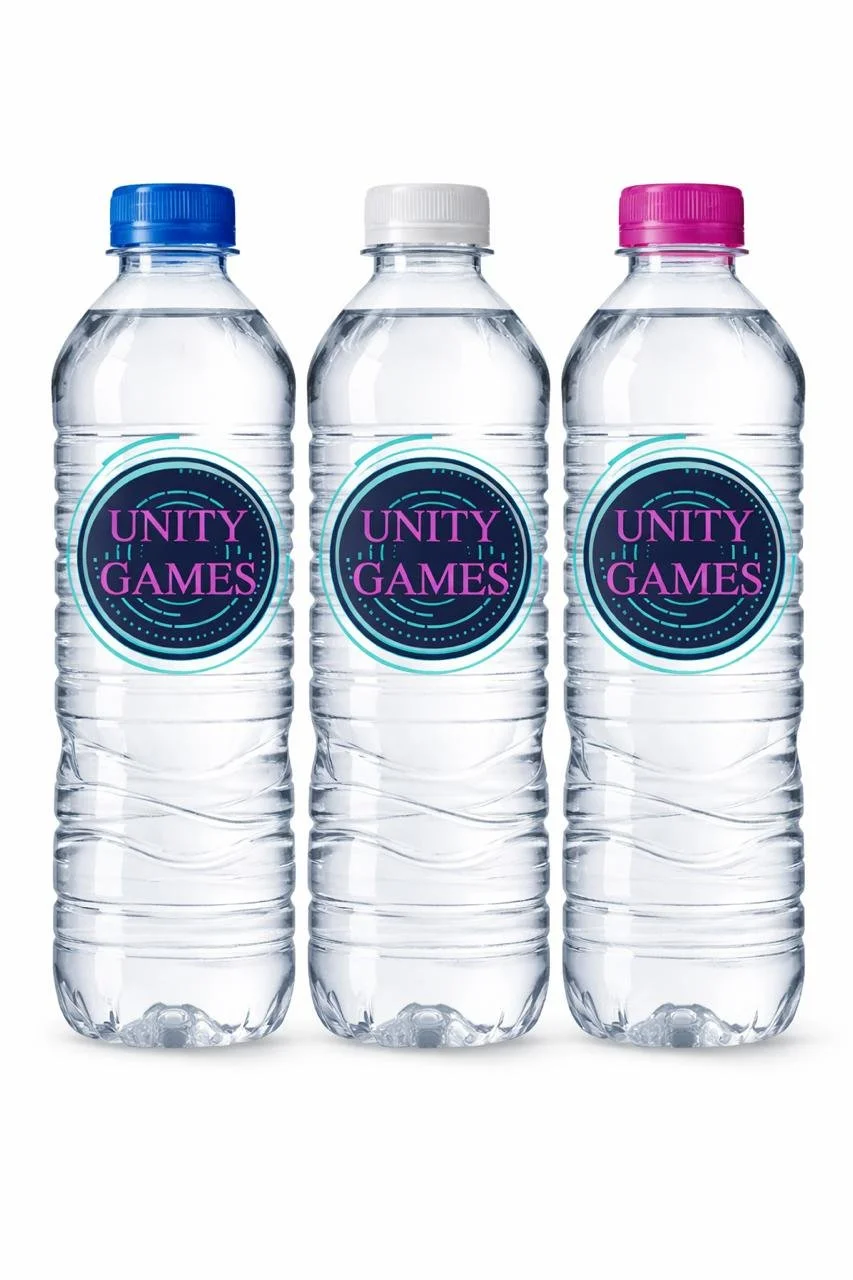
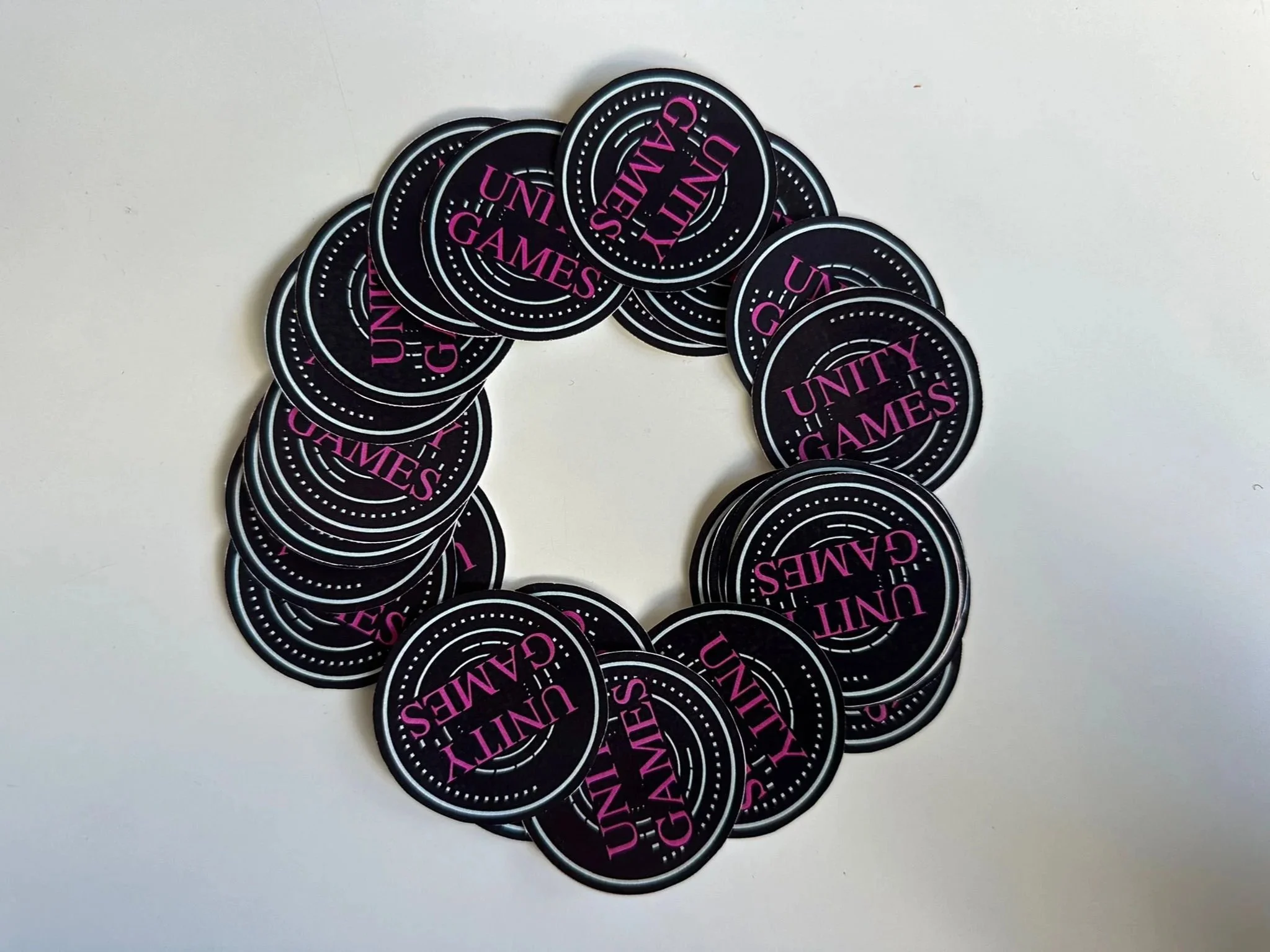
Stickers and merchandise of the Unity Games logo. The stickers were handed out during our presentation. This small item acted as a commercial element, contributing to the overall marketing strategy (Chow, 2026).
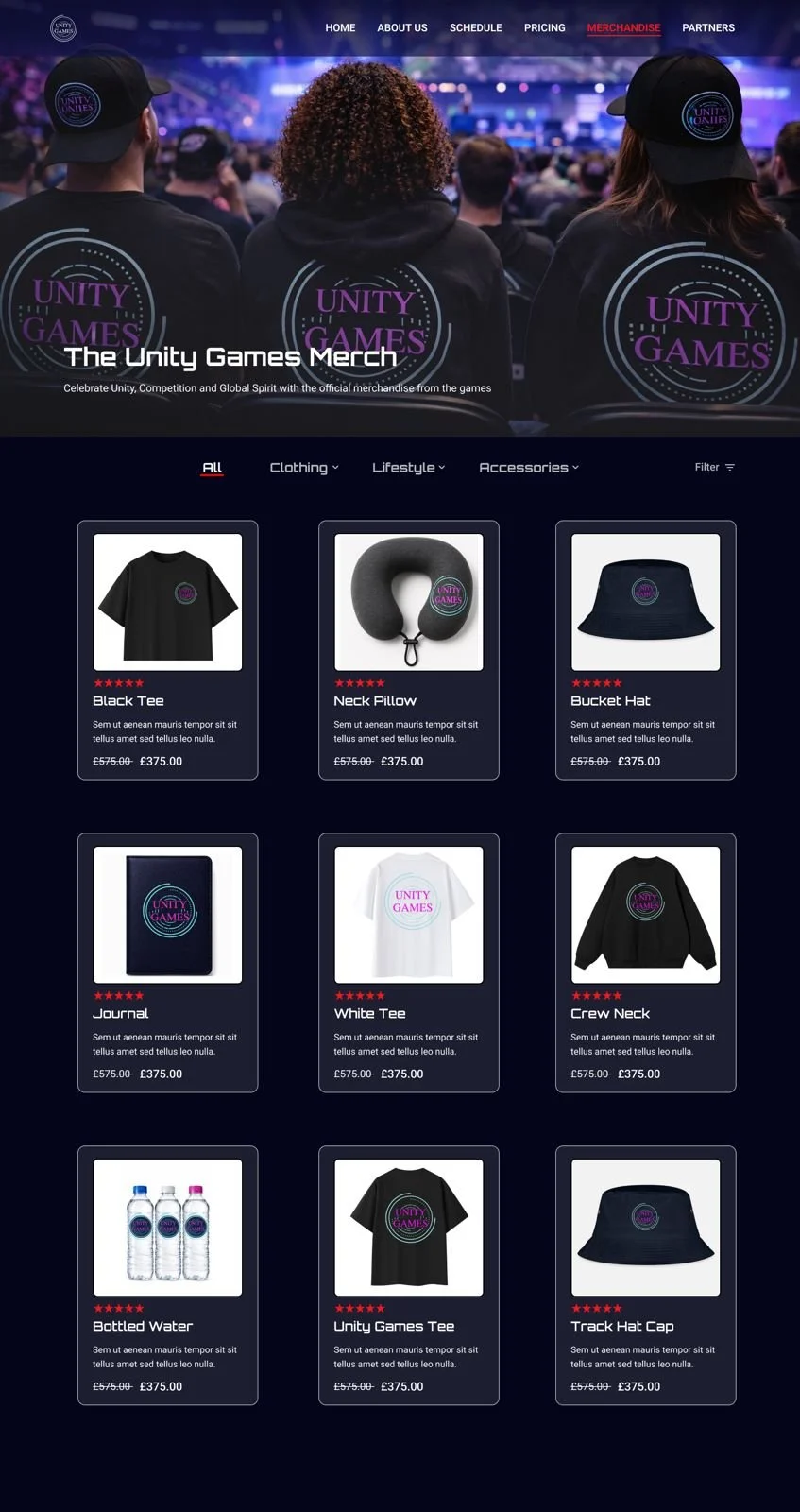
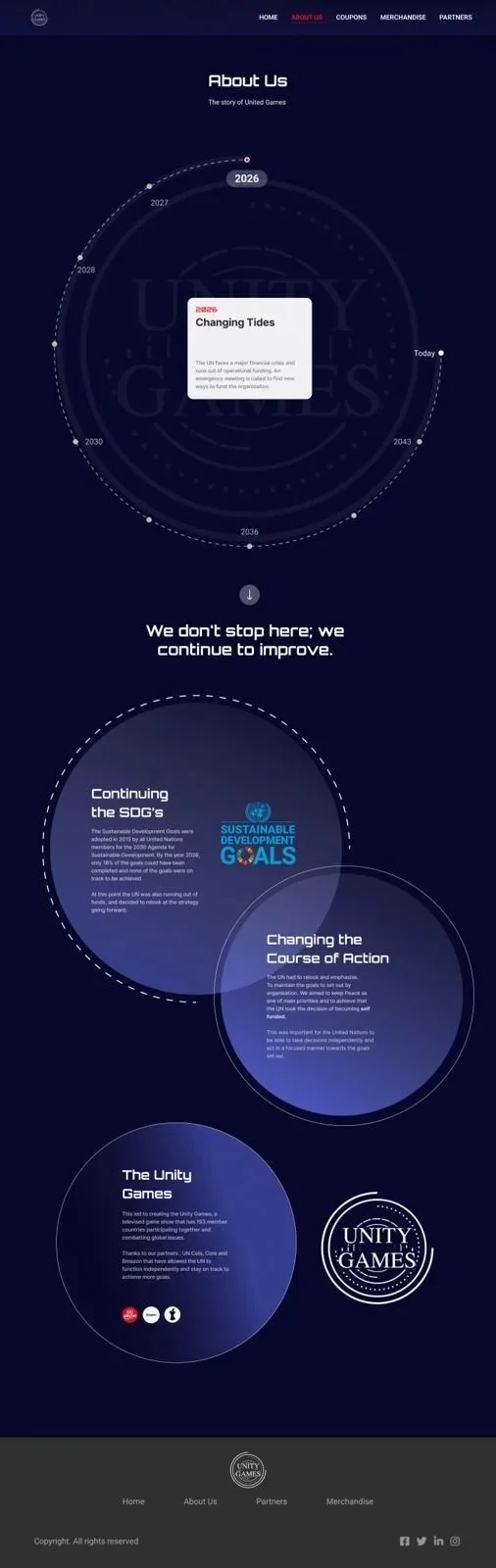
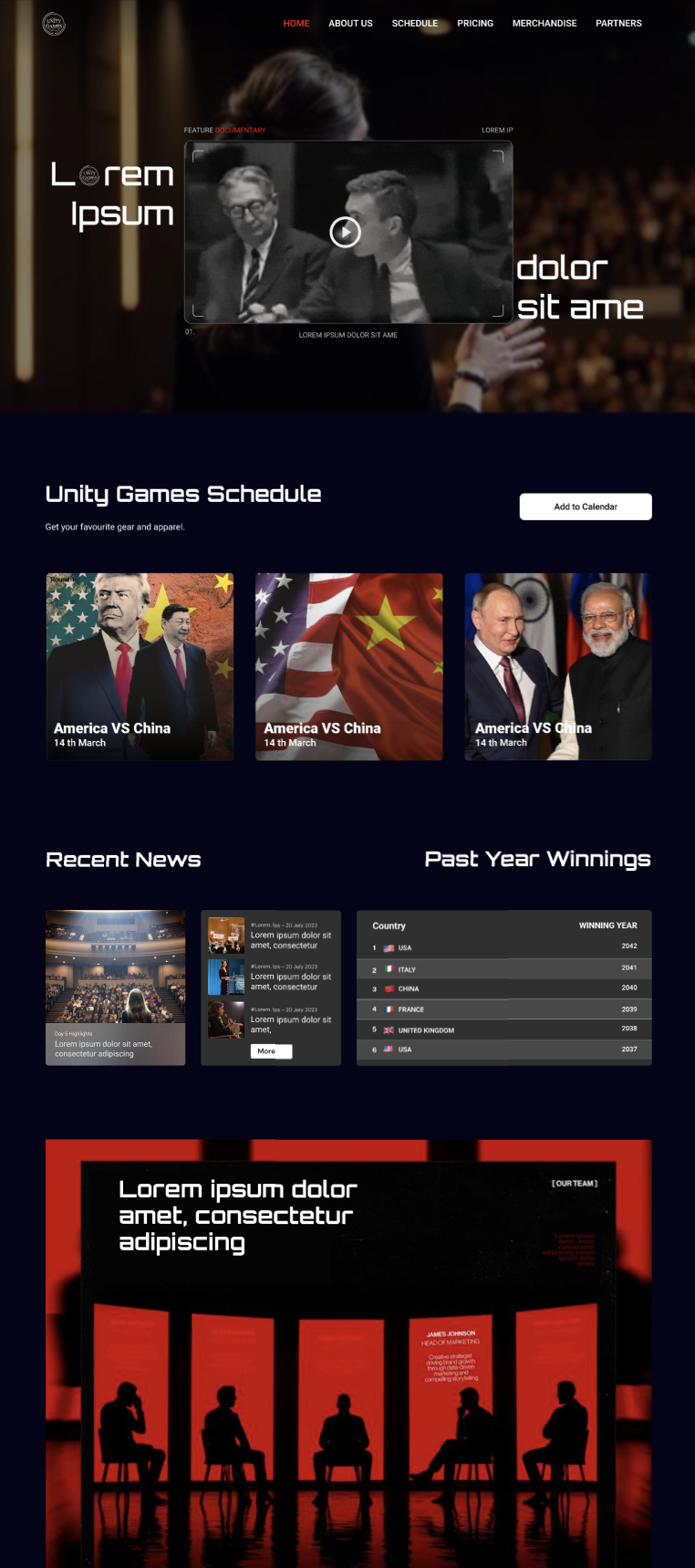
We needed a place for our game show to live. Since our game show takes place in 2043, we needed to consider how websites and game shows would be in the future (The Future of Apps and Web, 2012). Would they still be on a screen, or would this game show be more interactive? Below is the mock-up of the Unity Games website. (Mishra and Takrani, 2026)
Going into our presentation, we decided not to have a PowerPoint explaining how we reached our conclusion. This is a risk I have taken before in an early project, and it paid off. But for this project, it left the audience feeling confused, especially those who had not seen our midpoint presentation. Much of our feedback from the panel of partners related to needing more context for this type of presentation. I would love to have added that into the video, adding an introductory film or infographics showcasing why the UN had to do this, it would still be embedded in the video, just give our audience context that was missed.
Other comments praised the strong satire but felt it needed to either be a social artistic statement or a real solution for the future, not a combination of the two. While we attempted to combine the two, choosing one might have given our project a more cohesive feel.
Finally, we had the opportunity to have a call with ten members of the Athlon team. We gave them more context and showed a few small clips from our presentation. Their feedback said that while it felt minimal, it was very impactful and definitely an outside-of-the-box idea. Many agreed that we could have played more into the forward-thinking aspect of the brief, and I agree. This project felt like something that could happen now or within the next five years, not in 2043.
While we were asked to look into the future, I returned to Adaptive Capacity (2009) as Fuad-Luke notes, only focusing on the future can cause “de‑futureing.” He was speaking in terms of how we can get stuck in unsustainable paths if we only look into the future. While it's important to look into the future, as designers, we have the power to change what is happening now for a better future.
References
Fuad-Luke, A. (2009) 'Adaptive Capacity: Design as a Societal Strategy for Designing "Now" and "Co-futuring"', in Design Activism: Beautiful Strangeness for a Sustainable World. London: Earthscan, pp. 187–200. File
The Future of Apps and Web (2012), Pew Research Center. Available at: https://www.pewresearch.org/internet/2012/03/23/the-future-of-apps-and-web-2/?utm_source=chatgpt.com
